Sending Flowers to Russia? Here Is How Much to Budget by Relationship
Ordering flowers from abroad for someone in Russia feels straightforward until you reach the budget field and realise you have no reference point. Spend too little and the bouquet looks like an afterthought; spend too much for a casual occasion and it creates awkward social pressure. This article gives you honest, relationship-by-relationship benchmarks, explains what Russian recipients actually expect, and helps you choose a combination that lands exactly right — whether the recipient is a work colleague, a close friend, a parent, or the person you love most.
Why the Relationship Matters More Than the Occasion in Russia
In Russia, the emotional weight of a bouquet is read through two lenses at once: the occasion and the closeness of the relationship. A birthday bouquet for a colleague and a birthday bouquet for a spouse are understood as entirely different gestures, even when the calendar date is the same. Getting the scale right is a form of social fluency, and recipients notice.
Russian floral culture has a long tradition of giving odd numbers of flowers — even numbers are associated with sympathy and are avoided for celebratory gifts. This is not a rigid law, but it is a real expectation, and florists here follow it automatically. When you order, you do not need to count stems yourself; a working florist will compose the arrangement accordingly.
What also matters is presentation. In Russia, wrapping, ribbon, and the overall visual impression of a bouquet signal effort and care. A modest number of beautiful, well-chosen flowers in thoughtful packaging reads as more generous than a large, loosely assembled bunch. So when you think about budget, think about what the money is doing: it is buying the right flowers, arranged with skill, and delivered fresh — not just a headcount of stems.
The sections below move from the most casual relationship to the most intimate, giving you a realistic sense of what each level of connection looks like in flower terms and what a sender from overseas can reasonably expect at each price point.
Bouquets we can deliver

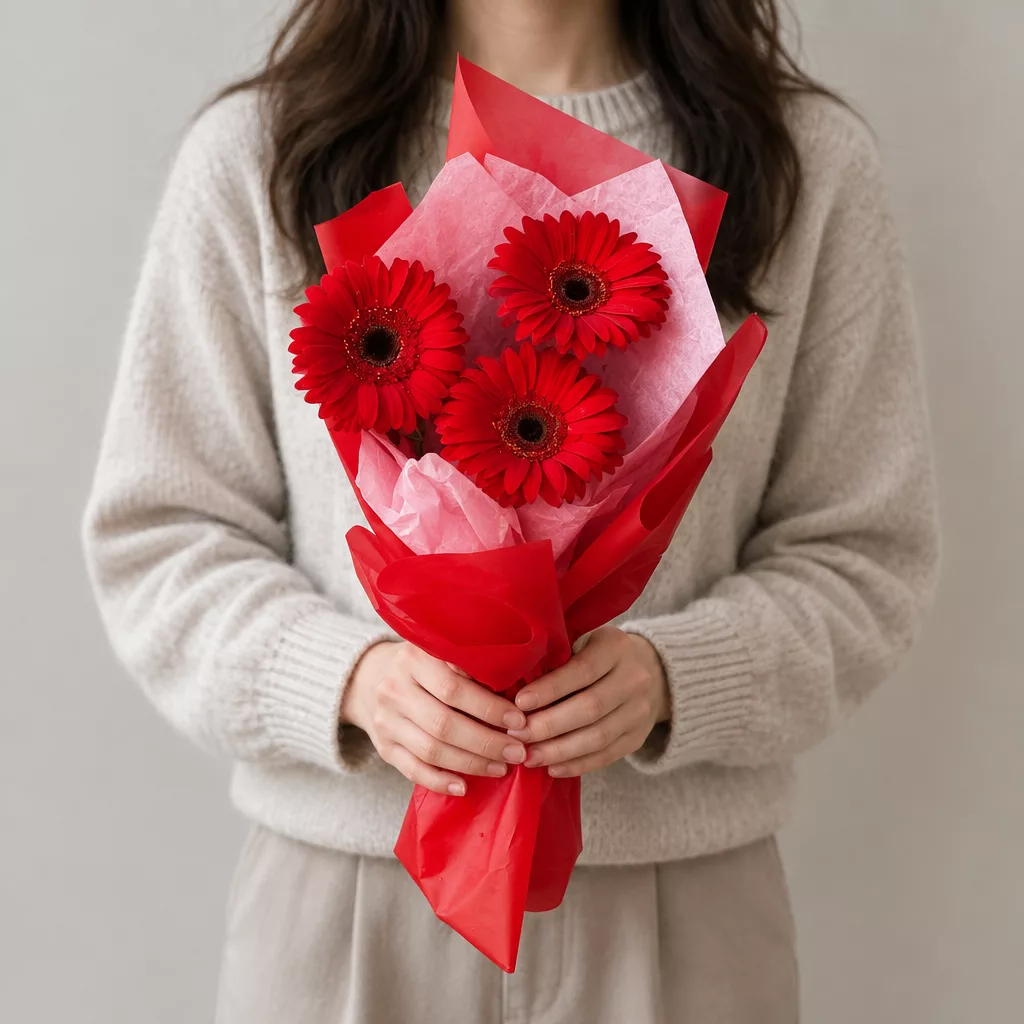
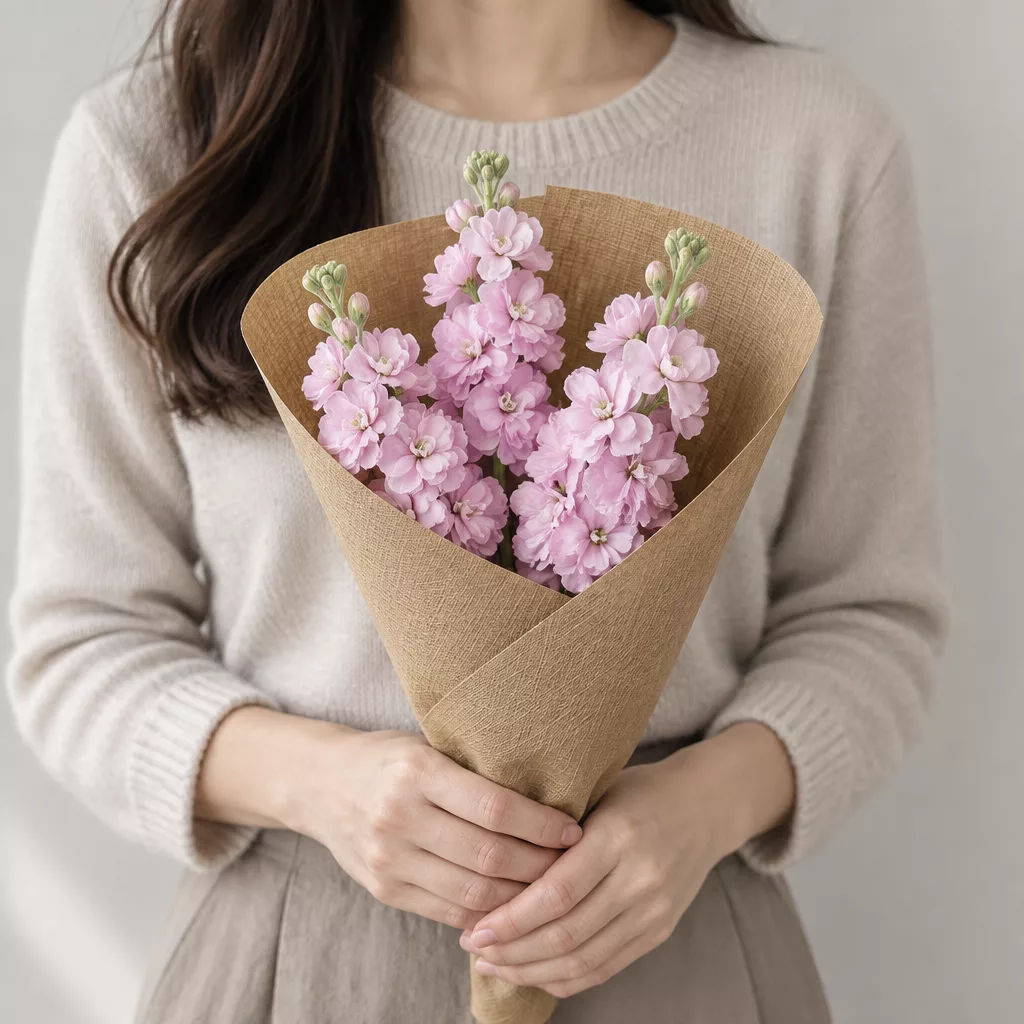
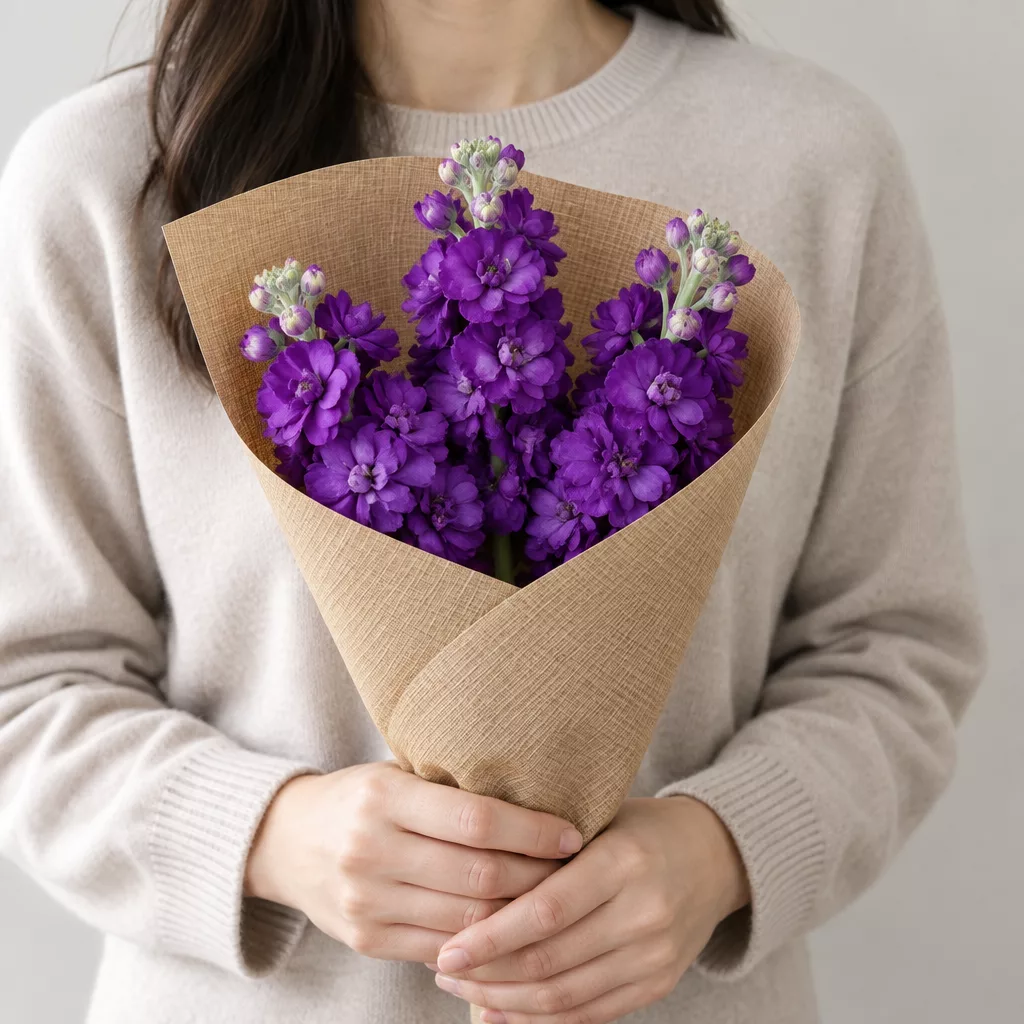
Flowers for a Colleague or Business Contact: Keeping It Appropriate
A colleague or professional contact sits at the lightest end of the spectrum, and the bouquet should reflect that — warm but not overwhelming, cheerful but not intimate. The goal is to mark a moment, such as a work anniversary, a promotion, or Women's Day on the eighth of March, without creating any sense of personal obligation on the recipient's part.
At this level, single-variety bouquets work beautifully. A neat arrangement of spray chrysanthemums, alstroemeria, or standard carnations in a single colour reads as polished and intentional. These varieties hold well in office environments, which tend to be dry and warm — a practical consideration when the flowers will sit on a desk rather than in a cool home. Alstroemeria in particular is excellent here: it opens gradually over several days, which means the recipient enjoys the bouquet long after the delivery.
Colour matters for professional gifts. Whites, creams, soft yellows, and pale pinks are safe and universally appreciated. Avoid deep red at this relationship level entirely — in Russian social reading, red roses carry unmistakable romantic meaning, and sending them to a colleague creates confusion rather than goodwill.
For a business contact you have never met in person, a small, elegant mono-bouquet with a handwritten card is exactly right. The card is important: in Russia, a bouquet without a note can feel anonymous. A few sincere sentences in the message field when you place the order make the gesture complete and personal, even from a distance of thousands of kilometres.
Flowers for a Friend: Room to Be Playful and Generous
Friendship in Russia is taken seriously, and a bouquet for a close friend is an opportunity to show that you know them — their taste, their favourite colours, the kind of beauty they respond to. This is where mixed bouquets come into their own, because combinations tell a more layered story than a single variety.
Tulips paired with ranunculus, for example, give a spring market feel that feels effortless and generous. Eustoma mixed with matthiola brings softness and a faint, sweet scent that fills a room. For a friend who leans toward drama and richness, garden roses combined with burgundy scabiosa and dark foliage create something that looks genuinely considered. The key is choosing a combination that reflects personality rather than defaulting to whatever is most generic.
At the friendship level, you also have more freedom with colour. Vibrant corals, warm peaches, saturated purples, and bold fuchsias all work well. If you know your friend's home aesthetic, you can even think about colours that will look good in their space — a detail that shows real attention.
Budget for a friend should feel slightly stretching in a good way. You want the recipient to feel genuinely celebrated, not just acknowledged. A mid-range bouquet with interesting variety choices and good volume hits that note well. If the friend is celebrating something significant — a new home, a new job, the birth of a child — moving toward the upper end of the mid-range is the right instinct. The occasion justifies the gesture, and the flowers will be remembered.
Flowers for a Parent or Grandparent: Tradition and Warmth Over Trend
Sending flowers to a parent or grandparent in Russia carries a particular emotional register. These recipients often have strong preferences shaped by decades of experience with flowers, and they tend to value classic varieties over fashionable ones. Gerberas, standard chrysanthemums, freesias, and gladioli remain genuinely beloved by older Russian recipients in a way that newer varieties sometimes are not.
Freesias deserve special mention for this relationship. They carry a soft, distinctive fragrance that many people associate with memory and warmth, and they are not overpowering in an enclosed apartment — which matters, because many older recipients in Russia live in flats with limited ventilation. Fragrance is a gift in itself when it is calibrated correctly.
For a mother or grandmother, warm pinks, lilacs, and soft whites are almost universally right. For a father or grandfather, the gesture of flowers is less common but increasingly appreciated, especially on birthdays or major anniversaries. A structured, unfussy arrangement in green and white, or a dignified single-variety bouquet, works well without feeling incongruous.
Vase life is a real consideration here. Older recipients often take tremendous care of their flowers and will be disappointed if the bouquet fades quickly. Choosing hardy varieties — chrysanthemums, alstroemeria, carnations — means the flowers will stay beautiful for ten days or more with basic care. When you place the order, you can ask for care instructions to be included with the delivery, which is a thoughtful detail that many recipients genuinely appreciate.
Flowers for a Romantic Partner: When the Bouquet Has to Say Everything
This is where budget, variety, and presentation all converge, because a romantic bouquet carries the full weight of what you want to say. In Russia, roses remain the dominant language of romantic love — but the conversation has become much more nuanced than a dozen red stems. Garden roses with their layered petals and subtle fragrance feel more intimate than standard hybrid teas. Peony roses, when in season from late spring through early summer, are considered among the most romantic flowers a Russian recipient can receive.
For a partner, the bouquet should feel abundant. Volume matters here in a way it does not for other relationships — not because more is always better, but because generosity in this context is part of the message. A full, lush arrangement that takes both hands to hold says something that a small, neat bouquet simply cannot.
Red remains powerful and appropriate for a romantic partner, but it is not the only option. Deep blush, warm ivory, and rich burgundy all carry romantic weight. A combination of garden roses in blush and ivory with dusty miller foliage looks genuinely luxurious and photographs beautifully — which matters to many recipients who will want to share the moment.
If the occasion is significant — an anniversary, Valentine's Day, or a moment of reconciliation — this is the relationship where spending at the upper end of your comfort zone is genuinely justified. The flowers will be remembered not just as a gift but as evidence of how much you care, and that memory has real value.
Seasonal Timing and Why It Changes What You Get for Your Budget
Russia's climate means that seasonality affects both availability and value more sharply than in many other markets. Understanding this helps you make smarter choices regardless of which relationship you are buying for.
Tulips, for example, are at their best and most affordable in late winter and early spring — from February through April. During this window, a tulip bouquet at any budget level looks genuinely impressive because the stems are long, the colours are saturated, and the flowers are arriving at peak freshness. Outside that window, tulips are imported at greater cost and sometimes arrive with shorter vase life.
Peonies have an even narrower window, concentrated in May and June. If you are sending flowers to a partner or close friend during those months, peonies are the single best thing your budget can buy. A few stems of fully open peonies in a simple wrap make an impact that no other flower achieves in quite the same way.
In the heat of July and August, hardier varieties like lisianthus, statice, and summer chrysanthemums hold up better than delicate garden roses, which can wilt between the florist and the door if the delivery route is long. Saint Petersburg summers are mild enough, but if the recipient is in a hotter Russian city, variety choice genuinely affects how the bouquet arrives.
Winter, from November through January, is actually a strong time for roses and imported exotics, as cold-chain logistics work in the flowers' favour. Knowing the season helps you align your budget with what will look most beautiful at that specific moment in the year.
Mistakes Overseas Senders Make and How to Avoid Them
The most common mistake is choosing based on what looks impressive in a photograph rather than what will travel well and arrive beautifully. Heavily open blooms, for instance, look stunning on screen but have very little vase life left by the time they reach a recipient. A skilled florist will choose flowers at the right stage of opening — buds that will unfurl over the following days, giving the recipient the full arc of the bouquet's beauty.
The second mistake is under-budgeting for the occasion relative to the relationship. Overseas senders sometimes apply the logic of their home country, where a modest bouquet might be perfectly normal for a birthday. In Russia, particularly for close relationships and significant occasions, the bouquet is a statement, and a very small arrangement for a major milestone can feel like the gesture did not quite land. When in doubt, go one level up from what feels safe.
The third mistake is skipping the card. A bouquet without a personal message can feel puzzling to a Russian recipient, especially one who may not know you sent it until after the delivery. A few warm sentences — even translated into Russian if you want to make the effort — transform the bouquet from an object into a conversation.
Finally, do not choose delivery timing without thinking about the recipient's day. A morning delivery to someone who leaves for work at eight means the flowers sit outside a door. An evening delivery to someone who goes to bed early means the moment is rushed. Matching the delivery window to the recipient's rhythm is a detail that costs nothing and makes everything feel more considered.
Setting a flower budget for someone in Russia is really about understanding what the bouquet is being asked to do — and for whom. A thoughtful arrangement for a colleague, a generous mixed bouquet for a friend, a classic and hardy selection for a parent, or a lush romantic statement for a partner: each relationship has its own natural register, and staying within that register is what makes the gesture land. Seasonality, variety choice, and presentation do as much work as the budget itself. When all of those elements align, the flowers arrive not just as a gift but as a moment — and that is what the person on the other end will remember. We deliver bouquets across Russia in 1–2 hours.
Frequently asked questions
Is it normal to send flowers to a male recipient in Russia?
Yes, and it is becoming more common. Men in Russia receive flowers on birthdays, professional milestones, and significant anniversaries. A structured, unfussy bouquet in neutral or bold tones — think greens, whites, or deep purples — works well. Single-variety arrangements tend to feel more natural for male recipients than elaborate mixed designs, though personal taste always matters most.
Does the number of flowers in a bouquet really matter in Russia?
It does, in a cultural sense. Odd numbers are associated with celebration and life, while even numbers are traditionally reserved for mourning. In practice, your florist will compose the arrangement correctly without you needing to count. If you are ordering a specific number of stems for symbolic reasons — say, a significant birthday — odd numbers are the right choice for a joyful occasion.
How far in advance should I place an order for delivery in Russia from abroad?
For standard deliveries, placing your order a day ahead gives the florist time to source the best available flowers and confirm the delivery window. For major dates like March 8th or Valentine's Day, ordering several days in advance is strongly advisable — demand is extremely high and same-day availability cannot be guaranteed. Early orders also allow more variety choice.
What flowers last longest if the recipient does not have a vase immediately?
Alstroemeria, chrysanthemums, and carnations are the hardiest choices and can survive several hours without water without significant deterioration. Lisianthus and statice also hold well. Delicate options like garden roses and ranunculus need water sooner. If you are unsure whether the recipient will be home at delivery time, choosing a hardier variety is a genuinely practical decision.
Should I include a card message in Russian or English?
Either works, but a message in Russian — even a simple one — is always warmly received and shows effort. If you write in English, most recipients in cities will understand or will have someone translate it. The most important thing is that a message is included at all. A bouquet with no card can feel impersonal, regardless of how beautiful the flowers are.
Ready to send flowers?
Pick the city, choose the bouquet, and a local florist takes it from there.
Choose a city →