How Couriers Handle Flowers to Keep Them Fresh in Transit
You ordered a bouquet for someone who matters — maybe it is a birthday surprise, a first date, or simply a Tuesday that deserves something beautiful. The moment that bouquet leaves our studio, a quiet set of professional habits takes over to make sure it arrives looking exactly as it did when we wrapped it. Flowers are living things, and transit is the part of the journey most people never see. Here is what actually happens between our hands and yours.
Why Transit Is the Most Critical Moment for a Bouquet
Most people assume a bouquet is safe once it has been wrapped and handed to a courier. In reality, the first hour outside the cooler is when a bouquet is most vulnerable. Cut stems are already working hard to draw water upward, and any interruption — a jolt, a warm car, a few minutes in direct sunlight — can start a chain reaction that wilts petals before the recipient even opens the door.
The varieties most sensitive to transit stress are the ones people love most. Garden roses with many layered petals trap heat and bruise easily if pressed against packaging. Ranunculus, with their papery petals, crumple under the slightest pressure. Hydrangeas are notorious for wilting within twenty minutes if they lose stem contact with water. Tulips, on the other hand, keep drinking through their stems and will actually continue growing in the box, bending toward any available light source.
Understanding this is why professional flower delivery is genuinely different from simply putting a bunch in the back seat of a car. Every decision — the angle of the box, the temperature of the vehicle, the way stems are secured — is made with the biology of the flower in mind. A one-to-two hour delivery window is not just a convenience promise; it is a biological requirement for bouquets to arrive in full bloom. Longer transit times demand increasingly complex support systems, which is why keeping delivery fast is itself a form of care.
Bouquets we can deliver



Packaging That Protects Without Crushing
The box or wrap surrounding a bouquet is not decoration — it is an engineering decision. For loose, open blooms like peonies or garden roses at full flower, we use structured boxes with a raised inner sleeve that holds the stems firmly while leaving the heads completely free. Nothing presses against the petals from above. The bouquet floats inside its own protected chamber.
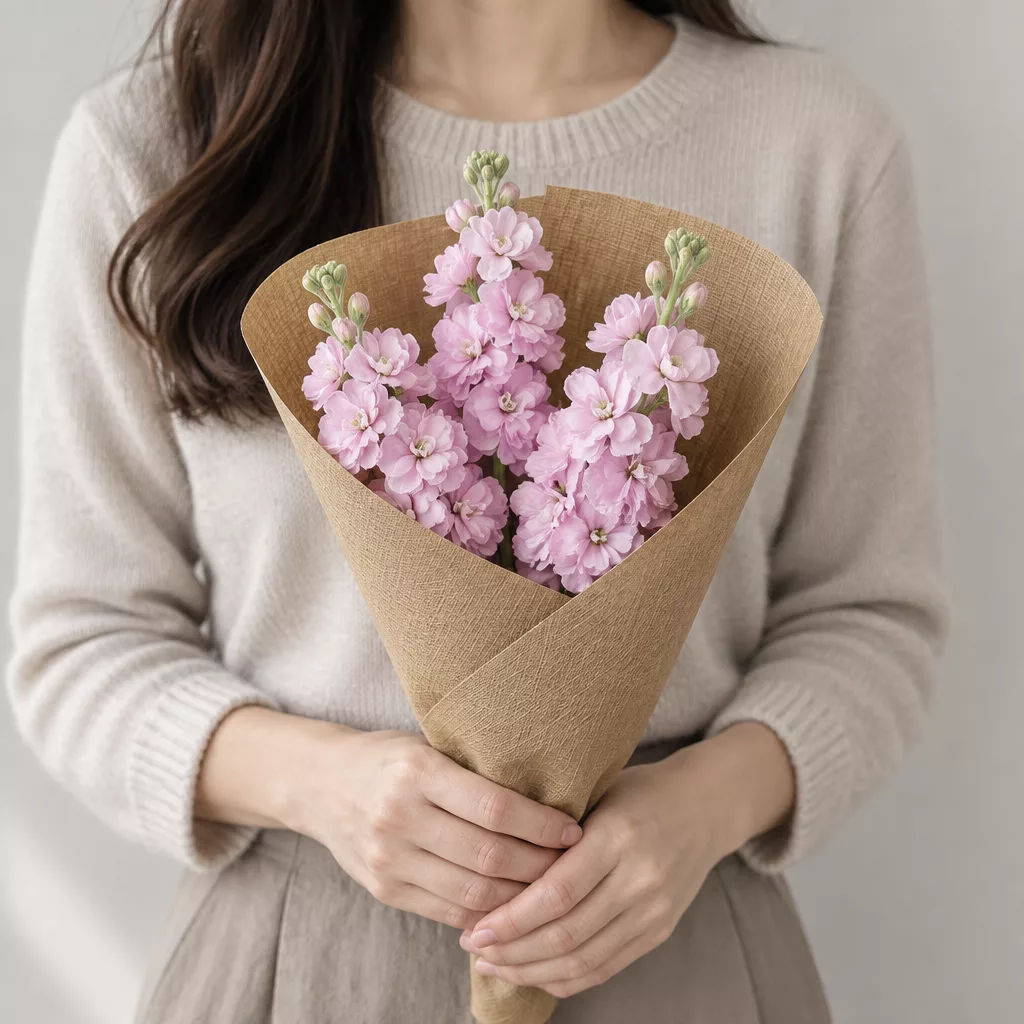
For tighter, more compact arrangements — think a dense cluster of spray roses, waxflower, and eucalyptus — a kraft paper wrap with a firm cone base works well because the stems are short and the overall shape is stable. The paper is folded in a way that creates a natural cradle rather than a tight grip. Flowers need to breathe, and wrapping too tightly traps the ethylene gas that blooms naturally emit, which accelerates aging in the very flowers producing it.
Delicate single-stem flowers like calla lilies or anthuriums travel best in individual sleeves or tubes with a small water reservoir at the stem end — a damp cotton pad secured with a rubber band keeps the cut end hydrated for the full transit window. For mixed bouquets combining sturdy stems like lisianthus with fragile ones like sweet peas, we layer carefully so that the sturdier varieties form a natural protective wall around the more delicate ones. Presentation and protection are the same decision made simultaneously. A beautifully arranged bouquet that arrives crushed has failed at both.
Temperature Control From Studio to Doorstep
Flowers have a preferred temperature range, and it is narrower than most people expect. The sweet spot for most cut flowers in transit is between four and ten degrees Celsius. Below four degrees, tropical varieties like orchids and birds of paradise suffer cold damage — their cells rupture and you see translucent, water-soaked patches on petals within hours. Above twelve degrees, roses and tulips open faster than intended, and bacteria in the stem water multiply quickly enough to block vascular tissue.
In Saint Petersburg, this creates a genuine seasonal challenge. Summer temperatures regularly exceed twenty-five degrees, and a courier vehicle without climate control becomes a greenhouse within minutes. Winter brings the opposite problem: a bouquet left on an unheated doorstep in minus fifteen degrees will freeze, and frozen petals collapse completely when they thaw. Our couriers use insulated carry bags for cold days, and vehicles are climate-controlled rather than simply heated or cooled — the goal is a stable, consistent temperature throughout the journey, not just at the start.
One detail that surprises people: the cooler temperature in a flower studio is not just about keeping blooms closed. It also suppresses bacterial growth in the water that hydrates stems overnight. When a bouquet moves from a four-degree cooler to a warm delivery bag, we factor that transition into the packing time. Flowers go from cooler to courier in under ten minutes, minimising the temperature shock that causes premature wilting. This handoff moment is treated with the same care as any other step in the chain.
How Couriers Actually Carry Bouquets
There is a version of flower delivery that involves a courier tucking a bouquet under one arm while unlocking a car door, and that version ends badly for the flowers. Professional flower handling means the bouquet is never horizontal unless it is specifically designed to travel that way, never compressed against another object, and never left unattended in a warm vehicle while the courier makes another stop.
Bouquets travel vertically whenever possible. Stems down, blooms up — the same orientation as in a vase — means gravity assists rather than fights the natural structure of the arrangement. For very tall arrangements, a slight forward tilt of about fifteen degrees prevents top-heavy blooms from swaying and snapping. Couriers carry bouquets with both hands when moving through buildings, keeping the base steady and the top clear of doorframes.
In apartment buildings — which are the dominant housing type across Russian cities — couriers navigate lifts, stairwells, and narrow corridors. These spaces demand awareness of the bouquet's full dimensions. A wide peony bouquet that fits through a car door may need to be turned sideways to pass through a lift door without losing outer petals. Our couriers learn the geometry of bouquet handling the same way a waiter learns to carry a full tray: smoothly, with constant awareness of what is at the edges.
One common mistake in amateur delivery is setting a bouquet down on a flat surface while waiting. Laying flowers flat causes water to shift inside any stem tubes and can cause heavy-headed blooms like sunflowers to press their faces against the packaging. Bouquets stay upright, always.
Water Management During the Journey
Cut flowers need water continuously, and a bouquet in transit is temporarily separated from its water source. The way professionals manage this gap makes the difference between a bouquet that opens beautifully over the next three days and one that droops within hours of arrival.
For bouquets travelling within a one-to-two hour window, well-hydrated stems that have had a proper overnight drink in the cooler can manage the transit period without additional water, provided the cut end is protected. We condition stems the evening before or early the same morning — this means cutting them cleanly at a forty-five degree angle and placing them in cool, clean water for a minimum of six to eight hours before they are arranged and packed. A stem that has fully hydrated stores water in its cellular tissue and can sustain itself through a short transit without wilting.
For bouquets that include particularly thirsty varieties — hydrangeas, lilacs, and stock are the classic examples — we add a small water source at the stem end before packing. A water tube, or a damp pad wrapped in cling film, keeps the cut end moist without soaking the packaging. The goal is not to replace the vase but to bridge the gap.
One thing we avoid is overly wet packaging. Excess water dripping through a box damages the outer wrap, makes the bouquet heavy and awkward to carry, and — critically — creates the humid, warm conditions that accelerate mould on petals. Moisture management is about precision, not generosity.
What the Recipient Should Do the Moment Flowers Arrive
The courier's job ends at the door, but the life of the bouquet is just beginning. What happens in the first fifteen minutes after delivery has a bigger impact on vase life than almost anything else. Sharing this knowledge with the person receiving the flowers — or reading it yourself before your order arrives — is part of what makes a delivered bouquet last.
First: unwrap immediately. Flowers in packaging are still in transit mode — they are compressed, without light, and breathing recycled air. Remove all wrapping, including any inner sleeves, and assess what you have. Look at the stems. If they have been in a water tube, remove it carefully. If the cut ends look dry or slightly discoloured, that is normal and easy to fix.
Second: recut the stems. Use a sharp knife or scissors and cut at a forty-five degree angle, removing about two centimetres from the base. Do this while holding the stem under running water if possible, or cut quickly and place immediately into the vase. The forty-five degree angle maximises the surface area available to absorb water and prevents the stem from sitting flat against the vase bottom and blocking its own intake.
Third: fill the vase with cool, clean water. Not cold — cool. Remove any leaves that would sit below the waterline, as submerged foliage rots quickly and clouds the water with bacteria. Place the vase away from direct sunlight, heating vents, and ripening fruit. Fruit releases ethylene gas, which is the same compound that causes flowers to age faster. Change the water every two days, and recut stems each time. These small habits can extend vase life from five days to ten or more, depending on the variety.
Every bouquet we deliver carries a small amount of invisible effort — the overnight conditioning, the careful wrap, the climate-controlled journey, the courier who knows not to lay flowers flat. None of this is visible when the door opens and someone receives something beautiful, and that is exactly the point. The flowers should look effortless, even though the process behind them is anything but. When you order from Turboflora, you are not just choosing flowers — you are choosing a delivery system built around keeping them alive, vibrant, and ready to mean something the moment they are received.
Frequently asked questions
How do you keep flowers fresh when delivering in hot Saint Petersburg summers?
Our couriers use climate-controlled vehicles and insulated carry bags to maintain a stable temperature between four and ten degrees Celsius throughout transit. Bouquets move from our cooler to the courier in under ten minutes to minimise heat exposure. In extreme heat, we also adjust conditioning times so stems are maximally hydrated before they leave the studio.
Can flowers freeze during winter delivery in Russia?
Yes, and it is a genuine risk we take seriously. Frozen petals collapse when they thaw and cannot recover. Our couriers use insulated bags designed for sub-zero conditions, and bouquets are never left in unheated vehicles or on unprotected doorsteps. If a recipient is not home, we coordinate redelivery rather than leaving flowers exposed to freezing temperatures.
Why do some bouquets arrive with slightly closed blooms?
Flowers are often packed at a slightly earlier stage of opening so they survive transit in better condition and then open beautifully over the following day or two. A rose that arrives at three-quarter bloom will fully open within twenty-four hours in a warm room. This is intentional — a fully open bloom is more fragile in transit and has less vase life remaining on arrival.
Does the forty-five degree stem cut really make a difference?
It does, for two reasons. The angled cut creates a larger surface area for water absorption compared to a flat cut, and it prevents the stem from resting flush against the vase bottom, which would block uptake entirely. Using a sharp, clean blade rather than scissors matters too — scissors crush vascular tissue slightly, which reduces water flow even with a good angle.
Which flowers are hardest to deliver without damage and how do you handle them?
Hydrangeas, ranunculus, and sweet peas are the most transit-sensitive varieties. Hydrangeas wilt rapidly without stem water contact, so we use water tubes for them specifically. Ranunculus and sweet peas travel in structured boxes where nothing touches the petals. We also time their delivery to avoid the hottest part of the day in summer, when even a short transit window can stress these delicate varieties.
Ready to send flowers?
Pick the city, choose the bouquet, and a local florist takes it from there.
Choose a city →