How do I water a cut flower arrangement in a basket without spilling it?
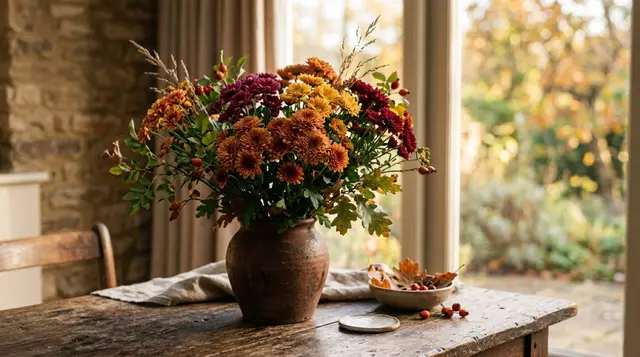
Set the basket on a waterproof tray, locate the inner container, and use a narrow-spouted jug or squeeze bottle to add water slowly at its edge. Pour in small amounts, pausing to check for pooling or leaks, and keep water off the basket itself. If you cannot see where the water will go, do not pour through the flowers blindly.
A flower basket is the outer presentation, so its appearance alone will not tell you how to water it. Inside, there may be water-holding floral foam in a lined tray, a removable vase, or another concealed vessel. Your first task is to identify that inner container without disturbing the stems; then you can add water where the arrangement actually needs it.
Find the water container before you pour
Place the basket somewhere bright enough to see between the stems. Gently move aside a loose leaf or the edge of decorative wrapping and look for a plastic rim, a vase opening, or a block of floral foam. Use a phone torch if the opening is shaded. Avoid pulling out a flower to make an access hole: you may disturb its position and still fail to find the container.
Check whether the container is supported securely inside the basket. A liner may sit below the visible rim, while decorative paper can conceal gaps around it. Neither paper nor the woven basket should be treated as a water reservoir. Identify an opening that leads inside the vessel, rather than a space between the vessel and the basket wall.
If everything is tightly covered, leave the arrangement assembled until you have clear care instructions. Do not cut a liner, pierce wrapping, or assume that a sponge-like material is intended to hold water. A photograph of the basket and the concealed base can help when asking for advice. Until the construction is clear, adding a large amount of water creates an avoidable risk of leakage.
Prepare a stable surface and a controlled pour
Move the basket to a level, water-resistant worktop and set it on a tray with a raised edge. Protect nearby electrical items and clear enough space to see the base. Keep the basket upright throughout the job; tilting it towards you can send water over a hidden rim before you notice. If it is awkward to lift, bring the tray and watering equipment to it instead.
Choose a small jug with a narrow spout or a clean squeeze bottle with a slim nozzle. Test the flow over a sink first: you want a gentle stream that stops promptly. Avoid containers previously used for cleaning products. An open drinking glass is harder to control when foliage blocks your view, and a full watering can adds unnecessary weight to a delicate task.
Part the foliage just enough to reach the opening and hold the spout above it without pressing against stems. Keep a cloth ready for stray drops, but use the tray to catch any unexpected runoff. Start with a small quantity in your pouring vessel so an accidental squeeze or slip cannot empty a large volume into the arrangement at once.
Bouquets we can deliver




Add water slowly to an arrangement in floral foam
If you have identified water-holding floral foam, direct a thin stream onto an exposed part of it within the liner. Add a little, pause, and watch what happens before adding more. Water should reach the foam without running over the outside of the tray. If the surface is hidden, do not use the flower heads as a funnel or pour across a broad area of foliage.
There is no useful universal measure such as one glass per basket: foam size, tray depth and the amount of water already present differ. Let the visible space in the inner container guide you. Stop if water begins to collect near its rim or remains pooled at the access point. Do not keep pouring to reach an assumed daily allowance.
Keep the foam and stems in place while you work. Squeezing the block, pushing a nozzle deep into it, or repeatedly removing stems can damage the support holding the design together. If the foam seems very dry but water runs straight into the basket, stop and check the liner and pouring route. More water will not solve a misplaced stream or a leaking container.
Handle a concealed vase or loose inner vessel
If the stems stand in a vase inside the basket, add water directly through the vase opening. Look for its actual water level and leave space below the rim so moving the basket does not immediately cause a spill. Pour along the inside wall where possible, keeping the spout clear of flowers and any decorative material tucked around the vessel.
Lift out the vase only if it is clearly designed to come out freely and you can support it securely. Stop if stems, ties or decorations connect it to the basket. A vessel that seems loose may still catch on the arrangement as you raise it. Never pull on flower stems or the basket handle to extract a hidden container.
When an accessible vase needs cleaning, support the flowers together while you empty and clean the vessel, then return them to fresh water. If the design is fixed in place, avoid tipping the whole basket to drain it. Our guide to changing vase water for cut flowers covers care for arrangements whose stems can be removed safely.
Check moisture regularly and respond to leaks
Check the arrangement when you receive it and then daily, using the same accessible opening. For a vase, inspect the water level; for foam, check the exposed surface gently with a clean fingertip as one clue to whether it is drying. Surface moisture alone cannot tell you the condition of the whole block, so combine that check with what you can see in the tray.
Keep the basket away from direct sun, heaters and strong draughts so it is easier to maintain steady care. Do not rely on misting the petals to supply water to the cut stems. If you use cut-flower food, follow its packet directions for the quantity of water you prepare. Avoid guessing a stronger concentration or adding household ingredients to a concealed reservoir.
If water appears beneath the basket, stop pouring and leave it on the waterproof tray. Blot the exterior, then check whether water missed the inner container or escaped from it. A wet decorative wrapper can hide the route of a leak. Do not wrap the base in a towel and return it to furniture while it is still leaking; the towel may simply conceal continuing moisture.
A drooping flower is a reason to inspect the water supply, not a reason to flood the basket. Check for an empty vessel, dry accessible foam or a stem that has shifted out of position. If the container is adequately supplied, further watering may only overflow it. Remove a visibly deteriorating flower only if you can do so without pulling apart the surrounding arrangement.
Make basket care easier when sending flowers to Russia
When you are ordering from abroad, ask about the construction and watering access of the arrangement you choose. You can start with our bouquets catalogue and contact a manager on WhatsApp for help choosing flowers, agreeing the address and delivery time, and arranging a photo before delivery. Use that conversation to clarify any care details you need to pass on.
Turboflora delivers flowers across Russia. City delivery costs 500 RUB; for remote districts and suburbs, the operator confirms the price when confirming the order. In large cities, express delivery is available within 1–2 hours after confirmation. You can also arrange an exact time within a ±30-minute margin, select a 09–12, 12–15, 15–18 or 18–21 window, or pre-order 1–30 days ahead.
A card with your text is free, so you can include a short reminder to check the inner container and add water carefully. Delivery is anonymous by default: the courier does not name the sender, so sign the card if you want the recipient to know who sent it. The courier calls the recipient about 15 minutes before arrival, which helps them prepare a suitable place for the flowers.
If the recipient is absent, we agree a second delivery the same day or, with the sender's consent, hand the flowers to a neighbour or concierge. Choose timing with the recipient's availability in mind so someone can receive and check the arrangement. Online checkout uses CloudPayments; check the payment options displayed there, as acceptance of every foreign card cannot be assumed. Check our delivery information; confirm the timing for your order.
Frequently asked questions
How much water should I add to a flower basket?
The amount depends on the inner container, the foam and how much water is already present. Add small amounts while watching the accessible area, and stop before water approaches the rim or pools without draining into the foam.
Can I water the basket without moving it?
Yes, if it is level and you can clearly reach the inner container. Put a waterproof tray beneath it first and use a narrow spout so you can control exactly where the water lands.
Should I spray the flowers instead of watering the foam?
Spraying petals does not replace supplying water to the cut stems. Add water to the identified foam or vase, keeping the stream inside its container.
What should I do if I cannot find an opening?
Look carefully between the stems with a torch, moving only loose foliage aside. If the construction remains unclear, ask for care guidance before cutting wrapping, removing stems or pouring water into a hidden space.
Can I put the whole basket in a sink of water?
Avoid immersing the whole basket: you cannot control where the water enters, and the decorative materials may become soaked. Water the inner container directly, with the basket upright on a waterproof tray.
Ready to send flowers?
Pick the city, choose the bouquet, and a local florist takes it from there.
Choose a city →