How Flower Delivery Works in Russia: A Step-by-Step Guide
You are sitting somewhere outside Russia, or maybe across town, and you want a stunning bouquet to arrive at a specific address within the next hour or two. It sounds like a lot to ask, but at Turboflora we do exactly this every single day. This guide walks you through every stage of the journey — from the tap of a button on our website to the moment a courier hands over flowers that still feel like they were cut this morning. No guesswork, no vague promises, just a clear picture of how the whole thing works.
Step One: Placing Your Order the Right Way
Everything begins on the Turboflora website. You choose your bouquet, enter the recipient's full address including the apartment number and entrance code if there is one, pick a delivery window, and leave a contact phone number for the recipient. That last detail matters more than most people realize. In Russia, residential buildings very commonly have a locked entrance door, called a podezd, with a keypad or intercom. Without a working phone number the courier simply cannot get inside the building, and the delivery stalls. We ask for the recipient's number not to spoil a surprise but to coordinate the final few metres of the journey discreetly.
When you write your personal message, keep it in the language the recipient reads comfortably. We print cards in Russian or English depending on what you type, and our team checks every message before it goes out to catch any formatting errors.
One common mistake is selecting same-day delivery without accounting for the time zone difference between your location and Saint Petersburg. Russia spans eleven time zones. Saint Petersburg runs on Moscow Time, which is UTC plus three, and there is no daylight saving adjustment. If you are ordering from Western Europe or the Americas, double-check the local Saint Petersburg time before choosing your slot. Our checkout clock displays the current Saint Petersburg time to help you get this right from the start.
Bouquets we can deliver

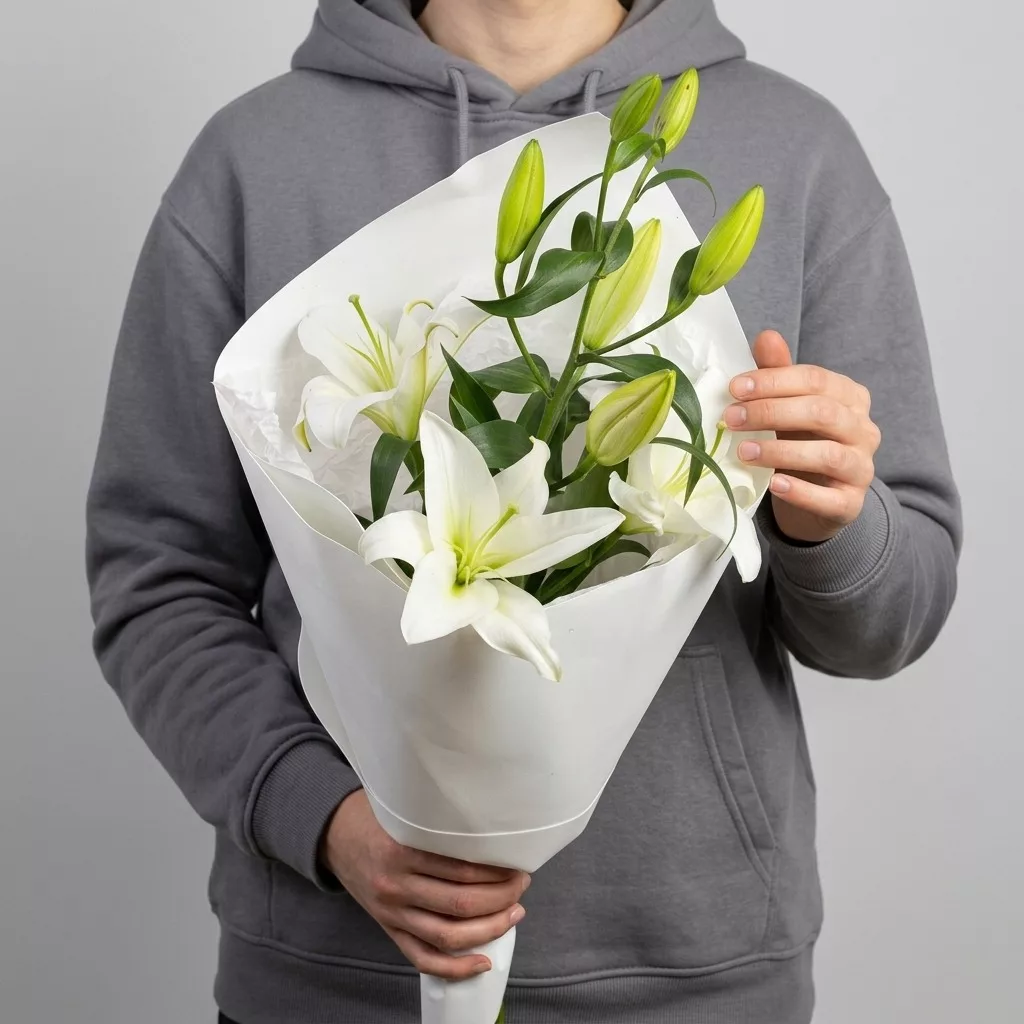
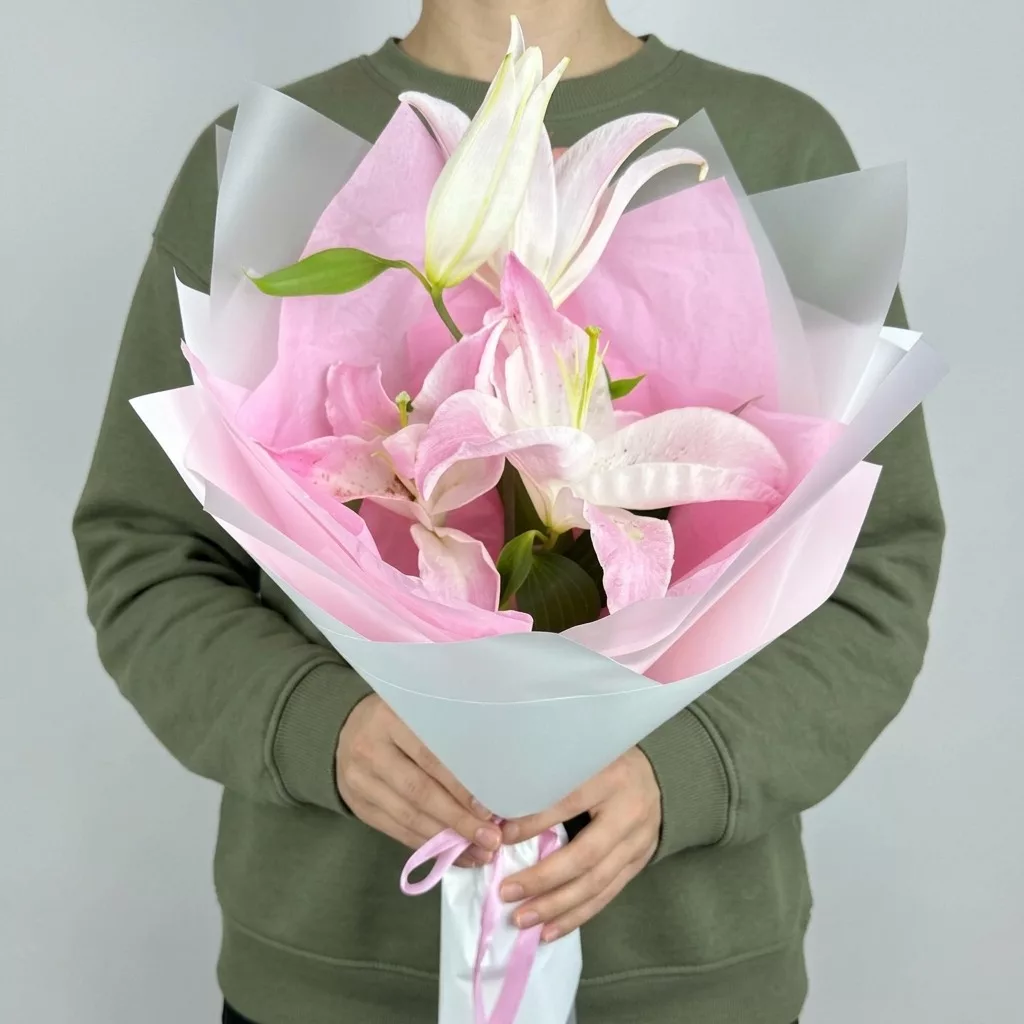

Step Two: How We Source and Store Our Flowers
Once your order is confirmed, it enters our internal workflow immediately. Unlike a marketplace that forwards requests to whoever is available, Turboflora works from its own inventory, which means we know exactly what is on hand and in what condition right now. Our flowers arrive several times a week from the main wholesale markets, including roses from Ecuador and Colombia, tulips and peonies from the Netherlands during their respective seasons, and spray chrysanthemums, alstroemeria, and lisianthus that travel well and hold their shape reliably through a Russian winter.
Storage temperature is critical. Cut roses, for example, need to be kept between two and five degrees Celsius to stay hydrated and firm. Tropical varieties like anthuriums prefer a slightly warmer range, around ten to twelve degrees, because cold shock causes blackening on the spathe. We maintain separate refrigerated zones for different flower families, and every stem is re-cut at an angle before it goes into water. This is not a decorative detail — a fresh diagonal cut exposes more xylem tissue and dramatically improves water uptake.
When your order is assigned to a florist, they pull the specific stems from refrigeration, assess each one individually, and discard anything that shows the earliest signs of wilting or bruising. You never see that quality check, but it is the reason the bouquet you receive looks the way it does. Russian winters are harsh, and a flower that looks fine indoors can deteriorate quickly if it has any weakness before it even leaves the building.
Step Three: The Art of Building the Bouquet
Bouquet assembly at Turboflora is not a mechanical process. Our florists are trained to read the composition as a whole — balance, colour temperature, stem height, and the way different textures interact. A classic round bouquet of garden roses paired with eucalyptus looks effortless, but it requires every rose to face outward at a consistent angle, which means rotating the bunch in the hand and adding each stem at a precise diagonal. This technique, sometimes called the spiral method, creates a stable structure that does not collapse when the wrapping is removed.
For larger arrangements that include ranunculus alongside standard roses, the florist must account for the fact that ranunculus heads are significantly lighter and will shift during transport if not anchored by sturdier neighbours. Gypsophila, which many people think of as mere filler, actually plays a structural role by cushioning fragile petals against vibration in the car.
Wrapping is the final act of assembly and the first thing the recipient sees. In Russian gifting culture, presentation carries real weight. A beautifully wrapped bouquet signals care and intention before a single petal is examined. We use kraft paper as the outer layer because it is breathable and does not trap humidity against the stems, which would accelerate bacterial growth. The inner layer is a soft sleeve that protects petals from the paper's texture. In winter, an additional insulating layer goes on outside to shield the flowers from temperatures that regularly fall below minus fifteen degrees Celsius in many Russian cities.
Step Four: The Logistics of Fast Delivery Across Russia
This is where the one-to-two-hour promise is either kept or broken, and we take it seriously. Turboflora operates its own courier fleet, which means we control the schedule, the vehicle condition, and the handling standards directly. Couriers carry flowers in insulated bags in winter and ventilated carriers in summer. The goal is to keep the bouquet within a stable temperature range throughout the journey, because a dramatic temperature swing — for instance, moving from a minus twenty exterior into a heated car and then back out again — stresses the flowers and shortens vase life noticeably.
For deliveries within Saint Petersburg, the routing is optimised around traffic patterns that our team knows well. The city's historic centre has narrow streets and restricted zones that can add significant time if not planned around. Couriers follow a specific protocol when they arrive: they call the recipient one to two minutes before reaching the entrance, which gives the person time to come downstairs or prepare the intercom without the courier standing in the cold.
For deliveries to other Russian cities, we work within zones where we can guarantee the same quality and timing standards. Russia is a vast country and conditions vary enormously — a summer delivery in Krasnodar operates very differently from a winter delivery in Novosibirsk, where outdoor temperatures can be extreme. Our team factors in seasonal conditions when confirming delivery windows, and if any adjustment is needed, we contact the sender directly before the order goes out rather than after.
Step Five: The Handover and What Happens at the Door
The moment of delivery is something we think about carefully, because it is the moment that matters most to the person receiving the flowers. Our couriers are instructed to be warm but efficient. They confirm the recipient's name, hand over the bouquet with both hands — this is a natural gesture of respect that feels right in Russian social contexts — and present the card separately so it does not get lost in the wrapping.
If the recipient is not home, which does happen, the courier calls the number on the order. We do not leave flowers outside a door unattended, because in winter the bouquet would be damaged within minutes, and in any season an unattended delivery feels impersonal. If contact cannot be made, we reach out to the sender to agree on a new delivery window. This adds time, which is why we always recommend confirming the recipient will be available, especially for surprise deliveries.
Some customers ask whether the recipient needs to sign anything. In Russia, flower deliveries do not require a formal signature the way a parcel service might. The handover is conversational and quick. The courier may briefly mention how to care for the flowers — trim the stems, change the water every two days, keep them away from direct sunlight and fruit bowls, because ethylene gas from ripening fruit accelerates petal drop in roses and tulips. This small piece of advice extends the life of the bouquet by several days and leaves a good final impression.
How to Make Sure Your Delivery Goes Perfectly
After thousands of deliveries, we have a clear picture of what separates a smooth order from a complicated one. The single most reliable predictor of a successful delivery is the accuracy of the address. Russia uses a specific address format: city, street, building number, sometimes a corpus or stroenie number for subdivisions of a large building, then apartment number. If any of these elements is missing or wrong, the courier loses time and the recipient loses patience. When in doubt, ask the recipient for their full address in Russian, copy it exactly, and paste it into the order form.
The second factor is timing. Same-day orders placed before midday have the highest success rate because they give the team full flexibility. Orders placed in the late evening for immediate delivery are possible but carry more risk of a narrow window. If the occasion is fixed — a birthday, an anniversary, a celebration — order the day before and schedule the delivery for the morning. Flowers arriving with the first hours of a special day make a stronger impression than flowers that race the clock.
Finally, trust the florist's seasonal expertise. If you order red peonies in December, we will tell you honestly that they are not available and suggest garden roses or ranunculus in similar tones. We would rather have that conversation upfront than substitute without telling you. The best bouquet is one that looks intentional and arrives in perfect condition, not one that matches a picture from six months ago. Seasonal flowers are also at their structural best, which means they last longer in the vase — a practical benefit on top of an aesthetic one.
Fresh flowers delivered in one to two hours is not a marketing claim — it is a chain of small, careful decisions made by real people at every stage, from the refrigerated storage room to the moment a courier stands at a door in any weather Russia offers. When you place an order with Turboflora, you are not setting off an automated process. You are working with a team of florists and couriers who care about what arrives and how it arrives. Get the address right, pick a realistic time window, and leave the rest to us.
Frequently asked questions
Can I order flower delivery to a Russian address from outside Russia?
Yes, absolutely. Our website accepts international orders and displays the current Saint Petersburg time during checkout so you can choose the right delivery window without confusion. Payment is processed securely online. The only thing you need is the recipient's full Russian address and a working local phone number for the courier to use on arrival.
What happens to the flowers if the weather is extremely cold?
Our couriers use insulated carriers specifically designed to protect flowers from temperature extremes. In severe frost, an additional outer wrap goes around the bouquet before it leaves our shop. We monitor conditions and adjust packaging accordingly. Most cut flowers tolerate brief cold exposure well when properly insulated, and the journey from courier bag to warm interior is kept as short as possible.
How long will the flowers last after delivery?
With proper care, most bouquets last five to eight days. Trim the stems diagonally by about two centimetres when you get home, change the water every two days, and keep the arrangement away from direct sunlight, heating vents, and fruit. Roses and tulips are particularly sensitive to ethylene gas from ripening fruit, so keep them in a separate room if possible.
Can I schedule a delivery for a specific time rather than a window?
We offer delivery windows rather than exact minute-by-minute slots because traffic and building access can shift timing slightly. However, you can leave a note specifying the preferred arrival time within your chosen window, and our team will do their best to honour it. For time-sensitive occasions like a morning birthday surprise, booking the earliest available window is the most reliable approach.
What if I am not sure which bouquet to choose?
Our product descriptions include the key flowers in each arrangement and the mood each one is designed to create. If you are still unsure, choose based on the recipient's favourite colour rather than specific variety — our florists build compositions that work as a whole. You can also leave a note at checkout describing the occasion and any preferences, and we will make sure the selection fits.
Ready to send flowers?
Pick the city, choose the bouquet, and a local florist takes it from there.
Choose a city →