How long do chrysanthemums last in a vase?
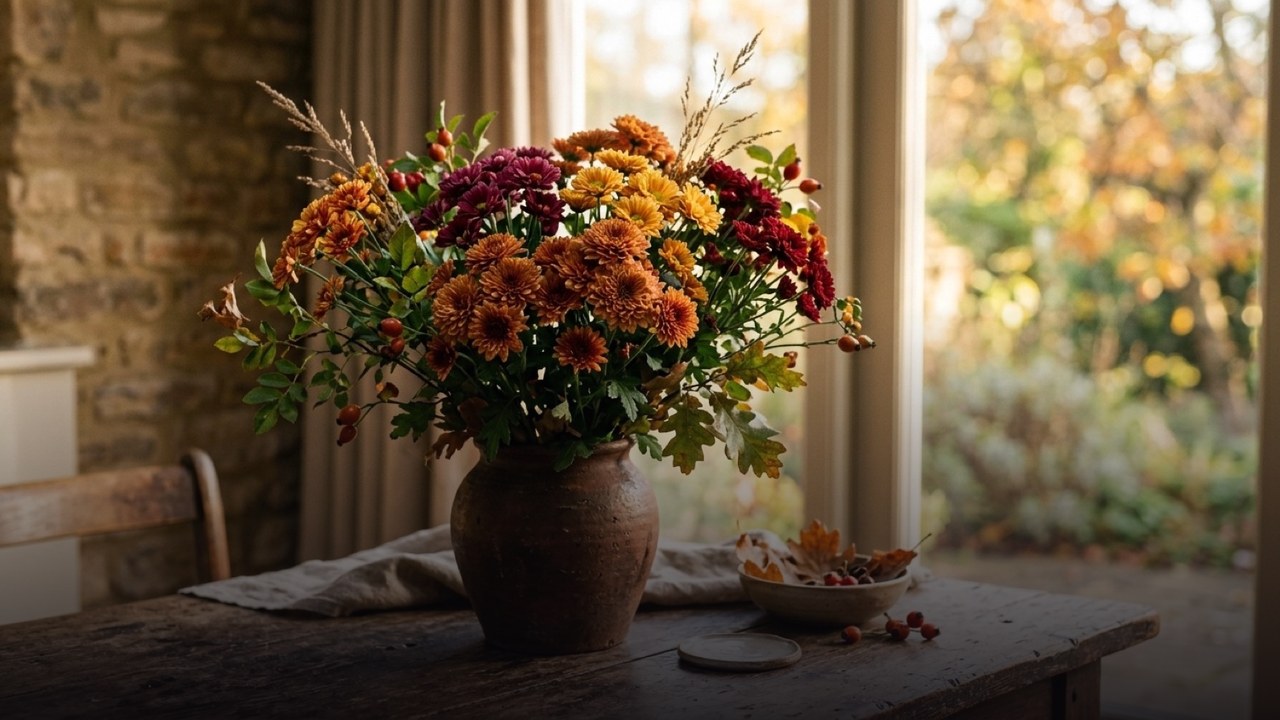
Cut chrysanthemums usually last about two to three weeks in a vase with good care, although some stems fade sooner. Their actual vase life depends on freshness when received, the variety, clean water and the conditions in your room. Treat that range as a useful expectation rather than a promise for every bouquet.
If you are choosing flowers for someone in Russia, chrysanthemums are a practical option when you want the gift to remain enjoyable beyond the day it arrives. The recipient can make a real difference with a clean vase, regular water changes and a sensible position indoors. Here is how to judge the flowers, care for them and plan a delivery that suits the person receiving them.
What determines how long your chrysanthemums last?
The clock does not start only when you put the bouquet in water. The stems' condition before arrival also affects how much vase life remains. Look for firm flowers, green foliage and stems without soft or slimy patches. Browning petals and yellowing leaves can indicate ageing or stress, though a single damaged outer petal does not tell you the condition of the whole bouquet.
Chrysanthemums come in different flower forms, from small blooms on branching stems to large individual heads. They will not necessarily age at the same pace, even within one arrangement. A mixed bouquet may also contain flowers that fade earlier. Remove those individually so you can keep enjoying the chrysanthemums without leaving deteriorating material in the vase.
For a useful comparison, note the date you receive the flowers and watch how they change in your own room. A bouquet beside a warm radiator may deteriorate faster than one in a cooler position. If you mean a chrysanthemum growing in a pot or garden, the two-to-three-week estimate is not its overall lifespan: a living plant and a cut stem need different care.
Give the stems a clean start on arrival
Prepare the vase before unwrapping the bouquet. Wash it with washing-up liquid, scrub away any residue and rinse thoroughly; simply topping up old vase water leaves contamination behind. Choose a vase that supports the stems without crushing them together. Our guide to cleaning a vase between bouquets explains how to reach the deposits that collect around the waterline.
Remove transport wrapping as needed to let you inspect the stems and arrange them freely. Strip off any leaves that would sit below the waterline, while keeping healthy foliage above it. Submerged leaves decay and make the water dirty. Check the final arrangement from the side as well as above, because low leaves can slip into the water as stems settle.
Using a clean, sharp tool, cut roughly one to two centimetres from each stem and place the flowers promptly into fresh water. Avoid crushing the stem ends with blunt scissors or hammering them. If flower food is supplied, follow the packet's dilution instructions carefully. Do not assume that a stronger mixture will work better, or substitute an improvised mixture of household products.
Bouquets we can deliver




Make water care a small, regular habit
Check the water level every day, especially when several stems share a vase. The cut ends must stay submerged, and a tall or opaque vase can hide a surprisingly low level. Add fresh water when needed, but distinguish topping up from cleaning: extra water does not remove the residue, fallen leaves or deteriorating plant tissue already inside.
A practical starting routine is to replace the water every two days, sooner if it becomes cloudy or smells unpleasant. Lift the flowers out, empty and wash the vase, rinse it well and refill it. If you are using flower food, prepare the fresh solution according to its instructions. Our vase water change guide can help you establish a manageable routine.
While the stems are out, inspect their lower ends and remove any loose foliage. A small fresh cut can help when the ends have dried or become discoloured, but repeatedly cutting off large lengths will soon make the arrangement too short. Keep the process gentle: hold the stems together loosely and avoid pulling branching chrysanthemums through a tight vase neck.
Choose a position that slows drying and fading
Keep your vase in a comfortably cool part of the room, away from direct sun, radiators and other sources of heat. A bright windowsill can become warm even when the rest of the room feels mild. Cut flowers do not need a sunny position to keep growing as a potted plant would; protecting their remaining freshness is the priority.
Avoid placing the bouquet directly in the airflow from a heater, air conditioner or fan. Moving air can dry petals and foliage, while an unstable spot near a frequently opened door makes the arrangement easier to knock over. A table or sideboard with enough space around the flower heads is usually easier to manage than a narrow, crowded ledge.
If the bouquet is intended for a desk or bedside table, check what is actually beside that spot before leaving it there. A lamp that gives off heat or a radiator beneath the table may matter more than how attractive the setting looks. For more placement advice, read where a bouquet lasts longest.
Know when to tidy, refresh or remove a flower
A few fading leaves do not automatically mean every flower is finished. Remove yellowing foliage and inspect each stem separately. On branching chrysanthemums, you can snip off an individual spent bloom while leaving healthy flowers in place. This keeps the arrangement presentable and prevents loose petals from collecting in the water or between neighbouring stems.
If a stem droops, first check the water level, the cleanliness of the vase and whether its cut end has stayed submerged. Refresh the water, make a small clean cut and move the bouquet away from heat. These steps may help a stem affected by poor water uptake, but they cannot reliably reverse ageing or restore petals that have become dry and brown.
Discard a stem when it becomes soft or slimy, develops an unpleasant smell or has flowers that are clearly collapsing. As the bouquet becomes smaller, transfer the remaining healthy stems to a clean, narrower vase so they still have support. You do not need to discard a whole arrangement simply because its first flower has faded.
Choose thoughtfully and arrange delivery in Russia
Long vase life is useful, but the recipient's preferences should lead your choice. Chrysanthemum meanings vary between countries and families, so avoid assuming that one colour carries a universal message. For a celebration in Russia, an odd number of stems is customary when the stems are counted individually; even numbers are traditionally associated with mourning. With branching flowers, discuss the intended occasion and overall arrangement.
Start with the bouquets catalogue, then contact a manager on WhatsApp for help choosing a bouquet and agreeing the address, delivery time and card text. You can also arrange a photo of the bouquet before delivery. Tell the manager the occasion and any known flower or colour preferences; a specific brief is more helpful than assuming the recipient shares a general flower symbolism.
We deliver across Russia. City delivery costs 500 RUB; for remote districts and suburbs, the operator confirms the price when confirming the order. Express delivery in large cities is available in one to two hours after order confirmation. You can also arrange an exact time with a tolerance of plus or minus 30 minutes, choose a 09–12, 12–15, 15–18 or 18–21 window, or pre-order one to 30 days ahead.
Choose a time when the recipient can receive the flowers and put them in water. The courier calls about 15 minutes before arrival. If the recipient is absent, we agree a second delivery the same day or, with the sender's consent, hand the flowers to a neighbour or concierge. Delivery is anonymous by default, and a card with your text is free. Checkout uses CloudPayments; check the payment options displayed there rather than assuming every foreign card will be accepted. We deliver bouquets across Russia in 1–2 hours.
Frequently asked questions
Can cut chrysanthemums last longer than three weeks?
Some stems may remain attractive longer, but two to three weeks is a more useful general expectation with good care. Judge them by firm flowers, healthy stems and clean water rather than keeping them for a fixed number of days.
How often should I change chrysanthemum vase water?
Start by changing it every two days, and do it sooner if the water becomes cloudy or smells unpleasant. Check the level daily and wash the vase during each full water change.
Do chrysanthemums need sunlight in a vase?
Cut chrysanthemums do not need direct sunlight. Keep them away from hot windowsills and radiators, where warmth can speed drying and fading.
Should I remove chrysanthemums when other flowers fade?
Remove the faded flowers individually and keep any healthy chrysanthemums. Wash the vase and refresh the water, then use a smaller vase if the remaining stems need more support.
Can I send chrysanthemums to Russia from abroad?
You can arrange flower delivery across Russia and ask a manager to help with the bouquet, address, timing and card text. Online checkout uses CloudPayments; check the available options at checkout because acceptance of every foreign card is not guaranteed.
Ready to send flowers?
Pick the city, choose the bouquet, and a local florist takes it from there.
Choose a city →