How Long Do Roses Last, and What Helps Them Stay Fresh?
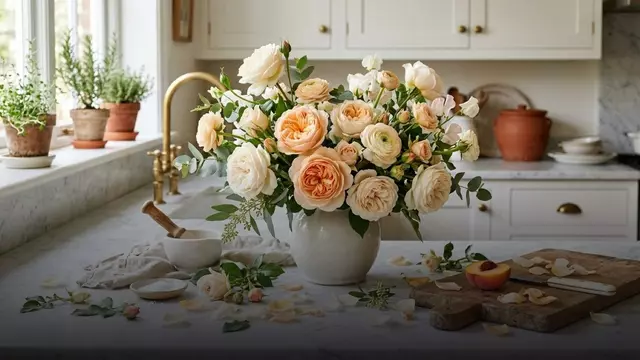
Cut roses usually last about five to seven days in a vase, although some remain attractive for ten days or longer with good care. Their actual lifespan depends on the variety, their condition when you receive them and the environment in your room. Treat these ranges as a guide rather than a promise for an individual bouquet.
The most useful question is how many days your roses will look good where you plan to display them. A bouquet beside a sunny window may fade sooner than one in a cooler spot, even if both arrive equally fresh. Here is how to judge their condition, set them up properly and choose a sensible delivery time when you are sending roses as a gift.
What determines how long a rose bouquet lasts?
A rose continues to change after cutting: its petals open, its stem takes up water and the flower gradually ages. Varieties differ in how quickly they open and how well their petals hold. A large flower head or a long stem does not, by itself, tell you how many days the rose will last, so avoid judging longevity from size alone.
The stage of opening matters, too. A partly open rose has a different appearance from a tightly closed bud, but neither is a reliable freshness certificate. Some very tight buds never open fully. Look at the whole flower instead: petals should hold their shape, foliage should look reasonably firm and the stem should support the head without a pronounced droop.
Care before the bouquet reaches you also affects its remaining vase life, and you cannot reconstruct that history from a photograph. Once the roses arrive, focus on what you can control: a clean vase, prompt access to water and a suitable position. These steps give the flowers a better chance of developing normally without implying that every stem will last equally long.
The first hour: give your roses a clean start
Prepare the vase before arranging the bouquet. Wash it with washing-up liquid, rinse it thoroughly and fill it with fresh water. Use a vase that supports the stems without squeezing them tightly together. If the bouquet includes flower food, follow the packet instructions for the amount of water; a stronger mixture is not a shortcut to longer-lasting flowers.
Remove any leaves that would sit below the waterline. Submerged foliage breaks down and makes it harder to keep the water clean. Keep healthy leaves higher on the stems, and avoid stripping the bouquet unnecessarily. Loosen any wrapping that prevents you from placing the stems properly in water, while preserving the arrangement where practical.
With a clean, sharp tool, trim roughly one to two centimetres from each stem at an angle, then place the roses in water promptly. Make a clean cut rather than crushing or splitting the stem ends. If you need a more detailed routine, our guide to making roses last longer takes you through everyday vase care.
Bouquets we can deliver




Daily care that makes a practical difference
Check the water level every day, especially during the first couple of days, when a full bouquet may use more than you expect. Keep the cut ends submerged. Replace the water regularly, and do it straight away if it becomes cloudy or develops a smell. Rinse the vase and remove debris rather than repeatedly adding fresh water to a dirty container.
Choose a display position away from direct sunlight, radiators and other sources of heat. Avoid placing the vase directly in the path of a heater or air-conditioning outlet. You do not need to chase a precise household temperature: a comfortably cool, sheltered position is a useful starting point. Keep the bouquet away from ripening fruit as well.
Remove fallen leaves and petals before they collect in the water. When changing the water, inspect the stem ends and give them a small fresh trim if needed. Use flower food as directed if you have it; otherwise, concentrate on cleanliness and fresh water. Adding improvised mixtures of sugar, alcohol or household cleaners introduces unnecessary uncertainty into a simple care routine.
Opening, wilting and bent necks: what the signs mean
Opening is part of a rose's development, so a wider bloom is not automatically a failing bloom. Watch for changes in texture and support instead. Softening petals, increasing discolouration and a flower head that no longer holds itself up are more useful signs of decline. A bouquet may age unevenly, with some roses remaining presentable after others need removing.
A bent neck can indicate difficulty taking up enough water, but it does not tell you the cause with certainty. Start by cleaning the vase, replacing the water, removing submerged leaves and recutting the affected stem. Return it to water promptly and keep it out of heat. These measures may help a dehydrated rose, but they cannot reverse every kind of damage.
Avoid boiling water, forceful handling or elaborate rescue methods as your first response. Petals are delicate, and repeated manipulation can make the flower look worse. For a fuller explanation, see our guide to roses with bent necks. If one stem continues to deteriorate, remove it and rearrange the remaining healthy flowers in a smaller vase.
When should you have gift roses delivered?
For a birthday, anniversary or dinner, delivery on the day usually lets the recipient enjoy the bouquet at the intended moment. If you need roses for a display several days later, allow for the fact that their opening speed and remaining vase life vary. Do not build an important occasion around the assumption that every rose will still look its best after a full week.
Think about the recipient's routine as well as the occasion. Flowers need someone who can receive them and put them in water, so a convenient delivery window is more useful than a surprise that leaves the bouquet unattended. If the roses are intended for an office, consider whether the recipient will be able to take them home and care for them afterwards.
For a gift in Russia, you can arrange express delivery in large cities one to two hours after the order is confirmed, or choose an exact time with a tolerance of plus or minus 30 minutes. Available windows are 09–12, 12–15, 15–18 and 18–21; you can also pre-order one to 30 days ahead. Choose the option that fits the recipient's plans rather than treating speed as the only priority.
Sending roses to Russia from abroad
We deliver flowers across Russia. Start with the bouquets catalogue, then check the delivery address, local date and suitable time for your recipient. City delivery costs 500 RUB; for remote districts and suburbs, the operator confirms the price when confirming the order. The delivery and payment page is a useful place to review the arrangements before checkout.
Contact a manager on WhatsApp for help choosing a bouquet and agreeing the time, address and card text, or to arrange a photo of the bouquet before delivery. A card with your text is free. Delivery is anonymous by default because the courier does not name the sender, so sign the card if you want the recipient to know who sent the flowers.
The courier calls the recipient about 15 minutes before arrival. If the recipient is absent, we agree a second delivery the same day or, with your consent, hand the flowers to a neighbour or concierge. Online checkout uses CloudPayments: check the payment options displayed there, since acceptance of every foreign card cannot be assumed. Once the bouquet arrives, a brief reminder to put it in fresh water can help the recipient enjoy it.
Frequently asked questions
Can cut roses last two weeks?
Some roses can remain attractive for close to two weeks under favourable conditions, but that is not a dependable lifespan for every bouquet. Plan around roughly a week and use the flowers' actual condition to judge how they are doing.
How long do roses last without water?
There is no reliable universal limit because heat, airflow and the flowers' starting condition all matter. Keep time out of water as short as possible and put the stems into a prepared vase promptly.
Should I spray rose petals with water?
Routine misting is unnecessary for vase care and can leave petals damp or marked. Focus on clean water around the cut stem ends and a position away from heat.
Do tightly closed roses always last longer?
No: a tight bud does not guarantee a longer vase life, and some buds may not open fully. Assess the firmness of the flower, the condition of the foliage and whether the stem supports the head.
Should I remove a rose as soon as it starts fading?
Remove a stem when it is visibly deteriorating, shedding heavily or developing mould. You can keep enjoying the healthy roses and move them to a smaller vase as the bouquet becomes less full.
Ready to send flowers?
Pick the city, choose the bouquet, and a local florist takes it from there.
Choose a city →