How long do cut flowers usually last?
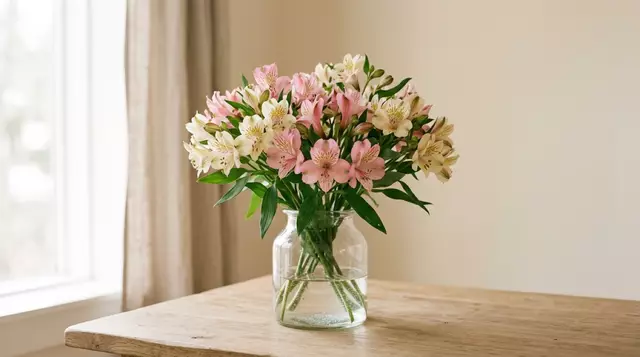
If you mean cut flowers in a vase, most bouquets usually last about 5–10 days with sensible care. Some flowers fade sooner, while carnations and chrysanthemums can last two weeks or longer; these are useful expectations, not a guarantee for an individual bouquet. The flower variety, its condition when it reaches you and the way you care for it all affect the result.
A bouquet also changes gradually: a tight bud may open while another stem begins to fade, so its useful life is not a single fixed number. If you are sending flowers to someone in Russia from abroad, think about both the occasion and what happens after delivery. Choosing suitable flowers, arranging a convenient arrival and helping the recipient get them into water all contribute to a gift they can enjoy for longer.
What lifespan should you expect from different flowers?
As a practical guide, roses often give you about 5–10 days, tulips roughly 5–7 days and gerberas around 5–10 days in a vase. Carnations and chrysanthemums commonly last 10–14 days, sometimes longer. These ranges overlap because variety, maturity, handling and room conditions matter. A flower that is still attractive after its usual range has simply outlasted the estimate; there is no need to discard it.
In a mixed bouquet, expect different stems to finish at different times. Removing a faded rose does not mean the whole arrangement is finished: the greenery and longer-lasting flowers may still look good in a smaller vase. If longevity is your main priority, choose with that in mind rather than assuming every large bouquet will last longer than a small one. More stems change the display, not the lifespan of each bloom.
Bud stage needs a little judgement, too. An open flower can make an immediate impression, while a developing bud may provide more change over the following days. However, a tightly closed bud is not proof that it will open successfully. For rose-specific expectations, our guide to rose vase life explains how to assess the flowers as they develop.
The first hour at home: give the stems a clean start
Prepare the vase before you unwrap the bouquet. Wash it with detergent, rinse it thoroughly and use fresh water; topping up water left from an earlier arrangement carries old debris into the new one. Choose a vase that supports the stems without crushing them together. The opening should leave enough space for you to check the water and remove an individual stem when necessary.
Remove any leaves that would sit below the waterline, then trim a small amount from each stem with a clean, sharp tool. Aim for a clean cut rather than a crushed end, and put the stems into water promptly. Keep decorative wrapping clear of the water. If the bouquet is tightly tied and the stems cannot sit naturally in your vase, carefully loosen the tie without pulling on the flower heads.
If flower food comes with the bouquet, follow the packet's dilution instructions rather than guessing or adding extra powder. Plain fresh water is preferable to an improvised mixture of sugar, household cleaners or drinks. An arrangement set in floral foam needs a different approach: leave the stems in place and carefully replenish the foam's moisture instead of treating it as a loose bouquet for a vase.
Bouquets we can deliver




A short daily routine makes the biggest practical difference
Check the water level every day, especially at the start, when a full bouquet may drink more than you expect. Make sure the cut ends remain submerged; a tall vase can look full from across the room while several shorter stems are above the water. Replace the water every couple of days, or sooner if it becomes cloudy, smells unpleasant or contains fallen petals and leaves.
During a water change, rinse the vase and inspect the stems. Remove submerged leaf fragments and any soft or decaying material, then make a fresh cut where the stem ends have deteriorated. Handle the arrangement by its stems rather than gripping the blooms. Our guide to changing vase water gives you a practical schedule to adapt to your bouquet.
Take out spent flowers as they fade instead of waiting until the whole arrangement looks tired. A few loose outer petals do not necessarily mean a rose is finished, but extensive browning, a soft stem or mould are reasons to remove it. As the bouquet gets smaller, move the healthy stems to a clean, narrower vase. This supports them properly and makes the remaining flowers easier to arrange.
Where you put the bouquet affects how long it looks fresh
Choose a place away from direct sunlight, radiators, heaters and the warm air from cooking appliances. Cut flowers do not need a sunny windowsill in the way a growing houseplant might. A bright room is fine, but a patch of strong sun can warm both flowers and water. A side table out of the sun is often a more useful choice than the most prominent windowsill.
Keep the bouquet away from a fruit bowl, particularly ripening fruit, which releases ethylene that can hasten ageing in sensitive flowers. Avoid placing the arrangement directly in the airflow from heating or air conditioning, too. You do not need to turn your home into a flower-storage room: the aim is a stable spot where the bouquet avoids unnecessary heat, drying airflow and accidental knocks.
In Russia, the room may be warm from indoor heating even when the weather outside is cold. Do not use an open balcony or outdoor windowsill as a shortcut to keeping flowers cool; the conditions may be unsuitable for the particular blooms. A household fridge is not a universal solution either, especially when it contains fruit. If the usual display spot is hot, move the vase to a cooler suitable room.
Time the gift for the person who will receive it
For a birthday, anniversary or thank-you, delivery on the occasion itself gives the recipient the chance to enjoy the bouquet from the beginning. If the flowers are intended for a dinner or gathering, allow time beforehand to unwrap them, find a vase and arrange them. Do not rely on closed buds opening by a particular hour: flowers develop at different rates, even within the same bouquet.
For a personal gift in Russia, an odd number of stems is the customary choice when the stems are counted; even numbers are traditionally associated with mourning. Meaning also depends on your relationship and the message you include. If you are unsure whether a bouquet could feel too romantic or too formal, a short card that clearly says why you are sending it is more helpful than relying on flower symbolism alone.
When ordering from another country, confirm the delivery date and time in the recipient's city rather than using your own time zone. Turboflora offers express delivery in large cities within 1–2 hours after order confirmation, an exact time within a tolerance of plus or minus 30 minutes, or windows of 09–12, 12–15, 15–18 and 18–21. You can also pre-order 1–30 days ahead; agree the timing that fits the recipient's plans.
How to arrange flower delivery in Russia from abroad
Start with the bouquets catalogue, then consider the recipient's preferences and whether they will have time to care for the flowers. We deliver across Russia. City delivery costs 500 RUB; for remote districts and suburbs, the operator confirms the delivery price when confirming the order. If long vase life matters more than a particular flower, tell the manager so that preference can guide your choice.
Contact a manager on WhatsApp for help choosing a bouquet and agreeing the delivery time, address and card text, or to arrange a photo of the bouquet before delivery. A card with your text is free. Delivery is anonymous by default: the courier does not name the sender, so include your name in the card if you want the recipient to know who sent the flowers.
The courier calls the recipient about 15 minutes before arrival. If they are absent, we agree a second delivery that day or, with the sender's consent, handing the flowers to a neighbour or concierge. Online checkout uses CloudPayments; check the payment options displayed there, as acceptance of every foreign card cannot be guaranteed. After arrival, the most useful next step is straightforward: get the flowers into a clean vase with fresh water. Availability and timing of delivery across Russia are confirmed for the chosen city, address, date and bouquet.
Frequently asked questions
How long do flowers usually last without water?
There is no dependable number of hours for every bouquet: the flower type, heat and handling all matter. Keep time without water as short as possible, and place the stems in fresh water promptly when they arrive.
Should I throw away a bouquet after a week?
Use its condition rather than the calendar. Remove flowers with decay or mould, then keep healthy stems in a clean vase with fresh water for as long as they remain attractive.
Can a drooping flower recover?
Sometimes, if poor water uptake is the cause: a clean vase, fresh water and a fresh stem cut may help. Recovery is less likely when the stem is damaged or the flower is already deteriorating.
Do flowers need sunlight to last longer?
Cut flowers do not need direct sunlight to stay fresh in a vase. Keep them out of strong sun and away from heat sources, and check their water daily.
Can I order flowers to Russia using a foreign card?
Online checkout uses CloudPayments, and you should check the options displayed at checkout. Acceptance of every foreign card is not guaranteed.
Ready to send flowers?
Pick the city, choose the bouquet, and a local florist takes it from there.
Choose a city →