How to Hydrate Cut Amaryllis So Stems Stay Stable
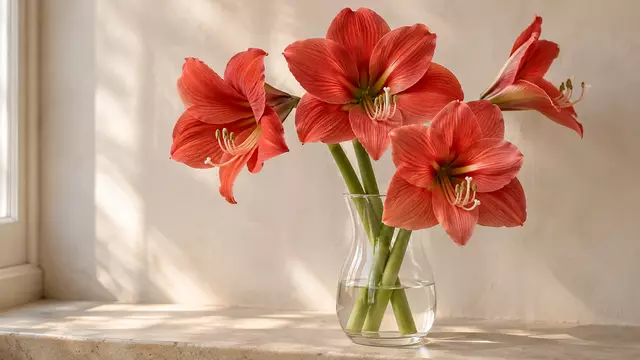
To hydrate cut amaryllis, trim the stem bases with a clean, sharp blade and place them promptly in a clean vase with about 5–8 cm of fresh, room-temperature water. Choose a heavy vase whose neck supports the stems, and check the water daily so every cut end stays submerged. Hydration and physical support work together: water alone cannot keep a tall, top-heavy stem upright.
Amaryllis stems are hollow and can crease under the weight of opening flowers. Once your bouquet is indoors, the practical decisions are how much stem to leave unsupported, how to keep the bases drinking and whether a leaning stem is still firm enough to support.
Trim gently and put the stems straight into water
Wash the vase thoroughly and rinse away detergent. With a clean, sharp knife or suitable flower snips, remove a small section from each stem base, cutting back to firm tissue. Support the stem while cutting so you do not crush its hollow walls.
Place the freshly cut ends in water immediately. If you use cut-flower food, follow the packet’s dilution instructions; adding extra concentrate does not improve hydration. For general cutting technique, see our guide to trimming cut-flower stems.
Use shallow water and check that every stem can reach it
Start with about 5–8 cm of water, keeping the cut ends submerged without soaking a long section of stem. Check the level each day and replenish it as needed. Replace the water and rinse the vase if the water becomes cloudy or the stem bases feel slippery.
In a mixed bouquet, check the shortest stems as well as the amaryllis. If shallow water leaves another flower’s cut end dry, adjust the arrangement or place the amaryllis in a separate supporting vase. Do not preserve a particular water depth at the expense of leaving stems out of water.
Bouquets we can deliver

Let the vase carry the weight
Choose a vase with a broad, heavy base and a neck that loosely gathers the stems. A tall, wide-open container may hold plenty of water while giving little support. Avoid wedging stems tightly into a narrow opening, which can compress them.
If the flower heads pull the arrangement sideways, shorten the stems gradually and rebalance their positions. Allow room for the blooms to open, and keep the vase away from busy edges where a projecting flower could be knocked.
Keep the arrangement away from radiators and direct sun. Check its balance again as the flowers open: the support that worked for closed buds may need adjusting.
Respond differently to leaning, splitting and softening
A firm stem that leans usually needs better support or less height above the vase. A split confined to the cut base can be trimmed away if enough healthy stem remains; return the new cut end to water promptly.
A soft, collapsed or sharply creased section will not regain structural strength simply by adding more water. If practical, cut above the damaged area and display the shortened stem in a smaller vase. Remove stems with extensive decay.
Sending flowers to someone in Russia
Turboflora delivers flowers across Russia. You can contact a manager on WhatsApp for help choosing a bouquet and agreeing the delivery time, address and free card text. A short care note can remind the recipient to use a supportive vase and check that the stem ends stay in water.
Frequently asked questions
Should I fill the hollow amaryllis stems with water?
For routine vase care, place freshly trimmed stem bases in clean water; you do not need to fill the hollow centres. Focus on keeping the cut ends submerged and supporting the stems without squeezing them.
Should I keep adding water if an amaryllis droops?
First check whether the cut end is submerged and the stem is firm. Restore the water level if it is low, but use better vase support or shorten the stem if the problem is bending under the flower’s weight.
Ready to send flowers?
Pick the city, choose the bouquet, and a local florist takes it from there.
Choose a city →