Flowers Just Arrived? Here Is How to Check They Are Truly Fresh
A bouquet lands at your door and it looks beautiful in its wrapping. But beauty through cellophane can be deceiving, and the first hour after delivery is the most important window you have for spotting any quality issues before you put the flowers in water and the moment passes. This guide walks you through exactly what to look at, touch, and even smell — so you can feel confident about what you have received and, if anything is wrong, flag it straight away while the evidence is still clear.
Start With the Packaging Before You Even Unwrap
The condition of the packaging tells a story before a single petal is visible. A well-prepared bouquet should feel cool or at least room-temperature to the touch, never warm. Warmth inside the wrapping means the flowers have been sitting in a heated space — a car boot, a warm hallway, or a dispatch area with no refrigeration — for longer than they should. Roses, peonies, and tulips are especially sensitive to heat and begin to deteriorate quickly once they leave the cool chain.
Look at the base of the wrapping. If there is a water sachet or damp foam attached to the stems, check whether it still holds moisture. A dry sachet on a bouquet that has supposedly just been delivered is a warning sign that transit took much longer than the stated window. The sachet does not need to be soaking, but it should not be bone dry either.
Check the outer wrapping for any dark wet patches. A small amount of condensation on the inside of the film is actually a good sign — it means the flowers were cold when wrapped. But large soggy patches on the outside suggest the bouquet was left somewhere damp or that water has been leaking for hours. Also notice whether the ribbon or decorative elements are crushed flat. Careful handling during delivery keeps the presentation intact, and a severely flattened bow often means the bouquet was placed under other items during transit.
Bouquets we can deliver

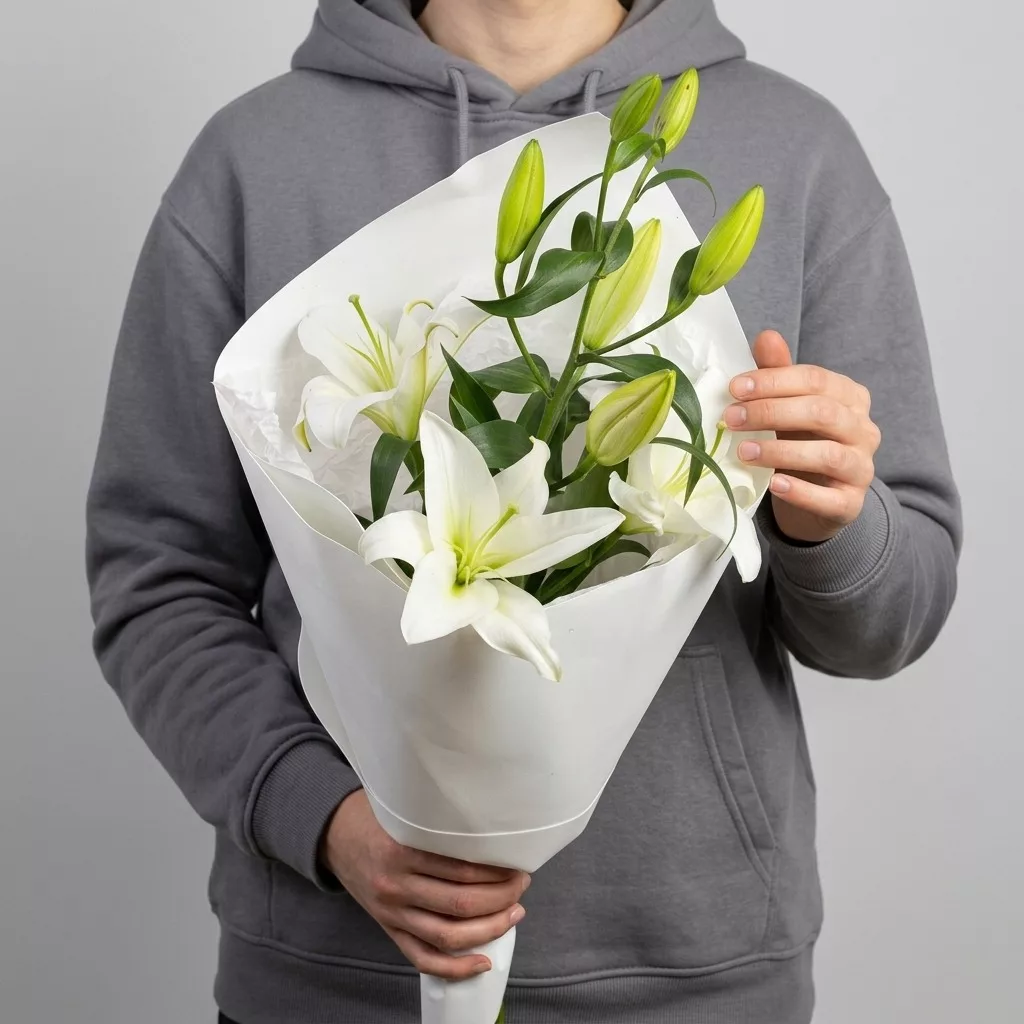
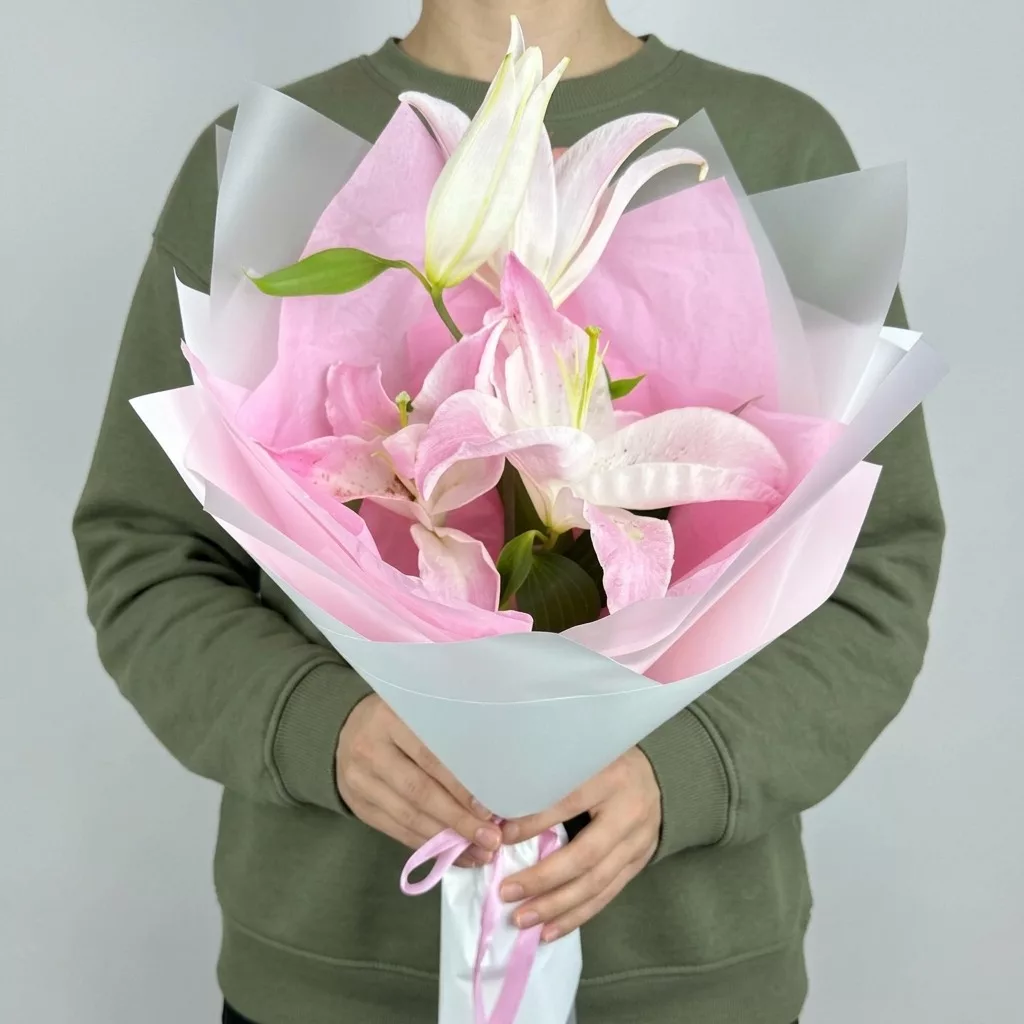

Reading the Petals — Colour, Texture, and the Edges
Once the wrapping is off, move to a window or a well-lit spot and look at the petals directly. Fresh petals have a certain luminosity — they catch light evenly and the colour is saturated right to the outer edge. On roses, that edge is the first place to check. A fresh rose has crisp, slightly firm outer petals with no translucency. If the very rim of a petal looks water-soaked, almost glassy, the cell structure has already begun to break down. This is called petal burn and it happens when flowers are exposed to ethylene gas, extreme temperature swings, or simply age.
On tulips, look at the base of each petal where it meets the stem. Browning or softening there, while the tip looks fine, often means the flower is further along than it should be. Tulips open fast at room temperature — a bud that is entirely closed is not necessarily ideal, but it is far preferable to one that is already fully open and floppy on arrival.
For spray varieties like alstroemeria or lisianthus, check the smallest, newest buds in the cluster. On a fresh stem, those tiny buds are firm and coloured but still closed. If they have already opened fully or, worse, if they have dropped, the stem is past its best. Chrysanthemums are more forgiving, but even they should have a firm, slightly waxy feel to the petals rather than a papery or limp texture. Run your fingertip very lightly across the surface — fresh petals feel almost taut.
Inspecting the Stems — The Most Reliable Freshness Signal
The stem is where freshness is hardest to fake and easiest to read once you know what you are looking for. Pick up the bouquet and look at the cut ends. A freshly cut stem should show a clean, pale cross-section — white or light green depending on the variety. If the cut end is brown, black, or has a slimy film on it, the stem has not been re-cut recently and bacterial growth has already begun blocking water uptake. This matters enormously because a stem that cannot drink will wilt within hours regardless of how the flower looked on arrival.
Smell the cut ends gently. Fresh stems smell green and slightly vegetal, like a garden after rain. A sour or sulphurous smell means the water the stems sat in was not changed regularly, and bacterial colonies have built up. This is one of the clearest signs of poor storage conditions before delivery.
Feel along the length of the stem. It should be firm and slightly rigid. A stem that bends easily or feels hollow has already lost significant moisture. On roses specifically, press the area just below the head — the neck. It should feel solid. A soft or bent neck, sometimes called a broken neck, means the rose is severely dehydrated and will droop within a day even if you re-cut and water it immediately. Lilies and gerberas are also worth squeezing gently at the base of the head. Firmness there signals that the flower has been properly hydrated throughout its journey to you.
What the Leaves Tell You About Storage Conditions
Leaves are often overlooked because the flowers themselves draw all the attention, but they are excellent indicators of how the bouquet was stored and handled before it reached you. Fresh foliage — whether the natural leaves on roses, the flat leaves of a lily stem, or decorative greenery like eucalyptus or ruscus — should be deep green and slightly glossy. Hold a leaf between two fingers and press gently. It should feel firm and slightly cool, with a little resistance. A leaf that crumples or tears without resistance has already lost its cellular moisture.
Yellow leaves on arrival are a significant concern. Some yellowing on the very lowest leaves, which are often removed before arrangement anyway, can happen during transit if those leaves were sitting in water. But yellowing on leaves higher up the stem points to ethylene exposure, chilling injury from temperatures below two degrees Celsius, or simply age. Roses and carnations are particularly sensitive to ethylene, which is produced by ripening fruit — so a bouquet that spent time near a fruit display during storage will show yellowing leaves faster than one that was kept in a dedicated flower refrigerator.
Black tips on eucalyptus or browning on the edges of broad lily leaves can indicate frost damage. This is relevant in Russian winters when bouquets travel between heated buildings and outdoor temperatures that can drop well below zero. A reputable delivery operation wraps stems and keeps the vehicle climate-controlled, but it is worth checking for these frost signals when flowers arrive during cold weather. Spotty or mottled patterns on leaves can indicate fungal issues, which spread quickly to petals in a vase.
Pollen, Fragrance, and the Small Details That Confirm Quality
Pollen is a surprisingly useful freshness indicator on certain varieties. On oriental lilies — the large, intensely fragrant ones — the anthers, which are the pollen-bearing tips on the stamens, should be closed or just beginning to open on a fresh flower. When they are fully open and dusting orange or brown pollen freely, the lily is at or past peak bloom. This does not mean the flower is bad, but it does mean it will not last as long in the vase. For gifting purposes, a lily that arrives with closed anthers is the ideal: it will open beautifully over the following days.
Fragrance is another honest signal. Roses bred for fragrance — David Austin varieties are the most well-known example — should smell distinctly of themselves when you bring the head close. A rose that has no scent at all is not necessarily old, since many modern commercial roses are bred for appearance and longevity rather than scent. But if a bouquet was described or presented as fragrant and you smell nothing, it is worth noting.
Look at the centre of open flowers like gerberas and sunflowers. The disc — the central button — should be tight and firm, with the tiny florets in the middle still closed or only just beginning to open. A disc that is fully open and surrounded by visible seeds or loose florets means the flower is well past its prime. On ranunculus, which have many layered petals, check that the outermost petals are not transparent or torn. These outer petals are the oldest and are the first to show age.
The Water Test and What to Do in the First Ten Minutes
Once you have done your visual inspection, the next step is to get the stems into water quickly and observe how the flowers respond. Fill a clean vase with cool water — not ice cold, not warm. Room temperature water, around eighteen to twenty degrees Celsius, is ideal for most cut flowers. Re-cut each stem at an angle of about forty-five degrees using sharp scissors or a knife, removing at least two centimetres from the base. This exposes fresh tissue and opens the water channels that may have sealed during transit.
Place the bouquet in the vase and leave it for thirty minutes in a cool spot away from direct sunlight, radiators, and fruit bowls. Then come back and look at the heads. A fresh flower will have visibly perked up — petals that looked slightly soft will have regained some firmness, and stems that were lightly bent will have straightened. This is the flower drinking and rehydrating. If a flower looks exactly the same or worse after thirty minutes in water, it was already compromised before it arrived.
Tulips are an interesting case because they continue to grow after cutting and will lean toward any light source in the room. This is normal behaviour, not a sign of poor quality. Gerberas, on the other hand, should stand upright in the vase quite quickly. A gerbera that droops immediately, with its head falling sideways on a stem that cannot support it, has a broken or blocked stem and will not recover regardless of care. Note any flowers that fail the water test before contacting the sender — photographs taken within the first hour are the most useful evidence.
When to Raise a Concern and How to Document It Clearly
Knowing when something is genuinely wrong — rather than just the natural variation in how flowers look — saves everyone time and ensures you get a fair outcome. The clearest grounds for raising a concern are: stems with black or slimy cut ends, petals with widespread browning or translucency on arrival, flowers that are fully wilted and do not respond to water within an hour, and visible mould on petals or leaves. These are not cosmetic issues; they indicate that the flowers were not fresh when dispatched or were handled incorrectly in transit.
Document everything before you do anything else. Take photographs in natural light, showing the full bouquet and then close-ups of the specific problem areas — the stem ends, the affected petals, the yellowed leaves. Note the time the delivery arrived. This information is what makes a quality complaint clear and verifiable rather than vague.
Contact the sender or the delivery service the same day, ideally within two to three hours of arrival. Most reputable flower services operate on a same-day quality guarantee, and the window for resolving issues is short. Be specific: say which flowers are affected, describe what you are seeing, and attach your photographs. A florist who stands behind their work will want to know about a quality problem immediately — it is useful information for them as well as for you. If the issue is with one or two stems in a larger bouquet rather than the whole arrangement, that context matters too. Pinpoint the problem clearly and the resolution will be faster.
Checking a bouquet on arrival takes less than five minutes once you know what to look for, and it is the most important five minutes in the life of those flowers. Stems, petals, leaves, pollen, and the simple water test together give you a complete picture of what you have received. A genuinely fresh bouquet will pass every one of these checks comfortably — and when it does, you can put it in the vase, step back, and simply enjoy it.
Frequently asked questions
How quickly should I check flowers after they are delivered?
Check them within the first hour. Petals and stems show their true condition most clearly before they have had time to adjust to the room temperature. If you re-cut the stems and place them in water immediately, you can also observe how they respond over the following thirty minutes, which is one of the most reliable freshness tests available to you.
Is it normal for some outer petals on roses to look slightly damaged?
Yes, the outermost petals on roses — called guard petals — are deliberately left on during transport to protect the inner bloom. They may look slightly bruised or papery. Gently peel them away and the petals beneath should be firm and perfect. If damage continues past the first two or three layers, that is when it becomes a quality concern worth flagging.
My tulips are drooping even though they arrived today. Are they past their best?
Not necessarily. Tulips are thirsty flowers and droop quickly when deprived of water, even briefly. Re-cut the stems, place them in cool water, and leave them in a cool room for an hour. They should straighten noticeably. If they remain completely limp after a full hour in fresh water, the stems may be blocked or damaged and the flowers are unlikely to recover.
What temperature is too cold for flowers during winter delivery in Russia?
Most cut flowers suffer damage below two degrees Celsius, and frost damage can occur almost instantly at minus temperatures. In winter, look for translucent or water-soaked patches on petals and blackened leaf tips — both are signs of cold injury during transit. A well-managed delivery keeps flowers insulated and moves them quickly between vehicle and recipient to avoid exposure.
Can I tell freshness by smell alone?
Smell is a useful supporting signal but not enough on its own. Fresh stems smell green and clean; a sour or swampy smell from the cut ends points to bacterial buildup. Fragrant varieties like oriental lilies and some roses should have a clear, pleasant scent. However, many commercial rose varieties have little natural fragrance, so the absence of scent alone does not indicate poor freshness.
Ready to send flowers?
Pick the city, choose the bouquet, and a local florist takes it from there.
Choose a city →