How to Arrange Flowers Around Your Commute
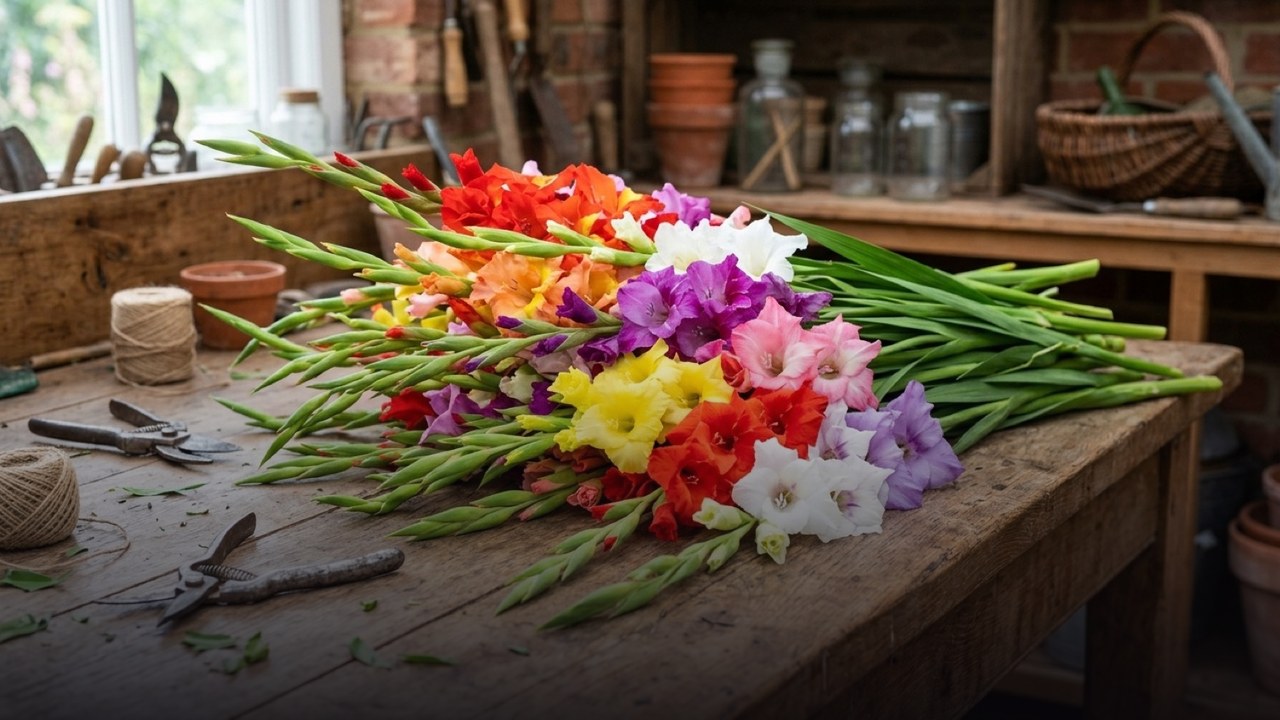
For flower arranging around a commute, choose a small bunch, prepare a clean vase before you leave, and arrange the stems as soon as you reach your destination. Use one main flower, a supporting flower and a little greenery, keeping the finished arrangement compact enough for your desk or table. If carrying flowers would mean a long, crowded journey, arrange delivery to the destination instead.
The useful skill is making a few decisions in advance: where the flowers will stand, how you will carry them and when you can give them fresh water. A modest arrangement is easier to transport, position and maintain than a sprawling display. Whether you want flowers at home after work, a brighter office desk or a gift for someone in Russia, build the plan around the recipient’s routine as carefully as the flowers themselves.
Choose flowers for the space you actually have
Start with the surface, rather than the bouquet. A desk arrangement should leave room for your screen, papers and water glass; a dining-table arrangement should allow people to see one another. Set an empty vase in the intended spot before buying flowers. If it already feels intrusive, choose a smaller vessel and fewer stems instead of trying to squeeze a large bouquet into the space.
For a first arrangement, choose one main flower type and one supporting element, such as a smaller flower or foliage. Carnations or spray chrysanthemums offer several flower heads to work with, while roses give you individual focal points. These are design options, not a promise of availability. Choose stems with firm growth and clean-looking leaves, and avoid crushed petals or visibly damaged stems.
Keep the colour scheme simple enough to assess quickly: one colour with greenery, or two colours that share a similar softness or depth. You do not need a separate flower type for every role. A few branching stems can provide both height and fullness. For a shared office, consider colleagues’ preferences and sensitivities before bringing strongly scented flowers into a room where people cannot easily move away.
Prepare your vase before the morning rush
Wash the vase thoroughly, rinse away detergent and fill it with fresh water before you start cutting. A narrow-necked vase helps hold a small number of stems in place; a wide opening needs more stems or a different design to look balanced. Choose a stable base, particularly beside a keyboard or on a narrow shelf. Keep water and cutting tools away from electrical equipment.
Lay out sharp scissors or secateurs, a cloth and a container for discarded leaves. Remove any foliage that would sit below the waterline, then make a fresh, clean cut at the base of each stem. Cut a little at a time: you can always shorten a stem, but you cannot restore its length. Put prepared stems into water promptly rather than leaving them on the counter while you organise everything else.
If flower food is supplied, follow the packet’s dilution instructions instead of guessing or adding household ingredients. Leave enough space in the vase for the stems without wedging them tightly together. For a weekday routine, keep the vase and tools in one accessible place so the practical work is easy to repeat. Do the washing and clearing when you have time, rather than leaving both for the moment you need to catch a train.
Bouquets we can deliver




Build a small arrangement in three clear stages
First, establish the outline with a few foliage stems or branching flowers. Let them lean gently in different directions inside the vase, forming a loose framework. Keep the overall shape narrower than your available surface and check that no stem projects into a walkway. Turn the vase as you work if it will be viewed from several sides; for a shelf against a wall, concentrate the display towards the front.
Next, add your main flowers at slightly different heights. Position one lower, another a little higher and a third off to one side, rather than making a rigid row. Allow the flower heads enough room to remain visible without pressing against one another. If the arrangement looks crowded, remove a stem before adding anything else. Empty space can make a small bunch look more deliberate and help each flower read clearly.
Finally, use the supporting flowers to connect gaps without filling every opening. Step back and look at the silhouette, then sit down to check it at desk or table height. Shorten any stem that blocks your view or makes the vase feel top-heavy. Stop when the arrangement feels balanced from its main viewing position; repeatedly pulling stems out and pushing them back in can damage delicate petals and waste your limited time.
Carry flowers without turning the commute into an obstacle
For an ordinary public-transport journey, carrying a wrapped bunch and arranging it at your destination is generally more manageable than travelling with a water-filled vase. Keep the flower heads above the edge of your bag and away from zips, laptop corners and other passengers’ luggage. Hold the bunch where you can see it, and avoid putting heavy items against the stems or resting the flowers on a seat.
Keep the time between water sources as short as practical. If the journey includes long waits, several changes or errands, collect flowers nearer the end of your trip or arrange delivery. In cold or hot weather, protect the bunch from direct exposure and avoid leaving it in a parked vehicle. Suitability varies by flower and conditions, so do not assume wrapping makes a long outdoor wait harmless.
At the destination, unpack carefully, check for bent stems and place the flowers in a clean vase with fresh water. If you need to transport a finished arrangement, keep its container upright and supported from the base; never lift it by the flowers. Our guide to protecting flower arrangements in transit explores the handling questions to consider before a journey.
Make flower care fit your working week
Place the arrangement away from direct sunlight, radiators, heating vents and ripening fruit. Check the water level each day, especially when the vase is small or the stems are numerous. A useful habit is to check it when you first make tea or coffee after arriving. Do not wait for the flowers to droop before noticing that the stems no longer reach the water.
Refresh the water regularly and wash the vase if it becomes cloudy or develops residue. Remove fading flowers and any leaves that fall into the water; where needed, refresh the stem ends with clean tools before returning them to the vase. Different flowers age at different speeds, so judge the stems individually. A mixed bunch can become a smaller arrangement as you remove flowers that have finished.
Plan for days when nobody will be there. Before a weekend or a period away from the office, check the water and decide who can look after the arrangement. If there is no suitable place or person, enjoy the flowers at home instead of leaving them unattended beside a sunny window. Smaller vessels can also give sound, shorter stems a second display after you have removed damaged or fading material.
Send flowers to Russia around the recipient’s routine
When the flowers are a gift, start with the recipient’s taste and schedule. Colour meanings vary between people, so a favourite shade and a clear card message are more useful than assuming a bouquet will convey an exact sentiment. In Russia, an odd number of stems is customary for a counted gift bouquet; even numbers are traditionally associated with mourning. Consider whether a workplace delivery would feel welcome or draw unwanted attention.
You can choose a bouquet from our bouquets catalogue for delivery across Russia. City delivery costs 500 RUB; for remote districts and suburbs, the operator confirms the price when confirming the order. In large cities, express delivery is available in 1–2 hours after confirmation. You can also select an exact time with a tolerance of plus or minus 30 minutes, a 09–12, 12–15, 15–18 or 18–21 window, or preorder 1–30 days ahead.
Use WhatsApp to get help choosing a bouquet and agree the time, address and card text, or request a photo before delivery. Delivery is anonymous by default: the courier does not name the sender, and a card with your text is free. The courier calls the recipient about 15 minutes before arrival. If they are absent, we agree a second delivery that day or a handover to a neighbour or concierge with the sender’s consent.
Choose a delivery window when someone can receive the flowers, allowing for the recipient’s own commute and any time difference when ordering from abroad. Read the delivery and payment details before checkout. Online payment uses CloudPayments; check the options displayed at checkout for your card. If you want the recipient to know who sent the gift, include your name in the card text rather than relying on the courier to identify you.
Frequently asked questions
What is the easiest flower arrangement for a commuter?
Use a small, stable vase with one main flower type and a few supporting stems. Prepare the vase beforehand, then trim and arrange the flowers at their destination so you have less to carry.
Should I arrange flowers before or after travelling?
For a crowded commute, arranging them after arrival is usually easier because you can carry a wrapped bunch instead of a filled vase. Make sure a clean vase, water and suitable cutting tools are available when you arrive.
Can I leave flowers at the office over the weekend?
That depends on the flowers, water supply and room conditions. Check the arrangement before leaving and organise someone to look after it if needed, particularly if the room becomes warm or sunny.
Can I order flowers to Russia while I am abroad?
You can place an online order for delivery across Russia and use WhatsApp to agree the details with a manager. Checkout uses CloudPayments; check the payment options shown there, as acceptance of every foreign card is not guaranteed.
Will the recipient be told who sent the flowers?
Delivery is anonymous by default, and the courier does not name the sender. A card with your text is free, so include your name there if you want the recipient to recognise the gift.
Ready to send flowers?
Pick the city, choose the bouquet, and a local florist takes it from there.
Choose a city →