How to Keep Lilies Alive in a Vase, from Bud to Last Bloom
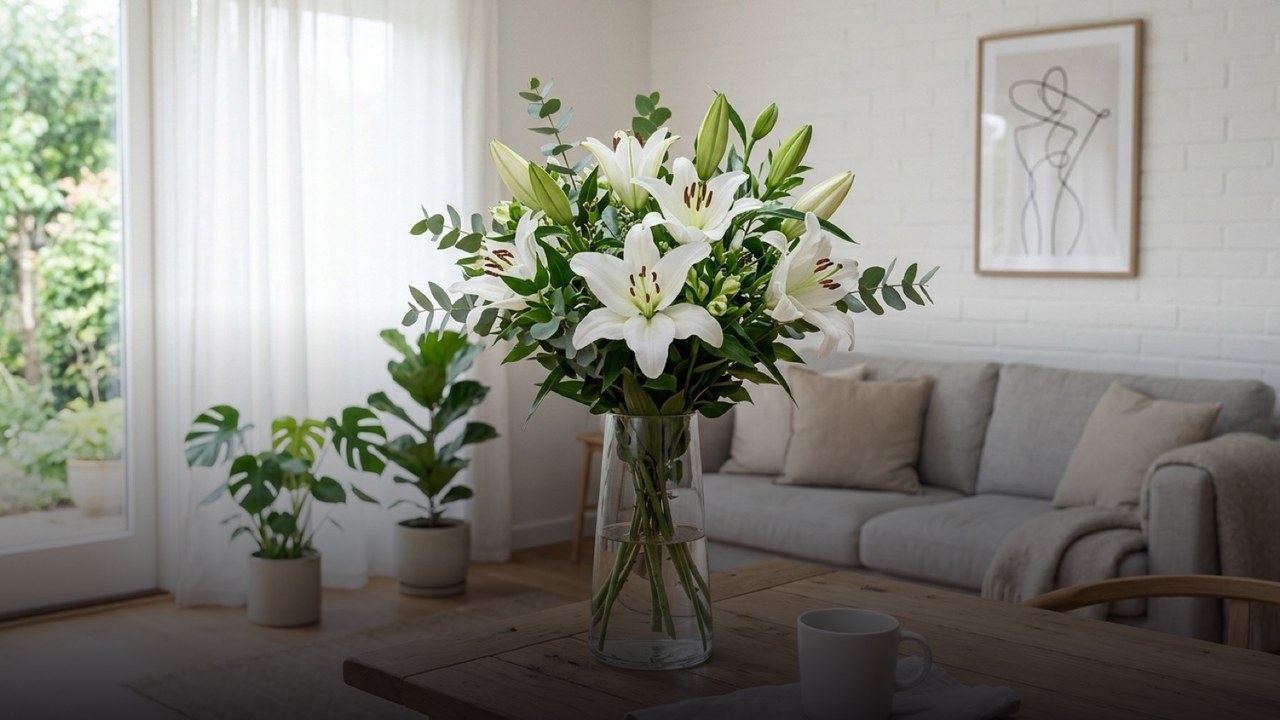
To keep lilies alive in a vase, trim the stems with a clean, sharp tool, remove leaves below the waterline and place them in a clean vase with fresh water and correctly mixed cut-flower food. Check the water daily, replace it regularly and keep the flowers away from direct sunlight, heating and ripening fruit. Remove fading blooms as the remaining buds develop.
Cut lilies can carry open flowers and closed buds on the same stem, so their appearance changes as the bouquet matures. Your job is to keep water moving through healthy stems while limiting contamination and excess heat. One essential precaution comes first: true lilies and daylilies are highly toxic to cats, including their pollen and vase water; choose different flowers for any home with a cat.
1. Start with a clean vase and properly prepared stems
Choose a stable vase tall enough to support the stems without squeezing them together. Lily flowers become broad and relatively heavy as they open, so a narrow, lightweight container can become unbalanced. Wash the vase with detergent, clean the inside thoroughly and rinse it well. Residue from an earlier bouquet can contaminate fresh water even when the glass looks clear.
Unwrap the bouquet and remove any leaves that would sit beneath the water. Keep healthy foliage higher up the stems, and avoid stripping it all away. Submerged leaves soften and decay, making the water harder to keep clean. If you need a method for an awkward vase neck, our guide to cleaning a flower vase explains the preparation in more detail.
With clean, sharp secateurs or a knife you can handle safely, cut roughly 1–2 cm from each stem base at a slight angle. Make a clean cut without crushing or splitting the stem, then put it into water promptly. Remove enough length to fit the vase, but retain room for later trims. Avoid forcing stems against the bottom or packing them so tightly that you cannot inspect the water.
2. Keep the water fresh and mix flower food accurately
Use fresh tap water at room temperature and fill the vase deeply enough to keep all cut ends submerged, with no leaves in the water. Check the level every day, especially during the first few days when the bouquet may drink noticeably. A tall, opaque vase can hide a low waterline, so lift or inspect it rather than judging by the flowers alone.
If you have a sachet of cut-flower food, follow its stated water volume. A sachet intended for one litre should not be concentrated into a small glass or diluted across a much larger vase. Properly formulated food supports cut flowers and helps manage the vase water. If you have none, start with clean water; adding sugar alone can encourage microbial growth.
Replace the water every one to two days, and sooner if it turns cloudy, develops an odour or contains fallen plant material. Lift the stems out gently, wash and rinse the vase, then refill it. Recut the bases if they have become discoloured or slimy, using a clean tool. Simply topping up dirty water leaves the contamination in place, even if the level looks adequate.
Bouquets we can deliver




3. Choose a cool position with indirect light
Put your lilies in a comfortably cool room with indirect daylight. Avoid sunny windowsills, radiators, fireplaces and heat from appliances: warmth can make flowers develop and fade faster while increasing water loss. Check the position during the afternoon as well as in the morning, because a table that starts in shade may later receive strong sunlight.
Cut lilies do not need direct sun to keep their flowers open. Their care differs from that of a rooted lily growing in a garden or pot, so moving a bouquet into stronger sunshine is not a reliable way to rescue it. Our guide to light for cut lilies explains how to choose a suitable place without exposing the petals to unnecessary heat.
Keep the vase away from ripening fruit, which releases ethylene that can shorten the display life of susceptible flowers. Avoid strong draughts and direct airflow from fans or air conditioning, too. Give opening blooms space around them so their petals do not press against a wall, curtain or neighbouring arrangement. Handle the stems when repositioning the bouquet rather than gripping the flowers.
4. Let buds open naturally and manage pollen carefully
Expect the flowers on a stem to open at different times. Bud maturity, variety and the bouquet's condition all affect the sequence, so there is no dependable deadline for every bud. Firm buds showing colour generally offer a better prospect of opening than very small, hard green ones. Do not peel petals apart: forcing a bud can tear the flower without helping it develop normally.
As a bloom opens, you can gently remove its pollen-bearing anthers before they shed, using tissue or tweezers. Take care not to pull on the petals or the central stigma. This is mainly a way to reduce pollen stains on petals, clothing and furniture; it does not guarantee longer vase life. Removing anthers also does not make a lily safe for cats.
If dry pollen falls onto fabric, avoid rubbing it or immediately adding water, which can spread the stain. Lift loose grains carefully with adhesive tape and follow the fabric's care instructions for any remaining mark. Remove spent flowers individually as they fade, leaving healthy buds and foliage intact. If the scent bothers someone in the room, move the bouquet to another suitable space.
5. Troubleshoot drooping flowers and unopened buds
When a lily droops, first check whether the stem ends are actually in water and whether the water is clean. Move the vase away from heat, remove decaying material and refresh the water. If the bases look deteriorated, trim back to sound tissue and return the stems promptly. These steps can help when water uptake is the problem, but they cannot reverse advanced ageing or physical damage.
Treat unopened buds patiently rather than applying heat, sugar mixtures or hot-water treatments. Maintain clean water, suitable flower food if available and a steady position with indirect light. Some immature or damaged buds will never open. A bud that turns brown, becomes soft or starts to decay is best removed carefully so it does not shed deteriorating material into the arrangement.
Thin, papery petals, browning edges and collapsing flowers can indicate that an individual bloom has reached the end of its display. Remove that bloom while keeping the rest of the stem if its other flowers remain healthy. Discard stems that are extensively soft or rotting. Avoid adding aspirin, coins, alcohol or improvised bleach mixtures: uncertain doses can damage flowers and complicate otherwise simple care.
6. Plan a lily gift around the recipient and the occasion
Before sending lilies, check whether the recipient has a cat and whether strong floral scents suit their home. For a household with a cat, choose a different bouquet rather than relying on a high shelf or removing pollen. If you want an arrangement to look open for a particular occasion, discuss that preference when choosing it; individual buds cannot be promised to open at an exact hour.
To send flowers to someone in Russia, start with our bouquets catalogue. We deliver across Russia, with city delivery costing 500 RUB; the operator confirms the price for remote districts and suburbs when confirming the order. Contact a manager on WhatsApp for help choosing a bouquet, agreeing the address, timing and card text, or arranging a photo of the bouquet before delivery.
In large cities, express delivery is available 1–2 hours after order confirmation. You can also choose an exact time with a margin of ±30 minutes, a window of 09–12, 12–15, 15–18 or 18–21, or preorder 1–30 days ahead. When arranging a gift from abroad, check the recipient's availability and agree the delivery time clearly with the manager so the flowers can be received and placed in water promptly.
Delivery is anonymous by default: the courier does not name the sender, so use the free card to identify yourself if you wish. The courier calls the recipient about 15 minutes before arrival. Online checkout uses CloudPayments; check the payment options shown there, as acceptance of every foreign card is not guaranteed. A short care note with the gift can remind the recipient to trim the stems and check the water daily. We deliver bouquets across Russia in 1–2 hours.
Frequently asked questions
How often should I change the water for lilies?
Check the water level daily and replace the water every one to two days, sooner if it becomes cloudy or smells. Wash and rinse the vase each time, and keep every cut stem end submerged.
Should I remove pollen from lilies to make them last longer?
Removing the pollen-bearing anthers mainly helps prevent stains; it does not guarantee a longer vase life. Handle them gently as the flower opens, and remember that lilies remain toxic to cats after removal.
Why are my lily buds not opening?
Very immature buds, poor water uptake or damage can prevent opening. Refresh the water, check the stem bases and provide indirect light, but do not force the petals apart or assume every bud will bloom.
Can I keep lilies in a bedroom?
A cool bedroom with indirect light can be suitable if the scent is comfortable for you. Keep lilies out of any home with a cat, and choose another position if the fragrance disturbs your sleep.
Can I revive lilies after the vase has run dry?
Refill a clean vase, recut the stem bases and put the flowers back into fresh water promptly. They may recover if dehydration is limited, but severely dried or damaged flowers may remain wilted.
Ready to send flowers?
Pick the city, choose the bouquet, and a local florist takes it from there.
Choose a city →