A Practical Guide to Ordering Flowers in Russia Without Russian
You are in Saint Petersburg, or perhaps you are sitting in another country entirely and want to send a bouquet to someone you love here in Russia. The flowers are easy to picture — maybe a loose arrangement of garden roses, some dusty miller, a few stems of lisianthus — but the ordering process feels like a wall you cannot climb. What address format does Russia use? Will the courier call the recipient and confuse everything? What if nobody picks up? These are fair questions, and as florists who deliver fresh flowers across Russia every single day, we have answered all of them hundreds of times. This guide walks you through the entire process in plain English so that distance and language are the last things standing between you and a beautiful, same-day delivery.
What Information You Actually Need to Place the Order
Before you open a chat window or fill in an order form, gather four things: the recipient's full name, their mobile phone number, the delivery address with as much detail as possible, and your preferred delivery window. That is genuinely the core of it. Russian addresses follow a specific order that differs from Western conventions. The correct sequence is: city, street name, building number, apartment or office number. For example, you would write Saint Petersburg, Nevsky Prospekt, 28, apartment 14. If the building has a separate entrance number, called a podyezd in Russian, include that too — it saves the courier from pressing every intercom button in a large residential block. Floor number is also helpful for tall Soviet-era buildings where intercoms are unreliable. The recipient's phone number should include the Russian country code, which is plus seven, followed by a ten-digit mobile number. If you only have a number written with eight at the start, simply replace that eight with plus seven. Your own contact details matter as well. Provide an email address or a messaging app handle — WhatsApp and Telegram are both widely used by our team — so we can reach you in English if a question arises about the order. Finally, decide on your delivery window. We offer one-to-two-hour delivery across Saint Petersburg and to other Russian cities, but giving us a preferred time slot, such as between two and four in the afternoon, helps us coordinate the freshest possible flowers for that moment.
Bouquets we can deliver

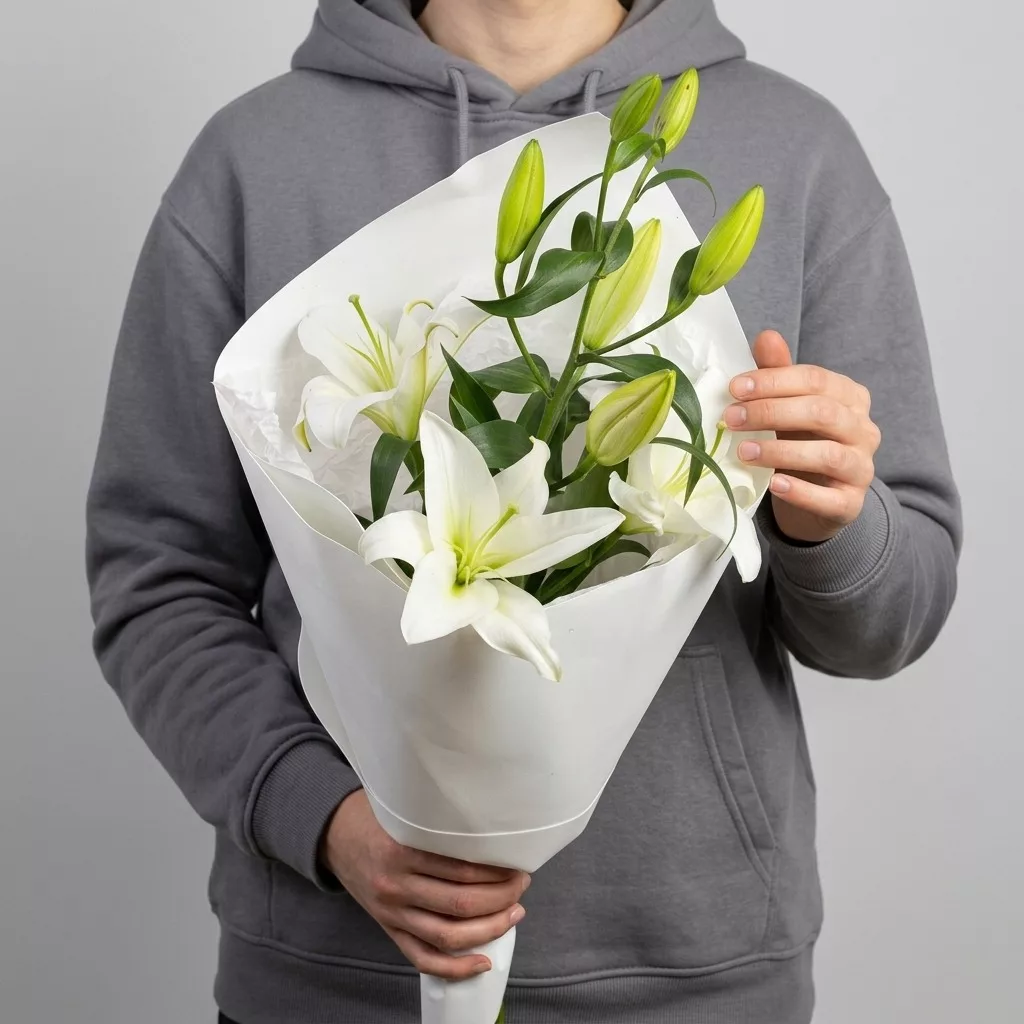
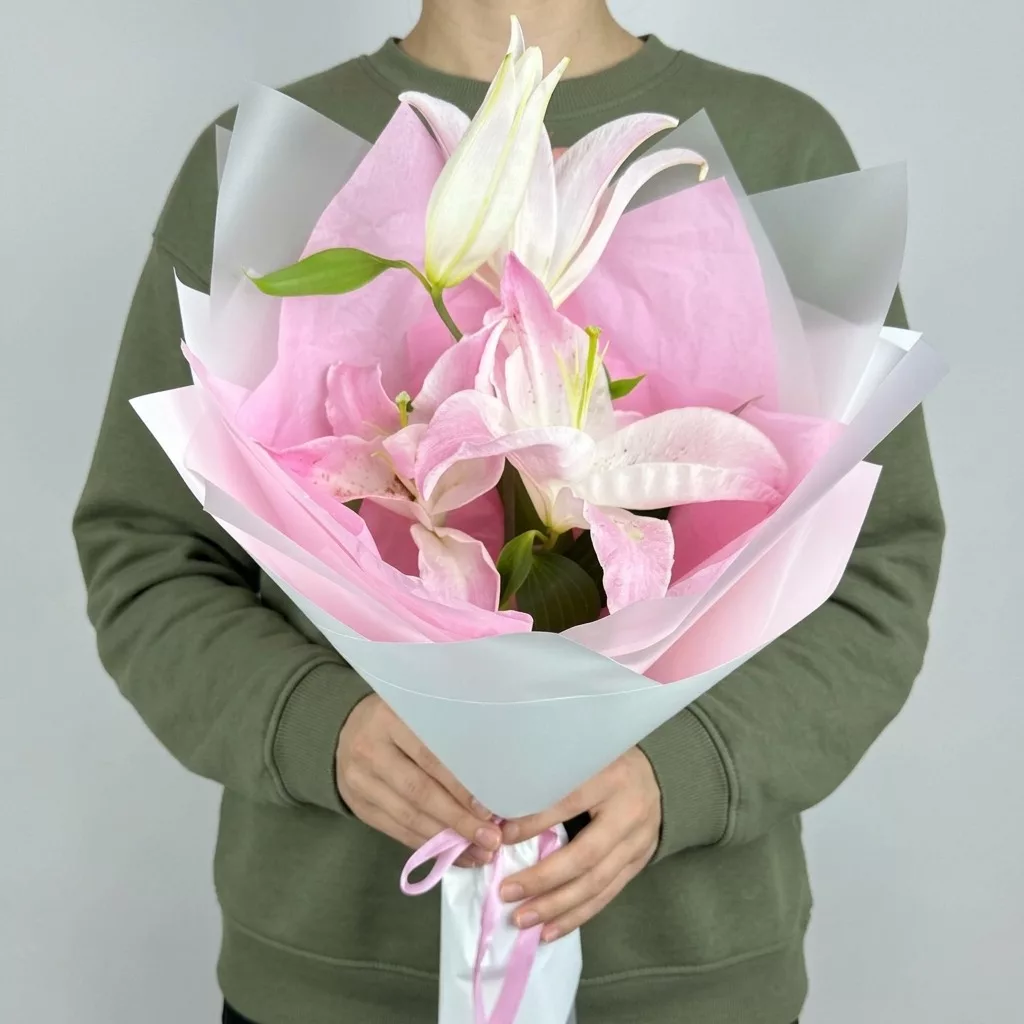
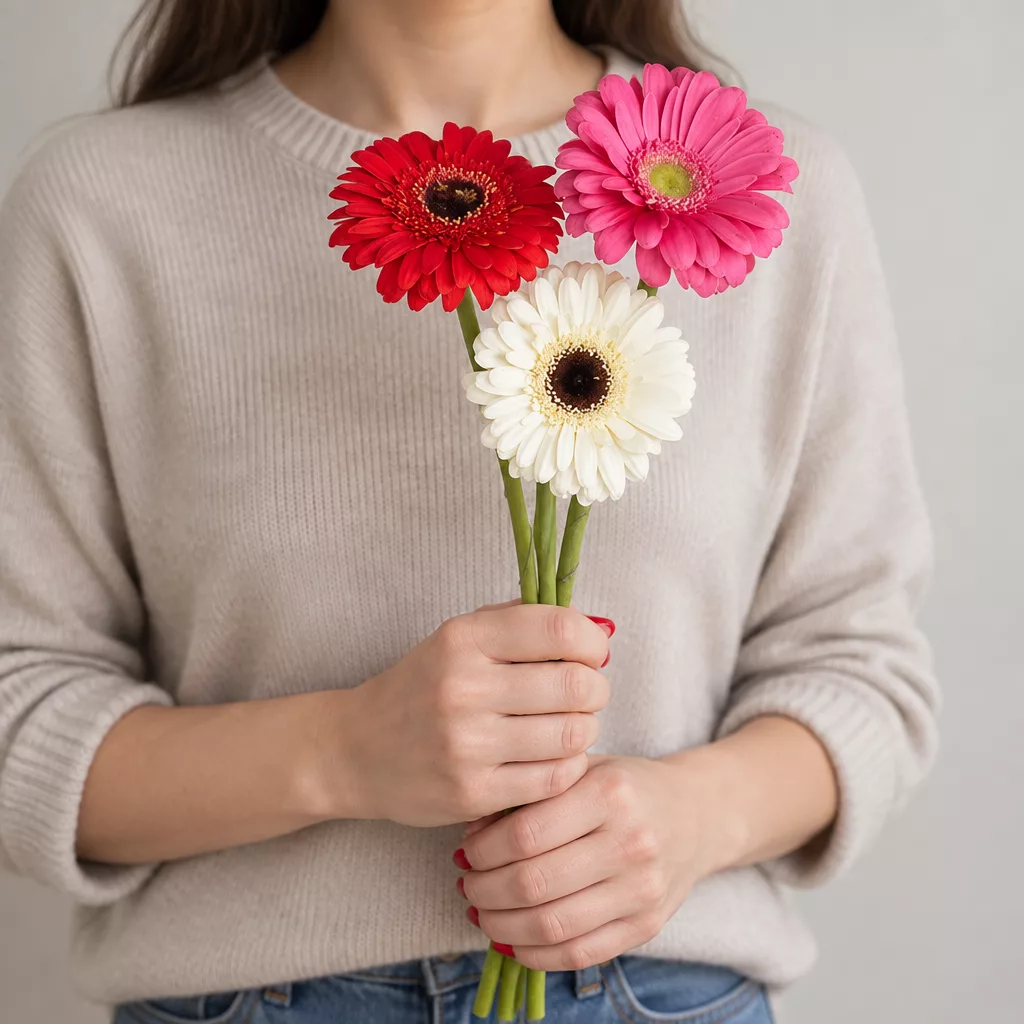
Choosing the Right Flowers for the Russian Climate and Occasion
Russia has a wide temperature range, and that matters for flowers. In winter, when Saint Petersburg can sit at minus fifteen degrees Celsius, delicate tropical blooms like anthuriums or orchids face real stress during the short journey from our van to the front door. We wrap them carefully, but if you want to be safe in deep winter, choose hardier varieties: spray roses, alstroemeria, chrysanthemums, or solidago hold cold well and arrive looking exactly as they should. In summer, the opposite challenge appears. Temperatures above twenty-five degrees can cause peonies and garden roses to open faster than expected, so we cut them at a tighter bud stage for warm-weather orders. Tulips are a perennial favourite in Russia and available almost year-round thanks to Dutch and domestic growers, but they are particularly beloved in spring. If you are sending flowers for a birthday, a romantic occasion, or a professional congratulation, roses remain the universal choice — red for romance, white or cream for respect and elegance, coral and peach tones for a warm, modern feel. For a housewarming or a new job celebration, a mixed seasonal bouquet with eucalyptus, chamomile, and matthiola has a relaxed, generous quality that Russians tend to appreciate. One cultural note worth knowing: always order an odd number of stems for a living recipient. Even numbers of flowers are traditionally associated with mourning in Russian culture, and our team will always follow this convention unless you specifically instruct otherwise.
How the Courier Call Works and What the Recipient Should Expect
This is the part that causes the most anxiety for international senders, so let us be very specific about what happens. When the courier is approximately fifteen to thirty minutes from the delivery address, they will call the recipient's mobile number. The call will be in Russian. The courier will say their name, mention that they are from Turboflora, and confirm the address. In most cases the recipient simply needs to say yes, da in Russian, and come downstairs or open the door. If the recipient does not speak Russian either, that is completely fine. You can prepare them in advance with a simple message: tell them a flower delivery is coming, give them the rough time window, and ask them to answer any call from an unknown number during that period. Our couriers are experienced and patient. If communication is difficult, the courier will send an SMS or a WhatsApp message with the building entrance and ask the recipient to come to the lobby. We can also add a note to the order asking the courier to text rather than call, which works very smoothly in residential buildings with a working intercom. If the recipient is at a hotel, our courier will hand the bouquet to the front desk with the guest's name clearly attached, so there is no language barrier at all. The key is simply to let the recipient know something is coming. A surprise is wonderful; an unanswered door is not.
Navigating the Order Form or Chat in English
Our website and customer support are accessible in English, and our team responds to messages in English via WhatsApp, Telegram, and email. When you write to us, be as specific as you can in your first message, because it saves several back-and-forth exchanges. A good first message looks like this: state the occasion briefly, give the delivery city, provide the recipient's name and phone number, write out the full address, specify your preferred delivery time, and mention any flower preferences or allergies if you know them. If you are unsure which bouquet to choose, describe the person and the occasion in a few words and we will suggest something appropriate. Common mistakes we see from international customers include writing the address in Western order — house number before street name — which can cause confusion, so always double-check that you have followed the Russian sequence described earlier. Another frequent issue is providing a landline number instead of a mobile. Couriers call mobile phones; a landline at an office or apartment building will not work for the pre-delivery call. If the recipient is at a business address, include the company name and, if possible, the name of a receptionist or colleague who can accept the delivery. Russian business addresses often have security checkpoints, and having a contact name on the bouquet card helps the courier get past reception quickly. We will confirm your order by message and send a tracking update when the courier departs.
Personalising Your Order: Cards, Languages, and Special Requests
A handwritten card in Russian carries a particular warmth that a printed label cannot replicate, and we are happy to write your message in Russian on your behalf if you provide the text in English. Simply tell us what you want to say and we will translate it naturally — not word for word, but in the way a Russian speaker would actually express the sentiment. If you prefer the card to be in English, that is absolutely fine too. Many recipients in Russia, especially in larger cities like Saint Petersburg and Moscow, read English comfortably. You can also request no card at all for a completely anonymous gift, though we will always include the sender's name if you want the recipient to know who sent the flowers. Special requests we handle regularly include adding a small gift alongside the bouquet — a box of chocolates, a soft toy, or a balloon — as well as requesting specific ribbon colours or wrapping styles. Russian bouquet wrapping tends to be generous and decorative, often using layers of kraft paper, fabric, or transparent film with a large bow. If you want something more minimal and European in style, just say so. We can also note instructions like leave with a neighbour if no answer, or do not ring the bell, call instead, which is useful when someone is working from home and does not want to disturb a sleeping child or a meeting.
After the Delivery: What to Tell the Recipient About Flower Care
Fresh flowers last longest when the recipient knows a few simple things to do in the first hour after they arrive. Russian apartments are typically warm, often twenty-two to twenty-five degrees Celsius even in winter because of central heating, which means flowers need fresh water and a cool spot away from radiators. Ask the recipient to unwrap the bouquet, trim about two centimetres from the bottom of each stem at a diagonal angle, and place the flowers in a clean vase with cool water. No aspirin, no sugar, no vodka — those are popular myths. Clean water changed every two days is what actually works. Roses and tulips should be kept away from fruit bowls, because ripening fruit releases ethylene gas that accelerates wilting. Alstroemeria and chrysanthemums are the most forgiving varieties and will stay fresh for ten days or more with basic care. Lisianthus, which looks like a delicate ruffled rose, is also long-lasting and a good choice if you know the recipient tends to forget to change the water. If any stems arrive with petals that look slightly compressed from packaging, placing them in a vase with fresh water for two hours usually restores them fully. We take care of conditioning and hydrating every bouquet before it leaves our workshop, so the flowers are already in good shape when they reach the door. Sharing these simple care tips with the recipient — even in a short message — shows thoughtfulness that goes beyond the flowers themselves and makes the gift last longer.
Ordering flowers in Russia from abroad, or simply navigating the process without speaking Russian, is far more straightforward than it looks once you know the steps. Gather the recipient's mobile number and full address in Russian order, choose varieties that suit the season, prepare the recipient for a courier call, and write to us in English — we will handle everything else. From our workshop in Saint Petersburg to doorsteps across Russia, every bouquet leaves with fresh water on the stems, careful wrapping suited to the weather, and a card written exactly as you intended. The distance between you and the person you want to make happy is just a few lines of information.
Frequently asked questions
What address details do I actually need before I start the order form?
You need four things: the recipient's full name, their Russian mobile number, the full delivery address in Russian order (city, street, building, apartment), and your preferred delivery window. The apartment number matters more than you might expect in Russian cities — couriers navigate large residential blocks where a missing flat number can mean a failed delivery. Gather these before you open the chat.
How do I write a Russian address correctly if I only have it in English?
Start with the city, then the street name, then the building number, then the apartment number. If you have the address written in English letters, send it to us as it is and we will confirm the correct Russian format before the order goes to dispatch. Do not guess at transliteration — a small error in a street name can send the courier to the wrong district entirely.
Which flowers actually survive a Russian winter delivery without arriving damaged?
Spray roses, alstroemeria, and chrysanthemums handle cold transit far better than tropical varieties. Anthuriums and orchids are beautiful but vulnerable when temperatures drop below minus ten. If you are ordering in winter and want the arrangement to arrive looking exactly as it left us, lean toward those hardier stems and tell us the season matters to you — we will build accordingly.
What will the courier actually say when they call the recipient, and will my recipient understand?
The courier will call roughly fifteen to thirty minutes before arrival, say their name, confirm they are from Turboflora, and check the address. The call is in Russian and is short. Most recipients handle it without difficulty. If your recipient does not speak Russian, let us know in advance and we can add a note to the order so the courier is prepared for a slower, simpler exchange.
Can I contact your team in English throughout the whole process, or only at the start?
You can reach us in English at every stage — before the order, during it, and after dispatch. WhatsApp, Telegram, and email all work, and our team reads and replies in English. If something changes on the day, such as a new delivery address or a different time window, message us directly rather than trying to update the order form yourself. That is the fastest way to catch us.
Ready to send flowers?
Pick the city, choose the bouquet, and a local florist takes it from there.
Choose a city →