How to Perk Up Cut Flowers and Recognise What Can Recover
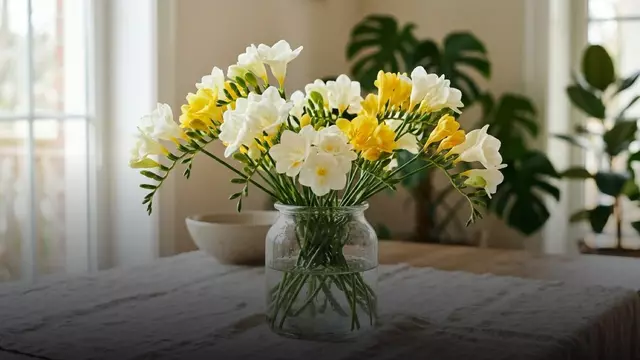
To perk up cut flowers, wash the vase, remove any leaves below the waterline and trim the stem ends with a clean, sharp tool before returning them to fresh water. Add commercial cut-flower food according to its instructions, then leave the bouquet somewhere cool and shaded for a few hours. Dehydrated flowers may become firmer, but browned petals, rotten stems and broken tissue will not repair themselves.
The useful first question is whether your bouquet is thirsty, physically damaged or simply reaching the end of its vase life. A soft stem with otherwise healthy petals deserves a careful hydration attempt; a slimy stem or collapsed, discoloured flower needs removing. Work through the steps below before trying dramatic remedies: extra handling, heat and improvised mixtures can make a recoverable bouquet worse.
1. Check what is drooping before you treat the bouquet
Lift the bouquet out of its vase and examine the stems, leaves and flower heads separately. Look for firm tissue, normal colour and an intact stem beneath each bloom. Check the water too: cloudiness, an unpleasant smell or slippery stem ends are reasons to clean everything immediately. Clear-looking water can still need changing, so judge the flowers as well as the vase.
Distinguish a gentle curve from a failure in the stem. Tulips naturally bend as they continue to grow, while a sunflower's heavy head may lean even when its petals and leaves look healthy. A sudden kink, split or flattened section is different: water uptake alone cannot restore its strength. Our guide to bent and damaged stems explains how to assess that problem.
Remove fallen petals and flowers with obvious rot before they sit against healthy blooms. On roses, a tired outer petal does not necessarily mean the whole flower is finished; remove only loose or damaged outer petals, without pulling apart the head. If most petals are dry, translucent or collapsing, concentrate on preserving the healthier stems instead of repeatedly treating the exhausted flower.
2. Clean the vase and give the stems a fresh cut
Wash the vase with washing-up liquid, paying attention to residue around the base and inside narrow necks, then rinse thoroughly. If you cannot reach the dirty surfaces, choose another container you can clean properly. Simply topping up old water leaves accumulated debris in place. Wash your cutting tool as well, especially after using it on a soft or decaying stem.
Cut roughly 1–2 cm from each stem end with sharp secateurs or a suitable sharp knife, keeping your fingers clear. Aim for a clean cut without crushing or splitting the stem. A slight angle can help prevent the end sitting flush against the vase base, but a clean, undamaged cut matters more than achieving a precise angle. Put each stem back into water promptly.
Strip off leaves that would otherwise sit underwater, while retaining healthy foliage above the rim. If a stem is soft at its base, cut back to firm tissue; discard it if decay extends too far to leave a usable stem. Do not hammer woody ends or scrape away their outer layers as a general rescue method. Those extra wounds can damage tissue and introduce more debris into the water.
Bouquets we can deliver




3. Rehydrate gently in fresh water
For most mixed bouquets, start with fresh water at room temperature unless the flowers came with specific care instructions. Add packaged cut-flower food at the stated dilution: a stronger solution is not a stronger treatment. If you have no flower food, use plain fresh water and keep the vase clean. Avoid guessing quantities of sugar, bleach, vinegar or other household ingredients.
Use enough water to keep the freshly cut stem ends comfortably submerged without covering any leaves. Check the level after arranging the flowers, because a full bouquet can obscure it. Place the vase away from direct sun, radiators, heating vents and strong draughts. Give the stems room rather than pressing them into a tight vase neck that bends or crushes them.
Let the bouquet rest undisturbed for a few hours, then assess whether the leaves and stems feel firmer and the heads have lifted. Recovery varies with the flower and its condition, so repeated cutting every few minutes will not help you judge it. Do not use boiling water, ice baths or a household refrigerator as universal rescue treatments; mixed bouquets can contain flowers with different needs.
4. Adjust your approach for roses, tulips and mixed bouquets
With roses, inspect the short section of stem immediately below the flower head. A drooping neck can accompany poor hydration, so a fresh cut, clean water and quiet rest are sensible first steps. If that section is sharply creased or has become brown and soft, the damage may be irreversible. Avoid tying the head upright so tightly that the support squeezes the stem.
Tulips often curve towards the light and change position in the vase, so perfectly upright stems are not the only sign of a healthy bunch. Give them sufficient water, room to move and a position away from strong heat. If the leaves remain firm and the petals look sound, a graceful bend may need no intervention. Rotate the vase occasionally if the flowers lean strongly towards a window.
In a mixed bouquet, assess each type separately rather than assuming every stem should respond at the same speed. You can place the most wilted stems in a separate clean vase while the others remain on display. Keep flower heads above the water and avoid soaking the entire bouquet as a default remedy: water trapped between petals can mark delicate blooms and encourage decay.
5. Keep the improvement going—and know when to stop
Once the flowers perk up, check their water level daily and replace the water promptly if it becomes cloudy or contains debris. Clean the vase during water changes, remove deteriorating foliage and mix any new flower-food solution according to the packet. Keep the bouquet away from ripening fruit, which releases ethylene that can accelerate ageing in sensitive flowers. These small checks matter more than repeated rescue treatments.
Watch for changes in firmness rather than expecting damaged petals to look new. A stem that holds its head more steadily and leaves that feel less limp suggest improved hydration. Brown edges, bruises and torn petals will remain visible even if the rest of the flower recovers. Take one quick photo before treatment if you want an easier comparison without constantly handling the bouquet.
If a stem stays limp after several hours in clean water, check that its end is submerged and that no ribbon or tight binding is constricting it. Remove it if it becomes slimy, smells unpleasant or develops spreading decay. You can shorten sound stems into a smaller arrangement rather than discard every flower together. For ongoing care, see our guide to keeping cut flowers fresh.
6. Sending flowers to Russia: plan the handover and care
If you are sending a bouquet to someone in Russia, choose a delivery period when they can receive it and put it in water. Turboflora delivers flowers across Russia; city delivery costs 500 RUB, while an operator confirms the price for remote districts and suburbs when confirming the order. Browse the bouquets catalogue, then consider the recipient's schedule as carefully as the flowers themselves.
Express delivery in large cities is available 1–2 hours after order confirmation. You can also arrange an exact time within ±30 minutes, select a 09–12, 12–15, 15–18 or 18–21 window, or pre-order 1–30 days ahead. Use WhatsApp to get help choosing a bouquet and agree the address, timing, card text and a photo of the bouquet before delivery.
Delivery is anonymous by default: the courier does not name the sender, and a card with your text is free. Sign the card if you want the recipient to know who sent it. The courier calls about 15 minutes before arrival; if the recipient is absent, we agree a second delivery that day or a handover to a neighbour or concierge with the sender's consent. Checkout uses CloudPayments; check the options displayed there, as acceptance of every foreign card is not guaranteed. Availability and timing of delivery across Russia are confirmed for the chosen city, address, date and bouquet.
Frequently asked questions
How long does it take for wilted cut flowers to perk up?
Allow a few hours in fresh water after cleaning the vase and recutting the stems, then look for firmer leaves and better-supported heads. Severely dehydrated, ageing or damaged flowers may not recover.
Should I put drooping flowers in hot or cold water?
For most mixed bouquets, start with room-temperature water unless specific care instructions say otherwise. Avoid boiling water or ice as a general treatment, because different flowers respond differently.
Can sugar revive cut flowers?
Sugar alone is not a complete flower-care treatment and can encourage microbial growth in vase water. Use commercial cut-flower food at the recommended dilution, or plain fresh water if none is available.
Can I revive flowers with a broken stem?
Hydration cannot mend a broken or crushed section. If enough healthy stem remains, cut above the damage and display the shortened flower in a smaller vase with its stem end submerged.
Should I remove the wrapping before putting flowers in water?
Remove transport wrapping that prevents you from checking the stems or would sit in the water. Loosen any binding that constricts the stems, and arrange the bouquet so the flower heads stay dry.
Ready to send flowers?
Pick the city, choose the bouquet, and a local florist takes it from there.
Choose a city →