Bent Stems: What You Can Fix and When to Cut
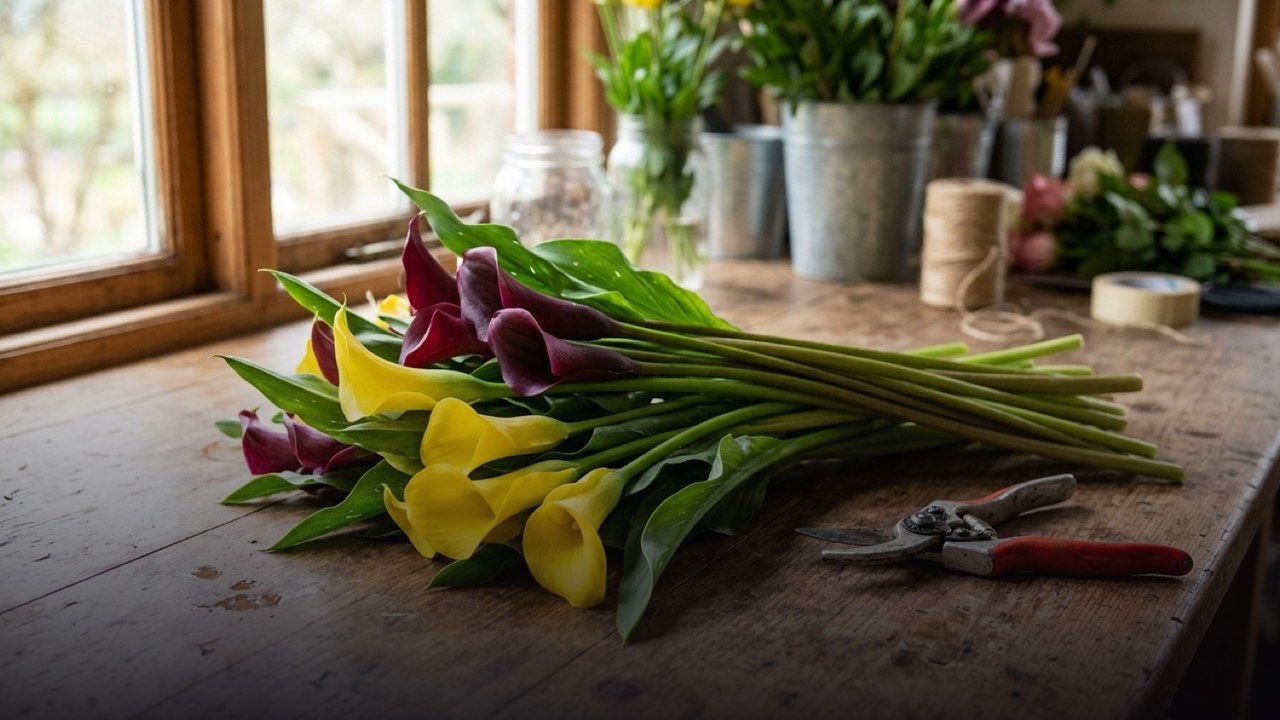
Bent stems on cut flowers can mean dehydration, physical damage or simply the flower’s natural growth habit. If the stem is intact, a clean recut and fresh water may help; if it is crushed or split, cutting below the damage is usually the more practical option. Check the bend before trying to straighten it, because forcing a stem can turn a recoverable curve into a break.
Start by taking the bouquet out of its wrapping and looking at each affected flower separately. A curved tulip, a rose hanging just below its head and a stem folded against the edge of a box need different treatment. Here is how to decide what you are seeing, give the flowers useful care and keep a damaged bloom in the arrangement where possible.
Check whether the stem is curved, wilted or broken
Support the flower head with one hand and inspect the bend with the other. A smooth curve with firm tissue and unbroken skin is different from a sharp crease. Look for a split, a flattened patch or a soft, dark area. These signs help you distinguish a naturally curved stem from damage that may interfere with water reaching the flower.
Notice what the rest of the bouquet is doing. Several limp stems, drooping leaves and a low water level suggest a water supply problem. One sharply folded stem among otherwise firm flowers points more strongly towards physical damage. These are clues rather than a diagnosis: a flower can be dehydrated and bruised at the same time.
Some flowers do not stay ruler-straight in a vase. Cut tulips can continue to elongate and curve towards light, so a firm, sweeping bend is not automatically a fault. Inspect the condition of the tissue and flower head before intervening. If the flower looks healthy, moving it into a more supportive position may be all you need.
Help an intact, drooping stem take up water
Wash the vase thoroughly and fill it with fresh water. If you have a sachet of cut-flower food, follow its dilution instructions instead of guessing the concentration. Remove leaves that would sit below the waterline: submerged foliage decays and makes the water harder to keep clean. Keep healthy leaves above the water where they do not crowd the arrangement.
With a sharp, clean blade or suitable flower snips, remove a short section from the bottom of each affected stem. Make a clean cut without crushing the end, then place the stem promptly into water. Keep your fingers clear of the cutting edge. You do not need to scrape the stem, hammer it or make long splits in its base.
Leave the flowers in a cool position away from direct sunlight, radiators and strong draughts, then reassess after a few hours. A flower affected mainly by dehydration may become firmer, but recovery is not certain. If the head stays limp or the stem develops a soft patch, repeated recutting is unlikely to solve the underlying problem.
Bouquets we can deliver




Treat a rose with a bent neck gently
A rose that bends immediately below the flower head has what florists commonly call a bent neck. The head may droop because the stem is not supplying enough water, although damaged or weakened tissue can look similar. First inspect that short section of stem for a crease or bruise; a fresh cut at the bottom cannot repair a break near the bloom.
If the neck is intact, remove any submerged leaves, recut the stem and put the rose in a clean vase with enough fresh water to keep the cut end well covered. A narrow vase can help hold it upright without squeezing it. Keep the flower head above the water and avoid repeatedly handling the petals while checking its progress.
For a closer look at this particular problem, read our guide to roses with bent necks. Judge recovery by whether the neck and head regain firmness, rather than whether you can prop the bloom into position. Avoid boiling-water treatments or improvised chemical mixtures: they can damage the flower and are unnecessary for basic care.
Shorten a crushed stem and use support carefully
A sharply kinked or split stem rarely becomes structurally sound again. If there is enough healthy length below the flower head, cut above the damaged section so the remaining stem has a clean, intact base. Use a smaller vase or bud vase to keep that bloom in the display. A shorter flower can still make a pleasing arrangement.
If the break is immediately beneath the head, there may be too little usable stem for a vase. You can display the head briefly in a shallow bowl, with the remaining cut end touching water where possible, but treat this as a decorative salvage option. It does not restore the stem, and the flower may fade sooner than the rest of the bouquet.
Support can steady an intact, flexible stem, but it cannot reconnect crushed tissue. Let the vase neck or neighbouring stems provide light support without packing the bouquet tightly. Avoid pulling a bend straight or winding tape firmly around it. For home care, shortening a damaged flower is usually simpler than trying to wire or splint it.
Arrange the bouquet to prevent another bend
Choose a vase that supports the stems without forcing them into a tight bundle. A tall, top-heavy flower can tip over a very low rim, while an overcrowded vase makes inspection and water changes awkward. Adjust the stem lengths gradually, checking how the flower heads sit together before taking off more length.
Remove travel wrapping and ties carefully so you do not pull on a caught leaf or flower head. If you need to trim a tie, keep the scissors away from the stems. When moving the bouquet, hold it around the stems and support its weight; lifting it by the heads or leaving blooms pressed against a hard edge can cause damage.
Check the water level daily and keep every cut end submerged. Refresh the water regularly and clean the vase if it becomes cloudy or develops a film. Remove deteriorating stems so they do not remain in the shared water. Good vase care helps the remaining flowers, even when one bent stem cannot be saved.
Sending flowers to Russia: agree the practical details
If you are ordering from abroad, start with the bouquets catalogue and choose an arrangement that suits the recipient and occasion. Turboflora delivers flowers across Russia. Use WhatsApp for help choosing a bouquet, agreeing the address, timing and card text, or requesting a photo of the bouquet before delivery.
City delivery costs 500 RUB; for remote districts and suburbs, the operator confirms the price when confirming your order. Express delivery in large cities takes 1–2 hours after confirmation. You can also arrange an exact time with a tolerance of 30 minutes either way, choose a 09–12, 12–15, 15–18 or 18–21 window, or pre-order 1–30 days ahead.
For a surprise, allow for the courier’s call to the recipient about 15 minutes before arrival. Delivery is anonymous by default: the courier does not name the sender, so put your name in the free card if you want it revealed. If the recipient is absent, we agree a second delivery that day or a handover to a neighbour or concierge with your consent.
If you notice a bent stem on arrival, photograph the whole bouquet and the affected area before trimming it, then contact the manager on WhatsApp to discuss what you are seeing. Checkout uses CloudPayments; check the payment options displayed there for your card. You can find the ordering details on our delivery and payment page.
Frequently asked questions
Can you fix a bent flower stem?
An intact stem that droops because of dehydration may improve after a clean recut and fresh water. A crushed or split stem will not reliably mend; shorten it above the damage if enough healthy stem remains.
Why do flower stems bend even when the vase contains water?
Water in the vase does not always mean the flower is taking it up effectively. Check that the cut end is submerged, refresh the water, inspect for damage and make a clean recut.
Should I tape a bent stem straight?
Tape may hold a flower in position, but it does not restore damaged tissue or water movement. Use gentle vase support for an intact stem, or shorten a stem with a sharp crease.
Are curved tulip stems a sign that the flowers are dying?
Not necessarily: cut tulips can elongate and curve towards light. A firm, smooth curve is different from a soft patch, split or sharply folded stem.
How long should I wait for a drooping flower to recover?
Reassess after a few hours in fresh water following a clean recut. There is no fixed recovery time or guaranteed result; persistent softness or visible damage may mean the flower cannot recover.
Ready to send flowers?
Pick the city, choose the bouquet, and a local florist takes it from there.
Choose a city →