How to Revive Lilies in a Vase—and Recognise When They Cannot Recover
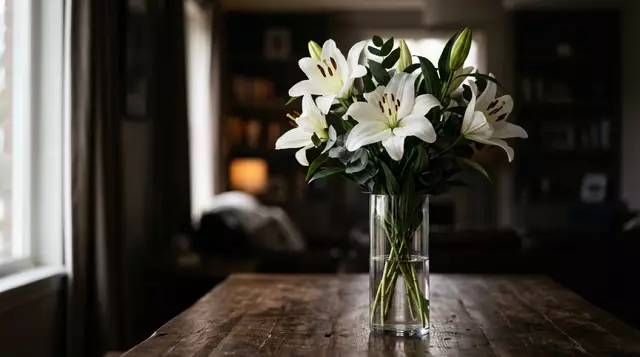
To revive lilies in a vase, wash the vase, refill it with fresh room-temperature water and recut the stems with a clean, sharp tool before returning them to water promptly. Remove submerged leaves and keep the flowers somewhere cool, away from direct sun and heat. Dehydrated lilies may become firmer over several hours, but browned petals and collapsed, ageing flowers will not recover.
Start by checking what is drooping: the whole stem, one open flower or just its outer petals. These point to different problems, and adding more water alone may not help. A firm stem with a fading lower bloom often needs simple tidying; a bouquet with limp leaves and a low water level needs attention to hydration. The steps below help you assess the damage and give recoverable stems a sensible chance.
1. Check whether the lilies are thirsty, ageing or damaged
Look at the water level before lifting the bouquet out. If the cut ends have been exposed to air, dehydration is a likely contributor to wilting. Cloudy water, an unpleasant smell or slippery stem ends suggest that cleaning and a fresh cut are needed. Clear water does not rule out a problem, so check the stems as well as the vase.
Inspect each stem from the cut end upwards. A firm stem with flexible leaves and soft, unbrowned petals may respond to better water uptake. A crushed section, a deep crease or a soft, decaying base is more serious: fresh water cannot repair damaged tissue. If the damaged section is low enough, you can sometimes remove it and display the shortened stem in a smaller vase.
Judge individual flowers separately. Lilies commonly carry buds and open blooms at different stages, so one spent flower does not mean the entire stem is finished. Papery edges, translucent patches and petals that are dropping away indicate deterioration. Remove those flowers while keeping sound buds and healthy leaves; avoid pulling at the main stem.
2. Clean the vase and give the stems a fresh cut
Take the lilies out and empty the old water completely. Wash the vase with washing-up liquid, including the base and any narrow areas where residue collects, then rinse thoroughly. Topping up dirty water leaves the underlying problem in place. Use a vase that supports the stems without packing them so tightly that leaves and flowers are crushed together.
With a clean, sharp knife or suitable flower snips, remove roughly 1–2 cm from each stem, cutting back farther if the base is discoloured or soft. Make a neat angled cut without crushing the stem, then place it promptly in fresh water. You do not need to cut underwater in a household sink, where food residue and dirt may contaminate the freshly cut surface.
Strip off leaves that would sit below the new waterline, but retain healthy foliage above it. Fill the vase so every cut end stays well submerged and no leaves soak in the water. If flower food came with the bouquet, mix it according to its packet instructions. Do not make the solution stronger in the hope of speeding recovery.
3. Let the lilies rehydrate without adding stress
Put the refreshed vase in a cool room with gentle, indirect light. Keep it away from radiators, heaters, sunny windows and strong draughts. Cut lilies do not need direct sunshine to recover, and a warm windowsill can increase water loss. Our guide to where to place cut lilies explains how light and positioning affect their condition.
Give the stems several hours undisturbed, then compare the firmness of the leaves and flower heads with their earlier condition. Improvement can be gradual, and there is no reliable deadline by which every lily should stand upright. If possible, let the bouquet rest overnight in a suitable room, checking that the water level remains above all the cut ends.
Avoid boiling water, ice baths, hairdryers and attempts to force the petals open. Do not submerge the entire bouquet as a routine rescue treatment: wet petals can bruise or develop marks, and soaking cannot reverse ageing. A clean vase, a sound stem base and steady access to water are the useful priorities; repeated handling adds little benefit.
Lily bouquets
4. Handle fading flowers and closed buds differently
Once the stems have had time to drink, remove any bloom that remains visibly spent. Snip its short flower stalk carefully rather than tearing it away, leaving neighbouring buds intact. If a stem has snapped or developed a deep bend, trim below that point and use the sound upper section in a shorter vase, provided enough healthy stem remains to hold it securely.
A closed bud is not necessarily a wilted flower. Firm buds may simply need more time, while very immature, shrivelled or browning buds may never open satisfactorily. Do not peel back the petals or place them beside a heater. For help distinguishing normal development from a stalled bud, see how long lilies take to bloom in a vase.
Removing pollen-bearing anthers from an open lily can reduce the chance of stains on petals, clothing and furniture, but it does not rehydrate the flower. Handle them gently with a tissue before loose pollen spreads, without squeezing the petals. Keep lilies completely away from cats: lily poisoning is an emergency, and suspected contact requires immediate veterinary advice.
5. Keep recovered lilies from drooping again
Check the water level every day, especially when several buds are opening. Add fresh water as needed so the cut ends never become exposed, and replace the water regularly rather than relying on top-ups alone. Wash the vase whenever the water becomes cloudy or the glass feels slippery. If using flower food, prepare the replacement solution at the stated dilution.
When changing the water, inspect the stem bases and remove any newly submerged leaves. Recut a small amount if the ends have deteriorated, using a clean tool each time. There is no need to keep shortening healthy stems repeatedly throughout the day. Support tall stems with an appropriately sized vase, and remove fallen petals and leaf fragments before they sit in the water.
Keep the bouquet away from ripening fruit, which releases ethylene that can hasten flower ageing, and maintain a position away from heat. Do not add aspirin, alcohol, coins or an improvised mixture of sugar and bleach. Household recipes are difficult to dose reliably. For a continuing routine after the rescue, use our practical guide to keeping lilies in a vase.
6. Know when to stop—and what to tell someone receiving lilies
If the lilies remain limp after fresh cuts, clean water and several hours in a suitable spot, reassess the stems instead of repeating increasingly harsh treatments. Extensive softness, decaying tissue and browned petals point to damage that care cannot reverse. Keep the healthy stems, remove those that are deteriorating and arrange the remaining flowers in a clean, smaller vase if necessary.
When sending lilies as a gift, a short care message is useful: put them in water promptly, remove submerged leaves and keep them away from heat and cats. Check that lilies suit the recipient's household before choosing them. If you are ordering from abroad for someone in Russia, you can discuss the bouquet, delivery time, address and free card text with a manager on WhatsApp.
We deliver flowers across Russia. City delivery costs 500 RUB; the operator confirms the price for remote districts and suburbs when confirming the order. In large cities, express delivery is available 1–2 hours after confirmation, and orders can be placed 1–30 days ahead. You can also discuss a photo of the bouquet before delivery. Online checkout uses CloudPayments; check the payment options displayed there, as acceptance of every foreign card is not guaranteed. Availability and timing of delivery across Russia are confirmed for the chosen city, address, date and bouquet.
Frequently asked questions
How quickly can wilted lilies recover in a vase?
Lilies affected mainly by dehydration may become firmer over several hours after cleaning the vase and recutting the stems. Recovery depends on their condition; ageing petals, decay and crushed stems will not repair themselves.
Should I use warm or cold water to revive lilies?
Fresh room-temperature water is a sensible starting point. Avoid boiling water and ice treatments, and follow the packet directions if you have flower food.
Why is one lily drooping while the other flowers look healthy?
That flower may be older than the others or have damage to its individual stalk. If it is browning or collapsing while the main stem and buds remain firm, remove the spent bloom and retain the healthy parts.
Can I revive lilies whose petals have turned brown?
Brown petal tissue will not turn fresh again. Remove badly affected flowers and concentrate on keeping the remaining healthy blooms and buds supplied with clean water.
Does removing lily pollen help a wilted flower recover?
Removing the anthers helps limit pollen stains, but it does not solve dehydration or stem damage. Focus first on clean water, a fresh stem cut and a suitable position away from heat.
Ready to send flowers?
Pick the city, choose the bouquet, and a local florist takes it from there.
Choose a city →