How to Send Flowers to Russia from Abroad: What Actually Works
You are sitting in London, Toronto, or Dubai, and someone you love is celebrating a birthday in Saint Petersburg tomorrow morning. You want flowers on their doorstep, not a voucher, not a sorry email, not a bunch of wilted stems that traveled three days by post. The good news is that sending fresh flowers to Russia from abroad is genuinely possible, and when you do it correctly it feels almost magical — a doorbell rings, a door opens, and someone who misses you suddenly has a armful of garden roses or peonies smelling of a June afternoon. This guide walks you through every step, from choosing the right service to writing the card message in a way that will land perfectly in Russian culture.
Understand How International Flower Delivery to Russia Actually Works
The first thing to clear up is the mechanics, because many people imagine their flowers are somehow shipped from their home country. That is not how it works, and honestly that is a good thing. When you place an order through a Russian flower delivery service like Turboflora, you are booking a florist based inside Russia who sources, arranges, and delivers the flowers locally. This means the roses or tulips in the bouquet were likely at a wholesale flower market in Saint Petersburg that same morning, not sitting in cargo hold for forty-eight hours losing moisture and fragrance.
What you are doing from abroad is choosing the arrangement, providing the recipient's address, paying online, and trusting the local team to execute. The payment leg is international — you use a card, PayPal, or another method the shop accepts — and everything else happens on Russian soil. This model is the only one that reliably produces a fresh result. Any service claiming to physically ship cut flowers from Western Europe or North America to a Russian address within a normal delivery window is either misleading you or delivering something you would not want to give.
For the recipient, the experience is indistinguishable from a local order. A courier arrives, hands over a wrapped bouquet or a box, and leaves. Nobody needs to explain where the order came from or navigate customs paperwork. Understanding this model helps you ask the right questions when you choose a service and sets realistic, actually very optimistic, expectations for quality.
Bouquets we can deliver

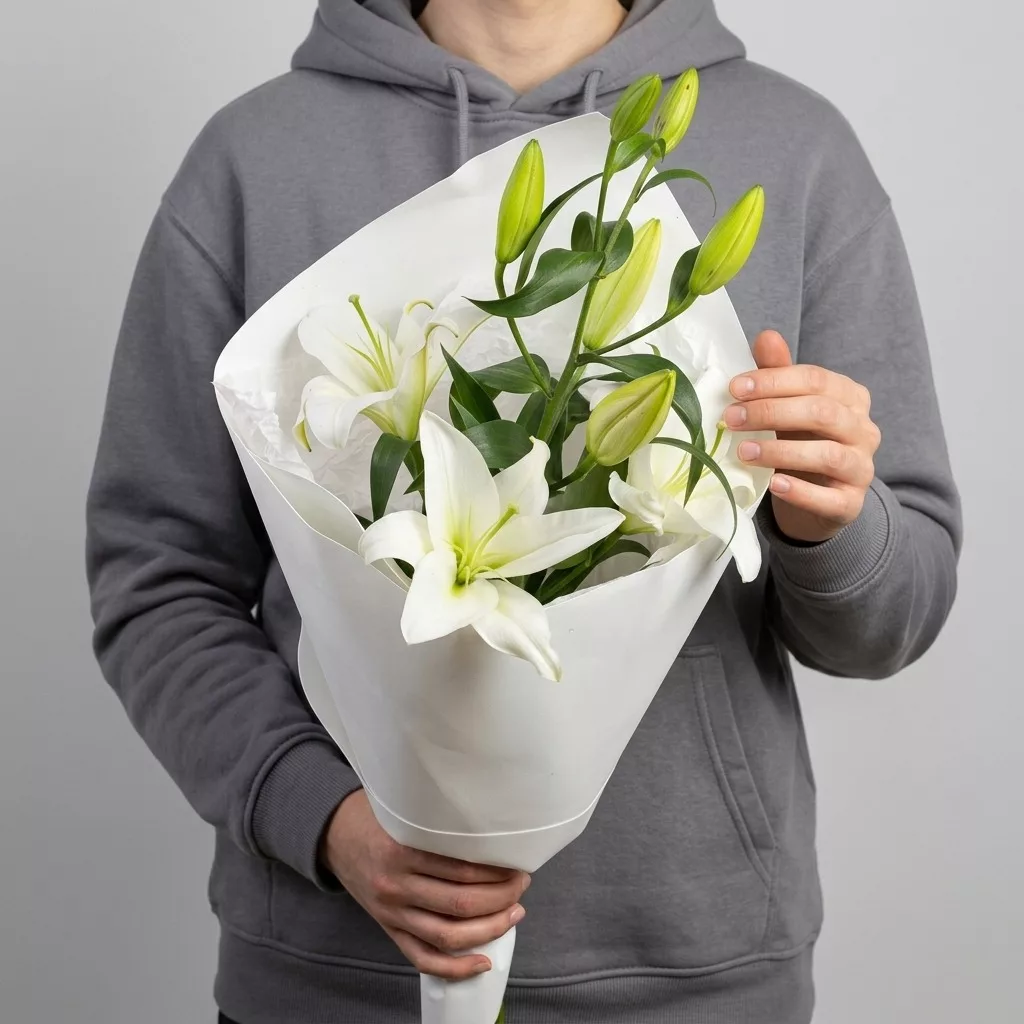
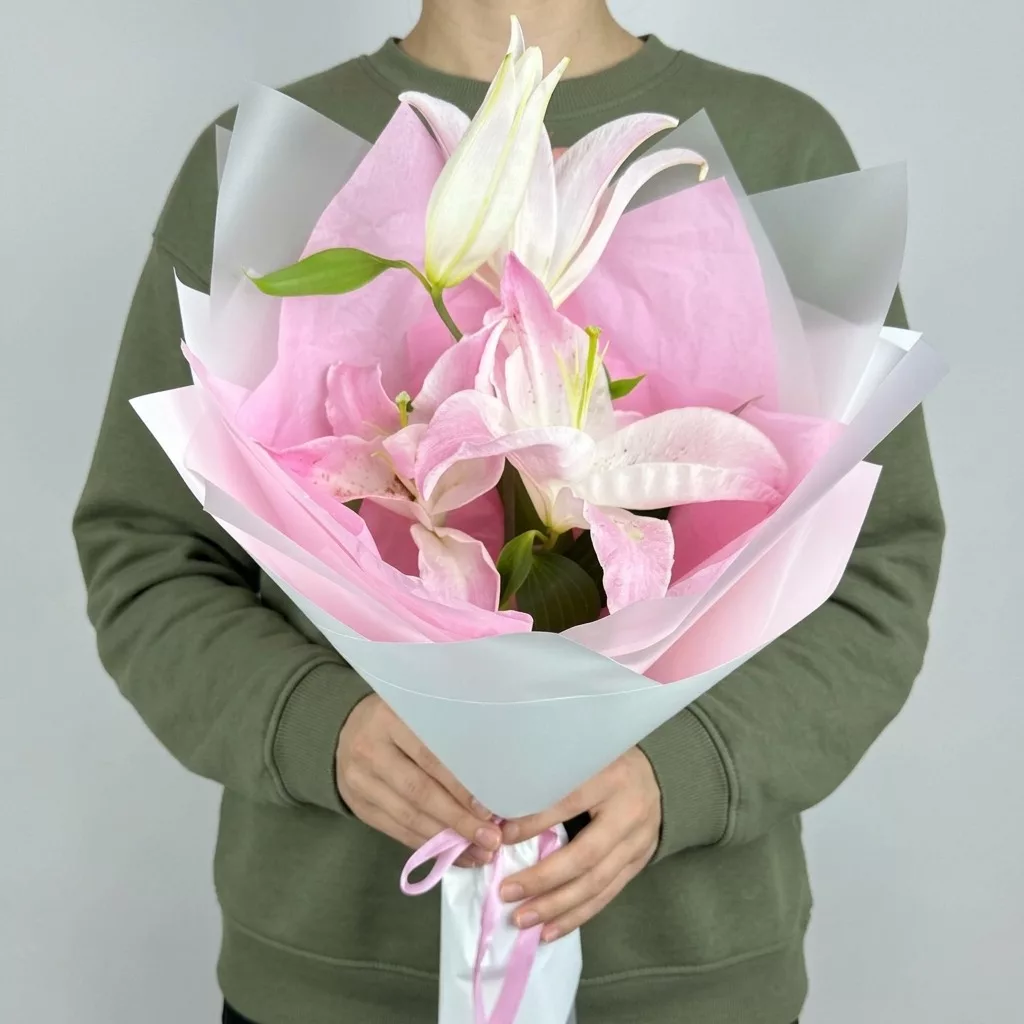
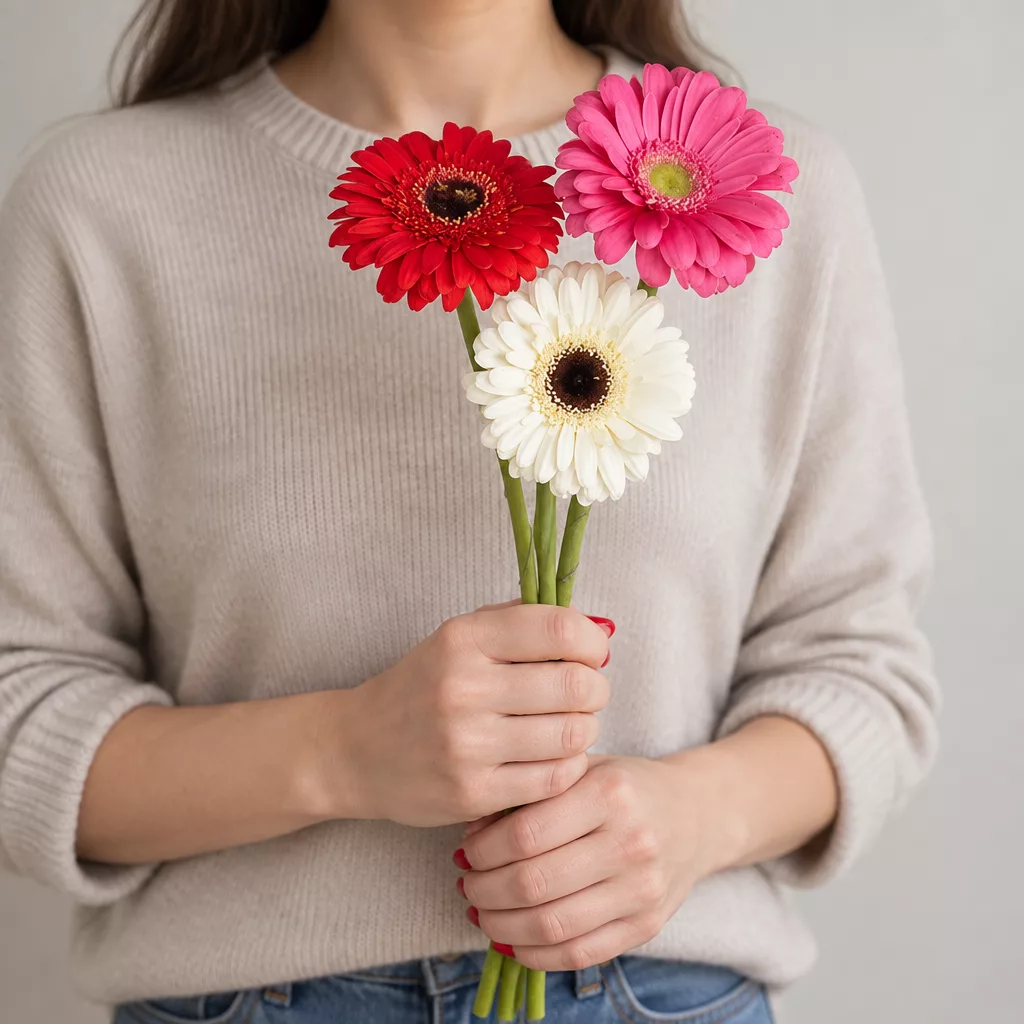
Choose the Right Flowers for the Russian Climate and Occasion
Russia has a continental climate, and Saint Petersburg in particular swings from minus fifteen Celsius in January to plus thirty in July. That temperature range matters enormously for which flowers survive the journey from the shop to the front door. In winter, a courier carrying an open bouquet of garden roses through a blizzard is a real scenario, and a good florist accounts for it by wrapping stems in insulating kraft paper and moving quickly. Delicate open blooms like anemones or sweet peas are riskier choices in deep winter; tight-budded roses, spray chrysanthemums, and alstroemeria travel much better in the cold.
In summer the challenge reverses. Heat above twenty-five degrees accelerates wilting, so arrangements with thick, water-retaining stems — sunflowers, lisianthus, hydrangeas — hold up better than thin-stemmed wildflower mixes. Turboflora's couriers carry flowers in climate-controlled conditions, which makes a significant difference, but knowing seasonal logic helps you make smarter choices.
For occasions, Russian culture has some specific associations worth knowing. Peonies are enormously popular for birthdays and are considered celebratory and generous. Red roses carry romantic weight universally. White flowers are perfectly acceptable for birthdays and celebrations — the old superstition that white means mourning is largely a Soviet-era holdover and is not observed by most people today, especially in a city as cosmopolitan as Saint Petersburg. Odd numbers of stems are traditional for living recipients; even numbers are reserved for funerals, so always check your count.
Gather the Information You Need Before You Place the Order
Ordering flowers internationally is easy to get wrong in small but important ways, and most mistakes happen in the address and timing fields. Before you open the order form, collect the following details so you are not guessing mid-checkout.
First, the full delivery address in Russian or in precise transliteration. Russian addresses follow the order: city, street, building number, apartment number. Saint Petersburg addresses sometimes include a korpus, which is a sub-building within a larger residential complex, written as 'к.' followed by a number. If you miss the korpus, the courier may not be able to find the right entrance. Ask your recipient casually, or check a previous message where they shared their address.
Second, the recipient's Russian mobile number. Couriers call ahead to confirm someone is home. A number without a country code, or a number that goes to voicemail in a language the courier does not speak, causes delays. The Russian mobile format is plus-seven followed by ten digits.
Third, the preferred delivery window. Most services offer morning, afternoon, or evening slots, and some offer specific two-hour windows. Think about your recipient's schedule. A nine-to-eleven morning delivery is wonderful if they work from home; it is wasted if they leave for the office at eight.
Fourth, your card message. Write it in advance. Decide whether you want it transliterated into Russian characters or left in your language. Many recipients in Saint Petersburg read English, but a message in Russian always feels more personal and considered.
Navigate the Payment and Confirmation Process from Overseas
Paying for flowers from a foreign card is the step that most often surprises people, not because it is complicated but because it occasionally requires an extra confirmation step that feels unfamiliar. Most international cards work fine with Russian e-commerce platforms that use standard payment gateways, but your bank may flag the transaction as unusual and send you a one-time verification code. Keep your phone nearby when you check out.
If your card is declined, do not immediately assume the service does not accept foreign payments. Try a different card, clear your browser cache, or contact the shop's support directly — Turboflora has an English-speaking team available to help with exactly these situations. In some cases, PayPal or other digital wallets offer a smoother path if your card repeatedly fails.
Once payment goes through, you should receive an order confirmation by email. Read it carefully. Confirm the delivery date, address, and time window are exactly what you intended. If anything looks wrong, contact support immediately — corrections are easy before the florist begins arranging, and much harder once the order is in production.
You will typically receive a second notification when the courier picks up the order, and sometimes a final one when delivery is completed. Some services send a photo of the delivered bouquet. If your recipient is unreachable during the delivery window, a good courier will leave a note and attempt a redelivery or hold the arrangement at the shop — ask about this policy when you order, especially if the recipient has an unpredictable schedule.
Time Your Order Correctly Across Time Zones
This is where most well-intentioned international orders go sideways. Saint Petersburg operates on Moscow Time, which is UTC plus three, with no daylight saving adjustment. That means when it is nine in the morning in Saint Petersburg, it is six in the morning in London, two in the morning in New York, and midnight on the previous day in Los Angeles. Internalize that gap before you set a delivery time.
If you want flowers delivered at noon on your recipient's birthday, you need to place the order with enough lead time for the shop to prepare the arrangement. For same-day delivery, Turboflora typically needs the order placed by a cutoff time — check the current cutoff on the website when you order, as it can shift seasonally. As a general rule, placing the order the evening before your recipient's timezone gives you the most flexibility and removes any time-zone arithmetic panic from the morning of the occasion.
For major Russian holidays, plan further ahead. March eighth, International Women's Day, is the single biggest flower day in Russia — comparable to Valentine's Day and Mother's Day combined, but concentrated on one date. Every florist in the country is at full capacity. Roses, tulips, and mimosa branches are the traditional choices. If you are sending flowers for March eighth, place your order at least two to three days in advance and specify your preferred delivery window early. The same applies to February fourteenth and the New Year period. Ordering twelve hours before a peak holiday from a different continent is the most common reason international customers are disappointed.
What to Expect After Delivery and How to Handle Problems
A well-executed flower delivery to Russia should feel seamless from your end. You place the order, you receive confirmations, and eventually your recipient sends you a photo or a voice message full of genuine surprise and warmth. That is the normal outcome when you use a reliable local service and follow the steps above.
But occasionally things do not go perfectly, and knowing how to respond helps. If the recipient reports that the flowers arrived in poor condition — stems broken, petals browning, bouquet clearly not matching what you ordered — document it with photos and contact customer support the same day. A reputable shop will investigate and offer a resolution, whether that is a replacement delivery or a refund. The photo evidence is essential; do not wait days before raising the issue.
If the delivery simply did not happen during the window, check whether the courier attempted contact and the recipient missed the call. This is the most common cause of a missed delivery, especially when the recipient's phone is on silent or the number on file had a typo. In most cases, rescheduling is straightforward.
One thing worth managing is expectations about vase life. Fresh cut flowers, even beautifully conditioned ones, are perishable. Roses typically last seven to ten days with proper care — clean water changed every two days, stems recut at an angle, kept away from direct sun and heating radiators. Including care instructions on the card or asking the shop to attach a care card is a small touch that significantly extends the joy of your gift.
Sending flowers to Russia from abroad is not complicated once you understand the model: you are ordering from a local Russian florist, paying internationally, and trusting a professional team to handle everything on the ground. The details that matter most are a precise address including any korpus number, a working Russian mobile for the recipient, a realistic delivery window calculated across time zones, and enough lead time on busy holidays. Get those four things right and you are giving someone you care about a genuinely beautiful, fresh, fragrant experience — the kind that a text message or a digital gift card simply cannot replicate. Turboflora has been doing exactly this for customers calling from across the world, and the reaction when the door opens is always worth it.
Frequently asked questions
Does the florist in Russia actually source the flowers locally, or are they shipped from my country?
Everything happens inside Russia. When you place an order through a service like Turboflora, a florist based in that city sources, arranges, and delivers the flowers locally. You are handling the payment and the instructions from abroad, but the bouquet itself never crosses a border. This is why the flowers arrive fresh rather than exhausted from international transit.
Can I send flowers to Saint Petersburg if I only have a partial address, like a building name but no flat number?
A building name alone is rarely enough. Russian couriers need the street, building number, entrance number, and flat number to reach the door. If you are missing details, contact the recipient casually beforehand or ask the florist whether they can call ahead. Most services will attempt a call to the recipient to confirm access rather than abandon the delivery.
What payment methods actually work for someone ordering from the UK, Canada, or the UAE?
Most reputable Russian flower delivery services accept international Visa and Mastercard, and some take PayPal. The payment leg is the one part of the process that crosses borders. Check before you commit that the checkout accepts cards issued outside Russia, since some smaller local shops only process domestic payments and the order will simply fail at the final step.
How does the January cold in Saint Petersburg affect which flowers I should choose?
Delicate blooms like garden roses with thin petals or tropical flowers struggle when couriers move between minus fifteen temperatures outside and warm interiors. Roses with tighter heads, chrysanthemums, and alstroemeria handle the cold transit better. If you are ordering in winter, ask the florist which varieties are arriving well that week rather than choosing purely by appearance from a website image.
Is same-day delivery to Saint Petersburg from an overseas order genuinely reliable, or is it a risk?
It is reliable if you order before the local cutoff, which is typically mid-morning Saint Petersburg time. The risk is not the delivery model itself but the time zone gap. Someone in Toronto placing an order at nine in the morning may already be past the cutoff in Saint Petersburg. Check the local time before you order, not your own, and confirm the cutoff directly with the service.
Ready to send flowers?
Pick the city, choose the bouquet, and a local florist takes it from there.
Choose a city →