How to Store Flowers Before Giving Them
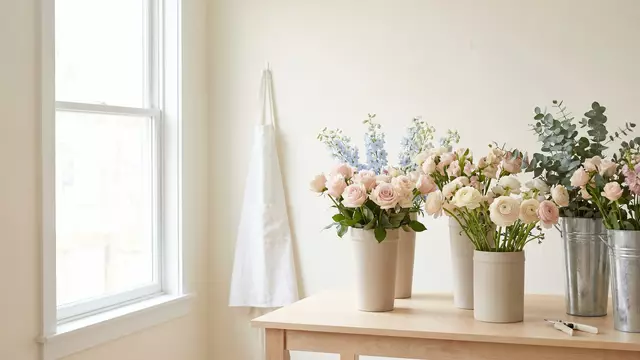
To store flowers before giving them, place the stems in a clean vase of fresh water and keep the bouquet in a cool room, away from direct sunlight, heaters and ripening fruit. Remove any leaves below the waterline, refresh the cut ends with a clean, sharp tool and leave the flower heads uncovered and dry. Keep the stems in water until shortly before you leave.
The right approach depends on whether you are holding a hand-tied bouquet for an afternoon, keeping it overnight or caring for an arrangement in floral foam. Start by checking how the flowers are supplied: decorative wrapping does not necessarily hold water, and a small transport pouch needs different handling from a vase. These steps help you preserve both the flowers and their presentation without repeatedly taking the gift apart.
1. Give the stems water as soon as you can
Prepare a clean vase or bucket with enough room for the stems to sit without being crushed. Wash the container with detergent and rinse it thoroughly, especially if it held another bouquet recently. Use fresh drinking-quality water; ordinary room-temperature water is a sensible starting point unless the flowers come with specific care instructions.
Remove leaves that would sit underwater, then trim a small amount from each stem with clean, sharp secateurs or a suitable knife. Make a fresh, slightly angled cut without crushing the stem, and return it promptly to water. You can usually do this while keeping the bouquet tied, so its shape stays intact. Keep the binding above the waterline where possible.
If a sachet of cut-flower food is supplied, follow its stated dilution rather than guessing the amount. Do not add extra powder to make the solution stronger, or substitute a mixture of sugar, bleach and household remedies. For more detail on this first stage, see our guide to hydrating flowers before gifting.
2. Choose a cool, shaded place with room around the bouquet
Choose the coolest suitable room in your home, with a stable temperature and no direct sun. A shaded corner away from a radiator, fireplace or warm appliance is usually more useful than a bright windowsill. Keep the vase on a stable surface where nobody will brush past the blooms, and leave space around the flower heads rather than pressing them against a wall.
Avoid placing the bouquet beside a fruit bowl. Ripening fruit can release ethylene, which speeds ageing in sensitive flowers, although the effect varies by flower type. Also keep blooms away from cigarette smoke and direct blasts from fans or air conditioners. A cool room should still protect the bouquet from drying draughts and sudden temperature changes.
A domestic refrigerator is not automatically the best storage place. It may contain fruit, have cold spots or leave too little space to keep petals away from chilled surfaces. Unless you have flower-specific guidance and suitable conditions, use a cool room instead. Do not put the bouquet in a freezer or leave it on a balcony where overnight conditions are uncertain.
Bouquets we can deliver




3. Adjust the wrapping without undoing the gift
Keep decorative paper and ribbons dry by placing only the exposed stems in the vase. If the wrapping reaches below the intended waterline, carefully fold it back or loosen the outer layer. Leave the main tie in place if it holds the design together. You do not need to separate every stem simply to give a hand-tied bouquet water.
Check any water pouch before deciding to leave the bouquet as it is. A securely attached pouch can provide temporary hydration, but its water supply is limited and it may leak if tilted. Keep it upright and follow any instructions supplied with it. If it is intended only for transport, transfer the stems to a vase rather than assuming it will last until the next day.
Treat flowers in a box or basket differently when their stems are inserted into floral foam. Leave the stems in place and check the foam for moisture; add water slowly where you can reach it, keeping the decorative container and furniture dry. Do not pull stems out to trim them, since reinserting them can leave poor contact with the foam. Avoid pouring water over the flower heads.
4. Check the bouquet overnight and before you leave
For an overnight wait, settle the bouquet in water before bed and check it again in the morning. Look at the actual water level rather than judging through coloured glass or wrapping. A crowded bouquet can use more water than you expect, so make sure all cut ends remain submerged. Remove fallen leaves or petals from the water instead of leaving them to decay.
Replace water that has become cloudy, and clean the container if it feels slippery inside. If you lift the bouquet out, support it by the stems and keep the pause brief. Recut the ends if they have dried during handling, then return them to fresh water. Follow the flower-food instructions when preparing a new solution; topping up blindly can change its concentration.
Before gifting, inspect the bouquet in good light. Remove clearly damaged foliage carefully, but avoid stripping away firm outer rose petals simply because their texture differs from the centre. Do not mist every flower as a routine finishing step: moisture trapped between petals can encourage spotting or decay. A wilted bouquet needs its water supply checked, rather than a cosmetic spray.
5. Plan the journey and the moment of giving
Leave the flowers in water until close to departure, then let the stem ends drain briefly so they do not soak the wrapping. For a longer journey, ask for advice on a suitable transport water pack rather than improvising a loose bag that could spill. Hold the bouquet by its stems, support its weight and keep the flower heads clear of doors, bags and seat edges.
Travel with the flowers in a comfortable passenger area and avoid leaving them in a parked car. Keep them away from direct heater vents and strong sunlight through the windows. In cold weather, protect the blooms during the walk outdoors with a loose outer covering that does not crush them, then remove that protective layer once you are safely inside.
Think about what happens after you hand over the gift. If the recipient is heading into a long meeting, theatre performance or journey, a large bouquet may be awkward to keep watered. Giving it when they can reach a vase is often more considerate. If there will be a delay, quietly ask whether a clean container is available and explain that the stems should go into water promptly.
6. Arrange delivery in Russia to reduce the storage wait
If you are ordering from abroad for someone in Russia, choosing delivery near the intended moment can reduce the time they need to store the bouquet. Turboflora delivers flowers across Russia, and you can start with the bouquets catalogue. City delivery costs 500 RUB; for remote districts and suburbs, the operator confirms the delivery price when confirming the order.
In large cities, express delivery is available 1–2 hours after order confirmation. You can also arrange an exact time within a margin of 30 minutes, choose a window of 09–12, 12–15, 15–18 or 18–21, or pre-order 1–30 days ahead. Use WhatsApp to agree the address, timing and card text, get help choosing flowers or request a photo before delivery. Check the recipient's local date and time when arranging details.
Delivery is anonymous by default: the courier does not name the sender, so sign the free card if you want the recipient to know who sent it. The courier calls about 15 minutes before arrival. If the recipient is absent, we agree a second delivery that day or a handover to a neighbour or concierge with your consent. See delivery and payment for planning; online checkout uses CloudPayments, and you should check the displayed payment options rather than assume a foreign card will be accepted.
Frequently asked questions
Can I buy flowers the day before giving them?
Yes, provided you can keep the stems in clean water in a cool, shaded room and check them before gifting. Their condition when purchased and the flower varieties affect how well they hold, so overnight storage cannot guarantee an unchanged appearance.
How long can a bouquet stay out of water?
There is no reliable universal limit: flower type, initial hydration, temperature and exposure all matter. Keep time out of water as short as practical, and use suitable water support when transport or the handover will involve a longer wait.
Should I remove all the wrapping before storing flowers?
Usually you only need to move wrapping that would get wet or prevent the stems from reaching water. Keep the bouquet's binding intact where possible, and loosen any outer covering that presses against the flower heads.
Can I store flowers in a dark cupboard overnight?
Darkness alone does not make a cupboard suitable: it may be warm, cramped or poorly ventilated. A cool, shaded room with a stable surface for the vase is generally a more practical choice.
What should I do if the flowers look droopy before gifting?
Check that every stem reaches the water, clean the vase and refresh the water if needed, then recut any dried stem ends with a clean, sharp tool. Let the bouquet rest in a cool place; some flowers may recover after hydration, but damaged or ageing blooms may not.
Ready to send flowers?
Pick the city, choose the bouquet, and a local florist takes it from there.
Choose a city →