Hydrangeas in Russia: Big Blooms, Short Season, Real Impact
There is a moment when someone opens the door and sees a bouquet of hydrangeas for the first time — the sheer volume of the bloom, the softness of the colour, the way it fills the room before it even reaches the table. That reaction is hard to replicate with any other flower. But hydrangeas in Russia come with a specific season, a specific price, and a specific set of rules for keeping them alive and beautiful. If you are thinking about sending them, or wondering whether they are worth it for a particular occasion, this article will give you a clear picture of everything that matters.
When Hydrangeas Are Actually Available in Russia
Russia's domestic hydrangea season runs roughly from late June through early September, peaking in July and August when garden varieties harvested in the Moscow region, Krasnodar Krai, and parts of the Leningrad Oblast reach their best quality. During these weeks you will find the widest colour range and the freshest stems at the most reasonable prices of the year. Outside that window, hydrangeas are still available, but they travel from the Netherlands, Colombia, or occasionally Japan, which adds both cost and transit time to every stem.
In Saint Petersburg the season feels especially vivid because the city's famous white nights coincide almost exactly with peak hydrangea availability. The long daylight hours suit the flower's natural rhythm, and local buyers tend to associate the bloom with summer celebrations for that reason. By October, reliable supply becomes patchier, and by November you are working almost entirely with imported stock.
For anyone ordering from outside Russia, it is worth knowing that the season window matters more here than in Western European countries, where year-round greenhouse supply is more established. If you want the most impressive, freshest hydrangeas possible, timing your order between mid-July and late August gives you the best chance of receiving stems with full, dense flower heads rather than the slightly looser clusters that can appear earlier or later in the season.
Bouquets we can deliver

Why Hydrangeas Cost More Than You Might Expect
A single hydrangea stem takes up as much space in a refrigerated transport box as three or four roses. That physical bulk is the first reason the price is higher — logistics cost more per unit when the cargo is this large and this delicate. The flower heads bruise easily under pressure, so stems cannot be packed tightly, and that means fewer units per shipment and a higher cost per stem passed along the supply chain.
There is also the question of water. Hydrangeas are among the thirstiest flowers in a florist's cooler. They need to be kept at a stable temperature between two and eight degrees Celsius with stems freshly cut and standing in deep, clean water at all times. Any lapse in that cold chain — a warm loading bay, a delayed vehicle, a cooler that fluctuates overnight — shows up immediately in the flower head, which begins to wilt from the outer petals inward. Maintaining that standard across a city as large as Saint Petersburg requires real infrastructure.
Finally, the varieties that hold their shape and colour best — Incrediball, Annabelle, and the deep blue and purple mophead varieties — are not always easy to source in large, consistent quantities within Russia. When supply is tight and demand is high, which happens around graduation season in late June and around major anniversaries in summer, prices reflect that scarcity honestly. The cost signals quality and effort, not simply a premium label.
Choosing the Right Colour for the Right Person
Hydrangeas come in a range of colours that carry genuinely different emotional tones, and the choice matters more than it does with, say, a mixed seasonal bouquet where the overall effect blends everything together. A single large hydrangea head is a statement on its own, so the colour you choose is the first thing the recipient reads before they even touch the flower.
White and cream hydrangeas feel clean, generous, and timeless. They work for a new home, a significant birthday for someone older, or any occasion where you want warmth without sentimentality. Blush pink and dusty rose read as affectionate and personal — they are a good choice for a close friend, a mother, or a partner when you want something softer than red roses but still clearly romantic. Lilac and violet varieties have a richness that suits creative people and anyone who tends to prefer the unusual over the conventional.
Blue hydrangeas deserve a specific mention because they are genuinely rarer and harder to source in Russia. The blue pigment in Hydrangea macrophylla depends on soil acidity during cultivation, which means consistent, saturated blue is not guaranteed from every grower every season. When you do find a true cobalt or indigo-toned stem, it reads as something special and considered — an ideal choice when you want the recipient to feel that real thought went into the selection rather than a quick order. Combining two complementary shades, such as white with soft lilac, creates a bouquet that photographs beautifully and feels curated rather than assembled.
Occasions Where a Hydrangea Bouquet Makes the Strongest Impression
Not every occasion calls for hydrangeas, and part of being a thoughtful sender is knowing when the flower fits the moment. Hydrangeas are at their most impressive when the setting gives them room to be seen — a dining table, a wide windowsill, a reception desk, or a hallway console where the full volume of the bloom can register. In a small apartment where flowers sit on a narrow kitchen shelf, a smaller, denser bouquet might actually serve the recipient better.
For milestone birthdays — thirtieth, fortieth, fiftieth — a large hydrangea bouquet wrapped simply in kraft paper or linen signals that the sender understands the weight of the occasion without resorting to cliché. The same logic applies to significant work anniversaries and promotions, where the scale of the flower matches the scale of the achievement without feeling overly personal or romantic.
Hydrangeas are also one of the best flowers for a housewarming gift in Russia. Moving into a new home is a genuinely celebrated event here, and bringing something that fills a room with colour and softness on day one sets a warm tone immediately. Many Russians associate large, lush flowers with abundance and good fortune in a new space, so the cultural resonance is real even if it is rarely stated directly. Wedding anniversaries, especially those reaching five or ten years, are another strong fit — the fullness of the bloom mirrors the idea of something that has grown and deepened over time.
How Long Hydrangeas Last and What Affects It Most
A well-conditioned hydrangea in a clean vase with fresh water will typically last between five and eight days. That is shorter than roses or chrysanthemums, and it is worth being honest about that when helping someone decide. The vase life depends heavily on what happens in the first two hours after the flowers arrive, and on a few habits maintained throughout the week.
The most common mistake is cutting the stem at a straight angle with scissors. Hydrangea stems are woody and need a sharp diagonal cut — ideally with a knife rather than scissors — to maximise the surface area drawing water. Some florists score the bottom centimetre of the stem vertically as well, which helps with particularly thick stems. Placing the freshly cut stems immediately into cool, clean water is essential; even five minutes of air exposure to a cut stem can cause the tiny vessels inside to block, and once that happens the flower head wilts faster regardless of what you do afterward.
Keep hydrangeas away from direct sunlight and away from fruit bowls. Ripening fruit releases ethylene gas, which accelerates petal drop in many flowers including hydrangeas. A cool room, ideally below twenty degrees Celsius, extends vase life noticeably. Change the water every two days and re-cut the stems each time. If the flower head begins to droop slightly despite good care, a short soak — submerging the entire head in cool water for twenty to thirty minutes — can revive it. This is not a myth; it works because the petals of hydrangeas can absorb water directly through their surface.
Combining Hydrangeas with Other Flowers for a Richer Bouquet
A single variety hydrangea bouquet is already a strong visual statement, but combining hydrangeas with complementary flowers can add texture, depth, and longevity to the overall arrangement. The key is to choose partners that do not compete with the hydrangea's volume but instead frame it or echo its softness.
Eustoma, also called lisianthus, is one of the most successful partners. Its ruffled petals in white, cream, or purple sit comfortably beside a hydrangea head without looking busy, and it shares a similar vase life which means the bouquet ages gracefully rather than losing half its flowers on day three while the rest survive. Spray roses in blush or cream add a finer texture and a familiar romantic note without taking over the composition.
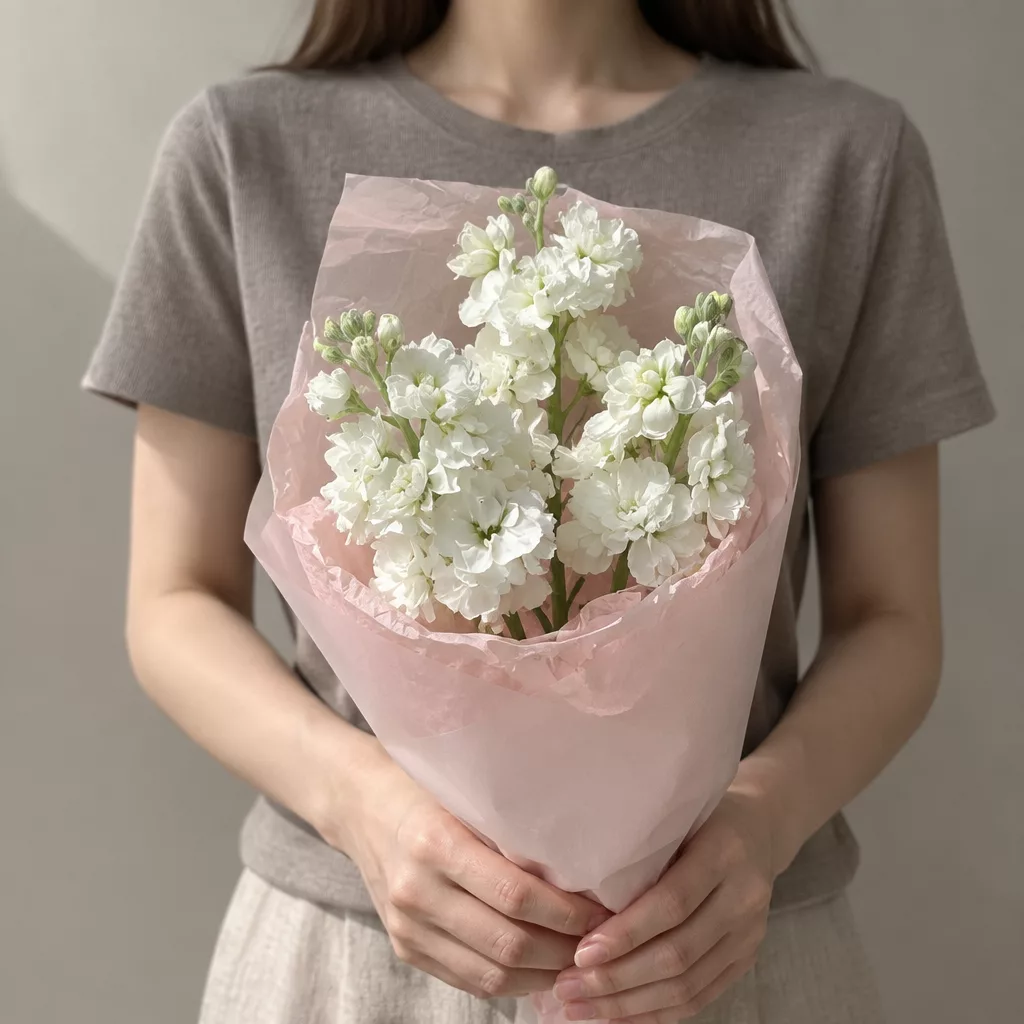
For a more structured look, eucalyptus or ruscus adds green volume and a gentle fragrance that complements rather than overwhelms. Matthiola, known in Russia as levkoy, brings a soft, powdery scent and a column shape that balances the roundness of the hydrangea head beautifully. Avoid combining hydrangeas with flowers that have a very strong scent, such as Oriental lilies, because the competing aromas can make the bouquet feel heavy rather than welcoming.
Presentation matters as much as composition. Hydrangeas wrapped in translucent vellum paper or wide linen ribbon photograph better than those wrapped in heavily printed cellophane, and the recipient is more likely to keep the wrapping as part of the display. A simple, confident wrap that lets the flower heads be seen from above is almost always the right choice.
Ordering Hydrangeas for Delivery Across Russia: What to Know
Sending hydrangeas across a distance introduces variables that do not exist when you buy flowers in person and carry them home yourself. The flower is sensitive to temperature change, vibration, and time out of water, so the quality of the delivery process matters as much as the quality of the flower at the point of packing.
For deliveries within Saint Petersburg, Turboflora operates its own refrigerated courier system, which means the cold chain from our cooler to the recipient's door stays intact. Hydrangeas ordered for same-day delivery within the city arrive in the same condition they left our studio — stems freshly cut, heads fully hydrated, wrapping protecting the outer petals from wind and contact damage. For deliveries to other Russian cities, we use temperature-controlled express shipping that reaches most major destinations within one to two days.
When ordering, it helps to specify the occasion and the setting if you know it. A hydrangea bouquet intended for a large office reception can be arranged differently from one going to a home address where a standard vase is the likely container. Mentioning the recipient's colour preferences or any known aversions also helps us make a choice that feels personal rather than generic.
If you are ordering well in advance — for a birthday two weeks away or a summer anniversary — placing the order a few days early during peak season is a practical idea. July and August see high demand for hydrangeas, and the specific colour combinations that read as most considered sell out faster than single-colour options. Early ordering gives us time to source exactly what you have in mind rather than working with what remains.
Hydrangeas are not the easiest flower to work with, and they are not the cheapest. But when the occasion is right and the timing is right, nothing else in a florist's cooler produces quite the same effect on a recipient — that immediate sense of generosity, of scale, of someone having chosen something genuinely beautiful rather than simply convenient. The season in Russia is real and relatively short, the care requirements are specific, and the price reflects genuine effort at every stage. Understanding all of that makes it easier to decide when a hydrangea bouquet is exactly the right choice and to feel confident that the one you send will arrive and last the way it should. We deliver bouquets across Russia in 1–2 hours.
Frequently asked questions
Are hydrangeas available year-round for delivery in Russia?
Hydrangeas are available year-round, but domestic Russian supply peaks between late June and early September. Outside that window, stems come from international growers, which affects both price and occasionally the density of the flower head. For the freshest, fullest blooms, summer orders give the best results.
How should the recipient care for hydrangeas once they arrive?
Cut the stems diagonally with a sharp knife, place them immediately in a clean vase with cool water, and keep them away from direct sun and fruit. Change the water every two days and re-cut the stems each time. If a head droops, submerge it fully in cool water for thirty minutes — this often revives it completely.
Is it appropriate to send hydrangeas as a gift in Russia, or do they carry any specific meaning?
Hydrangeas are well received across a wide range of occasions in Russia and carry no negative associations. They are particularly appreciated for birthdays, housewarmings, and anniversaries. Their size and lushness read as generous and celebratory, which makes them a confident choice for any moment you want to mark with something memorable.
Can hydrangeas be combined with other flowers in the same bouquet?
Yes, and some combinations work very well. Eustoma, spray roses, and matthiola complement hydrangeas without competing with them visually. Eucalyptus and ruscus add green structure. Avoid strongly scented flowers like Oriental lilies alongside hydrangeas, as the competing aromas can make the overall bouquet feel overwhelming rather than welcoming.
Why do blue hydrangeas seem harder to find than pink or white ones?
Blue pigmentation in Hydrangea macrophylla depends on the acidity of the soil during cultivation. Achieving a consistent, saturated blue requires careful growing conditions that not every supplier maintains. True cobalt or indigo stems are genuinely rarer, which is why they are not always available in large quantities and why they tend to feel more special when they are.
Ready to send flowers?
Pick the city, choose the bouquet, and a local florist takes it from there.
Choose a city →