Hypercium berries: a practical guide to Hypericum in bouquets
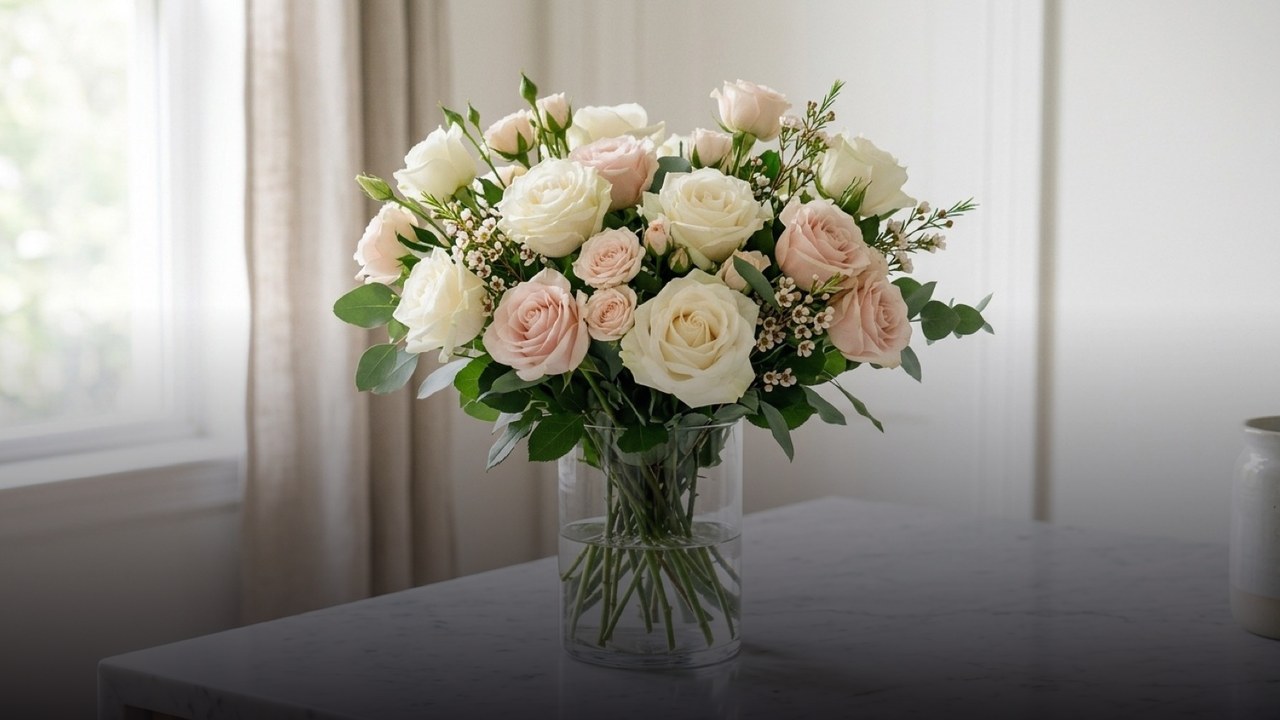
“Hypercium berries” usually means Hypericum berries: the small, rounded fruits on branching stems that florists use to add colour and texture to bouquets. You may see red, pink, green, cream or darker berries, depending on the variety and stage of development. They are decorative stems, not edible berries, so keep them away from children and pets.
If you are choosing flowers from a photograph, Hypericum is often the detail tucked between the larger blooms: clusters of berries above oval green leaves. It gives you a different shape from petals and can help a bouquet feel fuller without adding another large flower. Here is how to recognise it, choose a suitable combination and care for the stems once your flowers arrive.
What Hypericum berries are and how to recognise them
Hypericum is a genus of plants that includes species commonly called St John’s wort. In floristry, the name often refers to cut stems grown for their ornamental fruits rather than their flowers. A typical stem carries several small berries on branching tips, sometimes with a little star-shaped collar at the base of each fruit.
The spelling matters when you are looking for information: Hypericum is the botanical name, while “hypercium” is a common typing error. Searching with the correct spelling can make it easier to compare bouquet descriptions and care advice. Our Hypericum berries guide uses that spelling too; both searches generally point to the same floral ingredient.
Colour alone will not reliably identify a stem. Hypericum can resemble other decorative berries in a photograph, especially when leaves and branching points are hidden. Look at the whole stem where possible, and ask for the ingredient name if it matters to your choice. A red cluster in a bouquet is not enough evidence to identify the plant or decide that it is safe to eat.
Choosing berry colours and flowers that work together
Think first about the role you want the berries to play. Red Hypericum makes a clear accent against pale flowers, while green berries can blend into foliage and add a quieter change of texture. Pink and cream tones can sit gently beside soft-coloured blooms. The effect depends on the surrounding flowers, so judge the complete arrangement rather than one stem in isolation.
Scale matters as much as colour. Small berry clusters can break up the broad surface of a rose or another large bloom, helping individual flower heads remain distinct. In a smaller bouquet, a few visible clusters may be enough. If every gap is filled, the arrangement can look crowded and the berries lose the outline that makes them interesting.
For a birthday or a thank-you gift, start with the recipient’s favourite colours and decide whether the berries should match or contrast. You can use our bouquets catalogue to find a direction, then ask a manager whether Hypericum can be included in the bouquet you are considering. Confirm the intended ingredients before ordering if the berries are essential to your gift.
Bouquets we can deliver




What Hypericum berries mean, and when to send them
Hypericum does not have one universally agreed meaning in the language of flowers. Floristry descriptions sometimes associate its berries with protection or good wishes, but those interpretations vary. Treat them as possible associations rather than a message the recipient will automatically recognise. The colours, occasion and words on your card will usually communicate your intention more clearly.
Red berries can make an arrangement feel warm and festive, but they do not restrict it to a winter celebration. Green or pale berries may suit a quieter thank-you bouquet or flowers sent simply to brighten someone’s day. You do not need to assign a symbolic meaning to every ingredient: choosing a texture or colour the recipient enjoys is a thoughtful reason in itself.
For condolences, illness or another sensitive occasion, follow what you know about the recipient’s preferences and customs. Avoid assuming that a particular berry colour carries the same meaning in every household. A short, direct card message helps: “Thinking of you and sending love” leaves less room for misunderstanding than relying on an unfamiliar floral symbol.
How to care for cut Hypericum berries at home
Start with a clean vase and fresh water. Remove wrapping that would sit in the water, then check the lower stems for leaves that would fall below the waterline. Remove those leaves gently so they do not decay in the vase. If flower food comes with your bouquet, follow its packet instructions rather than estimating a stronger mixture.
Before placing the stems in water, make a fresh cut at their bases with clean, sharp secateurs or another tool suitable for the stem’s thickness. Avoid crushing the ends or trying to hammer woody stems open. In a mixed bouquet, handle the stems carefully so that berry clusters do not catch on neighbouring flowers and break away while you adjust their position.
Keep the vase away from direct sun, radiators and ripening fruit. Check the water daily, replenish it as needed, and replace it when it becomes cloudy; clean the vase at the same time. Remove fallen leaves and berries promptly. These steps support the whole bouquet, although different flowers may age at different rates and there is no single vase-life promise for every arrangement.
Look for changes rather than judging freshness by firmness alone. Shrivelling berries, mould, deteriorating leaves or an unpleasant smell are reasons to inspect the stems and water. Remove affected material so it does not remain among healthy flowers. Hypericum is for decoration: do not use the berries in food, drinks or homemade remedies, even if the plant name sounds familiar.
Ordering a Hypericum bouquet for someone in Russia
When you are ordering from abroad, give the manager the recipient’s city and address, your preferred date, and a description of the bouquet you want. If Hypericum is the reason for your choice, name it explicitly and explain whether its colour matters. A reference to “berries” alone leaves room for confusion with other ornamental stems, so agree that detail before confirming the order.
You can contact a manager on WhatsApp for help choosing a bouquet, agreeing the time, address and card text, and obtaining a photo of the bouquet before delivery. Use that conversation to clarify the overall colour balance and the role of the berries. A photograph helps you see the arrangement, while an explicit ingredient discussion confirms what you are asking for.
We deliver flowers across Russia. City delivery costs 500 RUB; for remote districts and suburbs, the operator confirms the delivery price when confirming the order. Online checkout uses CloudPayments. If you are paying from another country, check the payment options displayed at checkout; acceptance of every foreign-issued card is not guaranteed.
Agreeing delivery timing and making the gift personal
For an occasion with a fixed date, you can pre-order 1–30 days ahead. Express delivery in large cities is available 1–2 hours after the order is confirmed. Other options are delivery at an exact time with a tolerance of plus or minus 30 minutes, or within the windows 09–12, 12–15, 15–18 and 18–21. When ordering from abroad, agree the time for the recipient’s city explicitly.
Choose a time when the recipient is likely to be available to receive the flowers. The courier calls about 15 minutes before arrival, so a surprise still involves a short practical call. If the recipient is absent, we agree a second delivery the same day or, with the sender’s consent, hand the flowers to a neighbour or concierge. See delivery and payment details when planning the order.
Delivery is anonymous by default: the courier does not name the sender. A card with your text is free, so include your name in the message if you want the recipient to know who sent the bouquet. For a gift across a distance, a specific line such as “Thinking of our Sunday walks—happy birthday, Anna” can make the flowers feel personal without requiring an explanation of their symbolism.
Frequently asked questions
Are hypercium berries and Hypericum berries the same thing?
“Hypercium” is usually a misspelling of Hypericum, the name used for these ornamental berry stems in floristry. If you are identifying a particular bouquet, confirm the ingredient rather than relying only on the spelling or berry colour.
Can you eat Hypericum berries from a bouquet?
No. Treat Hypericum berries as potentially harmful if swallowed and keep them away from children and pets; they should not be used as food or drink decorations.
How long will Hypericum berries last in a vase?
Their condition depends on the stems’ freshness, handling and vase environment, so a fixed lifespan would be misleading. Use a clean vase, maintain fresh water and remove deteriorating material as it appears.
Can I request Hypericum when sending flowers to Russia?
Yes, you can ask a manager for a bouquet containing Hypericum and specify your preferred berry colour. Agree the ingredients before confirming your order, since a request alone does not establish availability.
Will the recipient know who sent the flowers?
The courier does not name the sender because delivery is anonymous by default. Add your name to the free card if you want the recipient to recognise your gift.
Ready to send flowers?
Pick the city, choose the bouquet, and a local florist takes it from there.
Choose a city →