Irises in Russia: Spring Window, Colours, and Vase Life
There is a particular kind of excitement when irises appear in the shop after a long Russian winter. They arrive almost without warning, fill the buckets with violet, white, and deep blue, and then — just as quickly — the season closes again. If you are thinking of sending irises to someone in Saint Petersburg, Moscow, or anywhere else across Russia, timing matters more than it does with roses or chrysanthemums. Get it right, and the recipient unwraps something genuinely seasonal and special. This article covers when to expect them, what shades are realistically available, and how to help the flowers last as long as possible once they arrive.
Why Irises Have Such a Short Season in Russia
Russia's climate makes iris cultivation outdoors a brief affair. Field-grown irises in the central and southern regions typically bloom from late April through the end of May, with the peak window sitting somewhere in the first three weeks of May. That is roughly six weeks in a good year, less if spring arrives late or a warm spell rushes everything at once. Florists in Saint Petersburg often say the season feels like a single long weekend — you blink and it is over.
The irises available in Russian flower shops during this period come from two sources: Dutch greenhouse imports, which extend availability slightly into early April, and domestic field cuts that arrive in May with a freshness and fragrance that imported stems rarely match. The domestic cuts are the ones worth waiting for. They tend to have thicker stems, more saturated colour, and a scent that fills the room rather than just hinting at one.
Outside this window, irises essentially disappear from the retail market. Unlike roses, which are grown under glass year-round across the world and shipped into Russia continuously, irises do not hold well during long cold-chain transport and are not economically viable to greenhouse-grow at scale for the Russian market. This scarcity is exactly what makes a bouquet of irises in May feel so considered. Sending them says you noticed the season and chose deliberately, which is a meaningful gesture in Russian flower culture, where seasonality is quietly appreciated even if it is rarely spoken aloud.
Bouquets we can deliver


Colours You Can Realistically Expect to Find
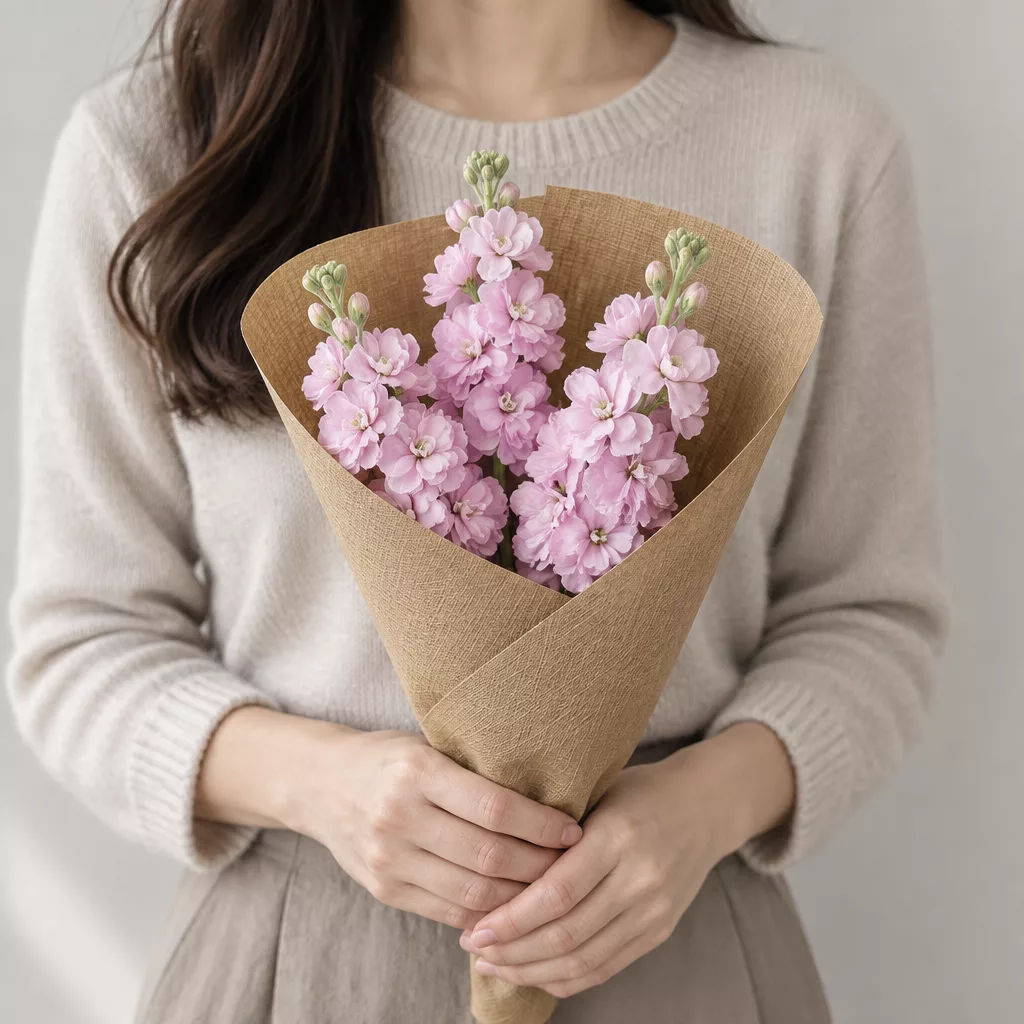
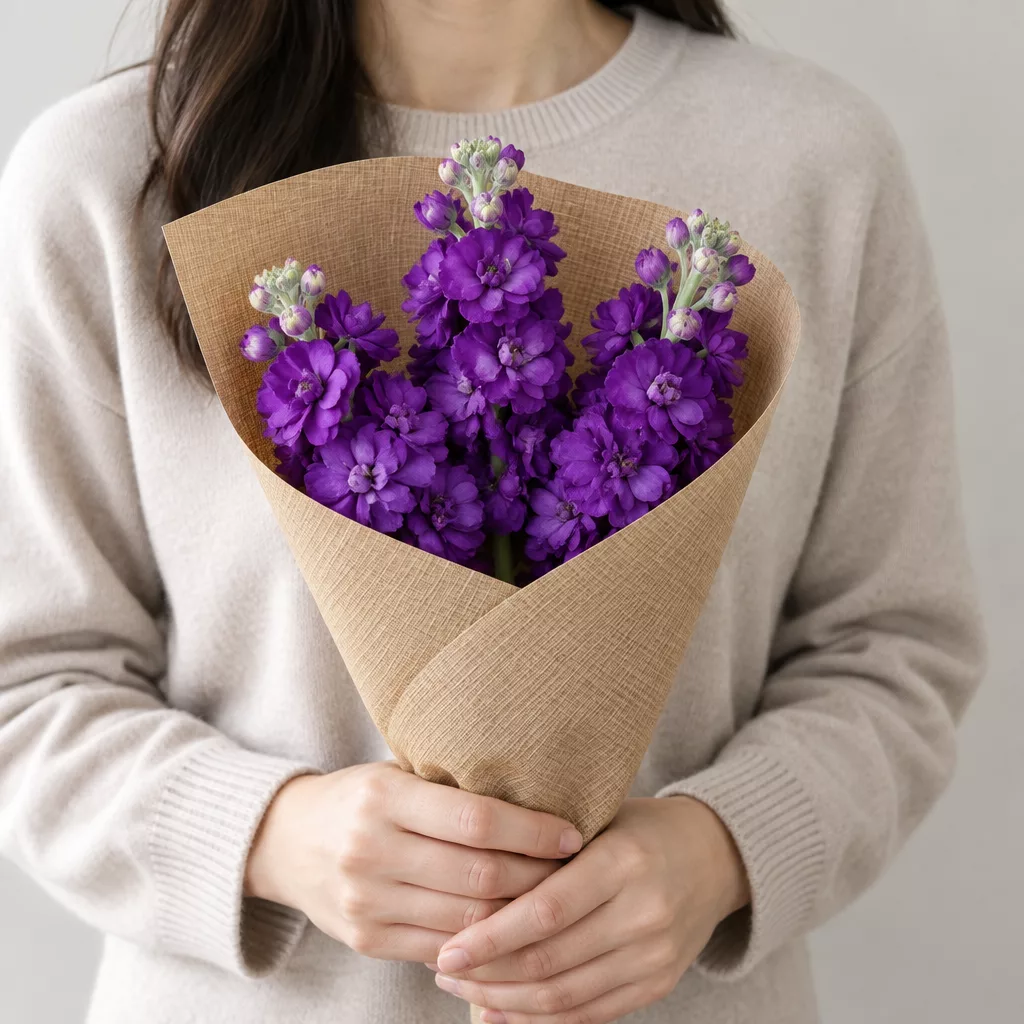
The colour palette of irises available in Russia skews heavily toward violet and purple, and that is not an accident. Varieties in the blue-violet range — including the widely grown Dutch bearded iris types and the slender Dutch iris cultivars bred for cut-flower production — travel and hold better than white or yellow forms. They also photograph beautifully, which matters in an era when flowers are shared on screens almost as often as they are held in hands.
Deep violet and blue-purple are the most reliably stocked shades throughout the season. White irises appear in most shops but in smaller quantities; they are popular for pairing with other spring flowers rather than standing alone. Yellow irises, particularly the slim Dutch iris varieties with their distinctive falls, are available but inconsistent — some weeks you will find them easily, other weeks they simply are not there. Bicolour forms, where the standards (the upright petals) are one shade and the falls (the drooping petals) are another, turn up occasionally and are worth asking about specifically.
What you will not often find in mainstream Russian retail are the tall bearded iris varieties beloved by garden designers. Those are primarily grown for gardens and do not perform reliably as cut flowers. The cut-flower market is dominated by Dutch iris hybrids, which are smaller, more uniform, and bred specifically for vase life. When you order a bouquet of irises from a florist, these are almost certainly what arrives — and in the right combination with white tulips or pale ranunculus, they are genuinely beautiful rather than merely serviceable.
Choosing Irises for the Person and the Occasion
Irises carry a particular emotional register that makes them well suited to certain moments. In Russia, they are closely associated with the May holidays — Victory Day on the ninth of May falls squarely within the season — but they are not limited to that occasion. A bouquet of deep violet irises feels both celebratory and a little serious, which suits birthdays for people who find roses too obvious, or thank-you gifts for teachers and mentors where something more considered than a standard mixed bouquet is appropriate.
For a woman who loves gardening or nature, irises in season are often more touching than any exotic import. They signal that the sender paid attention to what is actually growing right now, rather than ordering from a default list. For a new home or housewarming, a tall arrangement of irises in a simple glass vase reads as elegant without being formal.
When choosing a combination, irises pair exceptionally well with white or cream flowers that let the colour speak. White tulips are the classic Russian pairing in May — both are in season, both have clean lines, and the contrast is striking without being busy. Pale peony buds, if the timing overlaps in late May, make an even more luxurious combination. Avoid mixing irises with strongly coloured flowers like red roses or orange gerbera; the iris colour tends to fight rather than complement, and the arrangement loses the quiet sophistication that makes irises worth choosing in the first place. Greenery should be minimal — a few stems of ruscus or eucalyptus at most.
What Fresh Irises Should Look Like at the Point of Delivery
Knowing what to look for when a bouquet arrives protects the recipient from disappointment and helps them get the best from the flowers. Fresh irises for delivery should arrive in bud — ideally showing colour but not yet open. A bud that is still fully closed and showing no colour is too early and may not open at all if the flower was cut before it was ready. A bud that is already half-open has already used some of its vase life in transit and will not last as long at home.
The stems should be firm and green all the way down, with no yellowing at the base. The leaves, which are flat and strap-like, should be a clean mid-green without brown tips or translucent patches. Any sliminess at the stem base is a sign of bacterial damage, usually caused by sitting in warm water or being out of water for too long during transport — this is a quality control issue, not something the recipient caused.
At Turboflora, irises are cut and dispatched from temperature-controlled storage and delivered within one to two hours, which means they arrive in a condition very close to how they left the preparation room. This matters with irises more than with many other flowers because they are sensitive to temperature swings. A stem that has spent three hours in a warm delivery van is already compromised. Speed of delivery is not a luxury with irises — it is genuinely part of the product. When the flowers arrive correctly, the recipient gets to watch the buds open over the following day or two, which is one of the small pleasures that makes irises worth sending.
Vase Life: How Many Days to Expect and Why It Varies
Under good home conditions, a vase of fresh irises will typically last five to seven days. That is shorter than roses or alstroemeria, but the experience of those days is different — you watch the buds open in sequence, each one lasting a day or two before the next takes over, so the bouquet changes rather than simply fading. Many people find this more engaging than a static arrangement.
The variables that affect vase life most significantly are water temperature, room temperature, and cleanliness of the vase. Irises prefer cool, clean water changed every two days. Room temperature is probably the biggest factor most people underestimate. In a warm apartment — which Russian homes in May often are, since central heating does not switch off until late spring regardless of outdoor temperatures — irises will open faster and decline faster. A room sitting at 24 or 25 degrees Celsius will shorten vase life noticeably compared to a room at 18 to 20 degrees.
Direct sunlight and proximity to fruit are both damaging. Fruit releases ethylene gas as it ripens, and irises are moderately sensitive to ethylene, which accelerates aging in the petals. This is a practical detail worth passing on to the recipient — keeping the vase on a windowsill in full sun next to a bowl of apples is probably the fastest way to shorten the life of an iris bouquet.
As individual flowers finish, removing them from the arrangement rather than leaving them to decompose in the water will meaningfully extend the life of the remaining buds. A bouquet that starts with seven stems can still look intentional and attractive with four or five, especially if the vase is adjusted to suit the reduced volume.
Caring for Irises Once They Arrive: The Practical Steps
The first ten minutes after unpacking a bouquet of irises are the most important for vase life. The stems should be cut at an angle — a diagonal cut of about two centimetres — using a sharp knife rather than scissors. Scissors compress the stem tissue and reduce water uptake; a knife makes a clean cut that allows the stem to draw water efficiently. This is a small detail that makes a real difference with irises, which are thirstier than they look.
The vase should be clean and filled with fresh, cool water. Tap water in Saint Petersburg is fine for irises; there is no need for filtered water or special additives, though a sachet of flower food from the florist, if included, can be dissolved in at the correct dilution. The lower leaves — anything that would sit below the waterline — should be removed before placing the stems in the vase. Submerged leaves rot quickly and introduce bacteria that cloud the water and shorten the life of the flowers.
For the first few hours, placing the vase in a cool room or even a cool hallway helps the stems hydrate properly after delivery. Once the buds begin to open, the arrangement can move to wherever it will be most enjoyed. Avoid placing it directly above a radiator, which in Russian apartments can still be running in May, or in a draught from an open window — both cause rapid dehydration of the petals.
Changing the water every two days and re-cutting the stems slightly each time will noticeably extend the arrangement. These are not complicated steps, but they are the difference between a bouquet that lasts five days and one that lasts seven.
Ordering Irises for Delivery Across Russia: What to Keep in Mind
Because the iris season is short and demand spikes around the May holidays, availability can shift quickly. Ordering a day or two in advance during the first two weeks of May is genuinely advisable rather than just a standard recommendation. This is one of the few times in the Russian flower calendar when a specific flower can sell out across multiple suppliers in a single morning — Victory Day in particular sees enormous demand for spring flowers, and irises are among the first to go.
When placing an order for delivery to another city, it is worth specifying whether you want the stems in tight bud or showing some colour. Tight buds travel better and give the recipient the experience of watching them open. Open flowers are more immediately impressive but have less time left. A good florist will advise based on what is available that day and how far the delivery is going.
For deliveries within Saint Petersburg, Turboflora's one-to-two-hour window means irises can be sent with confidence that they will arrive in excellent condition. For deliveries to other Russian cities, the same standard applies — the flowers leave preparation rooms in good condition and are in the recipient's hands quickly, which is the factor that matters most with a flower as time-sensitive as the iris.
If you are unsure whether irises are available on a specific date, contacting the shop directly is the most reliable approach. The season is real, the window is narrow, and the flowers are worth the small effort of checking before you commit to them as your choice.
Irises are one of those flowers that reward attention. They arrive in Russia during a specific, brief window in spring, they open in front of you rather than all at once, and they carry a colour that is genuinely difficult to find in any other flower. Sending them during the season is a choice that says something — that you noticed what was growing, that you thought about the person rather than defaulting to the obvious. With a little care from the recipient, a good bouquet of irises will give five to seven days of real pleasure, changing day by day as each bud opens in turn. That is not a long time, but it is a vivid one. We deliver bouquets across Russia in 1–2 hours.
Frequently asked questions
Can I order irises from Turboflora outside the main spring season?
Irises are genuinely seasonal and largely unavailable in Russian flower shops outside April and May. Dutch greenhouse imports can extend availability slightly into early April, but from June onward the supply effectively disappears until the following spring. If you have a specific date in mind, contact us early in the season to check what is available and plan accordingly.
Are irises a suitable gift for a man in Russia?
Absolutely. In Russian flower culture, irises are not considered exclusively feminine. Their strong colour and clean architectural shape make them a natural choice for a man who appreciates something seasonal and considered over a conventional bouquet. A simple arrangement of deep violet irises with minimal greenery is a confident, unfussy gift for a birthday, professional achievement, or any occasion worth marking.
My recipient's apartment is quite warm. Will the irises still last?
They will last, but the timeline shortens in warm rooms. At typical Russian apartment temperatures in May — often 22 to 25 degrees Celsius with heating still running — expect closer to four to five days rather than seven. Advise the recipient to keep the vase away from radiators, change the water every two days, and place the arrangement in the coolest part of the room, even overnight if possible.
What flowers combine well with irises in a bouquet?
White tulips are the most natural pairing in May — both are seasonal, both have clean lines, and the contrast between white and violet is striking without being complicated. Pale ranunculus and cream-coloured freesia also work well. Avoid strongly coloured companions like red roses or orange flowers, which compete with the iris rather than letting it lead. Keep greenery minimal for the most elegant result.
How do I know if the irises I receive are fresh enough to open properly?
Fresh irises for delivery should arrive showing colour in the bud but not yet open. A bud with no colour showing may have been cut too early and might not open. Stems should be firm and green with no yellowing at the base. If buds arrive already half-open, they are still beautiful but will have a shorter vase life. Any sliminess at the stem base is a sign of bacterial damage and should be trimmed away immediately.
Ready to send flowers?
Pick the city, choose the bouquet, and a local florist takes it from there.
Choose a city →