Is Flower Food Good for Flowers in a Vase?
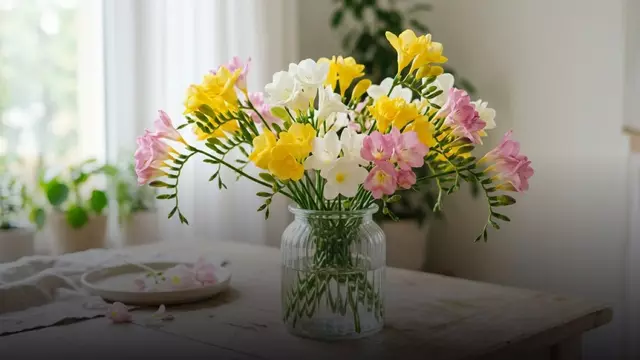
Yes, flower food is generally good for cut flowers when you dilute it exactly as directed. A suitable cut-flower formula supplies sugar, helps control microbial growth and adjusts the water's acidity to support water uptake. It can help a bouquet stay fresh, but it cannot restore damaged stems or guarantee a particular vase life.
The important distinction is between food made for cut flowers and fertiliser intended for growing plants. Your vase needs the former: a measured treatment for stems separated from their roots. Whether you are caring for your own bouquet or sending flowers to someone in Russia, the most useful advice is simple: use the correct dilution, keep the vase clean and check the water every day.
What flower food actually does in the vase
Cut flowers still use energy after harvesting, although they no longer have roots supplying water and nutrients. The sugar in flower food provides a source of energy that can support flower opening and maintenance. This is particularly relevant when a bouquet contains buds that are still developing, but the response varies with the flower and its condition.
Water uptake matters just as much as energy. Microorganisms multiply in vase water, especially when leaves or other plant material sit below the surface, and can contribute to blocked stems. Commercial flower food typically combines sugar with ingredients that limit microbial growth and adjust acidity. Sugar on its own does not provide that balanced treatment.
Think of flower food as one part of good vase care. It cannot compensate for a dirty container, stems left without water or a bouquet standing beside a heater. Different flowers also age at different rates, so a mixed arrangement may need individual stems removed while the rest remain presentable. An ageing bloom does not necessarily mean the food has failed.
How to mix a flower food packet correctly
Start by reading the packet rather than assuming one sachet suits any vase. Products are supplied for different volumes of water, and the intended concentration matters. Measure the water in a jug, add the stated amount of food and mix as directed. A large vase filled only partway may hold less water than its shape suggests.
Avoid adding an extra packet to make the treatment stronger. Too little water creates an overly concentrated solution that may damage flowers rather than help them. Excessive dilution can also reduce the intended effect. If your vase holds less than the packet's stated volume, you can prepare the full quantity in a clean jug and use only what the vase needs.
Do not estimate a fraction of a powder packet by eye unless the instructions explain how to divide it. If you cannot establish the correct dilution, clean water is a sensible temporary choice while you check the label. For more detail on what sachets can and cannot do, see our guide to flower food packets.
Bouquets we can deliver




Prepare the bouquet before adding it to the water
Wash the vase thoroughly with washing-up liquid, rinse it well and remove any residue from previous flowers. A vase that looks clear can still have a slippery film inside. Choose a container that supports the stems without packing them tightly together, and keep the foliage above the waterline so it does not sit in the solution and decay.
Refresh the stem ends with a clean, sharp tool before placing the flowers in the prepared water. Make a clean cut without crushing or splitting the stem, then return it to water promptly. Remove leaves that would be submerged, but leave healthy foliage higher up the stem. There is no need to strip every leaf from the bouquet.
Use fresh water and follow any temperature guidance on the flower food label or care instructions. Ice is not a necessary addition to a normal mixed bouquet. Once arranged, place the vase away from direct sun, radiators, heating vents and ripening fruit. These choices help limit stresses that a preservative solution alone cannot resolve.
Check the water daily and respond to changes
Look at the water level each day, particularly after first arranging the flowers. A bouquet can take up enough water to leave some cut ends exposed even when the vase still contains water at the bottom. Keep all the stem ends submerged. When topping up, follow the product's directions; if it calls for treated water, mix that separately at the correct dilution.
Follow the label's schedule for replacing the solution, and act sooner if the water becomes cloudy, develops an unpleasant smell or contains decaying material. Take the stems out, wash and rinse the vase, remove deteriorating leaves and make fresh solution. Pouring another packet into old, dirty water does not remove the material causing the problem.
Check the flowers individually rather than discarding the whole arrangement when one stem fades. Remove spent blooms and any soft or rotting material, then rearrange the healthy stems in a suitably sized vase. If you have run out of sachets, our guide to keeping a bouquet fresh without flower food explains the practical care steps that still help.
Avoid kitchen substitutes and check special arrangements
Table sugar alone is an incomplete substitute: it supplies energy but can also feed microorganisms in the water. Aspirin, coins and fizzy drinks do not reproduce a balanced cut-flower formula either. Homemade mixtures are difficult to dose consistently, so there is little reason to improvise when you can use a suitable commercial product or maintain a clean vase with fresh water.
Do not add household bleach, vinegar or other cleaners to an already prepared flower food solution. Combining products changes the formulation, and mixing household chemicals can be dangerous. Use one product intended for cut flowers according to its label. Never transfer a familiar cleaning dose from another household task into a vase by guesswork.
The advice changes when the flowers are not loose cut stems in a vase. Potted plants need care appropriate to their roots and growing medium; cut-flower food is not a substitute for plant fertiliser. For flowers arranged in floral foam or another fixed base, follow the arrangement's care instructions before adding anything. The right approach depends on how water reaches those stems.
Sending flowers to Russia: make the care easy to follow
When you send a bouquet from abroad, a short care message can be more useful than a list of homemade remedies: use a clean vase, remove submerged leaves, refresh the stem ends and follow any flower food instructions. You can choose from our bouquets catalogue and contact a manager on WhatsApp to agree the address, timing and card text, or request a photo before delivery.
We deliver flowers across Russia. City delivery costs 500 RUB; for remote districts and suburbs, the operator confirms the price when confirming the order. In large cities, express delivery is available in 1–2 hours after order confirmation. You can also arrange an exact time within a plus-or-minus 30-minute tolerance, choose a 09–12, 12–15, 15–18 or 18–21 window, or pre-order 1–30 days ahead.
Delivery is anonymous by default: the courier does not name the sender, so include your name in the free card if you want the recipient to know who sent the flowers. The courier calls about 15 minutes before arrival. If the recipient is absent, we agree a second delivery that day or handover to a neighbour or concierge with the sender's consent. Online checkout uses CloudPayments; check the payment options shown there, as acceptance of every foreign card cannot be guaranteed. Availability and timing of delivery across Russia are confirmed for the chosen city, address, date and bouquet.
Frequently asked questions
Is flower food better than plain water?
A correctly diluted cut-flower formula can offer benefits that plain water does not, including an energy source and ingredients that help manage microbes and acidity. Clean water remains a useful temporary option if you do not have suitable flower food.
Can too much flower food hurt flowers?
Yes, an overly concentrated solution may damage cut flowers. Measure the water and follow the packet's dilution instructions instead of adding extra food to strengthen it.
Should I add flower food every time I top up the vase?
Follow the product's topping-up instructions. If treated water is required, prepare it separately at the stated dilution rather than sprinkling powder directly into the vase.
Can I put cut-flower food in a potted plant?
Use cut-flower food for the purpose stated on its label. A rooted plant needs watering and, when appropriate, fertiliser suited to the plant and its growing medium.
Does flower food guarantee that a bouquet will last a week?
No specific vase life can be guaranteed from flower food alone. Flower type, condition, cleanliness, water supply and the room environment all influence how long a bouquet stays fresh.
Ready to send flowers?
Pick the city, choose the bouquet, and a local florist takes it from there.
Choose a city →