Got the Bouquet a Day Early? Here Is How to Keep It Perfect
The bouquet has arrived, it looks stunning, and the occasion is tomorrow. That gap of eighteen or twenty hours is where most flowers lose their magic — not because anything went wrong with the flowers themselves, but because they sat in the wrong spot, in the wrong water, at the wrong temperature. A few simple decisions made in the first ten minutes after delivery will decide whether your roses look just-cut tomorrow morning or whether they arrive at the celebration already drooping. This is what a florist would do.
Why That One Night Actually Matters More Than You Think
Flowers are living things that keep breathing and drinking long after they are cut. In the hours after a bouquet arrives, the stems are actively pulling water and the blooms are continuing to open. If conditions are right, that process works in your favour — a bud that was tight at delivery can be a beautiful open bloom by morning. If conditions are wrong, the same process drains the flower faster than it can recover.
The main threats overnight are warmth, dry air, ethylene gas, and dehydration. Warmth speeds up every biological process, which sounds helpful but actually means the flower ages faster. Dry air pulls moisture out of petals before the stem can replace it. Ethylene is a natural ripening gas released by fruit, vegetables, and even some older flowers — it tells nearby blooms to age quickly. Dehydration happens when a stem sits in too little water or when the cut end has sealed over and can no longer drink.
Roses, tulips, and peonies are especially sensitive to warmth. Chrysanthemums and alstroemerias are more forgiving. Orchid sprays can handle a night at room temperature better than most, but they still prefer cooler air. Knowing what is in your bouquet helps you set the right expectations. If you received a mixed arrangement, treat the most delicate variety as your benchmark and store everything to suit that flower — the hardier ones will only benefit from the same care.
Bouquets we can deliver



The First Thing to Do When the Bouquet Arrives
Before you do anything else, unwrap the lower part of the bouquet and check the water. Most professional deliveries arrive with a small water sachet or a wet foam base at the bottom of the stems. That sachet keeps flowers alive during transit, but it holds only a small amount of water and is not designed for overnight storage. Remove it carefully, and do not let the stems sit exposed to air for more than a minute or two.
Fill a clean vase or tall jug with cool water — not ice cold, not warm, just cool from the tap. If the water in your area is heavily chlorinated, let it sit for fifteen minutes first or use filtered water. Then, with clean scissors or a sharp knife, cut about two centimetres off each stem at a forty-five degree angle. Do this while holding the stem under water or immediately before placing it in the vase, so air does not seal the cut end. An angled cut increases the surface area that drinks water and prevents the stem from sitting flat against the bottom of the vase, which would block flow.
Remove any leaves that will sit below the waterline. Leaves submerged in water rot quickly and introduce bacteria that clog the stems and cloud the water. Even one or two rotting leaves overnight can shorten the life of the whole bouquet noticeably. This step takes two minutes and makes a real difference by morning.
Temperature Is the Single Most Powerful Variable
Professional florists store flowers at between two and eight degrees Celsius. Your home refrigerator runs at roughly four to six degrees, which makes it genuinely useful for overnight flower storage — with a few important conditions. The flowers must go in the main compartment, not the crisper drawer, where humidity levels are different. They must be kept away from fruit, especially apples, pears, and bananas, which release significant amounts of ethylene. And the vase must be stable enough not to tip when you open the door.
If your refrigerator is too full or the bouquet is too tall to fit, the next best option is the coolest room in your home. In Russia, that is often an enclosed balcony or a hallway near an exterior wall, where temperatures in most seasons stay comfortably cool overnight without freezing. Avoid placing flowers near radiators, which are common in Russian apartments and run warm from autumn through spring. Even sitting two metres from a radiator is enough to dry out petals overnight.
Never place flowers in a draught directly from an air conditioning unit. Cold moving air dehydrates petals faster than still warm air. The goal is cool and still. If you are storing the bouquet in a room rather than the refrigerator, aim for somewhere between twelve and sixteen degrees. Tulips in particular will open dramatically in a warm room overnight and may be fully open before the occasion begins — beautiful, but earlier than planned.
Water Quality, Flower Food, and What to Skip
Many bouquets from professional florists arrive with a small sachet of flower food. If yours did, use it. Dissolve the full sachet in the amount of water stated on the packet — usually around half a litre — and use that as your vase water. Flower food contains three things: a mild biocide that slows bacterial growth, a small amount of sugar that gives the stems energy to keep opening, and an acidifier that helps water travel up the stem more easily.
If you do not have a sachet, a small amount of sugar and a few drops of white vinegar in the water will approximate the same effect. Use about one teaspoon of sugar and one teaspoon of white vinegar per litre of water. This is not a perfect substitute but it is better than plain water for an overnight hold. Avoid the popular home remedies that involve bleach, aspirin, or lemonade — the concentrations are hard to control and can damage stems or alter the colour of delicate petals.
Change the water if it becomes cloudy at any point. Cloudy water means bacterial growth, and bacteria block the fine channels inside the stem that carry water to the bloom. A quick water change with fresh cool water and a new small trim of the stem ends can revive a bouquet that is starting to droop. For an overnight hold, you likely will not need to do this, but if you notice the water looking off by evening, do not wait until morning.
Protecting the Arrangement — Shape, Wrapping, and Display
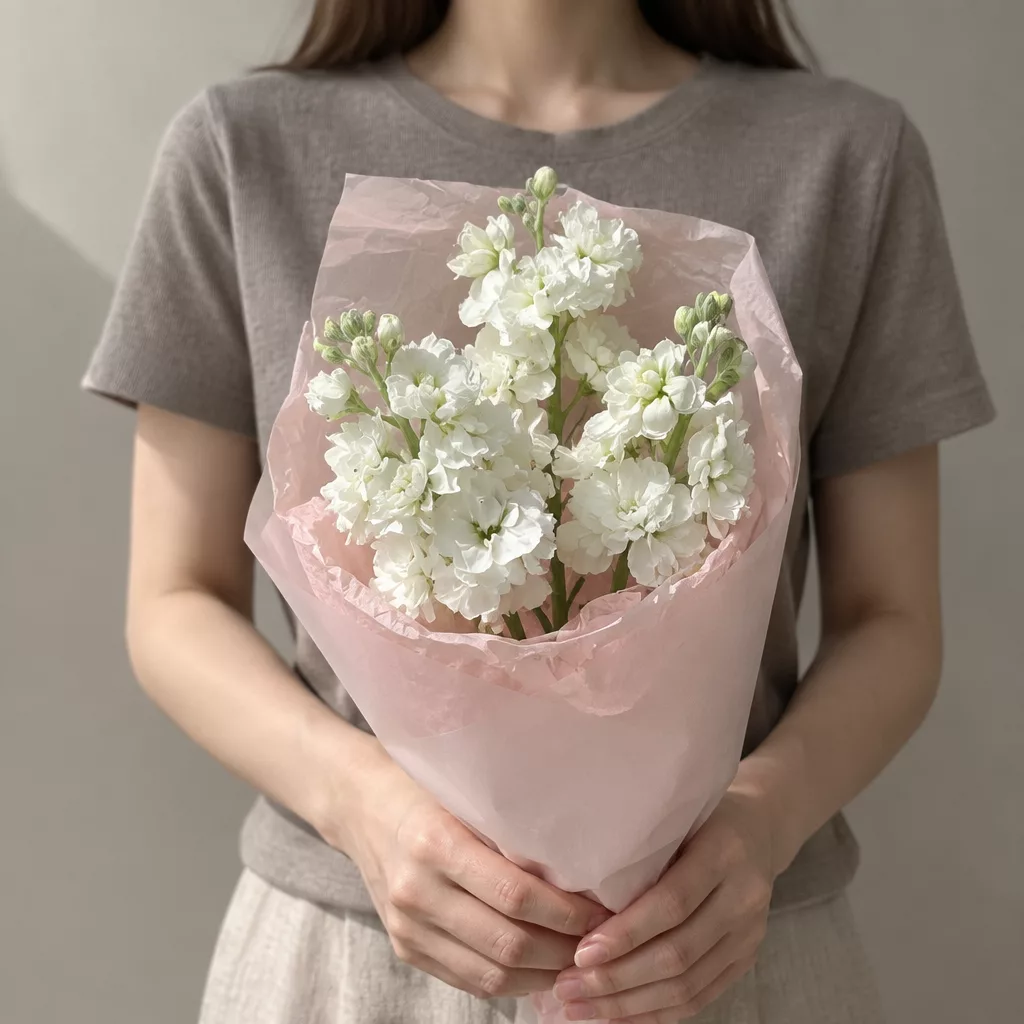
If the bouquet came wrapped in paper or in a box, consider keeping that wrapping loosely around the stems and lower blooms while it rests overnight. The wrapping helps hold the arrangement's shape and protects outer petals from brushing against surfaces. It also slows moisture loss from the stems. Do not seal the top — flowers need air circulation — but a loose wrap around the lower two-thirds of the bouquet is genuinely helpful.
For bouquets with large headed flowers like peonies, garden roses, or hydrangeas, the blooms themselves can be gently misted with cool water before storage. Use a small spray bottle and mist lightly — you want a fine film of moisture on the petals, not water pooling in the centre of the bloom, which can cause spotting or browning on some varieties. Hydrangeas in particular drink through their petals as well as their stems, so a light mist helps them stay plump overnight.
Keep the vase away from windows, even in cooler weather. Glass amplifies cold from outside in winter and heat from sunlight in any season. A central spot in a cool room, away from windows, fruit bowls, and heating vents, is ideal. If you have other flowers in the house that are past their peak — older blooms in a different vase — move them to a separate room overnight, as ageing flowers release ethylene that will affect your fresh bouquet.
Morning Refresh — What to Do Before You Give the Bouquet
About an hour before you plan to give the flowers, take them out of the refrigerator or cool room and let them come gently to room temperature. Cold flowers presented directly from the refrigerator can develop surface condensation on the petals, which looks lovely for a moment but can cause spotting on roses and leave water marks on light-coloured blooms like white lilies or cream tulips.
While the bouquet is coming to temperature, refresh the water in the vase one more time and give the stems a final trim — just half a centimetre is enough to re-open the cut ends. If any outer petals have bruised or dried at the edges overnight, remove them gently. On roses, this is called guard petal removal and it is standard practice in any florist's preparation room. The petals underneath are almost always perfect, and the bloom looks cleaner and more open without the damaged outer layer.
If the bouquet was in a vase, transfer it back to any original wrapping or a fresh sheet of paper for presentation. If it was delivered in a box, the box itself often makes a beautiful presentation. Check that the ribbon or any decorative elements are still in place. Flowers that have been stored properly overnight should look as good as — sometimes better than — they did on arrival, with buds that have opened a little further and stems that are fully hydrated and firm.
Telling the Recipient How to Keep Them Going
Part of giving a bouquet that lasts is passing on a few words about care. In Russia, receiving flowers is a meaningful gesture, and it is completely natural to mention briefly how to look after them — it shows thought, not fussiness. The recipient will appreciate knowing that a daily water change and a cool spot away from the radiator will keep the arrangement beautiful for much longer.
For mixed bouquets with roses, tulips, and seasonal greenery, a realistic vase life with good care is seven to ten days. Chrysanthemums and alstroemerias can last two weeks or more. Peonies and garden roses are shorter lived but more spectacular — four to six days of full bloom is typical. Lilies open gradually over several days, so a bouquet that arrives with mostly closed buds will actually peak on day three or four, which can feel like a second gift.
If the bouquet includes any flowers with pollen-bearing stamens — lilies are the most common — let the recipient know that removing the stamens as they open prevents pollen from staining petals, clothing, or furniture. This is a simple pinch-and-pull with clean fingers or a tissue, done when the stamen is fully extended. It does not harm the flower and keeps the blooms looking clean and bright for the full duration of their vase life. Small pieces of knowledge like this turn a beautiful gift into one that stays beautiful.
A bouquet kept well overnight is not just a practical achievement — it is part of the gift itself. The care you put in during those eighteen hours is invisible to the person who receives the flowers, but they will feel it in the way the roses stand straight, the way the petals are unbruised, and the way the whole arrangement looks as though it arrived moments ago. Cool temperature, clean water, trimmed stems, and a little attention to what is in the refrigerator with them: that is genuinely all it takes. The flowers do the rest. We deliver bouquets across Russia in 1–2 hours.
Frequently asked questions
Can I put flowers in the refrigerator overnight without a vase?
It is better to keep them in water even in the refrigerator. Without water, stems dehydrate quickly and the cut ends seal over, making it harder for the flowers to drink when they come out. If the vase is too tall, a short jug or even a deep bowl works. The key is that the stems stay submerged throughout the night.
My tulips opened a lot overnight. Can I close them back up?
Not really, and it is best not to try. Tulips are sensitive to warmth and open quickly in room temperature conditions. Moving them to a cooler spot will slow further opening, but blooms that have already opened will not close significantly. If they opened more than you wanted, remove the outermost petals gently — the flower underneath is often more beautifully shaped than the fully open outer form.
Is it safe to leave flowers in a cold hallway or near a window in winter?
A cool hallway away from draughts is a good overnight spot. However, avoid placing flowers directly against a cold window or exterior wall where temperatures might drop below zero on a very cold night. Frost damage on petals is irreversible — they turn translucent and soft. Keep flowers cool but frost-free, ideally between four and twelve degrees Celsius.
How do I know if the flowers have been damaged overnight and are not recoverable?
Stems that have gone soft and slimy near the cut end, petals that are translucent or brown at the edges, and blooms that droop even after a fresh water change and stem trim are signs of significant damage. A single drooping stem can sometimes be revived by re-cutting and placing it in warm water for thirty minutes, but widespread softness across the bouquet usually means the flowers need to be given as soon as possible.
Does it matter what kind of vase I use for overnight storage?
A clean vase matters more than the shape or material. Bacteria from a previously used vase that was not thoroughly washed can shorten flower life significantly. Rinse with hot water and a drop of washing-up liquid, then rinse again before filling. Tall, narrow vases support long stems well and reduce the chance of the bouquet toppling. Glass lets you see the water clarity, which is a useful reminder to change it if it clouds.
Ready to send flowers?
Pick the city, choose the bouquet, and a local florist takes it from there.
Choose a city →