Lilies in Russia: Beloved Bloom or Problematic Gift?
Few flowers divide opinion in Russia quite like lilies. One person receives a bouquet of Oriental lilies and calls it the most beautiful thing she has ever been given. Another opens the same box and quietly moves it to the balcony because the scent gives her a headache. Understanding why this happens — and knowing which lily to choose for which person — is the difference between a gift that lands perfectly and one that creates an awkward moment.
Why Lilies Have Such a Mixed Reputation in Russia
Lilies are genuinely beloved in Russia, but they come with a layer of cultural sensitivity that catches many people off guard. Part of this is practical: Oriental lilies, the large, heavily fragrant varieties most commonly sold in Russian flower shops, produce a scent so intense that in a small apartment with the windows closed in winter, it can feel overwhelming within hours. Russian apartments in winter are exactly that — sealed against the cold, with little ventilation. A gift that smells wonderful in an open shop can become oppressive in a 45-square-metre flat.
There is also a visual association that some older Russians hold, linking white lilies with formal, solemn occasions. This is not a universal rule, and younger recipients rarely share it, but it is worth knowing when you are sending to someone of an older generation. The association is far weaker than many people assume, and it should not stop you from choosing lilies — it simply means paying attention to colour and context.
The reputation problem is mostly a scent problem and a communication problem. When someone receives lilies without expecting them, the intensity can feel like too much rather than generous. When the same person chooses lilies for herself, she loves them. Knowing your recipient's home, her sensitivity to fragrance, and her personal taste resolves most of the uncertainty before you place the order.
Bouquets we can deliver

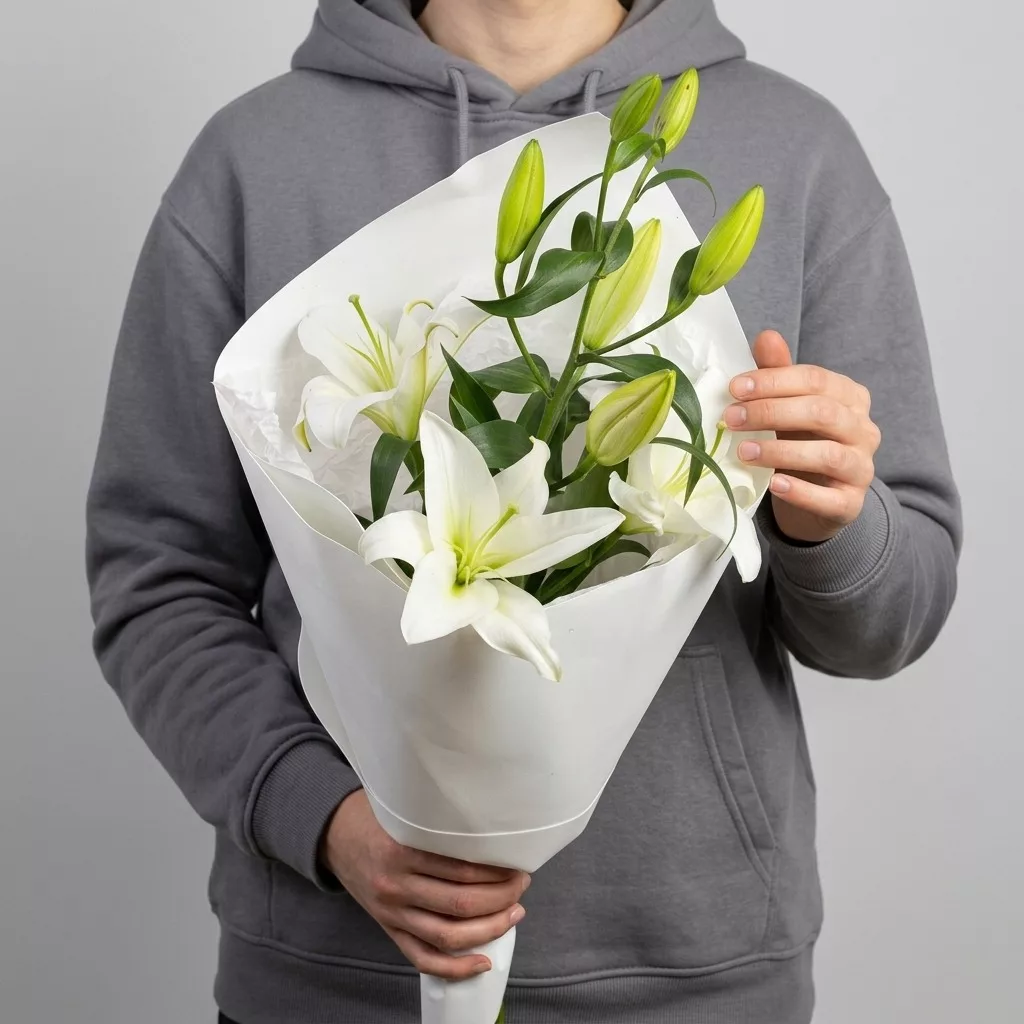
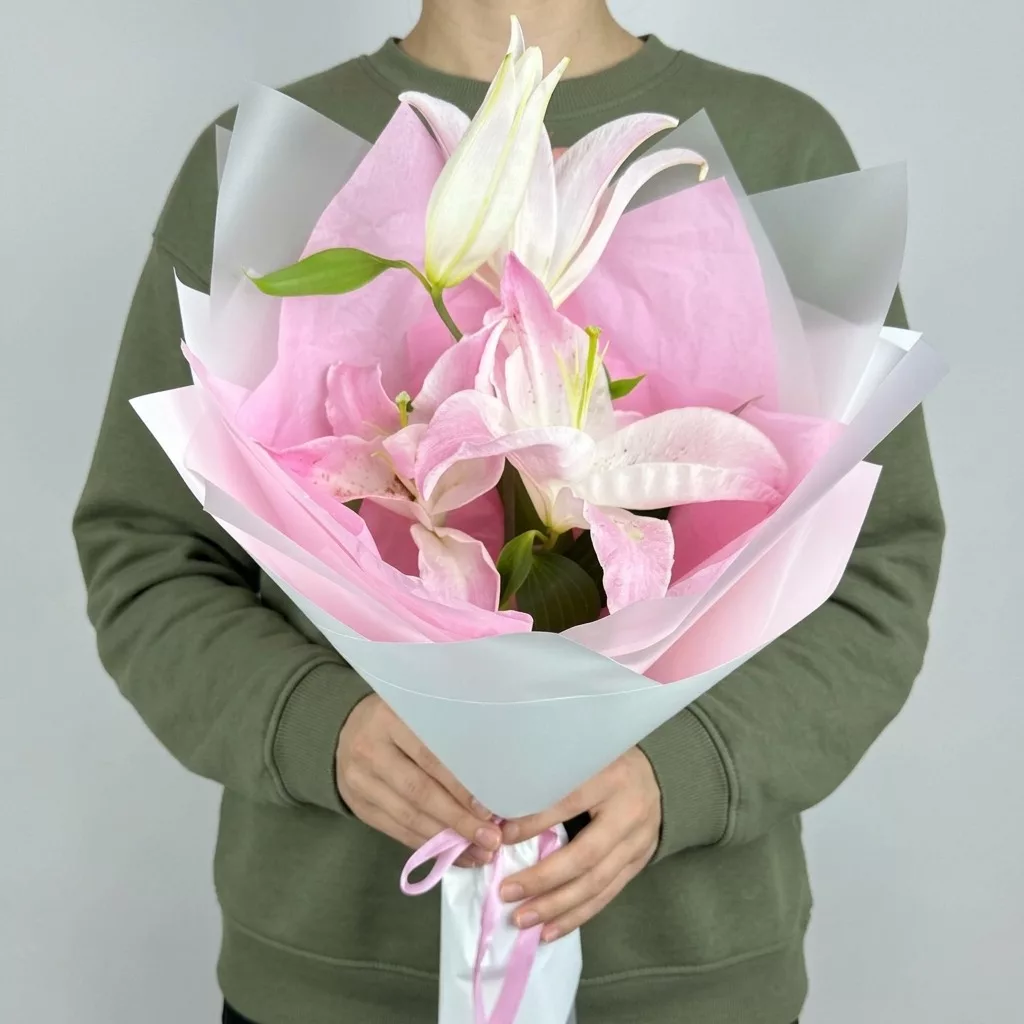
The Varieties That Actually Work as Gifts
Not all lilies behave the same way, and variety choice matters enormously here. Oriental lilies — think large, ruffled blooms in deep pink, white, or bicolour — are the most fragrant and the most polarising. They are showstoppers in the right setting, but they are the variety most likely to trigger the headache complaint. If you know your recipient loves bold fragrance, they are an excellent choice. If you are unsure, they are a risk.
Asiatic lilies are the safer everyday option. They carry little to no scent, come in a wide range of colours including vivid orange, yellow, soft pink, and deep burgundy, and they open steadily over several days, giving the recipient a changing display rather than one dramatic moment. They are the variety florists reach for when the recipient's scent tolerance is unknown.
LA hybrids sit between the two — longer stems, larger blooms than Asiatics, with only a mild fragrance. They photograph beautifully and hold their shape well even in warm rooms, which makes them a reliable choice for birthdays and celebrations where the bouquet needs to look good for a day or two after arrival.
Longiflorum lilies, the classic white trumpet lily, appear frequently in bridal work and elegant arrangements. Their scent is present but softer than Oriental varieties. They suit recipients who appreciate a refined, classic aesthetic over something bold and contemporary. Matching the variety to the person is the first real decision a florist makes.
Reading the Occasion Before You Choose
Lilies work brilliantly for some occasions and feel slightly off for others, and this has less to do with superstition than with practical fit. For a birthday, Asiatic lilies in a warm colour — coral, orange, or golden yellow — combined with greenery and perhaps some ranunculus for texture, feel celebratory and generous without being heavy. They suit recipients of almost any age and work in any size of home.
For a romantic gesture, Oriental lilies in deep pink or cream, paired with roses and eucalyptus, create something genuinely luxurious. The key is sending them with a note that acknowledges the fragrance — something as simple as mentioning that you chose them because they are beautiful and bold, like the person receiving them. This small act of intention changes how the gift is received.
For a new home or housewarming, lilies are an excellent choice precisely because they fill a space with presence. A new apartment is not yet a sealed, small room full of winter air — it is a place the recipient is actively opening up and making their own. Lilies suit that energy well.
For a colleague or professional contact, Asiatic varieties in neutral tones — white, pale yellow, or soft pink — keep the gesture warm without becoming personal. Avoid deeply fragrant varieties in professional contexts entirely. The rule of thumb is simple: the more intimate the relationship, the more latitude you have with fragrance and drama.
Choosing by Budget Without Losing the Effect
Lilies offer something genuinely useful for anyone working within a budget: a single stem carries multiple buds, so even a modest arrangement can look substantial. A bouquet built around five or seven stems of Asiatic lilies, with some foliage and one or two accent flowers, reads as generous and thoughtfully composed rather than minimal.
At a mid-range budget, combining Oriental or LA hybrid lilies with complementary flowers gives you the best of both worlds. Lilies paired with alstroemeria extend the vase life of the arrangement as a whole, since alstroemeria is exceptionally long-lasting. Lilies with soft pink peonies in season — roughly May through July in Russia — create a combination that feels genuinely special without requiring an enormous number of stems.
At a higher budget, the impact comes from stem count and presentation. A dense bouquet of Oriental lilies in a single colour, wrapped with intention and accompanied by a matching box or vase, makes a statement that few other flowers can match. The monochromatic approach — all white, or all deep pink — reads as sophisticated rather than simple.
One practical note: lilies are often delivered partially closed, with buds still tight. This is intentional and actually better for the recipient, since the flowers open gradually over two to four days, giving a longer display. Explain this to anyone unfamiliar with lilies, or include a short care note with the delivery, so the recipient knows what to expect when the bouquet arrives.
Care, Placement, and Getting the Most from Your Lilies
Lilies are straightforward to care for, but a few details make a significant difference to how long they last and how comfortable they are to live with. The first thing to do on arrival is remove the lower leaves — any leaf that would sit below the waterline in the vase should come off cleanly. Leaves in water decompose quickly and shorten vase life noticeably.
Cut the stems at an angle, about two centimetres from the base, before placing them in clean, cool water. Lilies prefer cool water and a cool room. In a Russian apartment in summer, where indoor temperatures can reach 26 or 27 degrees, they will open faster and fade faster. Moving them to a cooler spot overnight — a hallway, or near a window that is slightly open — extends their life considerably. In winter, keep them away from radiators, which dry them out rapidly.
One point that surprises many people: the orange pollen from lily stamens stains fabric and surfaces permanently. If you are placing lilies near soft furnishings, or if the recipient has a light-coloured tablecloth or sofa nearby, it is worth removing the stamens as each flower opens. This is done easily with a dry tissue — never wet, as moisture spreads the stain. Some florists remove stamens before delivery, which is considerate but means the flowers lose a little of their natural drama.
With good care, Asiatic lilies last seven to ten days. Oriental and LA hybrids typically give five to eight days. The arrangement changes character as it progresses, which many recipients find unexpectedly enjoyable.
When to Send Lilies and When to Choose Something Else
Lilies are the right choice when you want to make a strong impression, when you know your recipient has space and ventilation in her home, and when the occasion calls for something with real presence rather than something delicate. They suit confident, expressive people who appreciate a flower that announces itself.
They are the wrong choice when the recipient lives in a very small space with limited airflow, when you know she is sensitive to strong scents or prone to migraines, or when the relationship is new enough that you cannot predict her preferences. In those situations, Asiatic lilies with minimal fragrance are a middle path, or a different flower entirely — roses, tulips, or peonies in season — removes the question altogether.
Russia's climate also affects the decision. In the depths of winter, between December and February, indoor air is particularly still and dry. Fragrant lilies become more intense in these conditions, not less. If you are sending in winter and you are uncertain about the recipient's preferences, Asiatics are the sensible call. In spring and summer, when windows open and rooms breathe, Oriental lilies are far easier to live with.
The honest florist's answer to the question in this article's title is: lilies are beloved, and the problems are almost always avoidable. Choose the right variety for the person and the season, communicate your intention with a note, and you will send something genuinely memorable. The mixed reputation comes from mismatched choices, not from the flower itself.
Lilies have earned their complicated reputation in Russia not because they are a difficult flower, but because they are a powerful one. They fill a room, they open slowly, they last. When you match the variety to the person — Asiatics for someone whose preferences you do not yet know, Orientals for someone who loves drama and fragrance, LA hybrids for a polished and elegant effect — they become one of the most rewarding gifts you can send. The florist's job, and yours as the sender, is simply to think about who is on the receiving end before the order is placed.
Frequently asked questions
Are white lilies considered bad luck in Russia?
This concern is sometimes raised, but it is not a strong or universal belief. Some older Russians associate white flowers with formal solemnity, but the majority of recipients, especially anyone under fifty, will simply see a beautiful flower. If you want to be cautious, choose lilies in pink, coral, or yellow rather than pure white.
Which lily variety is best if I am not sure about the recipient's scent sensitivity?
Asiatic lilies are the clear answer. They carry virtually no fragrance, come in a wide range of warm and cool colours, and last well in most home conditions. They give you the visual impact of a lily without any risk of the scent becoming overwhelming in a closed apartment, which is the most common complaint florists hear about lily gifts.
How long will a lily bouquet last after delivery in Russia?
Asiatic lilies typically last seven to ten days with clean water and a cool room. Oriental and LA hybrid varieties give five to eight days. Because lilies are usually delivered with buds still closed, the recipient gets the pleasure of watching them open over several days. Changing the water every two days and keeping them away from radiators extends vase life noticeably.
Can I send lilies to an office or workplace in Russia?
Yes, but choose Asiatic varieties with low or no fragrance. Heavily scented Oriental lilies in a shared office space can be genuinely disruptive for colleagues, and the recipient may feel awkward rather than celebrated. Asiatics in soft pink, white, or yellow work well professionally and look elegant without making the whole room aware of them.
Why do lilies sometimes arrive with orange powder that stains everything?
That is pollen from the stamens, and it stains fabric and surfaces permanently if it gets wet. As each flower opens, remove the stamens with a dry tissue before the pollen has a chance to fall. Never use water to clean lily pollen — it sets the stain. Some arrangements have stamens removed before delivery, which is considerate, though it slightly changes the flower's natural appearance.
Ready to send flowers?
Pick the city, choose the bouquet, and a local florist takes it from there.
Choose a city →