Limonium and Statice: A Practical Guide to the Papery Flower
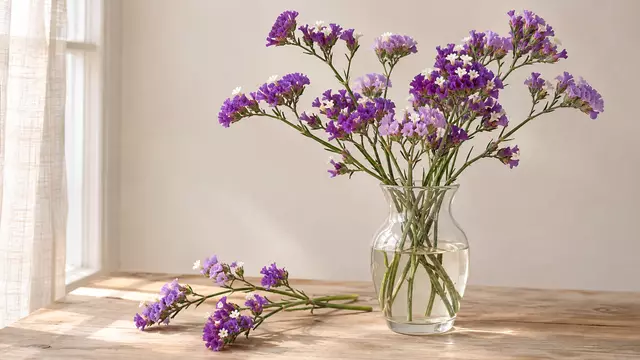
Limonium is a botanical genus, while statice is a common name used for several flowers within it, especially Limonium sinuatum. In a bouquet, statice usually means branching stems with clusters of papery, coloured cups surrounding small flowers. Those papery parts are calyces, and their dry texture is normal even when the stems are fresh.
The names overlap, but they do not always describe the same shape: one bouquet may contain dense statice clusters, another a fine cloud of branching limonium. If you are choosing flowers from a photograph, look at the structure as well as the name. Understanding that distinction helps you choose the right texture, assess fresh stems and decide whether to keep them in water or dry them.
Are limonium and statice the same flower?
Think of limonium as the broader botanical name and statice as a familiar florist's name within that group. Limonium sinuatum is the species many people picture when they hear statice: upright, branched stems carrying compact clusters of colour. Other limoniums used in floristry can have much finer branching, so the word limonium alone does not specify a particular bouquet silhouette.
The most visible coloured parts are persistent calyces, rather than the delicate petals you might expect from a rose or tulip. The small true flowers can fade while the surrounding papery structures remain attractive. This explains why statice can look partly dried on arrival without necessarily being old, and why its appearance changes less dramatically during drying than that of many soft-petalled flowers.
For a purchase, use descriptive language alongside the name: ask for compact purple clusters, for example, or an airy branching texture. A reference photograph is especially useful when translating between English and Russian flower terminology. Our statice definition guide explains the familiar bouquet form in more detail.
How to assess fresh statice and choose its colour
Judge fresh statice by the whole stem, not by the papery surface alone. Look for stems that support their branches, securely attached clusters and an absence of visible mould or slimy tissue. Some tiny flowers may already have faded inside the calyces; that detail alone does not establish poor condition. A musty smell or damp, deteriorating material is a more useful reason to investigate.
Common statice colours include purple, lavender, pink, white and yellow, although the available selection depends on the flowers being offered. Colour alone cannot reliably tell you whether a particular stem has been dyed. If natural colour matters to you, ask about the specific bouquet rather than assuming that every bright or unusual shade is either natural or treated.
Choose colour according to the effect you want. Purple statice gives pale flowers a defined edge; lavender makes a softer transition between pink and white; white can add texture without a strong colour contrast. Dense clusters create visible patches of colour, while finely branched limonium spreads smaller points throughout an arrangement. Examine both the close-up texture and the overall bouquet.
Bouquets we can deliver




Fresh statice care: water, trimming and placement
For fresh stems, start with a clean vase and clean water. Remove any foliage that would sit below the waterline, then make a fresh cut at the base with a sharp, clean tool. Put the stems into water promptly. If flower food is supplied, follow its dilution instructions; adding extra concentrate does not improve care and can upset the intended balance.
Check the water daily and replace it when it becomes cloudy, cleaning the vase and rinsing the stem ends as needed. Keep the coloured clusters above the water and avoid misting them: moisture trapped in dense flower heads can encourage mould. Remove any deteriorating material before it rests against healthy stems, particularly where the bouquet is tightly packed.
Place the vase away from direct sun, heaters and ripening fruit. In a mixed bouquet, assess each flower separately: a rose may need removing while the statice still looks presentable. There is no dependable vase-life promise that applies to every arrangement, because condition at purchase, transport, room conditions and daily care all affect the result.
How to dry limonium without trapping moisture
Decide to dry your statice while it is still in good condition, rather than waiting for stems to deteriorate in the vase. Take it out of water, remove unwanted foliage and separate any damaged or damp material. Divide the stems into small, loose bunches so air can move between the branches. A large, tightly tied bouquet can hold moisture in its centre.
Hang the bunches upside down in a dry, ventilated place away from direct sunlight. Avoid enclosing them in plastic or placing them in a humid bathroom. Drying time varies with the thickness of the bunches and the surrounding air, so check the stems rather than relying on a fixed date. They should feel dry throughout before you arrange or store them.
Handle dried statice by the stems and expect some brittleness. Keep it away from splashes, strong sun and frequent handling; colour can fade, and dry branches can break. Do not put fully dried stems back into vase water. For a keepsake, choose a sheltered position where the arrangement will not be brushed by sleeves or knocked when a window opens.
Bouquet pairings, meanings and gift etiquette
Statice works well when its texture has a clear role. In a bouquet of rounded flowers such as roses, small clusters can fill visual gaps and repeat a chosen colour. With airy flowers and foliage, finely branched limonium can continue the loose outline. Too much dense statice can obscure the main blooms, so consider whether you want it to support them or become the main feature.
Statice is often associated with remembrance and lasting affection, partly because it keeps its shape when dried. Flower meanings vary between traditions and recipients, however, so these associations are suggestions rather than a fixed message. A card that says why you chose the flowers communicates more clearly than relying on the recipient to recognise a symbolic meaning.
For a birthday or thank-you gift, connect the colour or texture to the person's taste. For condolences, follow the family's preferences and any stated cultural or religious customs rather than assuming one flower suits every situation. If you hope the recipient will dry the statice, mention that gently in the card; a mixed bouquet needs separating before its different flowers begin to deteriorate.
Sending a bouquet with statice to someone in Russia
Start with our bouquets catalogue, then use WhatsApp to ask a manager about a bouquet containing statice or limonium and agree the address, timing and card text. Describe the texture and colour you want, especially if you are working from a photograph. You can also arrange a photo of the bouquet before delivery; confirm the particular flowers rather than assuming a name guarantees availability.
We deliver flowers across Russia. City delivery costs 500 RUB; for remote districts and suburbs, the operator confirms the delivery price when confirming the order. In large cities, express delivery is available in 1–2 hours after order confirmation. Other timing options are an exact time with a tolerance of 30 minutes either way, windows of 09–12, 12–15, 15–18 or 18–21, or pre-ordering 1–30 days ahead. Agree the destination's local date and time clearly if you are ordering from abroad.
Delivery is anonymous by default: the courier does not name the sender, and a card with your text is free. The courier calls the recipient about 15 minutes before arrival. If the recipient is absent, we agree a second delivery that day or a handover to a neighbour or concierge with the sender's consent. Online checkout uses CloudPayments; check the options displayed at checkout, as acceptance of every foreign card is not guaranteed. See delivery and payment details when planning your order.
Frequently asked questions
What is the difference between limonium and statice?
Limonium is the botanical genus; statice is a common name used for several flowers in that genus, particularly Limonium sinuatum. In floristry, the names can refer to different branching forms, so a photograph helps identify the texture you want.
Does the papery texture mean my statice is already dried?
No: fresh statice naturally has papery calyces around its small flowers. Assess the stems and clusters for deterioration rather than using that texture alone to judge freshness.
Should fresh limonium go in water?
Yes, keep fresh cut limonium in a clean vase with water after trimming the stem ends and removing submerged foliage. If you choose to dry it, remove it from water while it is still in good condition and hang small bunches in a dry, ventilated place.
Can I dry statice from a mixed bouquet?
Yes, separate sound statice stems from the other flowers before deterioration begins. Dry them in small, loose bunches away from direct sunlight, and check that they are dry throughout before storing.
Can I send statice flowers to Russia from abroad?
You can arrange flower delivery across Russia with us and ask a manager to confirm a bouquet containing statice. Payment uses CloudPayments at checkout; review the displayed payment options rather than assuming your foreign card will be accepted.
Ready to send flowers?
Pick the city, choose the bouquet, and a local florist takes it from there.
Choose a city →