What Does Statice Look Like in a Bouquet?
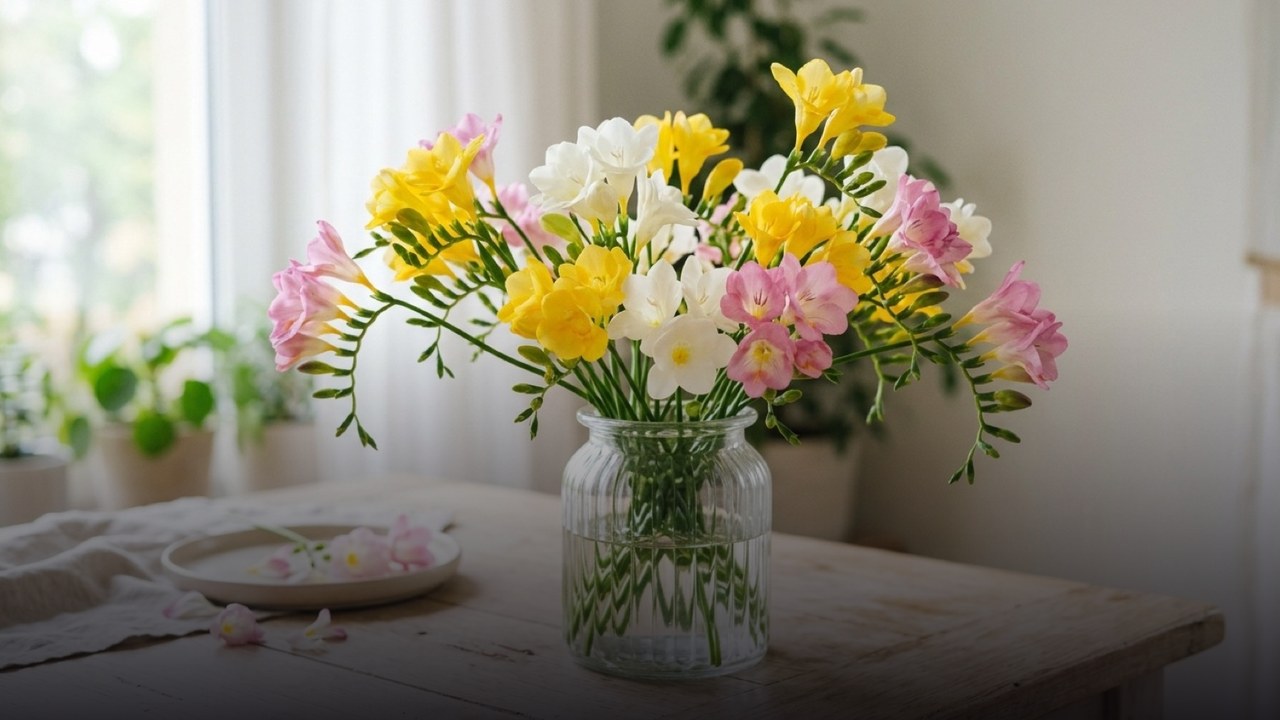
Statice looks like a spray of small, papery flower clusters carried on stiff, branching stems. The familiar florist’s type often comes in violet, lavender, pink, yellow or white, with tiny true flowers tucked inside the coloured, funnel-shaped cups. Its crisp texture can make even freshly cut statice look dried.
To recognise it in a bouquet, look between the larger blooms: statice often forms little clouds of colour rather than one rounded flower head. Those clusters add texture and fill spaces without hiding the main flowers. Here is how to identify the stems, judge their condition and decide whether their distinctive appearance suits the bouquet you want to send.
Look closely at the clusters, stems and leaves
What looks like a statice flower is usually a group of many small units packed along the ends of branching stems. Each coloured cup is a calyx, the structure surrounding the true flower. In common florist’s statice, the true flowers are tiny and often white or pale; you may need to look closely to see them against the stronger colour.
The coloured parts feel thin and papery rather than soft and velvety like rose petals. From a distance, their uneven edges create a lightly ruffled outline. Up close, you can see separate little cups. This combination of dense clusters and delicate individual shapes explains why statice can look both bushy and airy in the same arrangement.
Common cut-flower statice, Limonium sinuatum, often has angular green stems with narrow, flattened wings running along them. Much of the foliage grows near the base of the plant, so prepared bouquet stems can look almost leafless. Other Limonium species have finer, more open sprays, so the name alone does not identify one exact silhouette.
Why fresh statice already looks dried
The dry-looking surface is part of statice’s natural appearance. Its coloured calyces are papery while the cut stem is still fresh, so crisp flower clusters alone do not mean the bouquet is old. Unlike a tulip or a rose, statice does not need glossy, fleshy petals to look healthy. Judge the whole stem rather than expecting a soft petal texture.
Fresh stems generally retain green colour and some flexibility, while fully dried stems tend to become more rigid and brittle. Drying may also soften or change the flower colour. These clues help, but a photograph cannot reliably prove whether a stem is fresh or dried: lighting, variety and the stage of drying can make them look very similar.
Check for damage rather than rejecting the papery finish. Avoid stems with fuzzy mould, slimy lower sections or a sour smell from the vase water. A few tiny true flowers fading inside intact coloured cups is different from the whole cluster deteriorating. Our guide to statice’s naturally dried appearance explains this distinction further.
Bouquets we can deliver




How statice compares with similar bouquet flowers
Baby’s breath usually makes a finer mist of tiny, rounded flowers on slender branches. Statice typically has denser patches of colour, with visible papery cups and a more angular outline. If you are looking at a white bouquet, focus on the shape of each cluster: colour alone will not help you distinguish white statice from other small filler flowers.
Lavender has narrow flower spikes, with small blooms arranged along the upper part of each stem. Common florist’s statice branches outward into several clusters instead. Sea lavender is also a common name for Limonium, which can cause confusion; despite that name, statice is not the same plant as the fragrant lavender used in herb gardens.
Some Limonium sold for bouquets forms much finer, branching sprays than the familiar broad clusters of statice. If you are choosing from a picture, describe the visible feature you like: compact purple clusters, pale papery cups or a loose haze of tiny flowers. A clear description is more useful than relying on a common name that different people may use differently.
Choose the colour and amount to suit your message
Purple statice creates a noticeable contrast beside cream, yellow or peach flowers. Pale lilac and white can make the texture feel gentler, while yellow adds small, bright points throughout an arrangement. Photographs can shift these shades, especially between blue and violet, so treat an image as a colour reference rather than a precise screen-to-flower match.
The amount matters as much as the shade. A few branches add detail around larger blooms; a bouquet built mainly from statice has a fuller, more textured outline and a distinctly papery character. If your recipient prefers smooth petals and simple shapes, choose a design where statice plays a smaller role rather than assuming everyone enjoys its rustic appearance.
Statice is often associated with remembrance and lasting affection, partly because its coloured parts can remain attractive when dried. Those associations are not a universal language, so let your card carry the meaning. A direct line such as “Thinking of you and sending a little colour” makes your intention clear without asking the recipient to interpret flower symbolism.
Care for fresh stems, or dry them deliberately
For fresh statice, start with a clean vase and fresh water. Recut the stem ends with clean, sharp tools and remove any leaves or side growth that would sit below the waterline. Keep the flower clusters above the water: their papery texture does not benefit from soaking, and wet, crowded material is harder to keep in good condition.
Place the vase away from direct sun, radiators and ripening fruit. Check the water regularly, replenish it as needed and replace it if it becomes cloudy. In a mixed bouquet, remove deteriorating flowers as they fade rather than leaving them against the statice. Different flowers age at different rates, so assess each stem instead of treating the whole bouquet as one unit.
If you want to dry the stems, select sound ones before they deteriorate. Take them out of the water, gather them into small, loose bunches and hang them upside down somewhere dry, shaded and ventilated. Let them become fully dry before arranging them without water. Expect some colour change and handle the finished clusters gently, as dried pieces can break or shed.
Send a bouquet to Russia with the details agreed
Start with the bouquets catalogue to find a shape and colour palette you like. If statice is the feature you want, contact a manager on WhatsApp to discuss the bouquet, delivery address, timing and card text. Describe the papery clusters or share your colour preference, and ask for a photo of the bouquet before delivery.
We deliver flowers across Russia. City delivery costs 500 RUB; for remote districts and suburbs, the operator confirms the price when confirming the order. In large cities, express delivery is available within 1–2 hours after confirmation. You can also arrange an exact time within ±30 minutes, choose a 09–12, 12–15, 15–18 or 18–21 window, or preorder 1–30 days ahead.
Delivery is anonymous by default: the courier does not name the sender, so include your name in the free card if you want the recipient to know. The courier calls about 15 minutes before arrival. If the recipient is absent, we agree a second delivery that day or, with the sender’s consent, hand the flowers to a neighbour or concierge. See delivery and payment details; checkout uses CloudPayments, and you should check the payment options displayed there.
Frequently asked questions
What does statice look like up close?
It has clusters of tiny, coloured, papery cups on branching stems. Small true flowers, often white or pale in common florist’s statice, sit inside those cups.
Is statice naturally dry to the touch?
Its coloured calyces naturally feel papery, even on fresh-cut stems. That texture alone does not tell you whether the flowers have been dried.
Does statice look the same as lavender?
Common florist’s statice has branching clusters, while lavender carries flowers along narrow spikes. The common name sea lavender refers to Limonium and can make the two sound more alike than they look.
Should I put statice in water?
Put fresh-cut statice in a clean vase with fresh water, keeping the flower clusters above the waterline. Fully dried statice belongs in a dry container without water.
Can I send statice in a bouquet to someone in Russia?
Contact our manager to discuss a bouquet featuring statice and agree the delivery details. We deliver across Russia; the manager can help you choose the bouquet and arrange a photo before delivery.
Ready to send flowers?
Pick the city, choose the bouquet, and a local florist takes it from there.
Choose a city →