Lisianthus Pestovanie: A Practical Guide to Growing Eustoma
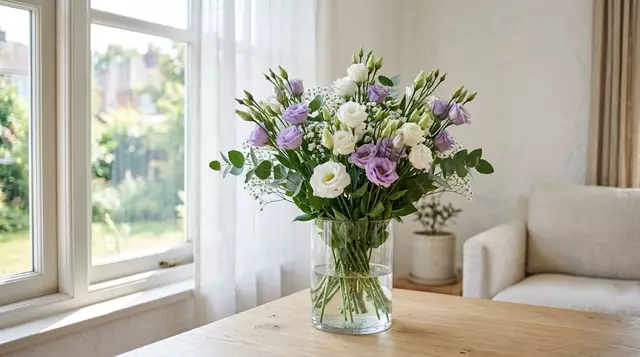
“Lisianthus pestovanie” means growing lisianthus: raise this flowering plant in bright light, in freely draining soil, with steady moisture and careful handling of its roots. Also called eustoma, it develops slowly from seed, so a healthy young plant is often the more manageable starting point for a first attempt.
The main challenge is patience during early growth, followed by balancing enough water with enough air around the roots. Growing a plant and caring for a cut bouquet require different routines: this guide takes you through sowing, potting, flowering and vase care, then explains how to arrange a flower delivery to someone in Russia.
Start with the right plant and a realistic timetable
Lisianthus is grown for its gently folded flowers, which may be single or double depending on the variety. Before buying seeds or young plants, check the expected height and intended use on the label. Compact varieties suit containers more easily, while taller types grown for cutting usually need support to keep their flowering stems upright.
Allow several months from sowing to flowering, with the actual interval depending on the variety, light and growing conditions. Seedlings can appear to make very little progress at first; repeatedly moving, feeding or watering them to speed things up usually creates more problems. For flowers needed for a particular occasion, home-grown plants are an uncertain timetable.
If your growing season is short or you have limited indoor light, begin with established young plants. Choose firm, healthy foliage and avoid specimens sitting in waterlogged compost. A plant already crowded with circling roots can be difficult to settle into a new container, so inspect the root ball gently when this is possible.
Sow tiny seeds on the surface and protect early growth
Use a clean seed tray and a fine seed-starting mix, moistened before sowing. Lisianthus seeds are extremely small and are often sold as pellets to make handling easier. Place them on the surface and follow the packet instructions for spacing; they need light for germination, so do not bury them beneath a layer of compost.
Keep the surface consistently moist with a fine mist or careful watering from below. If you use pelleted seed, ensure the coating becomes thoroughly moist so it can break down. A clear propagator cover helps retain humidity, but ventilate it and prevent condensation from leaving the compost saturated. Follow the seed supplier's guidance for germination conditions.
Once seedlings emerge, give them strong light and gradually increase ventilation. A bright window may still provide uneven or insufficient light, particularly during short winter days; a suitable grow light can help. Watch the seedlings themselves: leaning towards the window or becoming stretched suggests that their lighting needs attention.
Bouquets we can deliver




Choose a bright position and transplant with care
Choose a sunny position with good air movement and soil that drains freely. Where summer sun is intense, some protection during the hottest part of the afternoon can reduce stress. Move plants outdoors only when frost risk has passed, and introduce them gradually to outdoor light and wind instead of taking them straight from a sheltered windowsill.
For containers, use pots with drainage holes and a fresh potting mix that does not stay sodden. Decorative outer pots can conceal standing water, so check them after watering. Container width and plant spacing should reflect the variety's mature size: crowding several tall plants together makes watering uneven and leaves less room for air to circulate.
Transplant while the plants are young and their roots can still be moved as an intact plug. Hold the root ball rather than pulling on the stem, keep the existing planting depth and water gently afterwards. Avoid repeatedly potting up or teasing apart the roots. Our eustoma growing guide explains the distinction between container plants and cut flowers in more detail.
Water steadily, feed moderately and inspect the leaves
Check the compost before watering instead of following a fixed daily schedule. Water when the surface begins to dry, then allow excess water to drain away; do not let the whole root ball become repeatedly bone dry. Small plants use less water than large flowering specimens, and pots may dry much faster in sunny, windy weather.
Direct water towards the soil rather than routinely soaking the leaves and flowers. Persistent wetness around the crown or roots can encourage decay. If a plant wilts while its compost is still wet, adding more water may worsen the problem: check drainage and the condition of the roots before deciding that thirst is the cause.
Once plants are established and actively growing, use a balanced fertiliser according to its label. More feed does not automatically produce more flowers, and excessive feeding can favour soft growth. Check shoot tips and leaf undersides regularly for pests such as aphids or thrips; identify the problem before choosing a treatment suitable for the plant and setting.
Support flowering stems and care for cut lisianthus
Install stakes or another suitable support before tall stems begin leaning under the weight of buds. Attach stems loosely so ties do not cut into them as they grow. Remove spent flowers with clean scissors, leaving healthy leaves and unopened buds in place. Further flowering depends on the variety and conditions, so avoid treating it as a guaranteed second display.
If you want stems for a vase, choose ones with some flowers already open rather than cutting a stem made up entirely of tight buds. Harvest during the cooler part of the day with clean tools and place the stems promptly in clean water. Leave enough healthy foliage on the plant to support its remaining growth.
For the vase, remove leaves that would sit underwater, recut the stem ends and use flower food according to the packet directions. Keep the arrangement away from direct sun, heaters and ripening fruit; replenish water and clean the vase when changing it. Smaller buds may not all open, so judge a bouquet by its open flowers as well as its potential buds.
Give lisianthus thoughtfully or send flowers to Russia
Lisianthus is often associated with gratitude and affection, but flower meanings are cultural conventions rather than fixed rules. Let your card explain the sentiment: a specific thank-you or a few personal words are clearer than expecting the recipient to interpret a colour. For a gift, consider their preferred palette and where they will display the flowers; our guide to lisianthus meanings offers more context.
To send flowers to family or friends in Russia, browse our bouquets catalogue and check the available composition before ordering. We deliver across Russia, with city delivery costing 500 RUB; the operator confirms the price for remote districts and suburbs when confirming the order. Contact a manager on WhatsApp for help choosing a bouquet, agreeing the address, timing and card text, and a photo of the bouquet before delivery.
Express delivery in large cities is 1–2 hours after order confirmation. You can also arrange an exact time within ±30 minutes, choose a 09–12, 12–15, 15–18 or 18–21 window, or preorder 1–30 days ahead. Delivery is anonymous by default: the courier does not name the sender, and a card with your text is free. The courier calls about 15 minutes before arrival; if the recipient is absent, we agree a second delivery that day or handover to a neighbour or concierge with your consent. Checkout uses CloudPayments; check the payment options displayed there, as acceptance of every foreign card is not guaranteed. Check our delivery information; confirm the timing for your order.
Frequently asked questions
What does “lisianthus pestovanie” mean?
It means growing or cultivating lisianthus; “pestovanie” is Slovak for cultivation. Lisianthus is also commonly called eustoma, so growing advice may appear under either name.
Is lisianthus easy to grow from seed?
It requires patience because early growth is slow and the tiny seedlings need careful moisture and light management. Starting with healthy young plants reduces the most demanding part of the process.
Can you grow lisianthus indoors in a pot?
You can grow it in a container, but indoor success depends heavily on adequate light and drainage. Choose a compact variety and avoid leaving water in the saucer or decorative outer pot.
Why is my lisianthus wilting even though the soil is wet?
Wet compost can indicate poor drainage or stressed roots, both of which can cause wilting. Check for standing water and root deterioration before watering again; wilting alone does not prove that the plant needs more water.
Will every lisianthus bud open after cutting?
No, especially if the buds are very small or immature when the stem is cut. Select stems with some open flowers and maintain clean water and good vase hygiene to support the remaining blooms.
Ready to send flowers?
Pick the city, choose the bouquet, and a local florist takes it from there.
Choose a city →