International Women's Day Flower Traditions Across Russia
Walk through any Russian city on the morning of March 8 and the air smells different — tulips by the armful, mimosa branches wrapped in paper, roses stacked in buckets outside every metro entrance. International Women's Day is the single biggest floral moment of the Russian year, bigger than Valentine's Day, bigger than any birthday. But the way people celebrate it — what they choose, how they give it, what the flowers mean — shifts noticeably from one region to the next. If you are sending flowers to someone in Russia this March 8, understanding those local flavors will make your gift feel genuinely thoughtful rather than just dutiful.
Why March 8 Matters More Than Any Other Day for Russian Florists
In most countries, flower-giving is scattered across the calendar. In Russia, March 8 acts like a national exhale — a single day when the entire country decides, collectively, to show appreciation for the women in their lives. Mothers, grandmothers, colleagues, teachers, girlfriends, wives: every woman in a man's orbit is a potential recipient. This is not hyperbole. Order volumes in the days leading up to March 8 can be ten times a normal February week.
The cultural weight behind this comes from the Soviet era, when March 8 was an official state holiday. Factories, schools, and offices all marked it with ceremony. That institutional habit softened into something warmer over the decades, but the scale never shrank. Today it sits somewhere between Mother's Day and Valentine's Day in emotional register — affectionate, celebratory, and genuinely felt.
For anyone sending from outside Russia, or sending to a city they have never visited, the key thing to understand is timing. Morning delivery is the gold standard. Receiving flowers before work, or at the very start of the day, signals that someone planned ahead and thought of you first. Afternoon deliveries still land well, but the emotional peak is the early hours. If you are ordering for March 8, placing your order at least two days in advance is not caution — it is simply the right move.
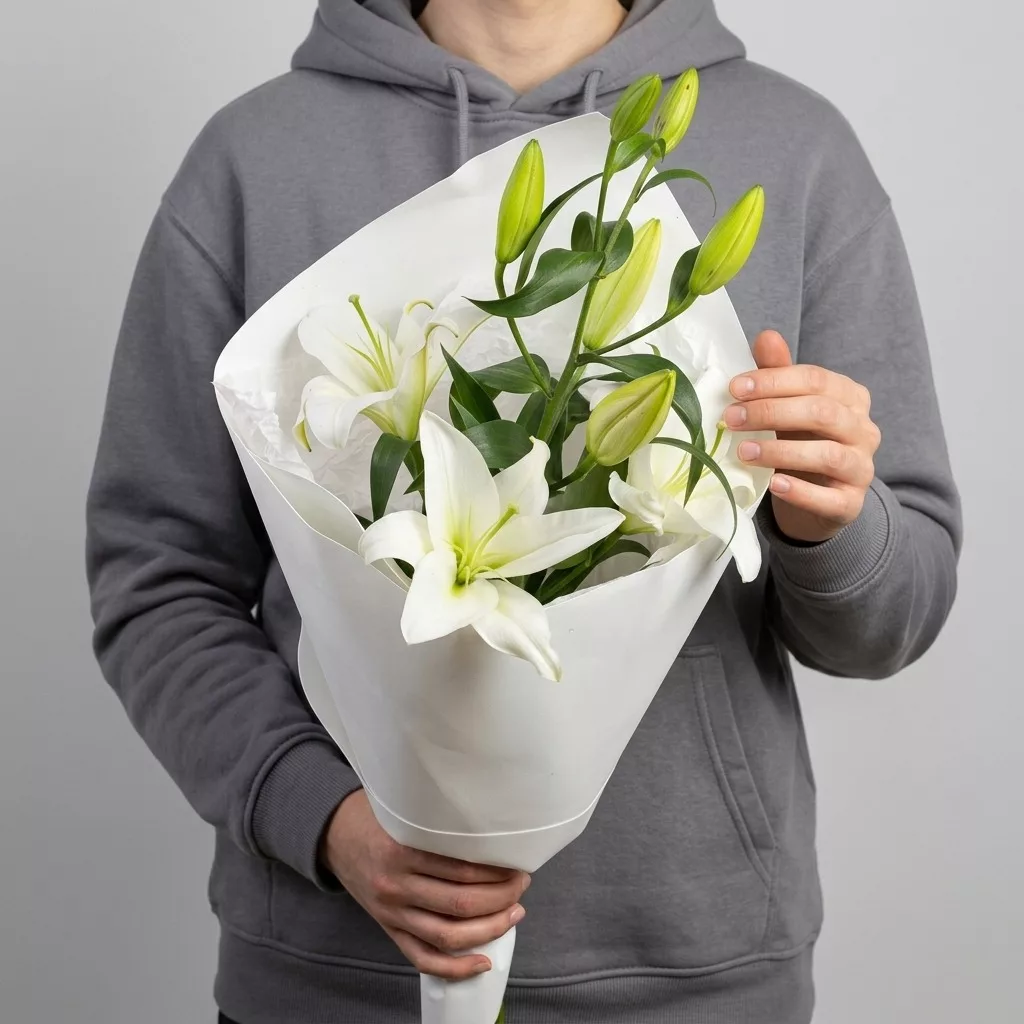
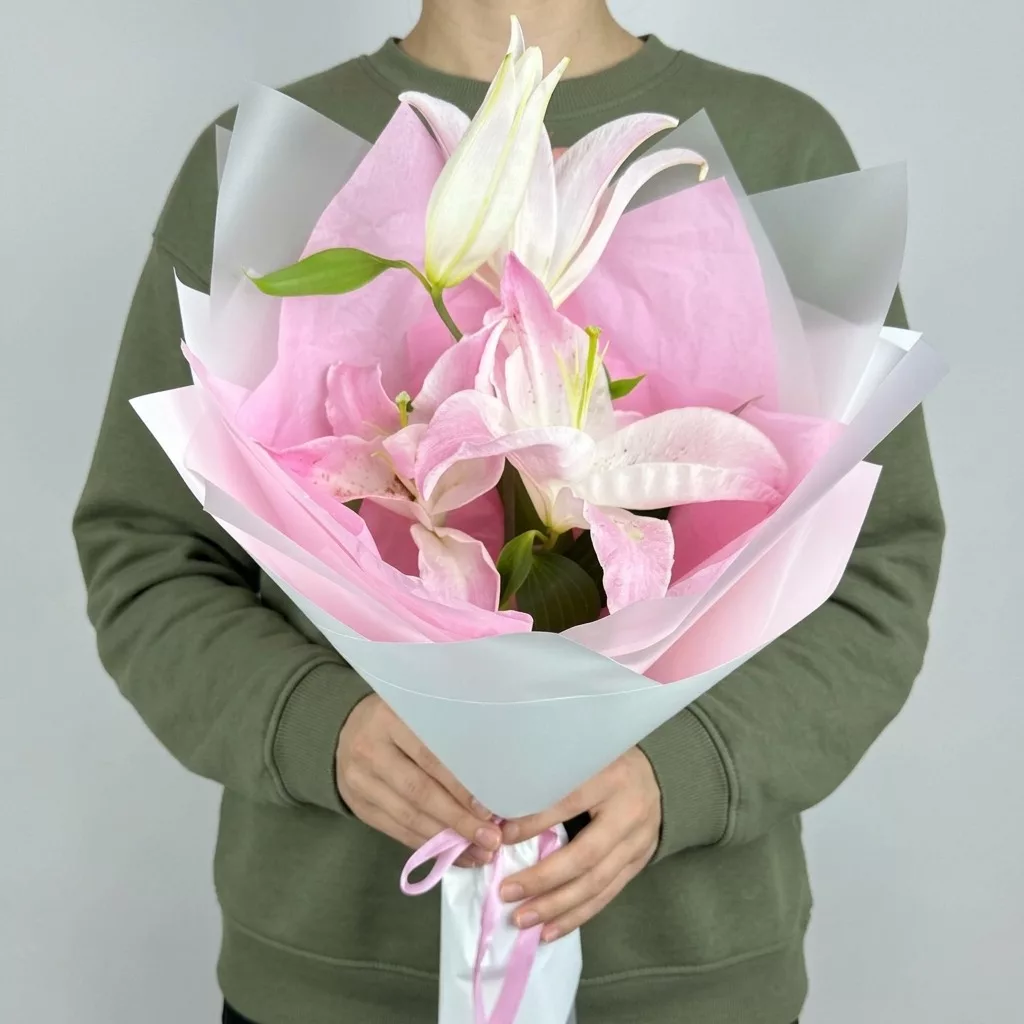
Bouquets we can deliver


Moscow and Saint Petersburg: Abundance and Presentation
In both capitals, the visual expectation for March 8 bouquets is high. These are cities where people notice wrapping, ribbon, and composition. A loose bunch of tulips handed over in a plastic sleeve will feel underwhelming here, even if the flowers themselves are fresh. Presentation counts as much as variety.
Tulips dominate — Dutch varieties in white, pale yellow, and deep violet are consistently popular, and a generous count matters. Forty tulips arranged in a round, paper-wrapped bouquet is a common sight in Saint Petersburg doorways on March 8 morning. Roses hold their place too, particularly spray roses in soft peach and cream tones, which photograph beautifully and last well in indoor temperatures that can swing between a warm apartment and a cold hallway.
Mimosa — the small, yellow, powder-puff flowering branches of Acacia dealbata — carries enormous symbolic weight in both cities. It is the unofficial flower of March 8, inherited from Soviet tradition, and even people who receive elaborate modern bouquets often want a sprig of mimosa included. Its shelf life is short, typically three to four days, and it dislikes warm, dry air. Keep it away from radiators and change the water daily. In Saint Petersburg specifically, where March temperatures hover just above freezing, mimosa survives transport well when wrapped carefully. Combining a few mimosa branches with white tulips and eucalyptus creates a bouquet that feels both classic and considered.
The Urals and Siberia: Warmth Against the Cold
Cities like Yekaterinburg, Novosibirsk, and Omsk are serious winter places in early March. Temperatures can sit well below minus ten Celsius, which changes both what people order and how flowers need to be packaged. Cold-sensitive varieties — open garden roses, delicate ranunculus, anemones — need insulated wrapping and fast transfer from van to door. A flower left in an unheated stairwell for even twenty minutes in a Siberian March can show frost damage on petals.
In these regions, there is a noticeable preference for robust, warm-colored flowers. Gerberas in orange and red, sturdy chrysanthemums, and alstroemeria in bright mixed tones are consistently chosen. These varieties hold their shape well in cold transit and look cheerful against the grey-white backdrop of a Siberian winter street. The brightness is deliberate — March 8 in Siberia feels like the first real promise that winter is loosening its grip, and the flowers people choose reflect that emotional anticipation.
Giving flowers at the workplace is especially common in Siberian cities. Office collectives often pool contributions so that every woman on the team receives something. This means individual bouquets tend to be modest in size but carefully chosen — a five-stem gerbera arrangement with a ribbon, or a small wrapped bunch of tulips with a handwritten card. The gesture is the point, not the scale. If you are sending to a colleague in Novosibirsk, a neat, compact bouquet in warm tones will feel exactly right.
The Volga Region: Tradition Runs Deep
Cities along the Volga — Kazan, Samara, Nizhny Novgorod — sit in a part of Russia where family ties and traditional customs remain particularly strong. March 8 here is emphatically a family holiday first. The primary recipients are mothers and grandmothers, and the flowers chosen for them tend toward the classic and the familiar rather than the fashionable.
Carnations, which have fallen out of favor in some metropolitan circles, remain genuinely beloved in Volga cities. They are long-lasting, fragrant, and carry a warmth of association for older generations who remember them as the flower of Soviet celebration. A mixed bouquet of carnations and roses in red and white is a completely sincere and welcome gift for a grandmother in Samara — do not let anyone tell you otherwise.
For younger recipients in these cities, the palette shifts. Tulips in lilac and soft pink, combined with waxflower or small-headed spray roses, reflect a more contemporary sensibility while still feeling appropriately festive. Kazan, with its large Tatar population, also sees a strong tradition of giving flowers to female teachers and educators on March 8 — it is common for schoolchildren to arrive with small bouquets, which means florists there prepare many modest, child-appropriate arrangements in the days before the holiday.
Delivery timing in the Volga region follows the same morning preference as the capitals, but there is less pressure on elaborate packaging. A clean, well-made bouquet in good paper is entirely sufficient. The flowers do the talking.
Krasnodar, Sochi, and the South: When Local Blooms Join the Mix
The south of Russia experiences March 8 in a physically different setting. In Krasnodar and Sochi, early March can bring genuine spring warmth — temperatures above ten Celsius, buds already showing on trees. This changes the mood of the holiday considerably. Flowers feel less like a defiance of winter and more like a natural extension of what is already happening outside.
Local seasonality plays a role here that it simply cannot in Siberia or even Moscow. By early March in the Krasnodar region, some growers have early tulips and even the first irises coming through. Irises — particularly the deep purple and blue varieties — are strongly associated with March 8 in southern Russia and carry a freshness that suits the climate. A bouquet of purple irises with white freesia is a combination that feels genuinely regional and very spring-like.
Freesia is worth highlighting specifically for southern deliveries. It is fragrant in a way that many cut flowers are not, and fragrance matters to recipients in the south, where windows are more often open and the scent can fill a room. Freesia lasts five to seven days in water, prefers cool conditions, and should be kept away from direct sunlight. In Sochi, where apartments can warm up quickly in March, this is worth mentioning to recipients.
Roses from Ecuador and Kenya — the long-stemmed, large-headed varieties that dominate the Russian market year-round — remain the most popular single flower in Krasnodar for March 8. Red and deep pink are the preferred colors here, reflecting a southern expressiveness that is characteristic of the region's culture.
Vladivostok and the Far East: Distance and the Art of Sending
Vladivostok sits seven time zones east of Moscow, which means March 8 arrives there first — a detail that matters if you are coordinating a surprise delivery from the European part of Russia. When it is still the evening of March 7 in Saint Petersburg, it is already morning of March 8 in Vladivostok. Anyone sending flowers across that distance needs to account for this when placing an order.
The Far East has its own relationship with flowers that is shaped partly by geography and partly by the influence of neighboring Japan and Korea, which are culturally closer to Vladivostok than Moscow is. Minimalist arrangements — fewer stems, more negative space, careful attention to a single focal flower — are appreciated here in a way that differs from the abundance-first sensibility of the capitals. A single large peony or a sculptural arrangement of anthuriums and tropical foliage can feel more sophisticated than a forty-stem tulip bouquet to a recipient with refined taste in Vladivostok.
Peonies are not typically available in early March from Russian or European suppliers — their natural season runs May through July — so florists rely on imports from South America for March 8 demand. These travel well when sourced carefully and kept at the right temperature during transit, around four to six Celsius. Upon delivery, the recipient should trim the stems and place them in cool water; peonies open slowly and reward patience, often reaching full bloom two to three days after delivery.
For recipients in Vladivostok who appreciate something less conventional, white orchid stems — Phalaenopsis branches rather than potted plants — combined with dark tropical leaves make an arrangement that feels considered, modern, and genuinely suited to the city's character.
March 8 in Russia is not one tradition but many layered on top of each other — Soviet memory, family warmth, regional pride, and the simple human impulse to mark the beginning of spring with something beautiful. Whether you are sending tulips to a grandmother in Samara, irises to a friend in Sochi, or a spare and elegant arrangement to Vladivostok, the gesture carries the same meaning: you thought ahead, you chose with care, and you wanted someone to feel seen. The flowers are the language. The city shapes the accent.
Frequently asked questions
What is the most popular flower for March 8 across Russia?
Tulips are the single most widely given flower for March 8 nationwide, followed closely by roses. Mimosa — the yellow, fragrant Acacia dealbata branch — is the symbolic flower of the holiday and appears in bouquets across every region, often combined with tulips or roses rather than given alone. Its availability peaks in the two weeks around March 8.
Is it appropriate to send flowers to a female colleague for March 8?
Completely appropriate and very common. Workplace flower-giving on March 8 is a normal part of Russian professional culture. A modest, well-presented bouquet or a small arrangement is the right scale for a colleague. Avoid anything too intimate in color or symbolism — soft whites, yellows, and mixed pastels read as warm and collegial rather than personal.
How far in advance should I order flowers for March 8 delivery?
Two to three days before March 8 is strongly recommended. The days immediately before the holiday are the busiest of the entire year for florists across Russia. Ordering early guarantees your preferred varieties are available, ensures morning delivery slots are still open, and gives time for any special requests — such as added mimosa or a specific color palette — to be fulfilled properly.
How should the recipient care for tulips received on March 8?
Trim the stems at an angle under running water and place them in a clean vase with cool, fresh water — not warm. Keep tulips away from radiators and fruit bowls, as ethylene gas from ripening fruit shortens their vase life. Change the water every two days. In a cool Russian apartment in early March, tulips typically last seven to ten days.
Do flower preferences differ between older and younger recipients in Russia?
Yes, noticeably. Older recipients — mothers and grandmothers especially — often appreciate classic choices: carnations, roses in red or pink, and mimosa. Younger recipients tend to prefer more contemporary combinations: ranunculus, spray roses, dried accents, or minimalist arrangements. When in doubt, a well-made tulip bouquet in a soft, modern color works across generations and reads as genuinely festive for March 8.
Ready to send flowers?
Pick the city, choose the bouquet, and a local florist takes it from there.
Choose a city →