March 8 Flowers in Russia: What to Send and Why
If you have ever walked through a Russian city on the morning of March 8, you already know: every man is carrying flowers. International Women's Day is not a quiet occasion here. It is the single largest flower-giving moment of the year, bigger than Valentine's Day, bigger than birthdays for most families. Understanding who you are buying for — and what the day actually means to her — is the only starting point that matters.
Why March 8 Feels Different in Russia Than Anywhere Else
In many countries, International Women's Day is primarily a political or professional occasion. In Russia, it carries all of that weight and then layers something warmer on top: it is genuinely a day of tenderness. Schoolchildren bring flowers to their teachers. Adult sons call their mothers first thing in the morning. Colleagues leave bouquets on desks before the workday begins. Partners try to outdo themselves. The result is a day that touches almost every woman in a man's life simultaneously, which is exactly why florists describe March 8 as the most emotionally loaded delivery window of the entire calendar.
The holiday has deep Soviet roots. It was a public holiday from 1918 onward, and the tradition of gifting flowers became inseparable from it during the mid-twentieth century. Mimosa — the bright yellow clusters that bloom exactly at this time of year — became the symbolic flower of the day, and it remains so today even as tastes have expanded dramatically.
What this means practically is that demand peaks sharply in the two days before March 8 and on the morning itself. Flowers ordered late may arrive warm or wilted simply because supply chains are under enormous pressure. Ordering early, ideally two to three days ahead, is not just convenient — it is the difference between a crisp, long-lasting bouquet and one that has spent hours in an overheated van. A florist who delivers directly and controls the cold chain from the moment the stems are cut makes a measurable difference on this particular holiday.
Bouquets we can deliver

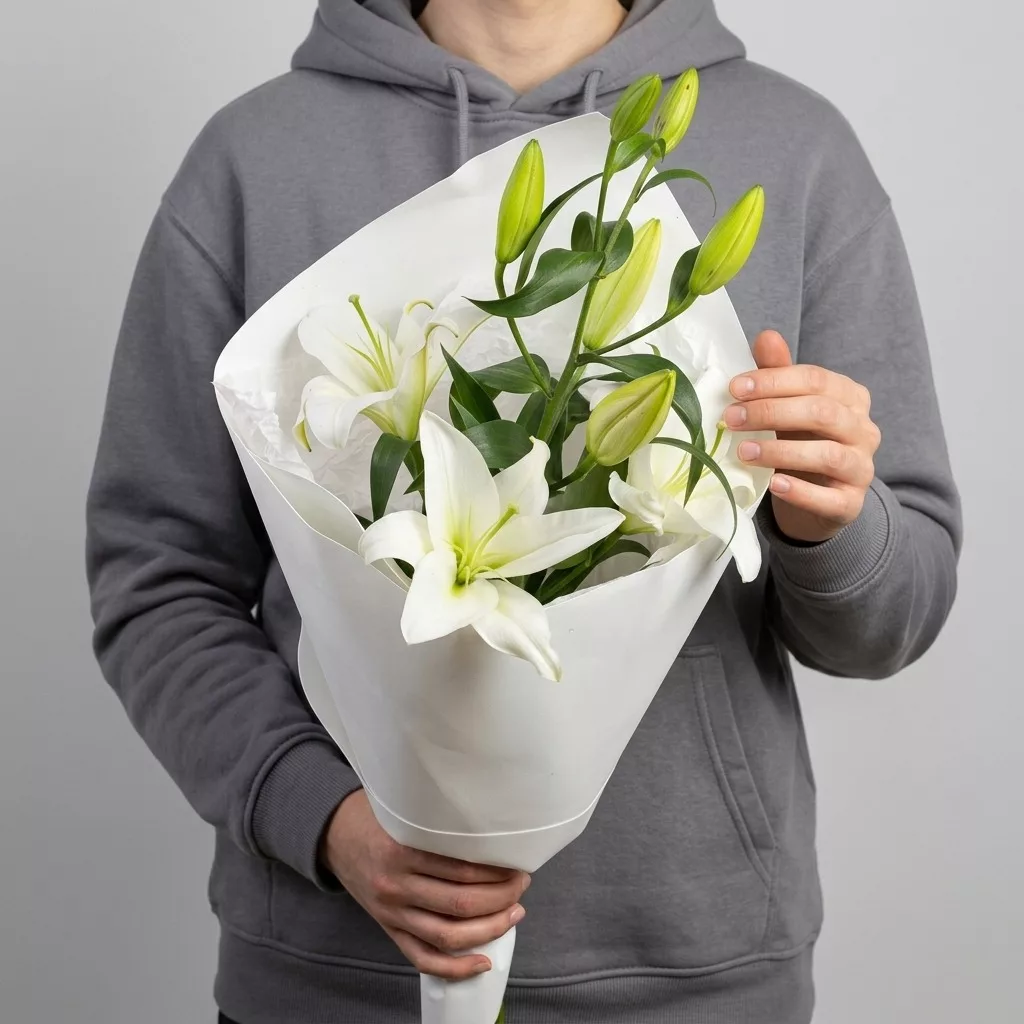
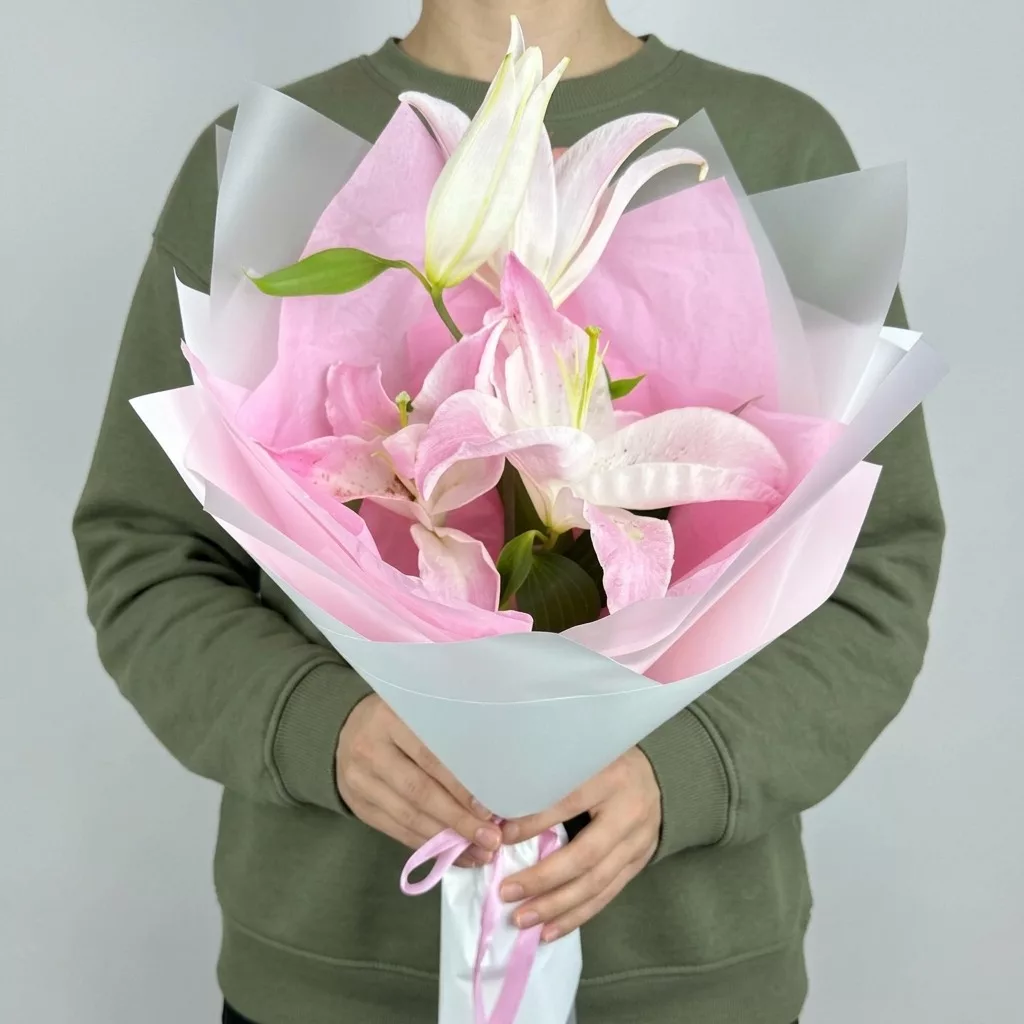

Flowers for Your Mother: Warmth Over Grandeur
When Russian men buy flowers for their mothers on March 8, the instinct is often to go large — a big, impressive bunch that says effort. That instinct is right, but the variety matters as much as the size. Mothers, especially older ones, tend to respond most warmly to flowers with a familiar, gentle quality: tulips in soft pink or cream, freesia with its unmistakable scent, hyacinths in lilac or white, and of course mimosa if it is available and fresh.
Mimosa deserves a special note. The fluffy yellow clusters are delicate and do not travel well in heat. If the delivery is going to an apartment with good light, mimosa can last five to seven days in cool water changed daily. If the home is warm, expect closer to three days. Pair mimosa with white ranunculus or pale pink tulips and you have something that looks considered rather than thrown together.
For mothers who appreciate a longer-lasting arrangement, chrysanthemums — particularly the spray varieties in white or pale yellow — are a reliable and traditionally respected choice in Russia. They are not the most fashionable flower right now, but they carry real cultural warmth and will stay fresh for ten to fourteen days with proper care. A mixed bouquet that leads with tulips or ranunculus and uses spray chrysanthemums as a supporting layer gives you both the visual softness of spring and the longevity that means she is still enjoying the gift two weeks later. Add a few stems of eucalyptus for structure and a light, clean scent that does not compete with the flowers themselves.
Flowers for Colleagues: Cheerful, Neutral, and Easy to Handle
Office gifting on March 8 follows its own unspoken logic. The flowers need to be cheerful without being romantic, impressive without being so large that the recipient cannot carry them home on public transport, and fragrant enough to feel like a real gift without overwhelming an open-plan office. This is a narrower brief than it sounds.
Tulips are the undisputed answer for colleagues. A bunch of ten to fifteen tulips in a single strong color — coral, bright yellow, deep purple — reads as festive and generous without any ambiguity. They are easy to wrap, easy to carry, and almost universally liked. Avoid heavily scented varieties like oriental lilies in an office context; a colleague with a headache or a sensitivity will remember that long after the holiday is over.
Alstroemeria is another excellent office choice that is often underestimated. The blooms are small and numerous, the stems are sturdy, and a single bunch produces an effect that looks far more expensive than it is. Mixed in warm tones — peach, orange, soft red — alstroemeria reads as genuinely spring-like. It also lasts exceptionally well, often ten days or more, which means your colleague is still thinking warmly of you when she comes back from the long weekend.
For a group of colleagues rather than one individual, a single large arrangement left in a common area — a wide, low bowl of mixed spring flowers including ranunculus, tulips, and a few stems of waxflower — creates a shared moment that feels generous and inclusive. The presentation matters here: a tight, rounded shape in a simple ceramic vessel looks intentional rather than improvised.
Flowers for a Partner: Where You Can Take Real Risks
Buying flowers for a partner on March 8 is the one context where playing it safe is actually the wrong move. She almost certainly receives flowers from other people today — her mother gets a call, her colleagues get tulips — and what you give her should feel categorically different. This is the occasion for roses, for peonies if the season allows, for garden roses with layered petals and a real fragrance, for something that takes a breath away rather than simply checking a box.
Red roses remain the classic romantic choice in Russia and there is nothing wrong with that. But the variety within roses is vast. Garden roses — varieties like David Austin types with their cupped, multi-petalled heads — have a softness and a scent that standard long-stemmed roses rarely match. A bouquet of fifteen to twenty garden roses in blush, cream, or deep burgundy, wrapped simply in kraft paper with a satin ribbon, is hard to improve upon.
If you want something less expected, consider a monochromatic bouquet built around a single color family. All-white arrangements using white ranunculus, white tulips, white freesia, and white lisianthus are striking in their restraint and photograph beautifully, which matters more than florists sometimes admit. Deep plum and burgundy combinations — dark tulips, burgundy ranunculus, wine-red roses — have a richness that feels genuinely luxurious.
Timing is everything here. A bouquet delivered in the morning, before she leaves for work, lands differently than one that arrives in the evening. Morning delivery signals that you planned ahead, that you thought about her before the day started — and that is the emotional content of a good March 8 gift.
Caring for March 8 Flowers: Making Them Last Beyond the Holiday
Most flowers that fade quickly after March 8 do so not because they were low quality but because they were not given the right conditions in the first 24 hours. This is especially true in Russia in early March, when apartments are still heated to winter temperatures — often 22 to 24 degrees Celsius indoors — while the flowers were cut in much cooler conditions. That temperature jump is the main enemy of vase life.
The first step when flowers arrive is to cut the stems at a 45-degree angle under running water, removing at least two centimeters. This sounds basic, but it is skipped more often than not. Place the flowers in a clean vase — any residue from a previous arrangement introduces bacteria immediately — with cool, fresh water. Change the water every two days and re-cut the stems each time you do.
Keep the vase away from radiators, sunny windowsills, and fruit bowls. Ripening fruit releases ethylene gas, which accelerates wilting in tulips and roses particularly. A cool hallway or a spot away from direct heat will extend vase life by two to three days on almost any variety.
Tulips will continue to grow after cutting — sometimes by several centimeters — and will bend toward light. Rotating the vase a quarter turn each day keeps them upright and even. Mimosa benefits from a light misting with water once a day; it dries out from the outside in, and surface moisture slows that process. Roses should have any leaves stripped from the lower half of the stem before they go into water, since submerged leaves rot quickly and cloud the water.
Ordering for March 8: Timing, Quantities, and What to Avoid
The most common mistake people make with March 8 flowers is treating it like an ordinary delivery day. It is not. The volume of orders across Russia in the 48 hours before March 8 is unlike anything else in the floral calendar, and the consequences of leaving things too late are real: fewer variety options, longer delivery windows, and flowers that have been handled more than they should be.
Order at least two to three days before March 8 if you want full choice of varieties and a guaranteed morning delivery slot. If you are sending to someone in another city — a mother in Moscow, a sister in Novosibirsk — order even earlier and confirm that the delivery address is accurate down to the apartment number and entry code. Flowers left in a cold lobby for two hours on a March morning will not look the way you imagined.
Avoid ordering very large, elaborate arrangements if the recipient lives alone and has limited vase options at home. A single enormous bouquet that cannot fit into any vessel she owns will spend its first hours in a bucket, which is not the image you were going for. Two medium bouquets — one for the kitchen table, one for the bedroom — often create more sustained joy than one oversized display.
Finally, think about the wrapping. On March 8, flowers arrive by the armful from every direction. Distinctive, considered presentation — a particular paper, a handwritten card, an unexpected ribbon color — is what separates your bouquet from the others she receives that day. The florist's craft is in the details, and those details are worth specifying when you place your order.
March 8 in Russia is a day when flowers carry more meaning than on almost any other occasion, and the choice of what to send tells a story before a single word is spoken. Getting it right is less about spending more and more about understanding who you are sending to, what she will feel when she opens the door, and how long those flowers will stay beautiful in her home. Order early, choose varieties that suit the person and the season, and let the presentation do the last mile of the work.
Frequently asked questions
What is the most traditional flower for March 8 in Russia?
Mimosa has been the symbolic flower of March 8 in Russia since the Soviet era. Its bright yellow clusters appear in shops every year specifically for this holiday. Tulips are equally traditional and far more widely given today because they are sturdier, travel better, and come in a much wider range of colors to suit different recipients.
Is it appropriate to send flowers to a female colleague on March 8?
Absolutely — workplace gifting is one of the central customs of the holiday in Russia. Tulips or alstroemeria in cheerful, non-romantic colors are the standard choice. Keep the bouquet modest in size so it is easy to carry home, and avoid heavily scented flowers like oriental lilies that can be overwhelming in a shared office environment.
Can I order March 8 flowers to be delivered to another Russian city?
Yes. Turboflora delivers across Russia, but for intercity deliveries on a peak holiday it is especially important to order two to three days in advance. Confirm the full address including apartment number and any door code. Morning delivery slots on March 8 itself fill quickly, so early ordering gives you the best choice of time and variety.
How long will tulips last after March 8 delivery?
Tulips typically last five to seven days in a cool room with water changed every two days and stems re-cut each time. Keep them away from radiators and fruit bowls. They will continue to grow and lean toward light after cutting, so rotate the vase daily to keep them even. Cooler room temperatures noticeably extend their vase life.
What should I avoid when choosing March 8 flowers for an older relative?
Avoid flowers with very strong scents if the recipient has respiratory sensitivities — some oriental lilies and hyacinths can be intense in a small apartment. Also avoid very large, heavy bouquets that are difficult to carry or find a vase for. Soft-colored tulips, freesia, and spray chrysanthemums are reliable, well-loved choices that feel genuinely personal rather than generic.
Ready to send flowers?
Pick the city, choose the bouquet, and a local florist takes it from there.
Choose a city →