Matthiola Stock Flowers: Fragrance and Freshness in Russian Arrangements
Open a box of fresh matthiola and the scent reaches you before you even see the flowers. That warm, clove-like sweetness is something most cut flowers simply cannot offer, and in Russia it has made matthiola — known locally as levkoy — one of the most requested fragrant additions to bouquets for birthdays, anniversaries, and spring celebrations. If you have never worked with stock flowers before, or if you are ordering a bouquet for someone and wondering whether matthiola is the right choice, this article will walk you through everything: when they are at their best, how they fit different budgets, which combinations look and smell wonderful together, and what the recipient needs to do to enjoy them for as long as possible.
Why Matthiola Has a Special Place in Russian Flower Culture
In Russia, matthiola carries a particular nostalgic warmth. Older generations remember levkoy growing in dacha gardens, filling evening air with their spiced sweetness, and that association with home and summer has never really faded. When a florist tucks a few stems into a bouquet, the recipient often pauses and says they know this scent from childhood. That emotional response is something no visual flower can replicate on its own.
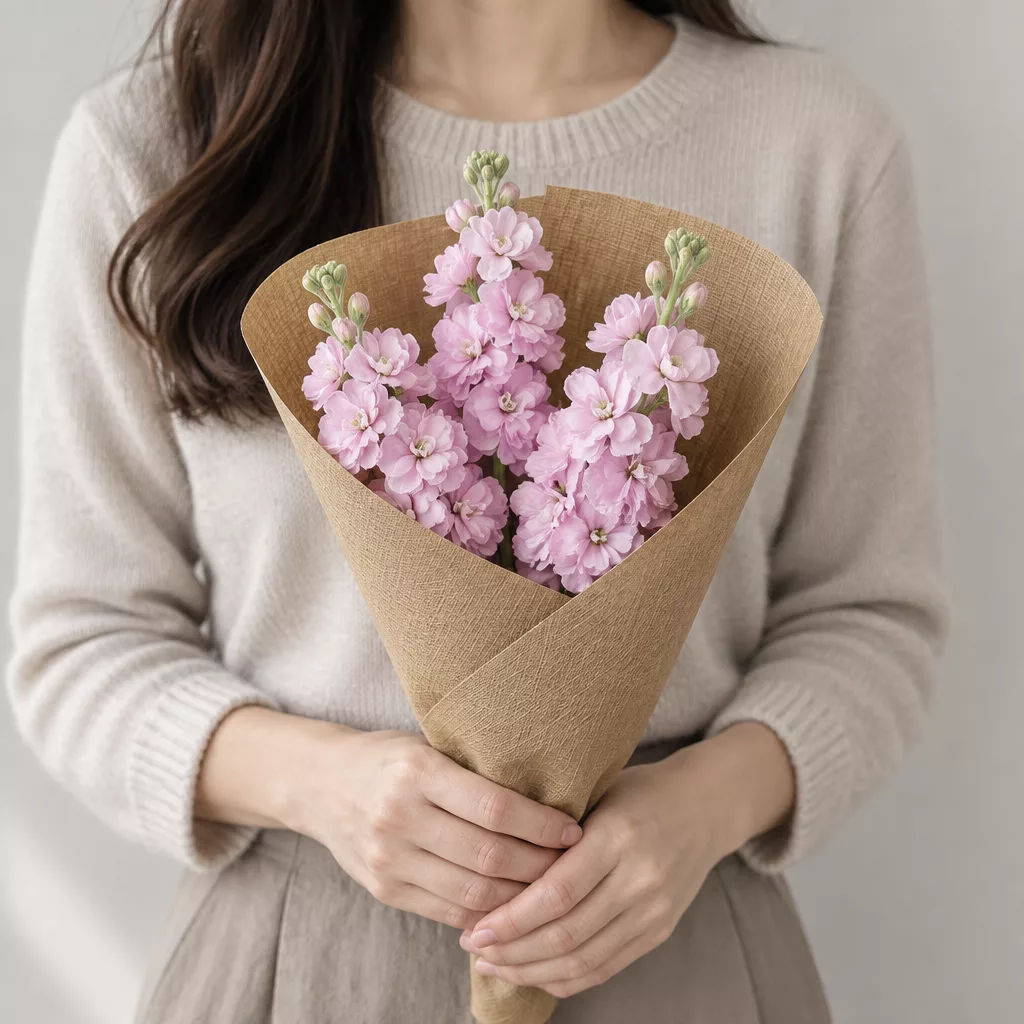
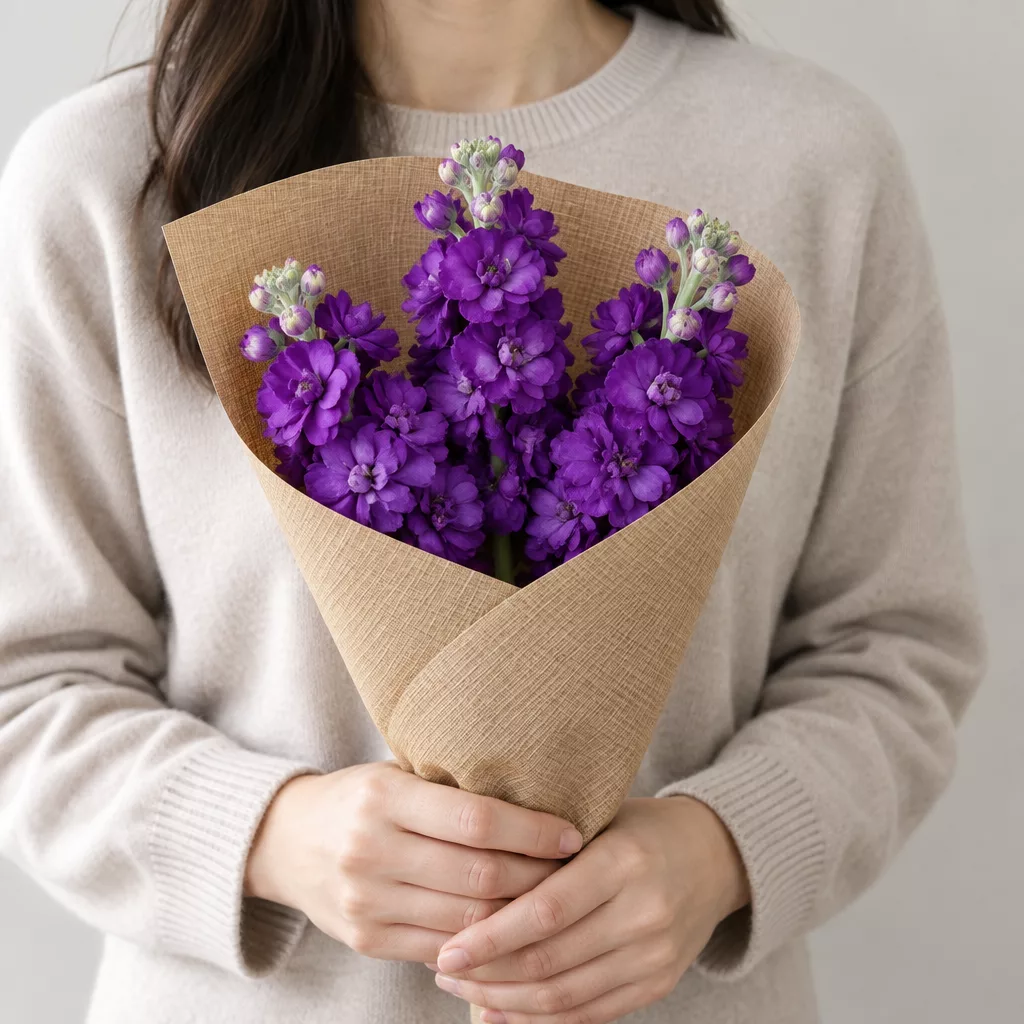
Matthiola belongs to the Brassicaceae family, the same broad group as mustard and cabbage, which explains why the plant is so hardy and adaptable to Russian growing conditions. The flowers grow in dense, upright spikes and come in white, cream, pale lilac, deep violet, rose pink, and burgundy. The double-flowered forms — the ones most commonly sold by florists — look almost like miniature roses stacked along a stem, which makes them photograph beautifully and hold their shape well in an arrangement.
For someone unfamiliar with Russian gifting customs, it is worth knowing that fragrance is genuinely valued here. Russians often smell a bouquet before they look at it closely, and a scentless arrangement, however beautiful, can feel slightly impersonal. Adding matthiola addresses this expectation directly. It signals that the person who chose the flowers was thinking about the experience, not just the appearance. That thoughtfulness lands especially well for birthdays and name-day celebrations, which remain significant occasions across much of the country.
Bouquets we can deliver


When Matthiola Is in Season and What That Means for Quality
Matthiola is a cool-season crop, and that fact shapes everything about when you can trust it. In Russia, domestically grown stems peak in two windows: a spring flush roughly from late April through June, and a shorter autumn flush in September and into early October. During these periods, the flowers are cut at their freshest, the fragrance is strongest, and the stems arrive at florists in genuinely good condition. If you are planning a gift and have any flexibility on timing, ordering within these windows gives you the best result.
Outside those windows, matthiola is still available but it travels further. Stems come primarily from Dutch auctions and greenhouse growers in the Netherlands and occasionally from producers in other parts of Europe. Cold-chain logistics across that distance are reliable but not perfect. The flowers that arrive in January or February are often slightly less fragrant than their spring counterparts, because the volatile compounds responsible for the scent diminish during extended refrigerated transport. They are still beautiful and still scented — just a little quieter.
Summer heat is actually the enemy of matthiola. In July and August, Russian outdoor growers stop producing the crop because temperatures above 25 degrees Celsius cause the plants to bolt and produce fewer flowers. This is why a florist who tells you matthiola is unavailable in midsummer is being honest with you, not making excuses. The honest answer is always better than receiving stems that have been stressed by heat at the source. If you are ordering in July, a florist might suggest eustoma or sweet peas as fragrant alternatives that handle summer conditions more gracefully.
Choosing Matthiola for the Occasion and the Recipient
Matthiola suits occasions where warmth and intimacy matter more than grandeur. A birthday bouquet for a close friend, a thank-you arrangement for a teacher, a gesture of affection between partners — these are the moments where stock flowers feel exactly right. The scent creates an immediate sense of closeness, and the soft, ruffled spikes have a romantic quality without being as formally weighted as roses.
For recipients who are sensitive to strong fragrances, it is worth mentioning matthiola in your order notes. Some people with allergies or migraines find intense floral scents difficult, even beautiful ones. A good florist will either reduce the number of stems or suggest positioning them as a smaller accent rather than the main element. Most people, however, respond very positively, especially if they are receiving flowers at home or in a personal office space where the scent can settle and develop.
Matthiola works particularly well for women in their forties and older who have that dacha-garden memory, but it is genuinely versatile. Younger recipients often find the vintage aesthetic of the double flowers appealing — there is a current trend in Russia toward garden-style and wildflower arrangements, and matthiola fits that aesthetic perfectly. For a man, it works best as a supporting element in a mixed bouquet rather than the focal point, where its fragrance contributes without the arrangement reading as overly delicate. Think of it as the difference between wearing a subtle cologne and being drenched in it — proportion is everything.
How Matthiola Fits Different Budgets Without Compromising Beauty
One of the practical pleasures of matthiola is that it offers genuine value. A single stem carries many individual florets along its spike, which means one or two stems can fill visual and olfactory space that would otherwise require four or five roses. For a florist building a bouquet with a mid-range budget, matthiola is a tool for creating lushness and fragrance without inflating cost. The recipient gets a bouquet that looks and smells abundant, and the person ordering feels their budget was used well.
In a budget-conscious arrangement, matthiola pairs beautifully with alstroemeria, which is widely available in Russia year-round and similarly long-lasting. The combination of matthiola's ruffled spikes and alstroemeria's open faces creates textural contrast, and the colors coordinate easily across the lilac-to-white-to-pink range. Add a few stems of eucalyptus or ruscus for green structure and you have a bouquet that looks considered and generous.
For a more generous budget, matthiola combines with garden roses, peonies in season, and ranunculus. In this context it moves from being the value element to being the fragrant accent that elevates the whole arrangement. A bouquet of blush garden roses and white matthiola in late May, when both are at their domestic seasonal peak, is genuinely one of the most beautiful and fragrant combinations a Russian florist can offer. The scents of the two flowers complement rather than compete — the rose brings a lighter, fresher top note and the matthiola adds depth underneath. It is a combination worth requesting by name if you want something memorable.
Presentation and Combinations That Show Matthiola at Its Best
Matthiola stems are upright and architectural, which means they need companions that soften and balance them rather than compete for height. Low, rounded flowers — spray roses, lisianthus, ranunculus — create the contrast that makes matthiola's vertical spikes look intentional rather than stiff. When a florist builds around this principle, the result is a bouquet with clear structure and visual movement.
Color is where matthiola really rewards careful thought. The lilac and violet tones of stock flowers are particularly beautiful alongside dusty sage, soft grey-green eucalyptus, and white. This palette reads as sophisticated and slightly vintage, which is very much in step with current Russian preferences for arrangements that look as if they were gathered from a garden rather than selected from a catalogue. The burgundy varieties work differently — they are richer and more dramatic, and they pair well with deep red roses, dark foliage like cotinus, and cream-colored companions that stop the arrangement from feeling heavy.
White matthiola is perhaps the most versatile option. It works in romantic bouquets, in clean and modern all-white arrangements, and as a bridge between other colors. If you are sending flowers to someone whose taste you are not entirely sure of, white matthiola is a safe and elegant choice that almost nobody dislikes.
One presentation detail worth noting: matthiola stems should not be stripped of their lower leaves too aggressively. A few small leaves left near the base of the spike help the flower look natural and garden-fresh. Over-stripped stems give any bouquet a slightly clinical look that works against the warmth matthiola is meant to convey.
Vase Life: Realistic Expectations and How to Extend Them
Fresh matthiola, cut correctly and cared for well, lasts between five and eight days in a vase. That is a reasonable but not exceptional vase life compared to, say, chrysanthemums or alstroemeria, which can last two weeks or more. The difference lies in how the recipient handles the flowers in the first twenty-four hours, which is when most of the avoidable damage happens.
The single most important instruction is water temperature. Matthiola should always go into cool or room-temperature water — never warm. Warm water accelerates bacterial growth and softens the stems, both of which shorten vase life significantly. The stems should be cut at a forty-five-degree angle with a clean, sharp knife before placing in the vase, not scissors, which can crush the vascular tissue and reduce water uptake. This is a small detail that makes a measurable difference.
Matthiola is sensitive to ethylene gas, the natural compound that causes fruit to ripen and flowers to age. This means the vase should be kept away from fruit bowls, particularly apples and bananas, which produce ethylene in quantity. It also means keeping the flowers away from direct sunlight and heat sources. A cool room — ideally between 16 and 20 degrees Celsius — is genuinely ideal, which suits most Russian apartments in spring and autumn.
Changing the water every two days and re-cutting the stems at the same time extends freshness noticeably. If the lower florets on the spike begin to drop before the upper ones open, this is normal — matthiola blooms from the bottom of the spike upward, and the progression of opening flowers is part of what makes it interesting to live with over several days.
Ordering Matthiola for Delivery Across Russia: What to Know
When ordering matthiola for delivery, the most important variable is temperature at the point of delivery. Matthiola is a cool-season flower and it responds badly to being left in a warm entrance hall or a heated car for extended periods. A delivery that arrives promptly and is placed directly in water by the recipient will always outlast one that sits in warmth for an hour before anyone attends to it. This is worth communicating to the recipient if you are sending a surprise — a simple message saying flowers are on their way means they can be ready to receive them properly.
For cities beyond Saint Petersburg, the transit conditions matter. Turboflora's delivery model is built around speed — the one-to-two-hour window exists precisely because fresh flowers, and fragrant ones in particular, lose quality with time and temperature fluctuation. The shorter the gap between the florist's cold storage and the recipient's vase, the better the result. Matthiola is an especially good test of this because its fragrance is the first thing to suffer when the cold chain is broken.
If you are ordering matthiola as part of a mixed bouquet, it is worth specifying whether you want it as the focal point or as a supporting element. Florists make different choices about stem count and placement depending on the role the flower is meant to play. Saying something as simple as 'I would like the bouquet to be led by the matthiola fragrance' gives the florist the information they need to build accordingly. Clear communication at the order stage almost always produces a better outcome than leaving everything to interpretation.
Matthiola is one of those flowers that earns its place in an arrangement through experience rather than appearance alone. You can photograph a rose and convey most of what it offers. You cannot photograph a scent. The people who receive matthiola remember it — the warmth of it, the way it changes the atmosphere of a room — in a way that outlasts the flowers themselves. For anyone sending a bouquet in Russia, whether for a birthday, an anniversary, or simply to say something kind, matthiola offers something genuinely rare: beauty you can smell before you see it. We deliver bouquets across Russia in 1–2 hours.
Frequently asked questions
Is matthiola available year-round for delivery in Russia?
Matthiola is available most of the year, but quality peaks in spring and early autumn when domestic growing conditions are ideal. In midsummer, heat reduces domestic supply and imported stems can be less fragrant. In deep winter, flowers travel from European growers and are still beautiful, though the scent may be slightly softer than at seasonal peak.
How long will matthiola last in a vase after delivery?
Expect five to eight days when the flowers are handled well. Cut the stems at an angle, place them in cool water immediately, keep the vase away from fruit and direct sunlight, and change the water every two days. The flowers open progressively from the bottom of the spike upward, so the bouquet continues to develop over its first few days.
Can matthiola cause problems for people with allergies or scent sensitivities?
Matthiola has a strong, clove-like fragrance that most people find pleasant, but it can be overwhelming in a small, enclosed space for those sensitive to intense scents. If the recipient has known fragrance sensitivities or migraines triggered by strong smells, mention this when ordering so the florist can adjust the quantity or suggest a lighter alternative.
What flowers combine best with matthiola in a bouquet?
For a romantic, garden-style arrangement, matthiola pairs beautifully with garden roses, ranunculus, and lisianthus. For a more budget-conscious combination, alstroemeria and eucalyptus work very well. White matthiola is the most versatile variety and bridges almost any color palette. Avoid pairing it with very strong-scented flowers like hyacinth, as the fragrances can clash.
Why does matthiola sometimes smell stronger in the evening?
This is a genuine botanical characteristic, not imagination. Matthiola releases more volatile fragrance compounds in cooler temperatures and lower light, which is why the scent intensifies in the evening and in cooler rooms. This is also why a vase kept in a cool spot during the day will often seem more fragrant when you return home in the evening.
Ready to send flowers?
Pick the city, choose the bouquet, and a local florist takes it from there.
Choose a city →