Midnight and Late-Night Flower Delivery in Russia: Is It Really Possible?
It is two in the morning and you have just remembered a birthday, or you want to surprise someone the moment they land at Pulkovo after a long flight. The question is not whether the impulse is romantic — it clearly is — but whether a fresh bouquet can actually arrive at that hour. In Russia, late-night flower delivery exists, it works, and when it is done properly it creates the kind of moment people talk about for years. Here is everything you need to understand before you place that after-hours order.
How Late-Night Delivery Actually Works in Saint Petersburg
Most flower shops in Russia operate on standard retail hours, closing somewhere between seven and nine in the evening. A genuine around-the-clock delivery service is a different operation entirely — it requires couriers on shift through the night, a refrigerated holding space that keeps stems at four to six degrees Celsius, and a florist or experienced assembler available to build the arrangement after the order comes in. Without all three of those elements in place at the same time, what you receive at midnight is not a fresh bouquet; it is whatever was left over from the afternoon rush.
At Turboflora we keep night shifts running precisely because Saint Petersburg is a city that does not stop. Flights land at odd hours, birthday parties run past midnight, and the White Nights season in June means that the boundary between evening and night blurs completely for residents and visitors alike. Our courier network covers the city and we dispatch within the same one-to-two-hour window we hold ourselves to during the day.
The practical side matters too. Cold storage is non-negotiable for night orders. Roses left at room temperature for more than two hours begin to lose turgor in the outer petals. Peonies and ranunculus are even more sensitive. When you order after ten in the evening, ask directly how the flowers are stored between assembly and dispatch — the answer tells you everything about whether the shop is genuinely equipped for the work.
Bouquets we can deliver

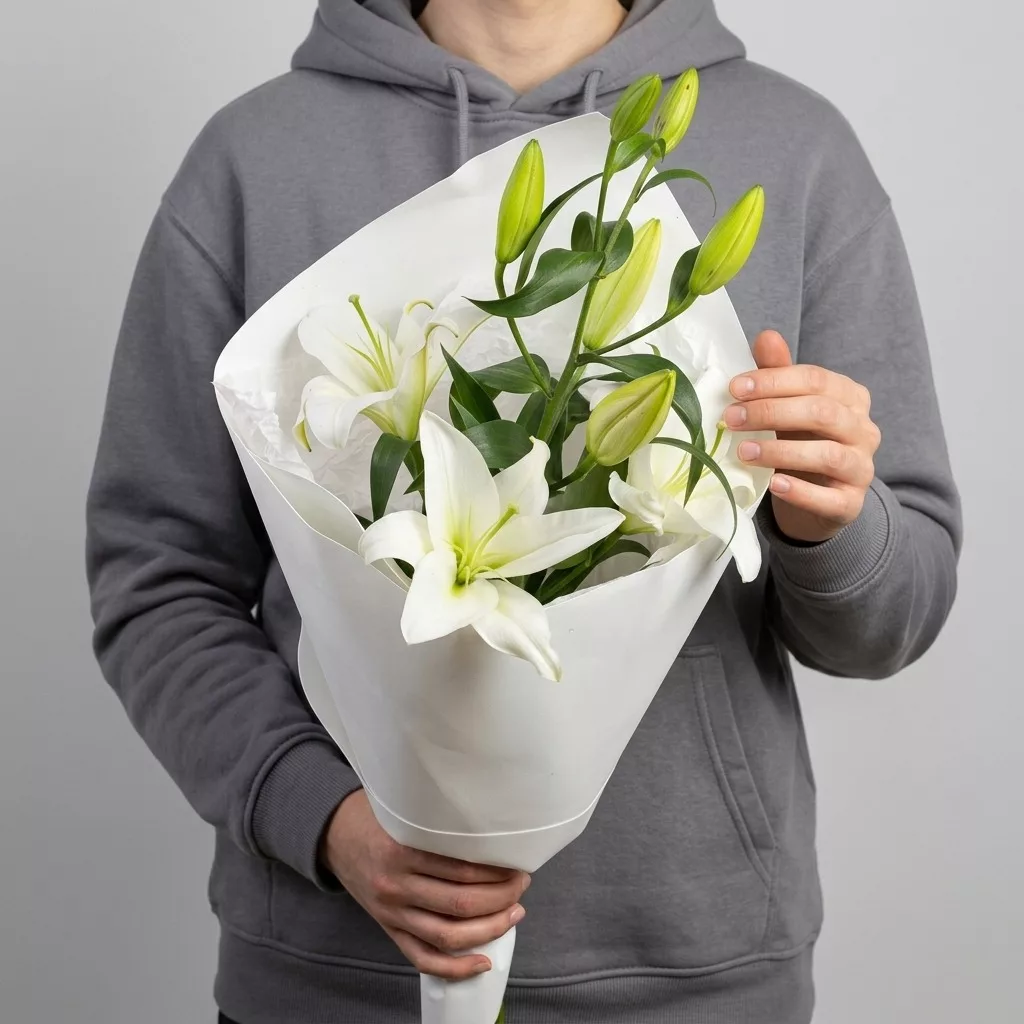
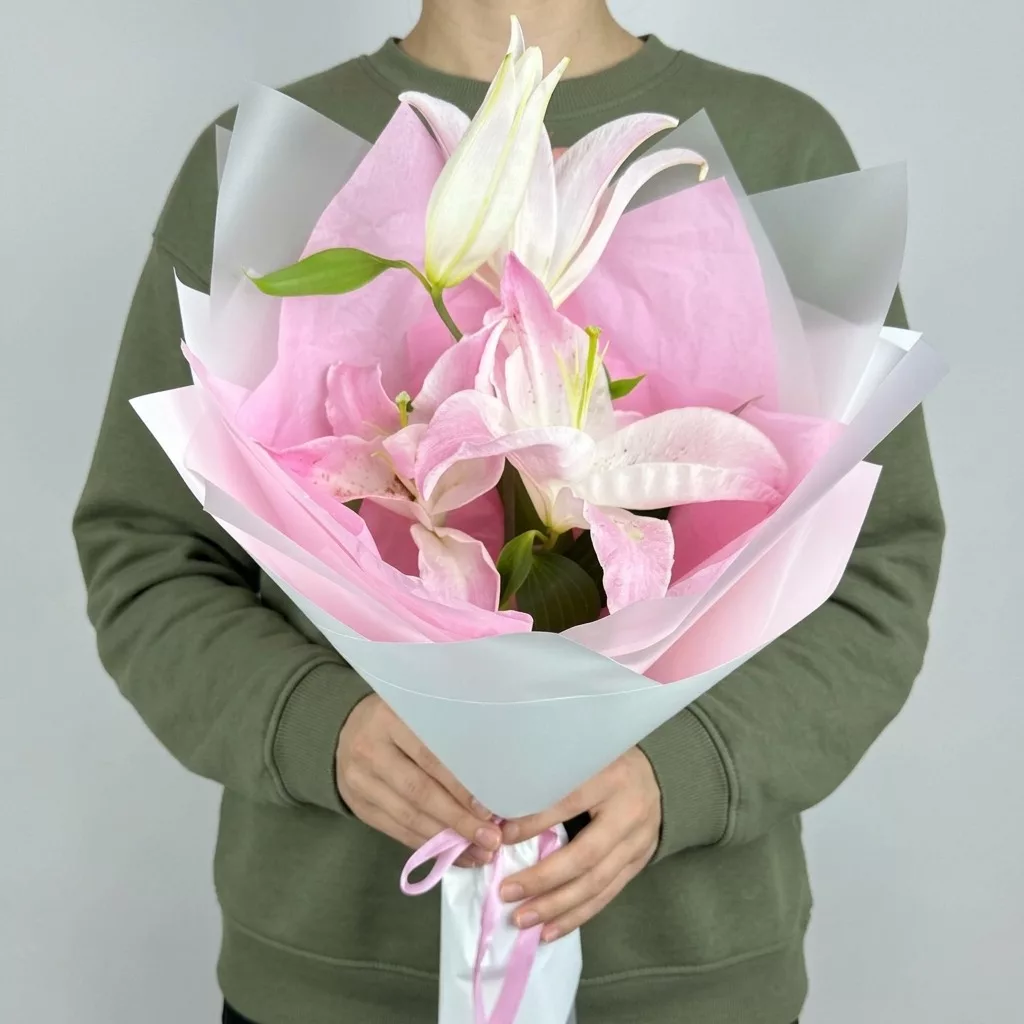
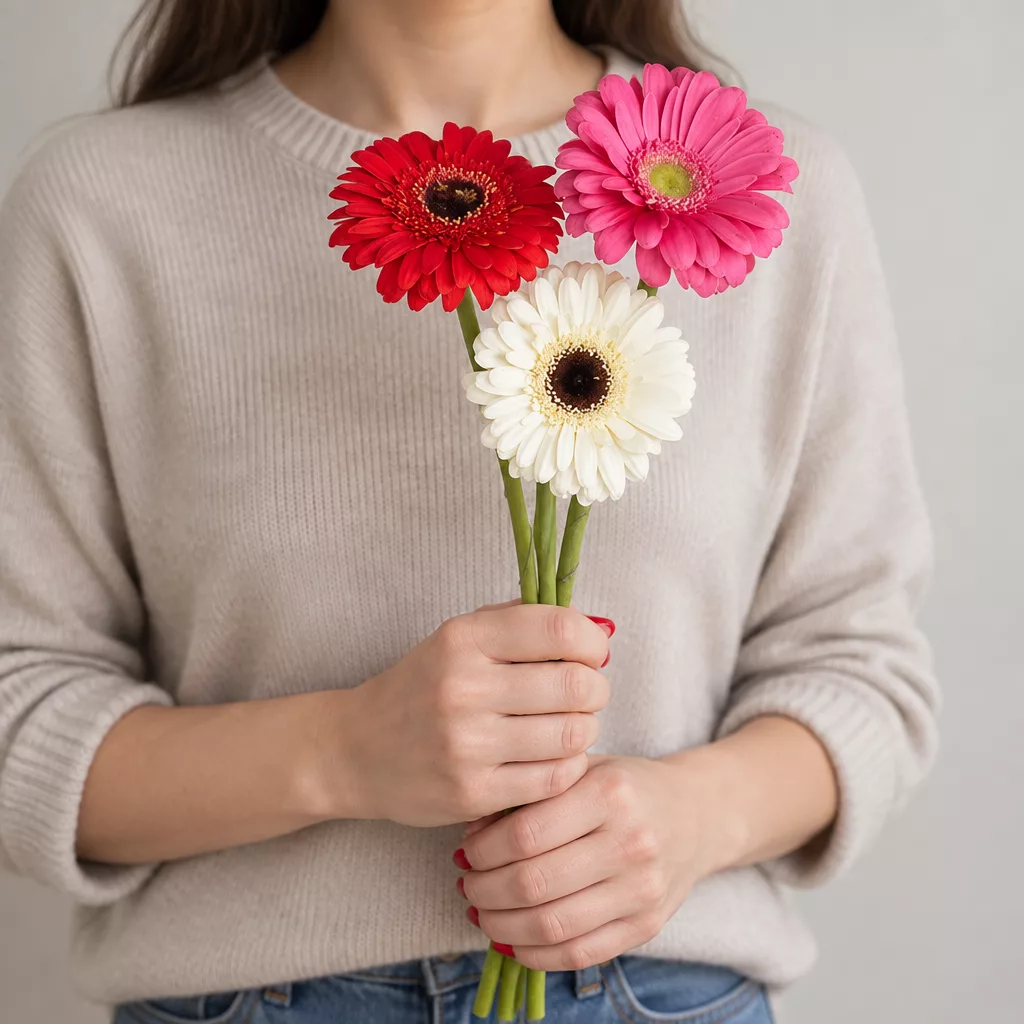
Which Occasions Actually Call for an After-Hours Bouquet
Not every gesture needs to happen at midnight, but some moments genuinely do. The most common reason people place a late-night order is a birthday that falls on the day itself — in Russian culture it is considered important to congratulate someone on the exact date, and if that date turns over at midnight, arriving with flowers at 00:05 carries real weight. It is a deliberate act, not a convenience, and the recipient understands the effort immediately.
Airport arrivals are another strong use case. Russia is a large country and domestic flights from Vladivostok, Novosibirsk, or Krasnoyarsk frequently land in Saint Petersburg between eleven at night and three in the morning due to time zone differences. Meeting someone at arrivals with a bouquet of white freesias or blush spray roses after a seven-hour journey across the country is the kind of welcome that resets exhaustion entirely.
Anniversaries are the third occasion worth mentioning. Couples who have been together for years often want to mark the exact hour, not just the day. A delivery timed to arrive at the moment that corresponds to when they first met, or when they got engaged, is a level of thoughtfulness that a daytime bouquet simply cannot replicate.
There are also professional situations — a performer finishing a late show, a chef at the end of a long service, a colleague who pulled an all-nighter to meet a deadline. Flowers that arrive when someone is still in that heightened, tired, emotional state land very differently from ones that appear the following morning.
How to Place a Night Order Without Mistakes
The single most common mistake people make with late-night orders is leaving them too late. If you want flowers to arrive at midnight, placing the order at eleven-forty gives a courier almost no margin, especially in a city where traffic near the centre can still be unpredictable after dark. A good rule is to order at least ninety minutes before your target delivery time, and two hours is more comfortable.
Be specific about the address. Night deliveries go to apartment buildings where intercoms may be switched off, to hotels where the front desk needs to be called, and to private houses where the gate code matters. Write all of this in the order notes. A courier standing outside a locked building at one in the morning with a bouquet of garden roses cannot do much without the right information.
Choose flowers that travel well after dark. Chrysanthemums, alstroemeria, and standard roses are robust and hold their shape through a night delivery. Delicate open peonies or fully bloomed hydrangea heads are beautiful but more vulnerable to jostling in a bag at speed. If you are ordering for a dramatic gesture, a tight bouquet of deep red roses or a structured arrangement of white lisianthus with eucalyptus carries well and photographs beautifully when the recipient opens the door.
Finally, let the recipient know a delivery is coming — unless the surprise is the entire point. An unexpected knock at two in the morning can startle rather than delight. A small hint, a message saying only that something is on its way, keeps the magic intact while making sure the door actually opens.
What Flowers Hold Up Best Through the Night
Temperature is the governing factor in how well flowers survive a night delivery. Saint Petersburg winters drop well below freezing, and a bouquet carried from a warm car into minus fifteen degrees, even briefly, can cause cell damage in the petals that becomes visible within hours. Tropical varieties like anthurium and strelitzia are particularly vulnerable to cold shock. In winter, every bouquet leaving our workshop after dark is wrapped in insulating kraft and placed in a thermal sleeve for the final leg of the journey.
In summer the challenge reverses. The White Nights bring warm, humid evenings, and flowers that sit in a warm car for thirty minutes begin to wilt from the stem upward. This is why our refrigerated holding temperature matters — flowers that go from six degrees directly into the recipient's hands arrive firm and fragrant, not slack.
For night orders specifically, the varieties that consistently perform well are standard and spray roses, carnations, alstroemeria, chrysanthemums, and lisianthus. These are not compromise choices — a bouquet of garden spray roses in apricot and cream tones, wrapped in dusty miller and tied with ribbon, is genuinely beautiful. Tulips are fine in cooler months but need to be conditioned carefully because they continue to grow after cutting and can shift position during transit.
If you want something more unusual for a late-night delivery, consider a compact arrangement built around a single statement flower — a few stems of burgundy calla lilies with dark foliage, for example. The drama is in the restraint, and a tightly composed bouquet handles the journey better than a loose, voluminous one.
Caring for Flowers That Arrive After Dark
When a bouquet arrives at midnight, the recipient is almost certainly not going to trim stems and arrange it in a vase immediately. That is completely understandable, and a well-conditioned bouquet can wait in its wrapping for a few hours without serious harm — provided it is kept cool and the stems are not sitting in water that has been standing for more than a day.
The best advice to pass along to whoever is receiving the flowers is simple: unwrap the bouquet, trim about two centimetres from the bottom of each stem at an angle using scissors rather than a knife, and place it in clean, cool water with a small sachet of flower food if one is included. Then leave it somewhere away from direct heat sources — not on top of a radiator, not next to a sunny window in the morning. A cool hallway or a kitchen counter away from the stove is ideal.
Roses delivered at night typically have a vase life of seven to ten days if they are cut properly and the water is changed every two days. Alstroemeria can last two weeks or more. Lisianthus holds for eight to twelve days and continues to open gradually, which means the bouquet looks different and arguably better on day five than it did on day one.
If the flowers arrive in cold weather and the outer petals look slightly bruised or translucent, do not discard the bouquet. Place it in water in a room-temperature space and wait several hours — cold-shocked petals often recover as the flower warms gradually. This is one of those things that surprises people who assume damaged means finished.
Making the Moment Land: Presentation and the Personal Touch
A late-night delivery is already an event. The hour alone signals that this was deliberate, that someone planned and stayed awake and made it happen. What the bouquet looks like when the door opens either confirms that feeling or slightly deflates it, so presentation at this hour deserves real thought.
Colour matters more at night than during the day. Under artificial light, pale flowers — white, cream, soft blush — glow in a way that warmer tones do not. A bouquet of white ranunculus and ivory roses with silver brunia berries looks extraordinary under a hallway light at midnight. Conversely, deep jewel tones like burgundy, violet, and plum read as rich and intentional rather than sombre. Bright yellows and oranges, which are cheerful in daylight, can look slightly flat under artificial light.
The wrapping matters too. Kraft paper tied with a wide satin ribbon is classic and photographs well. If there is a card, keep the message short — a single line lands harder than a paragraph at that hour. The recipient is likely tired or emotional or both, and brevity feels like confidence rather than laziness.
You can also ask for the bouquet to be accompanied by a small addition — a candle, a box of chocolates, a soft toy for a child's birthday. These additions do not diminish the flowers; they complete the picture of a gift that was thought through rather than assembled in a hurry. When someone opens their door at one in the morning to find a courier holding something beautiful and something sweet, the combination tells them everything about how much the gesture was meant.
Late-night flower delivery in Russia is not a workaround or a last resort — it is a legitimate and genuinely moving way to mark the moments that happen outside of business hours. The key is choosing a service that is actually equipped to do it properly: cold storage, night couriers, and flowers that were conditioned that day rather than left over from the previous morning. When all of that comes together, what arrives at someone's door at midnight is not just a bouquet. It is proof that someone thought of them at exactly that hour and decided to do something about it.
Frequently asked questions
Can I really order flowers for delivery at two in the morning in Saint Petersburg?
Yes. Turboflora operates around the clock with night couriers and refrigerated storage. Orders placed with at least ninety minutes of lead time before your target delivery window are handled the same way as daytime orders — fresh flowers, assembled that evening, delivered within one to two hours of your chosen time.
Will the flowers survive being delivered in winter cold?
They will if the delivery is handled correctly. We wrap all winter bouquets in insulating kraft and thermal sleeves before the courier departs. Flowers going from six-degree storage into minus-fifteen air for a brief handover moment are safe. The risk comes from prolonged exposure, which our process is designed to prevent.
Is it considered rude to send flowers very late at night in Russian culture?
For a planned occasion like a birthday midnight, an anniversary, or an airport arrival it is not rude at all — it is considered romantic and attentive. For an unannounced delivery to someone who is not expecting anything, a small advance message warning that something is on its way is courteous and ensures the door actually opens.
Which flowers should I avoid ordering for a late-night winter delivery?
Tropical varieties like anthurium and strelitzia are sensitive to cold shock and are better choices for warmer months. Fully open peonies and large hydrangea heads are beautiful but more fragile in transit at any temperature. For night deliveries we generally recommend roses, lisianthus, alstroemeria, or calla lilies — all of which travel reliably and look striking under artificial light.
How long will the flowers last if the recipient puts them in water the morning after delivery?
A well-conditioned bouquet kept in its wrapping overnight in a cool space and then trimmed and placed in fresh water the next morning will still achieve close to its full vase life. Roses typically last seven to ten days from that point, alstroemeria up to two weeks, and lisianthus eight to twelve days, continuing to open and change as the days pass.
Ready to send flowers?
Pick the city, choose the bouquet, and a local florist takes it from there.
Choose a city →