Mimosa in Russia: Why Every Woman Expects It on March 8
If you have ever walked through a Russian city in early March, you have seen it: men carrying armfuls of tiny yellow pom-poms wrapped in cellophane, sold from every corner stall and flower van. That plant is mimosa — Acacia dealbata, to be precise — and for most people in Russia it does not simply mean spring. It means one specific day, International Women's Day on March 8, and the feeling of being remembered by someone who cares.
What March 8 Actually Means in Russia
International Women's Day has been a public holiday in Russia since the Soviet era, and it carries a warmth that surprises many visitors from countries where the date passes quietly. It is not a political protest day here, though it began that way globally. In Russia it sits somewhere between Mother's Day and Valentine's Day — a moment to celebrate every woman in your life, not just a partner or a mother, but a colleague, a neighbour, a teacher, a friend.
Men typically give flowers to the women around them on this day, and it is one of the few occasions in Russian culture where showing up empty-handed feels genuinely wrong. Schoolchildren bring small bouquets to their female teachers. Office managers arrange deliveries for the whole team. Husbands who forget flowers on March 8 tend to remember that mistake for years.
The emotional weight of the day is enormous, and mimosa has become its unofficial emblem. When a woman receives a sprig of those soft yellow clusters, she does not think about the botanical name or the growing region. She thinks about every March 8 she has ever had — the scent from childhood, the first time a boy was brave enough to bring her a bunch, the ritual of it. Choosing mimosa for someone on this day is less a floral decision and more a cultural statement: I know what this day means to you.
Bouquets we can deliver

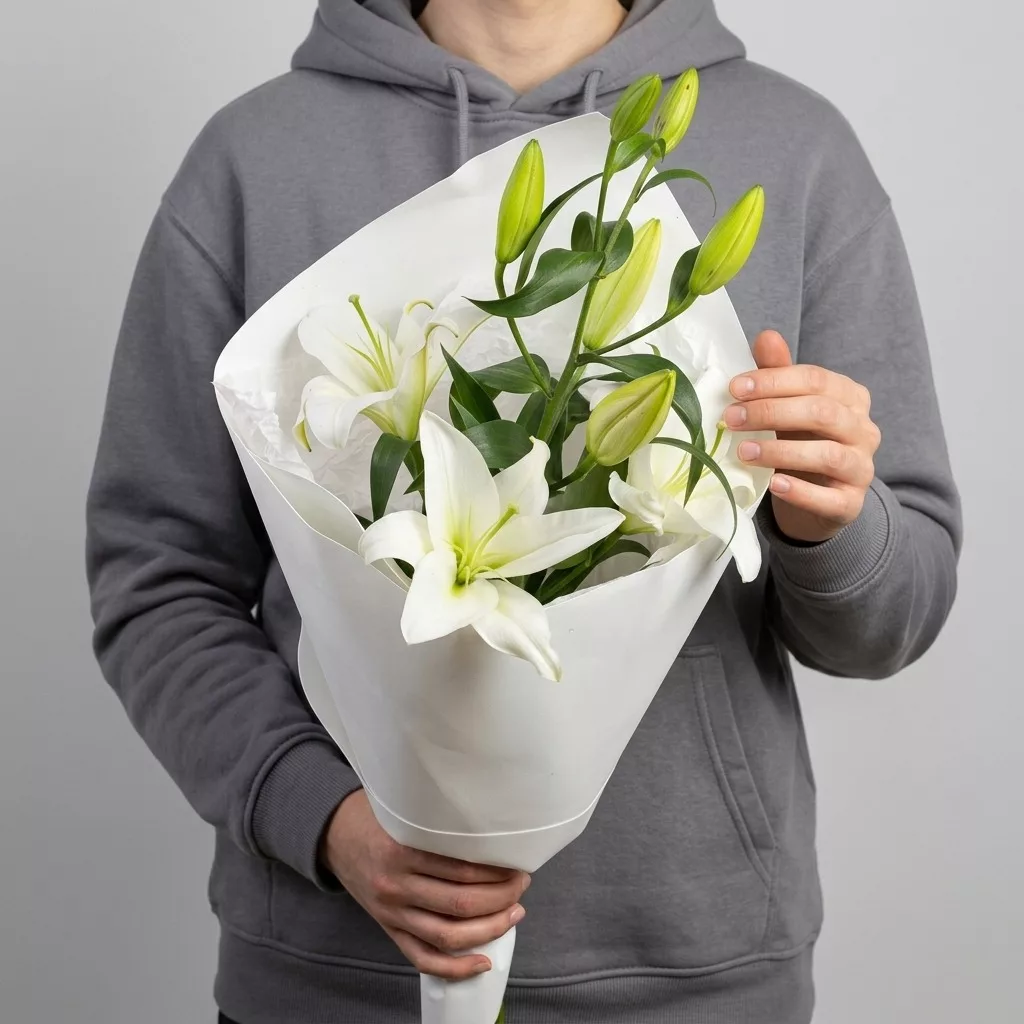
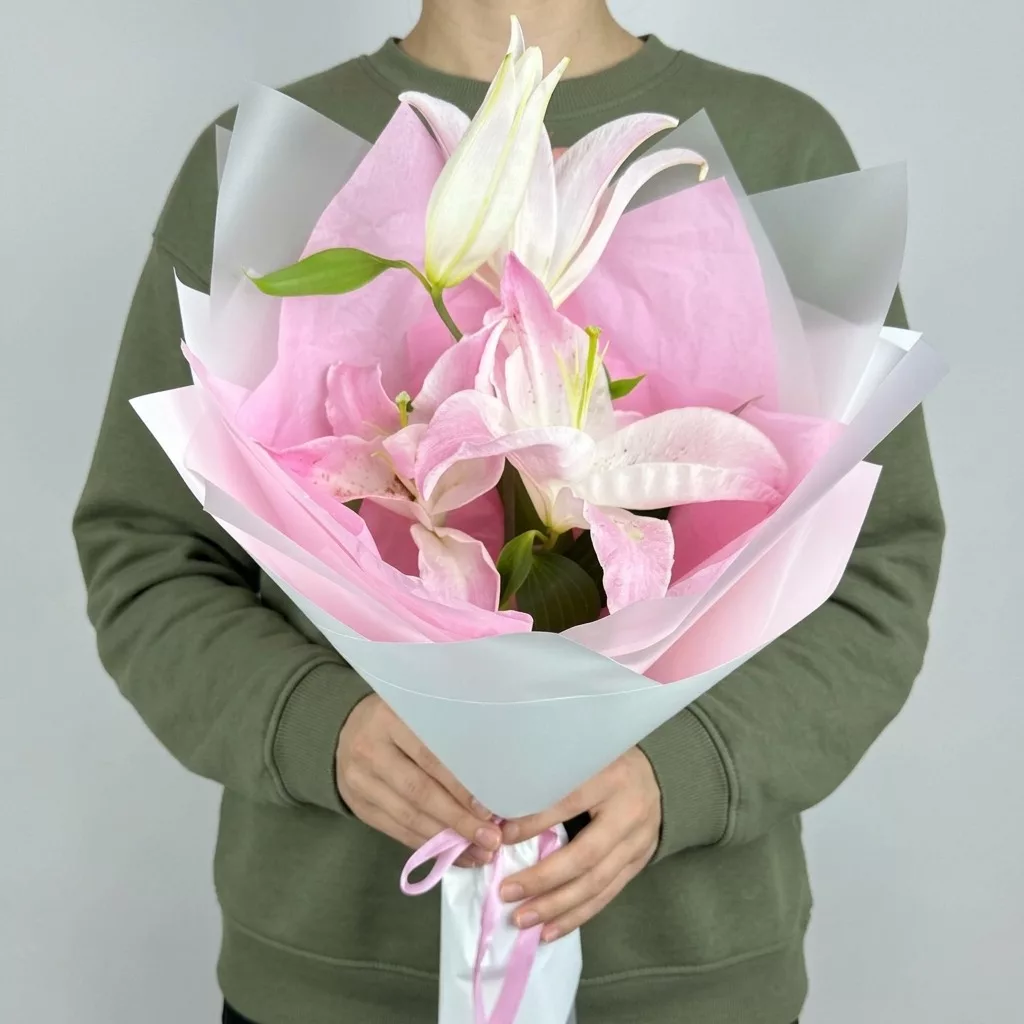

Why Mimosa Became the Symbol of This Day
The connection between Acacia dealbata and March 8 in Russia is partly timing and partly history. The plant blooms naturally in late winter across the Black Sea coast — particularly around Sochi and Abkhazia — which made it one of the few fresh, fragrant, visibly alive flowers available in the Soviet Union at the exact moment the holiday fell. In a period when imported flowers were scarce and greenhouse roses were expensive, mimosa was accessible, bright, and unmistakably seasonal. It became the flower of the day simply because it was there.
But habit became tradition, and tradition became emotion. By the time imported tulips and roses were widely available, mimosa had already claimed its place. It is now irreplaceable not because it is the most beautiful flower in the shop but because it is the most loaded with memory.
The scent is part of this. Acacia dealbata has a powdery, honey-like fragrance that is immediately recognisable and strongly linked to childhood memories for most people who grew up in Russia. Scent is one of the most powerful triggers of emotional memory, and for many Russian women the smell of mimosa in a warm room is inseparable from the feeling of being celebrated. No other flower carries that exact association. You can send roses for a birthday, peonies for a wedding, sunflowers for a housewarming — but on March 8, mimosa speaks a language that other flowers simply do not.
The Season Is Shorter Than You Think
Acacia dealbata is not a year-round flower. It blooms for a narrow window in late winter, and in Russia that window is essentially the last two weeks of February through the first week of March. After that, the flowers drop quickly, the pollen disperses, and the branches that were golden a week ago look exhausted and brown. The entire commercial season for mimosa in Russia lasts roughly three to four weeks, with peak availability concentrated in the five to seven days just before and on March 8 itself.
Most of the mimosa sold in Russia comes from the Krasnodar region, particularly from the areas around Sochi and Adler where the subtropical climate along the Black Sea coast allows Acacia dealbata to grow outdoors. Some volume also arrives from Abkhazia. The trees are cut while the buds are still partially closed — this is intentional, because tight buds travel better and open slowly in a warm room, giving the recipient more time to enjoy the flowers.
Temperature during transport matters a great deal. Mimosa is sensitive to both heat and cold. Below zero it freezes and the tiny florets turn brown within hours. Above twenty degrees Celsius during a long journey it opens too fast and sheds pollen before it reaches the recipient. The ideal transport temperature is between five and twelve degrees, which is why professional cold-chain delivery makes a visible difference in the quality of what arrives at the door. A bunch that was kept at the right temperature looks plump and golden. One that was left in a warm van for three hours looks like it already had its moment.
The Price Surge in Late February and How to Navigate It
Anyone who has tried to order mimosa on March 7 knows what happens to the price. Because the season is so short and the demand spikes so sharply, the cost of mimosa in the days immediately before March 8 can be two to three times what it was in mid-February. This is not manipulation — it is simple supply and demand applied to a perishable product with a fixed harvest window. The growers cut what they have, the logistics chains run at full capacity, and the last available bunches go to whoever orders them first.
The practical advice from a florist's perspective is straightforward: order early. If you place your order before February 25, you are likely to pay significantly less and have access to better-quality stems, because the first batches of the season tend to be the freshest. The bunches cut in the final rush before March 8 are often harvested more aggressively, with less care taken over stem length and bud stage.
For those who want to send mimosa as part of a larger arrangement rather than as a standalone bouquet, combining it with other flowers also helps manage the cost while creating something more visually interesting. Mimosa pairs beautifully with white ranunculus, pale tulips, and eucalyptus — the feathery yellow against cool white and grey-green is one of the most elegant combinations of the early spring palette. A smaller volume of mimosa used as a textural accent in a mixed bouquet can be more striking than a large bunch of mimosa alone, and it holds together better in transit.
Choosing the Right Bouquet for the Person You Have in Mind
Mimosa on its own makes a strong, personal statement — it says you understand the cultural weight of the day and you chose something with meaning rather than just something expensive. For a mother or grandmother, a generous bunch of mimosa wrapped simply in kraft paper is often more touching than an elaborate arrangement. The simplicity reads as sincerity.
For a colleague or friend, mimosa combined with other early spring flowers creates something that feels celebratory without being too intimate. White anemones, pale yellow tulips, or a few stems of waxflower all work well alongside mimosa without competing with its texture. Avoid heavy, dark flowers — deep burgundy roses or purple lisianthus will clash visually and feel tonally mismatched with mimosa's light, cheerful energy.
For a romantic partner, consider asking your florist to build something around mimosa rather than treating it as a filler. When mimosa is the centrepiece and other flowers support it, the result is both seasonal and intentional. A composition of mimosa, garden roses in cream or soft peach, and a few stems of white freesia carries scent, texture, and colour in a way that photographs beautifully and lasts well if cared for properly.
Budget matters, but presentation matters more than volume. A smaller, well-composed bouquet with fresh stems and thoughtful wrapping will be received better than a large bunch that was handled carelessly. When you are ordering for delivery, check that the shop uses insulated packaging for mimosa — this detail separates a flower that arrives glowing from one that arrives already past its best.
Keeping Mimosa Alive Once It Arrives
Mimosa is honest about its lifespan. It does not pretend to last two weeks the way a rose might. With good care, a fresh bunch will look beautiful for four to six days, and the scent will be strongest in the first two or three. Understanding this helps you enjoy it rather than feel disappointed when it begins to fade.
The single most important thing is water temperature. Mimosa drinks best from cool water, not warm. Fill the vase with cold water, cut the stems at an angle under running water, and place the bunch somewhere away from direct sunlight and heating radiators. Russian apartments in early March are often quite warm indoors, and a vase sitting near a radiator will cause the florets to open and drop within a day. A cool windowsill — not a freezing one — is ideal.
Strip any leaves that would sit below the waterline, because decomposing foliage speeds up bacterial growth and shortens vase life noticeably. Change the water every day if you can, and re-cut the stems slightly each time. Some florists recommend adding a small amount of sugar to the water, but with mimosa this can actually accelerate petal drop — plain cool water is safer.
Do not mist mimosa with a spray bottle. The tiny florets are delicate and excess moisture makes them brown faster. If the air in the room is very dry, placing the vase in a slightly cooler room overnight will help more than misting. Finally, enjoy the scent while it lasts — it is most intense in the first twenty-four hours after the bunch warms to room temperature, and that first wave of fragrance is really the heart of the whole experience.
Mimosa is not the longest-lasting flower in the shop, and it is not the rarest or the most architecturally dramatic. What it is, for millions of people in Russia, is the smell of March 8 — a day that asks everyone to pause and make the women in their lives feel genuinely seen. Ordering early, choosing fresh stems, pairing thoughtfully, and caring for the bunch properly will give you the best version of that experience. And if you are sending to someone who grew up in Russia and has not received mimosa in years, know that the reaction when she opens the door and smells that powdery yellow cloud is almost always the same: she will smile before she even looks at the card.
Frequently asked questions
Is mimosa available in Russia outside of the March 8 season?
Rarely and unreliably. Acacia dealbata has a natural bloom window in late winter, and commercial availability in Russia is almost entirely concentrated in the two to three weeks around March 8. Outside this period, you may occasionally find it from specialist growers, but quality is inconsistent and volumes are very small.
Why does my mimosa start dropping tiny yellow balls so quickly?
Those yellow pom-poms are the individual florets, and they shed when the flower is stressed by heat, dry air, or rough handling. Keep the vase away from radiators and direct sun, use cool water, and avoid misting. A cooler room at night significantly slows petal drop and extends the life of the bunch by one to two days.
Can mimosa be sent long distances across Russia without losing quality?
Yes, if it is handled correctly. The key is temperature control throughout transit — mimosa needs to stay between five and twelve degrees Celsius. Stems cut at the right bud stage and packed in insulated materials arrive in good condition even after a journey of several hours. This is why professional cold-chain delivery makes a real difference with this particular flower.
What flowers combine well with mimosa for a March 8 bouquet?
White ranunculus, pale tulips, white anemones, eucalyptus, waxflower, and cream or soft peach garden roses all work beautifully alongside mimosa. The principle is to choose light, cool tones that let the yellow read clearly. Avoid heavy, dark flowers — they fight with mimosa visually and undercut the cheerful, springlike feeling the day calls for.
Is it appropriate to send mimosa to a colleague or is it too personal?
In Russian workplace culture, giving mimosa to female colleagues on March 8 is completely normal and expected. It reads as warm and respectful, not romantic. A small bunch or a mixed arrangement with mimosa as a key element is a perfectly appropriate office gift. The day is broadly celebratory in Russia, and mimosa fits that tone exactly.
Ready to send flowers?
Pick the city, choose the bouquet, and a local florist takes it from there.
Choose a city →