New Year Corporate Flowers in Russia: Gifting Colleagues Remotely
In Russia, New Year is the biggest celebration of the year — bigger than birthdays, bigger than any other holiday on the calendar. If your team or partners are based across Russian cities and you want to mark the season with something genuinely warm, sending flowers is one of the most personal gestures you can make remotely. The challenge is knowing what to order, when to send it, and how to make sure a bouquet arriving in Novosibirsk feels just as thoughtful as one handed over in person.
Why New Year Flowers Matter More in Russia Than You Might Expect
Russians celebrate New Year on the night of December 31st into January 1st, and the holiday carries enormous emotional weight. Unlike in many Western countries where Christmas is the centrepiece, in Russia it is New Year that brings families together, fills tables with food, and prompts the exchange of gifts and good wishes. For businesses, this means the New Year period — roughly the last week of December — is the single most important moment to acknowledge colleagues, employees, and long-standing partners.
Flowers fit naturally into this tradition. Russians have a deep cultural affinity with fresh flowers as a mark of respect and warmth. Receiving a bouquet at home or at the office just before the holiday tells the recipient that someone took time to think of them specifically, not just to send a mass email or a branded calendar. For remote teams spread across a country as vast as Russia, a physical delivery carries even more meaning because it closes the distance in a tangible way.
Corporate flower gifting for New Year is not a niche practice — it is expected at many Russian companies, particularly for senior employees, long-term clients, and partners. If you manage a team remotely or work with Russian counterparts and have never sent seasonal flowers before, starting this year will be noticed and remembered. The gesture does not need to be elaborate to land well; sincerity and timing matter far more than scale.
Bouquets we can deliver

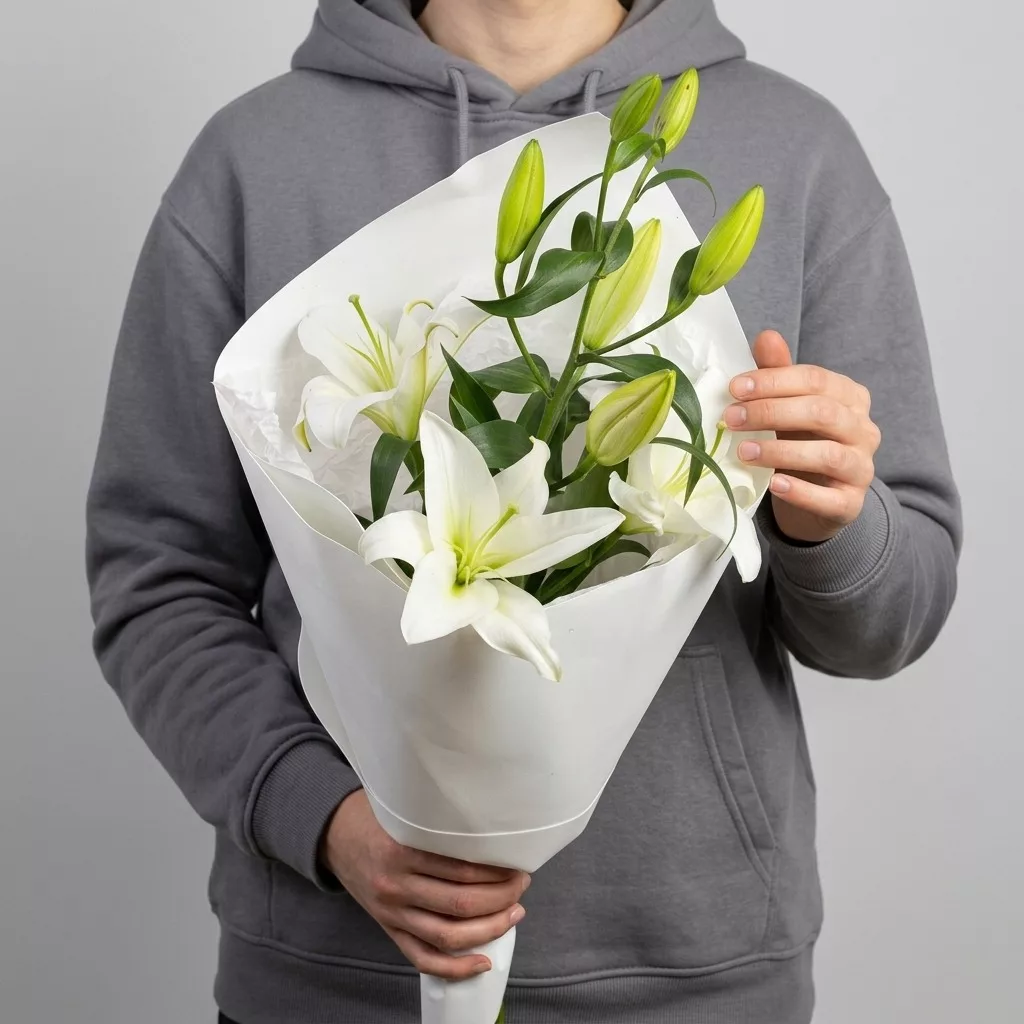
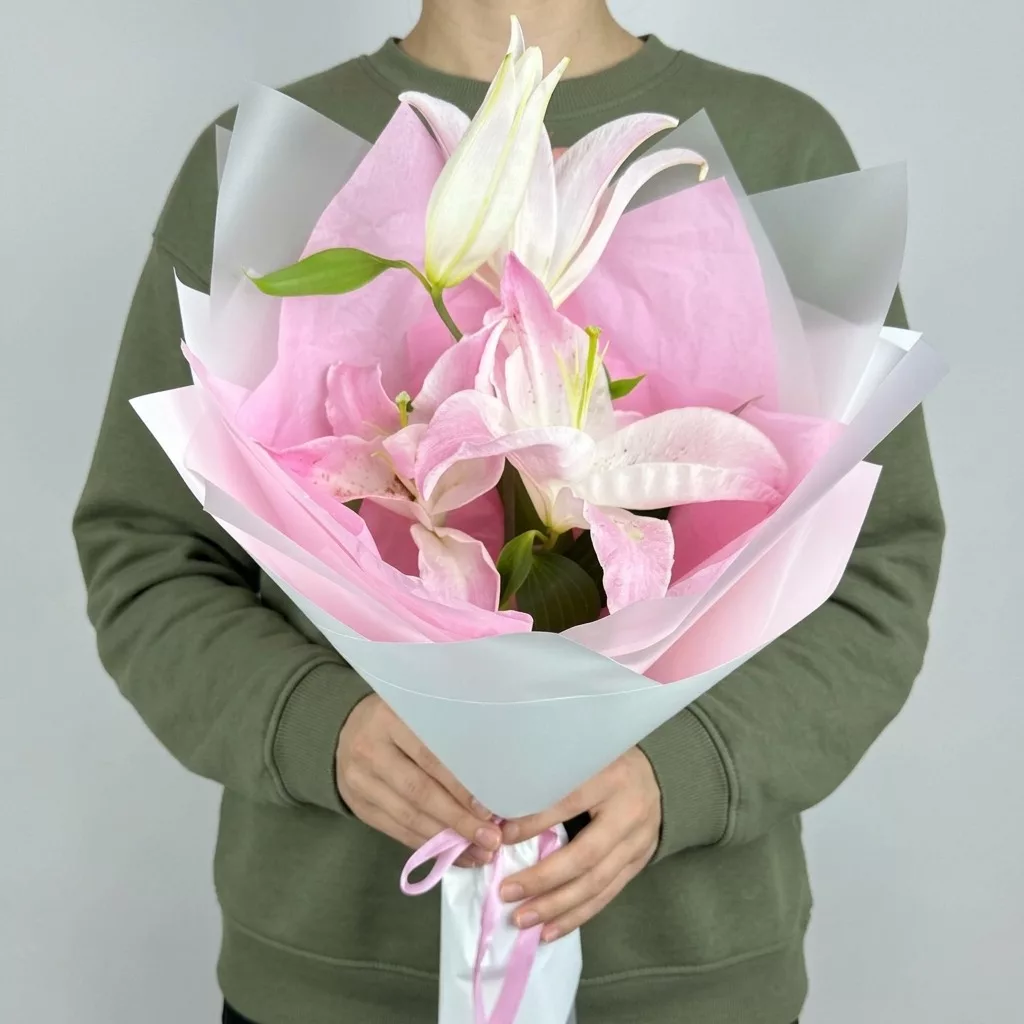

Choosing Flowers That Read as Festive Without Being Overwhelming
The right New Year arrangement feels celebratory but professional. You are not decorating a banquet hall — you are sending something a colleague will place on their desk or kitchen table and look at for the next week. That means the composition should be elegant, not theatrical, and the colours should feel seasonal without veering into costume territory.
White and cream tones work beautifully for corporate gifting. White roses, white spray chrysanthemums, and white lisianthus read as clean and refined. Pair them with deep green foliage — eucalyptus, ruscus, or pittosporum — and the result is immediately festive without a single piece of tinsel in sight. This combination suits almost any interior and any recipient regardless of personal taste.
If you want to introduce colour, soft gold or champagne tones in flowers like cream ranunculus or pale yellow freesia add warmth without loudness. Red is bold and works well for partners with whom you have a close, long-standing relationship, but it is worth using selectively in a corporate context — a mono-red bouquet of roses can feel more romantic than professional. A better choice is red accents within a predominantly white or green arrangement: a few stems of red hypericum berries, for example, add a festive note without changing the overall register of the bouquet.
Avoid heavily scented flowers like tuberose or oriental lilies for office deliveries. Strong fragrance in a shared workspace can be uncomfortable for colleagues, and it undermines the goodwill the gift is meant to create.
Timing Your Order Across Russian Time Zones
Russia spans eleven time zones, and this is the most practical challenge for any business sending flowers remotely. If your recipients are in Moscow, Yekaterinburg, Novosibirsk, and Vladivostok simultaneously, a single send date on your calendar does not translate into a single delivery moment for everyone. You need to think about when each person will actually be at home or at the office to receive the arrangement.
For corporate deliveries, the optimal window is December 28th through December 30th. By December 31st, many Russian offices are either closed or running on skeleton staff, and employees are at home preparing for the evening celebration. A bouquet arriving on the 28th or 29th gives the recipient several days to enjoy it before the holiday itself, which feels generous rather than rushed.
If you are sending to home addresses — which is common when teams are working remotely — confirm delivery windows with recipients or their assistants in advance. Turboflora delivers within one to two hours of order confirmation, so you have flexibility to schedule precisely. For eastern cities, remember that when it is 10 a.m. in Moscow it is already late afternoon in Novosibirsk and early evening in Vladivostok. Plan order placement accordingly so flowers arrive during reasonable hours.
For large corporate orders covering multiple cities, placing the order at least three to five days before the target delivery date gives the best outcome. This is especially true in the final week of December, when demand across Russia rises sharply and fresh stock at the highest quality is allocated early.
Arrangements by Budget: What Each Level Delivers
Corporate flower gifting works across a wide range of budgets, and the right choice depends less on spending more and more on spending thoughtfully at whatever level you choose. The key is that the arrangement looks intentional — a small bouquet that is tightly composed and beautifully wrapped will outperform a large one that looks thrown together.
At a modest budget, a hand-tied bouquet of five to seven stems makes a strong impression when the flowers are premium quality. White roses paired with eucalyptus and wrapped in kraft paper with a simple satin ribbon is a classic that never reads as cheap. The presentation does the heavy lifting here, so the wrapping and any accompanying card matter as much as the flowers themselves.
At a mid-range budget, you can move into mixed arrangements that include lisianthus, ranunculus, or freesia alongside roses. These combinations have more visual texture and a longer vase life, which means the recipient enjoys them well into January. A round, dome-shaped bouquet in this tier feels considered and generous without being ostentatious — appropriate for most professional relationships.
At a higher budget, box arrangements and hatbox compositions are the format of choice for corporate gifting. Flowers arranged in a decorative box require no vase and arrive looking exactly as they will look on display. For senior partners or long-standing clients, adding a small seasonal element — a few stems of white amaryllis, for instance, or branches of cotton flower — elevates the composition into something genuinely memorable. These arrangements also photograph well, which matters when recipients share their gifts on social media or internal company channels.
Writing the Card: What to Say in a Russian Corporate Context
The card that accompanies a New Year flower delivery is not an afterthought — in Russian gifting culture, the written message is read carefully and often kept. A generic printed label undercuts the warmth of a physical bouquet, so it is worth spending a few minutes on the wording even for a large batch of corporate orders.
The standard Russian New Year greeting is to wish health, happiness, and success in the coming year. In a corporate context, you might also acknowledge the specific work the recipient has done or the relationship you share. Something like: 'Thank you for everything this year — wishing you a bright and joyful New Year' lands far better than a purely formulaic phrase.
If your company is international and the recipient speaks English, writing in English is perfectly appropriate and often appreciated as a personal touch from an international team. If you are writing for a Russian-speaking audience and your Russian is limited, keeping the message short and sincere in English is better than a machine-translated Russian text with grammatical errors, which can feel impersonal despite the effort.
For large orders where individual personalisation is not possible, a short handwritten note from a manager or director — even just a signature on a printed card — adds a human element. Turboflora can include a printed card with your message for every delivery in a batch order, so the logistics of this are straightforward. The content, though, is yours to provide: make it specific enough to feel genuine, and brief enough to be read in full.
Keeping Flowers Fresh in Russian Winter Conditions
January in Russia is cold, and that cold is actually an advantage for flower longevity — but only if the transition from delivery vehicle to indoor space is managed correctly. The danger is not the outdoor temperature itself but the rapid shift from freezing air to a warm, centrally heated interior. Most Russian apartments and offices are kept very warm in winter, often above 22 degrees Celsius, which accelerates the opening and ageing of flowers.
When a bouquet arrives, the recipient should unwrap it immediately and place it in a clean vase with fresh, cool water. Cutting the stems at an angle underwater before placing them in the vase helps the flowers draw water efficiently. The vase should be kept away from radiators, which are a fixture in virtually every Russian home and office and are often positioned directly under windows — a natural spot to place flowers, but the worst possible location in winter.
For roses, the vase water should be changed every two days and the stems re-cut each time. This simple step can extend the life of a winter rose arrangement from five days to ten or more. Lisianthus and chrysanthemums are more forgiving and will last well in a warm room without as much intervention.
Bouquets delivered in cold weather should never be left outside a door for extended periods, even in a building corridor. If no one is home to receive the delivery, Turboflora coordinates with recipients to confirm a suitable time, so the flowers always go directly into warm hands rather than sitting in a cold hallway.
Making Remote Gifting Feel Personal at Scale
The most common concern businesses raise about corporate flower gifting is that sending the same arrangement to fifty people will feel impersonal. This is a fair instinct, but it misunderstands how recipients experience a flower delivery. When a bouquet arrives at your door with your name on it and a message addressed to you, the fact that your colleague across the country received something similar does not diminish what you hold in your hands. The physical presence of fresh flowers is inherently individual.
That said, there are small ways to add variation that make a large order feel more curated. Consider grouping recipients by relationship type — a slightly more elaborate arrangement for senior partners, a classic hand-tied for the wider team — rather than treating all deliveries as identical. This tiering is standard practice in corporate gifting and is understood and appreciated by recipients at every level.
Personalised cards, as discussed earlier, do the most work in making scale feel personal. Even a card that reads 'To the Novosibirsk team — thank you for a remarkable year' rather than a generic greeting acknowledges the specific people receiving it.
Finally, consider the timing of your notification to recipients. Sending a brief message — an email or a team chat note — saying 'a small New Year gift is on its way to you today' creates anticipation and ensures someone is available to receive the delivery. It also frames the gesture as intentional rather than surprising in an inconvenient way. Remote gifting at scale works when the logistics are invisible and the warmth is what the recipient experiences.
Sending New Year flowers to colleagues and partners across Russia is one of the most straightforward ways to close the distance that remote work creates, and the holiday season gives you a natural and culturally resonant moment to do it. The details — variety, colour, timing, card wording, vase care — are all manageable once you understand what the occasion calls for. What matters most is the decision to send something real and physical to people who have worked alongside you through the year, wherever they happen to be. Turboflora handles the delivery; the thought behind it is yours.
Frequently asked questions
How far in advance should I place a corporate flower order for New Year in Russia?
For multiple deliveries across different cities, placing your order three to five days before the target delivery date is ideal. The final days of December see very high demand for fresh flowers across Russia, and ordering early ensures you get the best available stock and can confirm delivery windows with recipients in advance.
Is it appropriate to send flowers to male colleagues or partners in Russia?
Yes, absolutely. In Russian professional culture, receiving flowers as a New Year gift is considered respectful and warm regardless of gender. A well-composed arrangement of white or green tones works well for any recipient. The gesture is about marking the occasion and the relationship, not about personal style preferences.
Can I send flowers to a home address if I do not know whether the recipient will be in?
Turboflora coordinates delivery timing directly with recipients, so you do not need to manage that logistics yourself. When placing a corporate order, you provide the recipient's contact details and we confirm a suitable delivery window with them, ensuring the flowers go directly into their hands rather than being left unattended.
What flowers last the longest in a warm Russian apartment during winter?
Chrysanthemums, lisianthus, and carnations are among the most resilient in warm, centrally heated interiors. Roses last well too if the water is changed every two days and stems are re-cut. Avoid placing any arrangement near a radiator, which is the single most common reason flowers fade quickly in Russian homes during winter.
Do I need to write the card message in Russian for a Russian recipient?
Not necessarily. A sincere, short message in English from an international team is well received and often appreciated as a personal touch. A poorly machine-translated Russian text can feel more impersonal than a genuine English note. If your company has a Russian-speaking contact who can write a brief, natural greeting, that is a bonus — but it is not a requirement.
Ready to send flowers?
Pick the city, choose the bouquet, and a local florist takes it from there.
Choose a city →