Sending Flowers to Russia Without Speaking Russian? Here Is Everything You Need
You want to send roses to someone in Saint Petersburg, or a bright spring bouquet to a friend in Moscow, but you do not speak a word of Russian and you are not sure anyone on the other end will speak yours. That hesitation stops a lot of people from sending anything at all — and that is a shame, because the gesture matters and the logistics are genuinely simple. Turboflora handles the entire process in English, from the moment you land on the website to the second the flowers reach the door.
The Website and Checkout Are Fully in English
The first thing most people worry about is getting lost in a Cyrillic interface, clicking the wrong button, and accidentally ordering something unrecognisable. That does not happen here. The Turboflora website operates in English throughout: product names, descriptions, checkout fields, and confirmation emails all appear in the language you are reading right now. You choose the bouquet, select a delivery date and time window, enter the recipient's address in Russian or in transliteration, and pay — all without switching a browser translation plugin on or guessing at dropdown menus.
The address field is worth a moment of attention. If your recipient has given you their address in Russian script, you can paste it exactly as they sent it. If they gave it to you in Latin letters, the team reads both and handles the conversion internally. The safest move is to ask your recipient to send you their full address in Russian — building number, apartment number, and the entry code if the building has one. Russian apartment buildings very commonly have a door code called a domofon code, and without it the courier cannot get past the front door. One quick message to your recipient before you order saves a failed delivery.
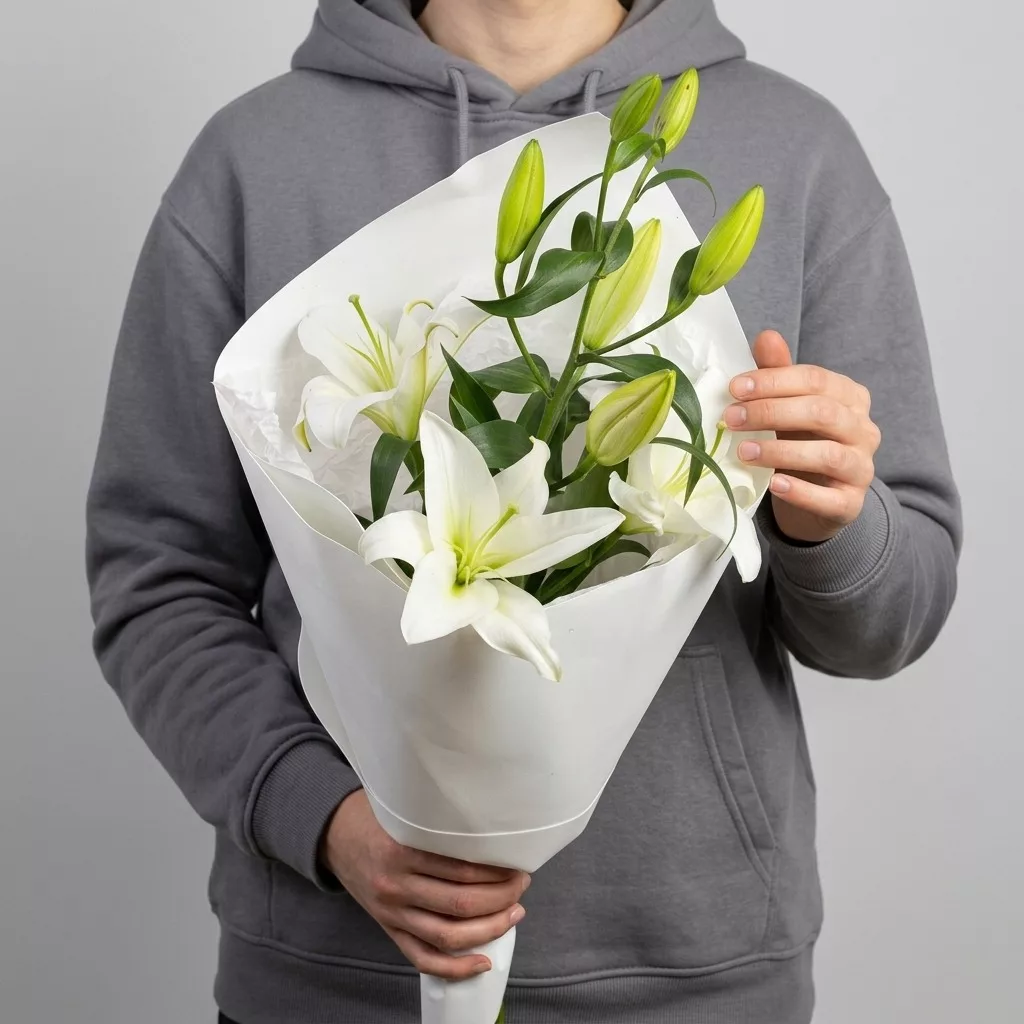
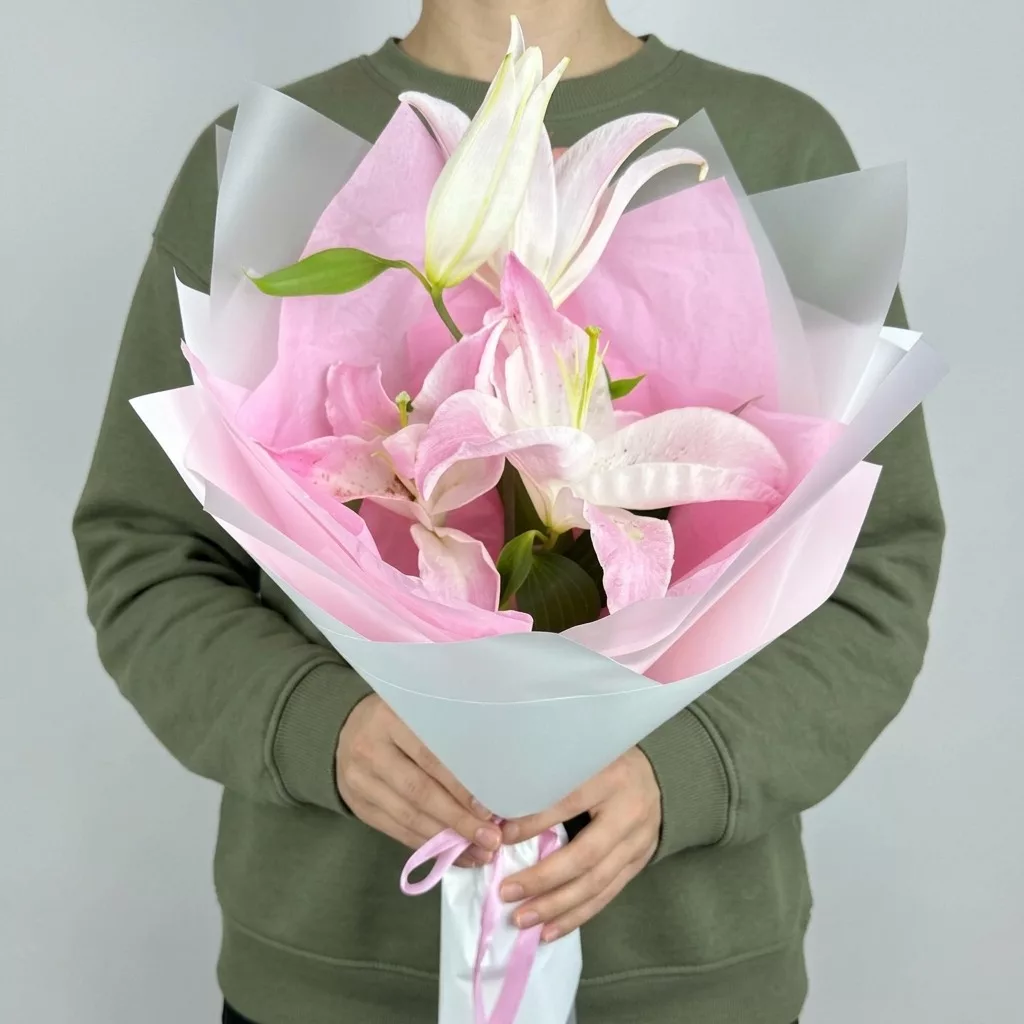
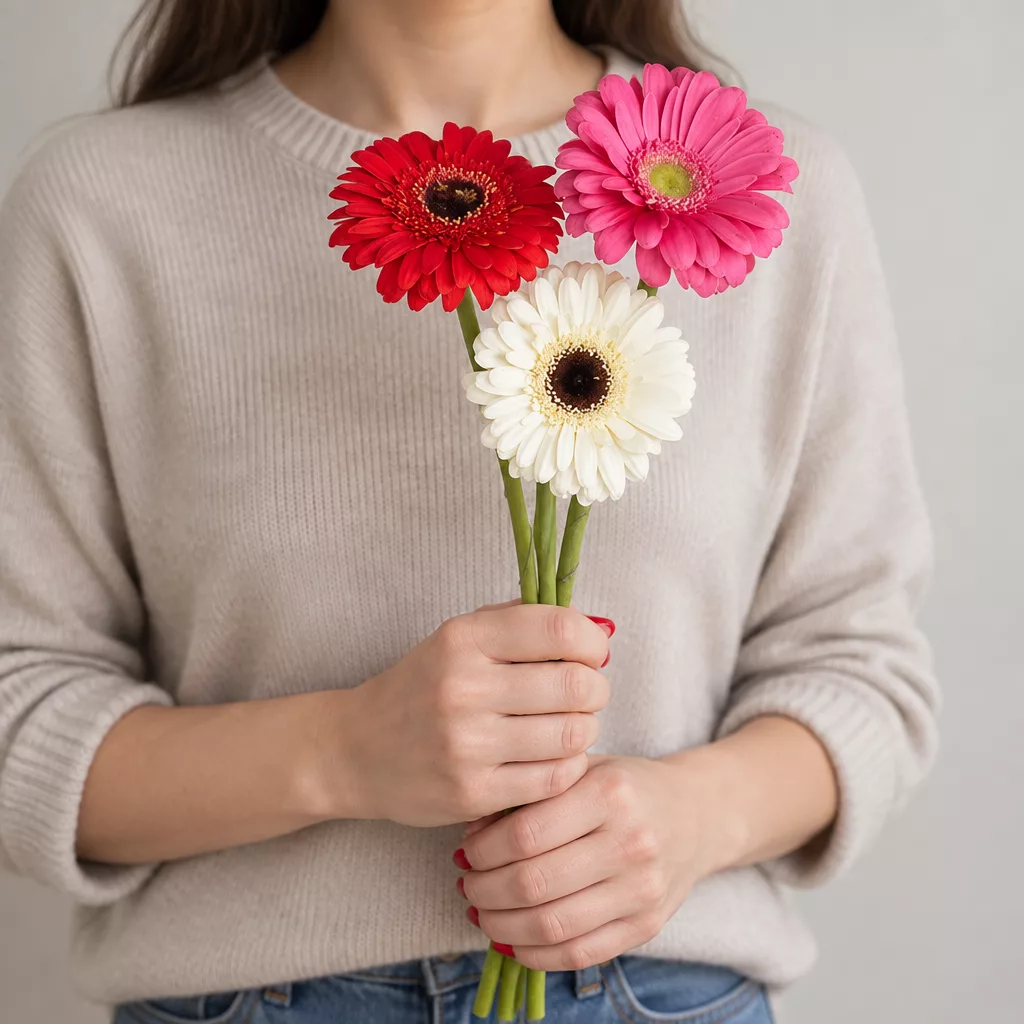
Bouquets we can deliver

English-Speaking Customer Support That Actually Knows Flowers
Once you have a question that the website cannot answer on its own — which variety holds up best on a long flight of stairs in July heat, whether white chrysanthemums are appropriate for a birthday, or what to do if the recipient is unexpectedly away — you need a human. Turboflora's support team communicates in English, and they are florists first, not call-centre scripts. That distinction matters when you are trying to make a real decision about a real bouquet.
White chrysanthemums, to answer that question plainly, are traditionally associated with mourning in Russia and are best avoided for celebrations. The support team will tell you this without you having to know it in advance. They will also tell you that peonies, which many international senders love, have a short season running roughly from late May through June, and that outside that window a peony-style ranunculus or a garden rose with full petals gives a similar soft, romantic look. These are the kinds of substitutions a florist makes automatically, but only if you ask or if the team knows to flag it. Reaching out before you finalise the order, even just to confirm the occasion and the recipient's taste, takes two minutes and tends to produce a much better result than ordering in isolation. The team can be reached by chat or email, both in English, during shop hours.
Writing a Card Message in English — and What Happens to It
One of the nicest parts of sending flowers is the card, and one of the most common worries for international senders is whether a message written in English will reach the recipient in a way that feels personal rather than mechanical. You write your message in English at checkout, exactly as you would say it. The florist team then transcribes it onto the card by hand, either keeping it in English if your recipient reads the language, or translating it into Russian if you have indicated that they do not.
If you want the message in Russian, note that in the order comments. You can write something like: "Please translate the card message into Russian — the recipient does not read English." The team does this regularly and treats it as a normal part of the service, not an unusual request. The tone of the message is preserved as closely as possible — if you wrote something warm and informal, it arrives warm and informal in Russian too, not as a formal document.
If you are unsure what to write, the support team can suggest phrasing appropriate to the occasion. Russian card culture tends toward direct warmth rather than elaborate verse, so a sentence or two expressing genuine feeling lands better than a long poem. "Wishing you a wonderful birthday — thinking of you from London" is exactly the kind of message that works well and travels across languages without losing anything.
Choosing the Right Bouquet When You Do Not Know Russian Floral Customs
Flower customs in Russia have a few specific rules that are worth knowing, and the most important one is the odd-number rule. Bouquets given as gifts should contain an odd number of stems — three, five, seven, eleven, and so on. Even numbers are reserved for funerals and carry that association strongly enough that receiving an even-numbered bouquet feels wrong to most Russian recipients, even if they cannot immediately explain why. Every bouquet from Turboflora follows this convention automatically, so you do not need to count or specify.
Beyond that, Russian floral taste leans toward abundance and colour. A single-stem rose, which reads as romantic and sufficient in many Western contexts, often feels sparse here. A bouquet that mixes textures — say, garden roses with eucalyptus and a few stems of lisianthus, or tulips with muscari and soft foliage — reads as considered and generous. For a birthday, bright colours are always welcome: coral, fuchsia, warm yellow, and orange work beautifully in March and April when tulips and ranunculus are at their peak.
For a more romantic occasion, red roses remain the clearest signal of affection in Russia, and they are taken seriously rather than seen as clichéd. A mono-bouquet of red spray roses with dark foliage is a strong, legible choice. If you want something softer, blush and cream tones in a mixed garden-style arrangement read as romantic without the directness of red. The support team can help you match the mood of the occasion to what is actually beautiful and fresh that week.
Delivery Timing and What the Recipient Actually Experiences
Turboflora delivers within one to two hours of the order being confirmed, which means you can time the arrival with some precision — useful if you want the flowers to appear at a specific moment, like just before a birthday dinner or at the start of a workday. You select a time window at checkout, and the courier brings the bouquet directly to the address you provide. No intermediate stops, no repackaging.
The bouquet arrives wrapped and presented as it left the shop. In winter, which in Saint Petersburg means anything from October through April and sometimes beyond, the flowers travel in insulated wrapping to protect them from temperatures that regularly drop below minus ten Celsius. Roses and tulips are particularly sensitive to freezing, which causes the cells in the petals to rupture and the bloom to collapse within hours of thawing. The wrapping prevents this, and the recipient unwraps a bouquet that looks exactly as it did when it was assembled.
If the recipient is not home, the courier will attempt to contact them using the phone number you provide at checkout. This is why the recipient's phone number is one of the most important fields in the order form — more important, in some ways, than a perfectly formatted address. A working mobile number means the courier can reach the recipient, arrange a brief wait, or coordinate a handoff with a neighbour or building concierge. Including both the recipient's number and a brief note about any access complications — a gate code, a specific entrance — makes the delivery smooth from the first attempt.
Payment From Abroad and What to Expect After You Order
Paying from outside Russia is straightforward. Turboflora accepts international cards, and the checkout process does not require a Russian bank account or a Russian phone number for verification. The currency conversion happens on your card provider's side, and the price you see at checkout is the price you pay for the flowers and delivery — no surprise fees added afterward.
After you complete the order, you receive a confirmation email in English with the order details, delivery time window, and a summary of what was ordered. If anything about the order needs clarification — an address detail that is ambiguous, a variety that is unexpectedly out of stock that day, a time window that needs adjusting — the team contacts you by email or by the messaging channel you used to reach them. Responses come in English.
One practical note about timing across time zones: Saint Petersburg operates on Moscow Time, which is UTC plus three, and there is no daylight saving adjustment. If you are ordering from New York, London, or Tokyo, calculate the local time in Saint Petersburg before selecting your delivery window. An order placed at ten in the evening your time may be early morning in Saint Petersburg, which is fine for a same-day delivery if the shop is open, but it is worth confirming. The website shows current availability for the selected date, which removes most of the guesswork. When in doubt, place the order a day ahead and select a morning delivery window — fresh flowers at the door before noon is a universally good way to start any occasion.
Keeping the Flowers Beautiful After They Arrive
You will not be in the room when the flowers arrive, but you can send care instructions along with the bouquet — or share them with the recipient separately — so the arrangement lasts as long as possible. Russian apartments tend to be well heated in winter, sometimes quite intensively so, and warmth shortens vase life noticeably. Roses that would last ten days in a cool European apartment may last six or seven in a warm Russian flat. Knowing this helps you set expectations and gives the recipient something useful to act on.
The basic care steps translate across any language: trim the stems at an angle under running water, change the vase water every two days, keep the bouquet away from direct sunlight and away from fruit bowls (ripening fruit releases ethylene gas, which ages flowers quickly). Tulips continue to grow in the vase and will bend toward the light, which is charming in a loose arrangement but can look untidy in a structured one — rotating the vase every day keeps them upright.
Lisianthus and alstroemeria, which appear in many mixed bouquets as supporting flowers, often outlast the focal roses or tulips by several days. Once the main flowers fade, these can be rearranged into a smaller vase on their own and continue looking fresh for another week. Sharing this with the recipient — even in a short card note — turns a gift that lasts a week into one that lasts closer to two, and that extended presence in someone's home is part of what makes flowers a meaningful gesture rather than a fleeting one.
Sending flowers to Russia from abroad, in English, without any prior knowledge of Russian customs or language, is genuinely simple when the shop is set up to handle exactly that. The variety choices, the card message, the address format, the delivery timing, the payment — every part of the process has an English-language path through it, and the team behind the order knows enough about Russian floral culture to catch the details you would not know to look for. The flowers arrive fresh, presented beautifully, and carrying exactly the message you intended.
Frequently asked questions
Do I need to write the delivery address in Russian?
Not necessarily. If your recipient has given you their address in Russian script, paste it as-is. If you only have it in Latin letters, include it and note that in the order comments. The safest approach is to ask your recipient to send their full address in Russian, including the apartment number and any door entry code, before you place the order.
Can my card message be translated into Russian for the recipient?
Yes. Write your message in English at checkout, then add a note in the comments asking for a Russian translation. The team translates it and writes it by hand on the card. The tone — warm, informal, or heartfelt — is carried across into Russian rather than rendered as a formal or mechanical phrase.
Are there any flowers I should avoid sending as a gift in Russia?
White chrysanthemums are strongly associated with mourning and should be avoided for celebrations. Yellow flowers carry a mild negative association for some recipients, though this is less universal than it once was. The team will flag anything that might read unexpectedly for the occasion if you describe the situation when you reach out.
What happens if the recipient is not home when the flowers arrive?
The courier uses the recipient's phone number to make contact. This makes the mobile number one of the most critical fields in the order form. If the recipient is briefly unavailable, the courier can wait a short time or coordinate with a concierge or neighbour. Including any building access details — door codes, specific entrances — in the order notes prevents delays.
Can I order from a country outside Russia using a foreign bank card?
Yes. Turboflora accepts international payment cards and the checkout does not require a Russian bank account or local phone number. The price shown at checkout covers the flowers and delivery. Currency conversion is handled by your card provider. Confirm the Saint Petersburg time zone — UTC plus three, no daylight saving — when selecting your delivery window.
Ready to send flowers?
Pick the city, choose the bouquet, and a local florist takes it from there.
Choose a city →