Peonies in Russia: When They Bloom, What They Cost and How to Get Them Fresh
Few flowers stop people mid-stride the way a fully open peony does. That heavy, layered bloom, the scent that fills a whole room, the colours that range from the palest blush to a deep saturated crimson — peonies have a devoted following in Russia, and for good reason. But they are also one of the most misunderstood flowers when it comes to timing. Buy them at the wrong moment in the season and you will pay a premium for buds that struggle to open. Buy them at the right moment and you get five to seven days of breathtaking colour for a surprisingly reasonable spend. This guide, written from the daily experience of working florists, will walk you through when Russian peonies actually peak, how long they last at home, what affects the price, and exactly how to get them delivered to your door — or someone else's — within a couple of hours anywhere across Russia.
When Peonies Are in Season in Russia
Russia's peony season is short, concentrated and genuinely exciting for anyone who loves fresh flowers. In the southern regions — Krasnodar Krai, Stavropol, parts of the Crimea — outdoor peonies begin cutting in mid to late May, depending on how warm the spring has been. In central Russia, including the Moscow and Saint Petersburg areas, garden peonies reach their peak between late May and mid-June. By the first week of July, the domestic outdoor season is essentially over.
That six-to-eight-week window is what florists call the true season. During this period, Russian-grown peonies arrive at wholesale markets almost daily. The most widely cultivated varieties you will encounter are Sarah Bernhardt, a classic soft pink with a strong fragrance, and Kansas, a vivid magenta-red that holds its shape well in transit. Bowl of Cream, an ivory double variety, is also popular for weddings and gift arrangements.
Outside this window, peonies are still available but they travel much further. From roughly October through April, most peonies in Russian flower shops come from the Netherlands or Ecuador. These imported blooms are perfectly beautiful and professionally grown, but they are cut at a tighter bud stage to survive the journey, which means they need more time and warmth to open fully once they arrive with you. Understanding this distinction helps you set realistic expectations and choose the right moment to order for maximum impact.
Bouquets we can deliver

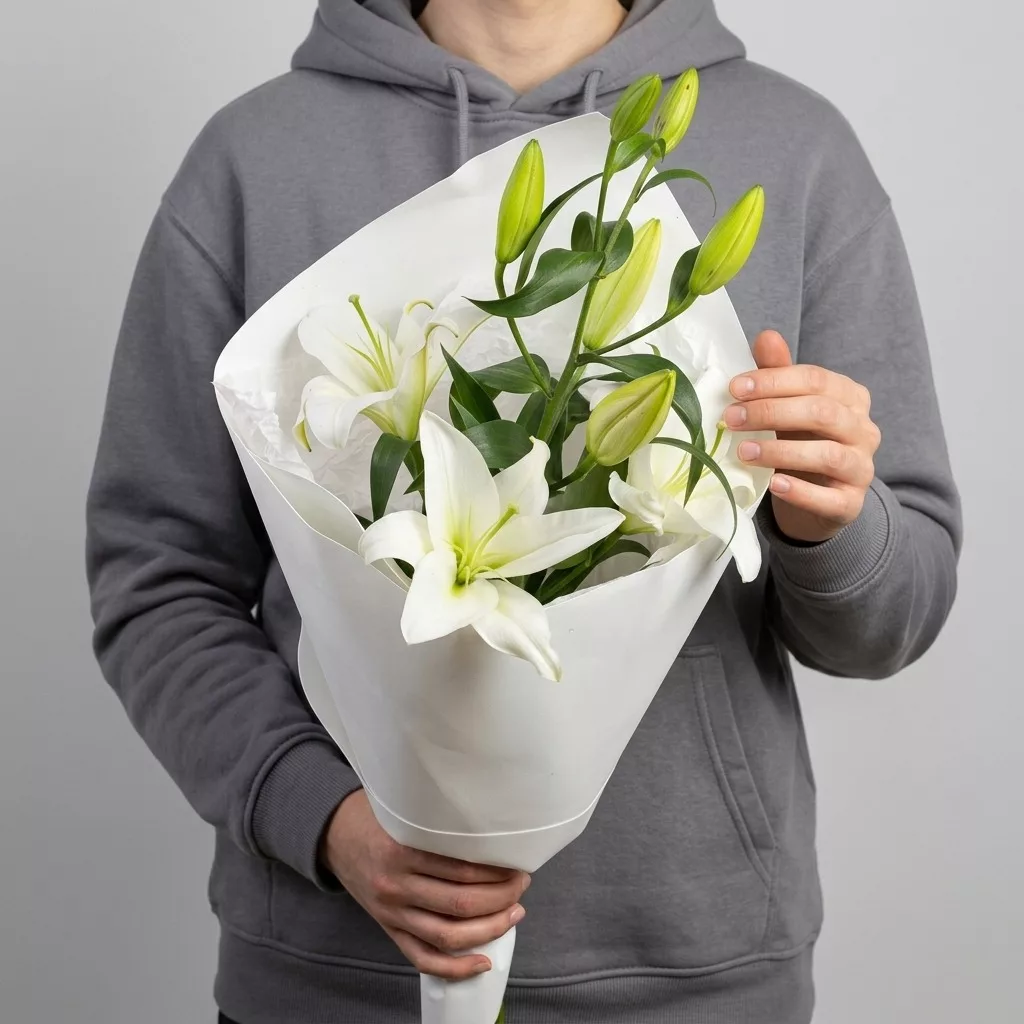
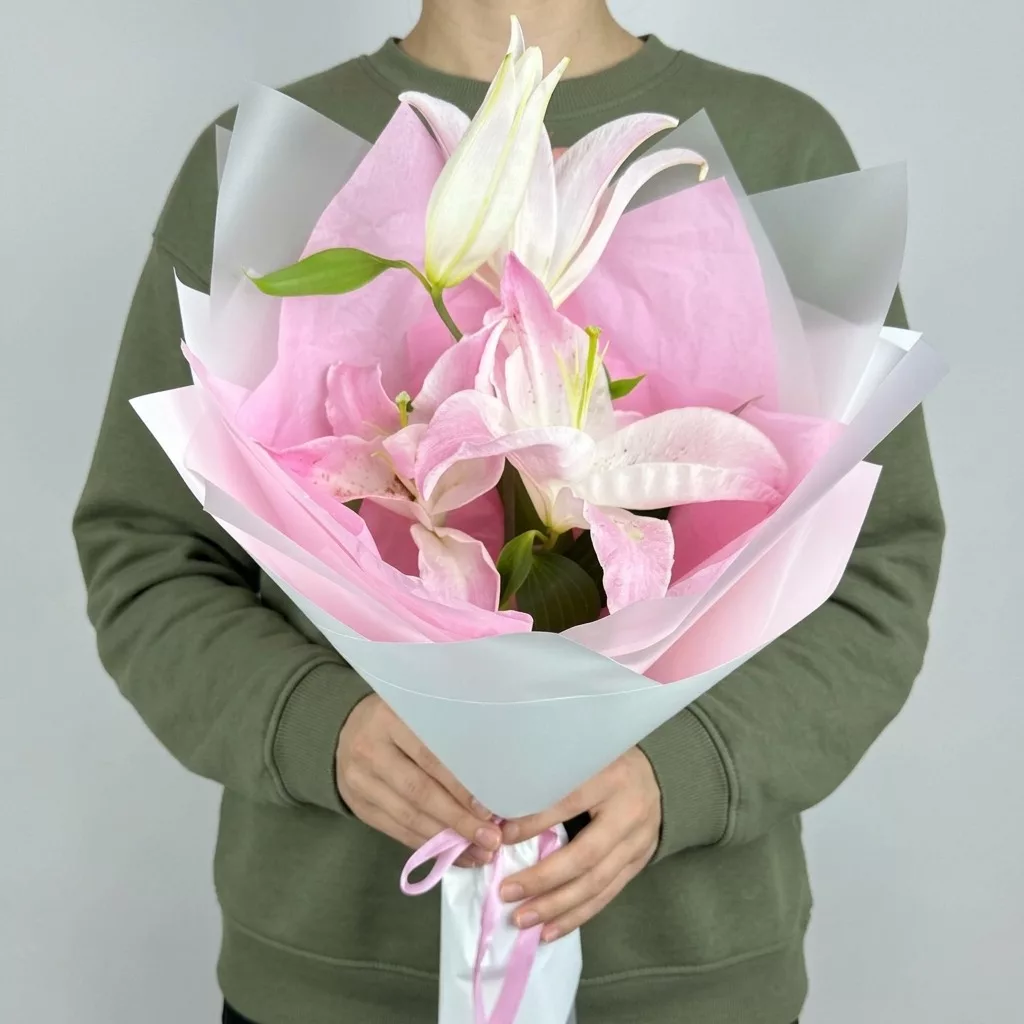

How Long Do Peonies Last in a Vase
The honest answer is five to eight days under good conditions, but that range hides a lot of variation. The single biggest factor is the stage at which the bud was cut. Peonies sold in tight bud — where the petals are still fully enclosed and the bloom feels firm like a large marble — need two to four days just to open. Once open, they will then last another three to five days before petals begin to drop. A bud that arrives already half-open will give you full beauty faster but a shorter overall display.
Temperature matters enormously. Peonies kept in a cool room, ideally between 15 and 18 degrees Celsius, will last noticeably longer than those sitting in a warm apartment at 24 degrees. Keep them away from direct sunlight, radiators, and fruit bowls — ripening fruit releases ethylene gas, which accelerates petal drop in peonies faster than almost any other environmental factor.
Change the water every two days and trim the stems at a slight angle each time, removing about a centimetre with a clean, sharp knife rather than scissors. Scissors can crush the stem tissue and reduce water uptake. Remove any leaves that would sit below the waterline, as they rot quickly and introduce bacteria that shorten vase life significantly.
One common mistake: people put fresh peonies in a very warm room hoping to speed up opening. This does work, but it also compresses the total vase life. If you have time, patience with a cool room rewards you with a much longer display.
What Affects the Price of Peonies in Russia
Peony pricing in Russia follows a clear seasonal logic, and once you understand it, the fluctuations make complete sense. During the peak domestic season in late May and early June, prices drop to their lowest point of the year. Supply from Russian growers floods the wholesale market, logistics are short, and the flowers are at their freshest. This is the moment to order large, generous arrangements or to treat yourself to a big bunch without stretching the budget.
As the domestic season ends in late June and import volumes take over, prices rise. Imported peonies from the Netherlands arrive via air freight, which adds significant cost at every step of the supply chain. By winter, a single stem can cost three to four times what it costs during the Russian peak season. This is not a retailer markup — it genuinely reflects the cost of moving a perishable product thousands of kilometres under refrigeration.
Variety also plays a role. Standard double varieties like Sarah Bernhardt are grown in large volumes and priced accessibly. Rarer varieties — particularly some of the Japanese single-form peonies or unusual coral tones — are grown in smaller quantities and command a higher price regardless of season.
Stem count and arrangement style matter too. A loose, garden-style bunch of fifteen peonies wrapped in kraft paper will cost less than the same flowers arranged in a box with supporting foliage and decorative elements. Both are beautiful; the difference is labour and materials. When you order from Turboflora, the price you see reflects the actual flowers and the care that goes into assembling and delivering them to you within one to two hours.
Peonies in Russian Culture and Gift-Giving
For someone unfamiliar with Russian flower customs, a few things are worth knowing before you send peonies as a gift. First, peonies carry entirely positive associations in Russia. They are strongly linked to warmth, abundance, femininity and celebration. They are popular for birthdays, anniversaries, graduations, and the major flower-giving occasions on the Russian calendar: International Women's Day on the eighth of March, and the end of the school year in late May and early June — which, conveniently, aligns almost perfectly with peak peony season.
Russian flower-giving etiquette does have one well-known rule that surprises many international visitors: flowers are traditionally given in odd numbers. A bunch of five, seven, nine or eleven stems is considered appropriate for a gift, while even numbers are associated with more solemn occasions. In practice, modern Russians — especially younger generations in cities — are relaxed about this, and a beautifully arranged box of peonies is unlikely to cause offence regardless of stem count. But if you are sending flowers to someone older or more traditional, keeping to an odd number is a simple way to show cultural awareness.
Peonies are also frequently chosen for weddings, both as bridal bouquets and as table centrepieces. Their lush, full shape photographs beautifully and they pair naturally with roses, ranunculus, and eucalyptus. If you are ordering for a wedding or a significant event, placing the order a day or two in advance allows us to source the exact variety and colour you have in mind.
Choosing the Right Peonies for Your Purpose
Not all peonies are the same, and matching the variety to the occasion makes a real difference in how the gift lands. For a romantic or celebratory bouquet where fragrance is important, Sarah Bernhardt is hard to beat. It is a fully double, soft pink variety with a genuine, old-fashioned scent that fills a room. It opens reliably, travels well, and has been a florist favourite for decades for good reason.
If the recipient prefers bolder, more saturated colour, Kansas delivers a rich magenta-red that looks striking both in a hand-tied bunch and in a box arrangement. It is slightly less fragrant than Sarah Bernhardt but has excellent vase life and a strong, upright stem that holds the heavy bloom well.
For a softer, more romantic palette — popular for anniversary gifts and wedding proposals — Coral Charm offers a warm peachy-coral tone that shifts and deepens as the bloom opens. It is one of the more sought-after varieties during season and is not always available, so it is worth asking about availability when you order.
If you are putting together a mixed arrangement rather than a single-variety bunch, peonies combine beautifully with garden roses, sweet peas when in season, and ranunculus. Adding eucalyptus or ruscus provides contrast and helps the peonies breathe within the arrangement, which actually extends their vase life slightly by improving air circulation around the blooms.
When in doubt, a monochromatic bunch — all one variety, perhaps in graduating stages of opening — looks effortlessly elegant and lets the peony itself be the statement.
How to Order Peonies for Delivery Across Russia
Ordering peonies for delivery in Russia is straightforward when you work with a florist who controls the process from assembly to doorstep. At Turboflora, we handle everything ourselves — no handoffs, no uncertainty about who is actually putting the bouquet together or how it will be transported. That matters with peonies specifically, because they are sensitive to temperature swings and rough handling during transit.
The ordering process on turboflora.com takes a few minutes. You choose the arrangement, specify the delivery address anywhere in Russia, select your preferred delivery window, and add a personalised message if you want one included. For same-day delivery, orders placed before early afternoon are typically fulfilled within one to two hours. If you are planning ahead for a birthday or anniversary, scheduling delivery a day in advance is easy and gives you peace of mind.
A few practical tips from experience: if the recipient lives in a warm apartment and you are ordering during summer, let us know — we can pack the flowers with additional care to account for heat during the final leg of delivery. If you want the peonies to arrive in tight bud so they open gradually over several days rather than all at once, mention that when you order and we will select accordingly.
For large orders — events, corporate gifting, or sending flowers to multiple addresses — reaching out directly through the site gives you the chance to discuss quantities, variety availability, and timing in detail. Peonies at their best are worth a moment of planning, and we are always glad to help you get that right.
Peonies reward people who understand them. Know the season — late May to mid-June for Russian-grown blooms — and you get the freshest flowers at the most accessible prices. Know how to care for them at home and you get a full week of that extraordinary, room-filling beauty. Know the variety you want and you can match the flower to the moment perfectly, whether that is a lush coral bouquet for an anniversary or a generous armful of fragrant Sarah Bernhardt for a birthday. Russia's peony season is short and genuinely special, and having a reliable florist who can put exactly the right flowers in your hands — or someone else's — within a couple of hours makes it possible to enjoy that season fully, without stress and without compromise.
Frequently asked questions
Can I order peonies for delivery in Russia outside of the May–June season?
Yes, absolutely. Outside the domestic season, Turboflora sources peonies from professional growers in the Netherlands and Ecuador. These flowers are beautiful and well-grown, though they arrive in tighter bud and may need an extra day or two to open fully. Availability varies by month, so checking the current catalogue on the website gives you the most accurate picture of what is in stock.
How should I store peonies if I receive them before the event I bought them for?
Keep them in a cool room — around 15 degrees Celsius is ideal — with fresh water and trimmed stems. If they are still in tight bud, a cool environment will slow their opening significantly, which is useful if you need them to look their best in two or three days rather than today. Avoid the fridge unless it has a dedicated floral setting, as standard fridge temperatures can damage the petals.
Why do some peonies fail to open fully even after several days?
This usually happens when buds are cut very early and then exposed to cold storage for too long before sale. The bud loses the energy it needs to complete the opening process. To encourage stubborn buds, trim the stems, place the flowers in lukewarm water in a warm room, and check them after 12 hours. In most cases this resolves the issue. If a bud is completely hard and shows no colour at the tip, it may not open.
Is it true that peonies attract ants, and is that a problem indoors?
Peony buds do produce a sweet nectar that attracts ants outdoors in the garden, but commercially cut peonies sold through florists are handled and stored in conditions that prevent this from being an issue. Rinsing the stems and buds gently under cool water before arranging them indoors is a simple precaution that eliminates any concern entirely.
What is the best way to revive peonies that have started to wilt?
Cut two centimetres from the base of each stem at a sharp angle, then submerge the stems in cool water up to the base of the blooms for 30 to 60 minutes. This deep-hydration technique works well for peonies that have been out of water during delivery or arrangement. After soaking, move them to a vase with fresh water in a cool spot away from direct sun and they should recover noticeably within a few hours.
Ready to send flowers?
Pick the city, choose the bouquet, and a local florist takes it from there.
Choose a city →