Pink and Peach Tones: Why They Work for Almost Any Russian Recipient
Choosing a flower colour for someone in Russia when you are not sure of every local custom can feel like navigating a minefield. Yellow is complicated, red carries heavy romantic weight, white sits close to funeral tradition in many Russian minds, and purple can read as sorrow in certain regions. Pink and peach, by contrast, land softly. They carry warmth without intensity, romance without pressure, and celebration without the risk of a misstep. This is not a compromise palette — it is genuinely one of the most beloved in the country, and understanding why helps you send something that will be received with real pleasure.
Why Colour Choice Matters More in Russia Than You Might Expect
In many Western countries, flower colour is largely an aesthetic decision. In Russia, it carries a layer of social meaning that most recipients feel instinctively even if they cannot always articulate the rules. Yellow flowers, for example, are widely associated with separation or infidelity in Russian popular culture — this belief is not universal, but it is common enough that sending a yellow bouquet to someone you do not know well is a genuine risk. White flowers, particularly white chrysanthemums and white lilies, are strongly connected to funerals and are best avoided for celebratory occasions. Red roses are read as a declaration of romantic love, which can create awkwardness if the relationship is professional or friendly rather than intimate.
These associations are not rigid laws, but they are real enough to shape how a bouquet is received. A recipient who opens a delivery and feels even a flicker of uncertainty about the sender's intent has not had the best possible experience. The goal of a good bouquet is to make someone feel immediately, uncomplicated joy.
Pink and peach tones exist in a space that is almost entirely free of these complications. They are associated in Russian culture with tenderness, warmth, femininity in the broadest and most positive sense, and celebration. They do not trigger the automatic associations that yellow or white can provoke. For anyone sending flowers across a cultural distance — whether from abroad or simply from a different city — this palette is the most reliably safe and genuinely beautiful choice available.
Bouquets we can deliver

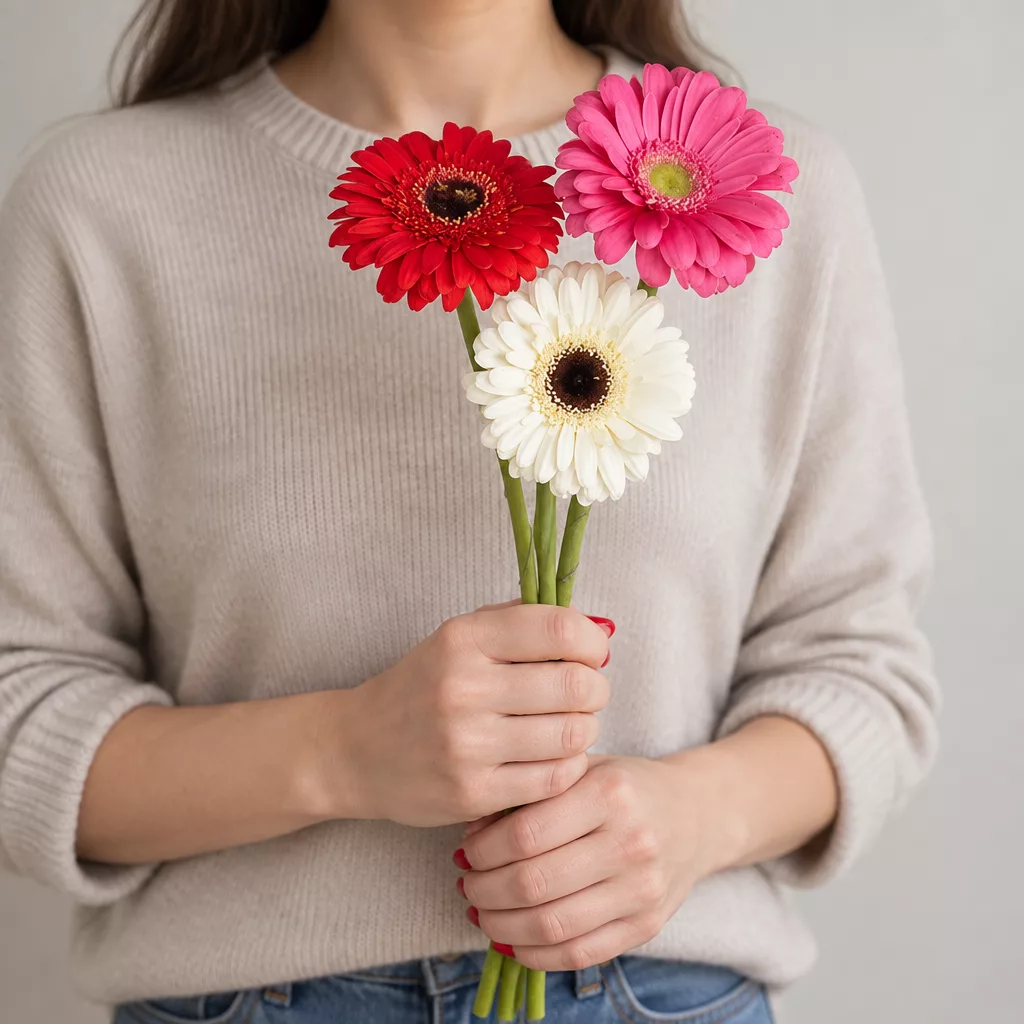

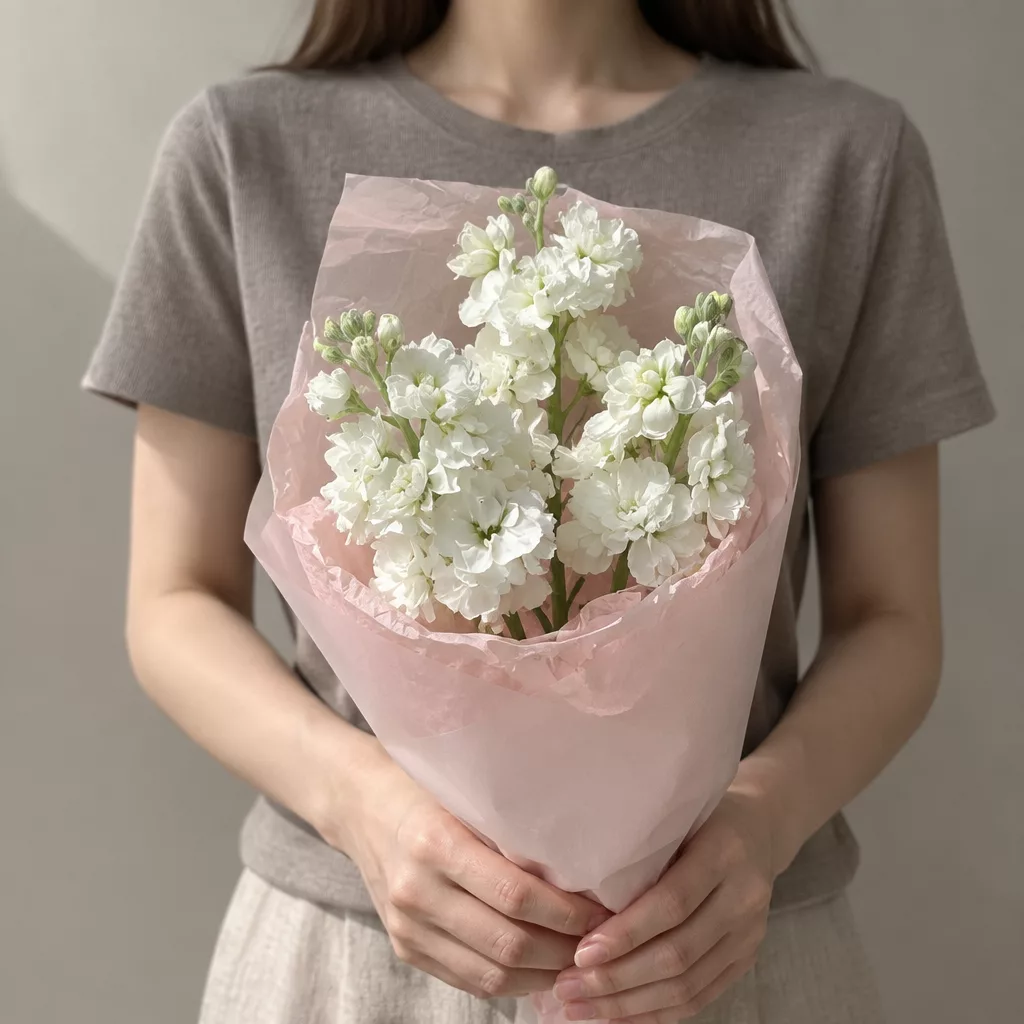
What Pink Actually Signals to a Russian Recipient
Pink in Russia reads first as care and affection. It is the colour most commonly chosen for birthdays, graduations, Mother's Day, and the kind of spontaneous gift that says 'I was thinking of you.' It does not carry the romantic exclusivity of red, which means it works equally well from a son to his mother, from a colleague to a team member, from a friend to a friend. This versatility is genuinely rare in the Russian colour vocabulary around flowers.
The shade of pink matters in practice. Deep magenta or fuchsia reads as energetic and bold — it suits a confident recipient and a celebratory occasion. Pale blush pink, almost white at the edges, reads as delicate and refined. It suits a more reserved personality or a quieter occasion like a thank-you or a get-well gesture. Mid-toned rose pink sits comfortably in the middle and is the safest single choice when you do not know the recipient's taste well.
Varieties that carry pink beautifully include garden roses such as Keira and Miranda, spray roses in soft coral-pink tones, ranunculus in blush, and double-flowered lisianthus, which mimics the look of a rose but with a lighter, more airy feel. Peonies in pink are perhaps the most universally adored flower in Russia when they are in season from late May through July. Outside peony season, a well-constructed arrangement of garden roses and ranunculus in coordinated pink tones achieves a very similar emotional effect and photographs just as well.
Peach as a Colour: Warm, Neutral, and Impossible to Misread
Peach occupies a unique position in the flower colour spectrum. It is warm enough to feel generous and celebratory, but it does not carry the directness of red or the sharpness of orange. In Russian reception culture, peach reads as sophisticated and gentle. It is a colour that tends to appeal across age groups — younger recipients find it fresh and contemporary, while older recipients often describe it as elegant and tasteful.
From a practical standpoint, peach tones are also exceptionally photogenic in the low natural light common to Russian interiors, particularly in northern cities like Saint Petersburg where the light in autumn and winter is soft and diffuse. A peach bouquet photographed on a wooden table in a Saint Petersburg apartment in November will look warm and luminous rather than washed out, which matters because recipients almost always photograph their flowers.
The best peach varieties currently available include Juliet garden roses, which have a deeply cupped, antique form and a colour that shifts from apricot at the centre to pale peach at the outer petals. Coral Charm peonies, when available, offer a similar warmth. Freesias in peach-apricot tones add fragrance, which is always a welcome dimension in a bouquet. Alstroemeria in peach-coral tones is more modest in appearance but extends vase life considerably and works well as a filler that does not compete with the focal flowers. For foliage, eucalyptus and dusty miller both complement peach tones without pulling the arrangement toward green in a way that disrupts the warm palette.
Choosing the Right Combination for the Occasion
The occasion shapes how you balance the tones within this palette. For a birthday, leaning toward richer, more saturated pinks — deep rose, coral-pink, warm peach — creates a sense of festivity. Adding white as an accent, rather than as a dominant colour, brightens the arrangement without triggering any of the associations that an all-white bouquet might carry. A classic combination for a Russian birthday that almost never fails is deep pink garden roses, blush spray roses, and peach ranunculus, finished with soft grey-green eucalyptus.
For a professional occasion — congratulating a colleague on a promotion, welcoming a new business partner, thanking a mentor — the palette should move toward softer, more restrained tones. Pale blush, ivory-pink, and light peach together read as respectful and considered rather than effusive. Lisianthus and garden roses in these tones, arranged in a structured round bouquet, are appropriate for a business context without feeling cold or impersonal.
For a romantic gesture that is not yet at the intensity of red roses, peach and soft pink together strike exactly the right note. They say warmth and interest without the declarative weight of a full red arrangement. This is a useful choice early in a relationship or for an anniversary where the couple values understated elegance over dramatic gesture.
For a new baby, blush pink and white with minimal foliage is the traditional choice in Russia, and it remains the most warmly received. If the baby is a boy, many senders still choose pink and white in Russia — the Western convention of blue for boys is less rigidly observed than in some other countries.
Budget Ranges and What They Actually Look Like
The pink and peach palette works across every budget level, which is one of its practical advantages. At the most accessible level, a bouquet of spray roses in coral-pink tones, supplemented with alstroemeria and simple foliage, creates a genuinely lovely arrangement. Spray roses are durable, fragrant, and open beautifully over several days. They are not a lesser flower — they are simply a different scale, and a well-composed spray rose bouquet can be more visually interesting than a sparse arrangement of premium stems.
At a mid-range level, the addition of one or two garden rose varieties — Keira, Miranda, or a similar cupped form — elevates the arrangement significantly. Garden roses have a much fuller, more complex bloom than standard hybrid tea roses, and even two or three stems among spray roses and ranunculus change the visual weight of the whole bouquet. This is the level at which most recipients in Russia would describe a bouquet as genuinely impressive.
At a premium level, Juliet roses as the centrepiece, surrounded by blush ranunculus, peach freesia, and soft pink lisianthus, with dusty miller as accent foliage, produces an arrangement that photographs beautifully and lasts well. Juliet roses in particular are prized in Russia — they are immediately recognisable as a luxury flower and carry associations with European-style floristry that many Russian recipients find aspirational and exciting.
In all cases, odd numbers of stems are traditional in Russia for celebratory occasions. Even numbers are reserved for mourning. This is one of the most consistent and widely observed customs, and it is worth confirming when ordering.
Care Instructions to Pass On to the Recipient
A beautiful bouquet that wilts within two days is a disappointment, and most of that outcome is determined in the first few hours after delivery. The single most important instruction to pass on to a recipient in Russia — particularly in winter — is to let the flowers rest at room temperature for thirty minutes before cutting the stems and placing them in water. Flowers delivered in cold weather, especially in cities like Saint Petersburg or Moscow where outdoor temperatures can drop well below freezing from November through March, experience a temperature shock when they enter a warm interior. Allowing them to acclimatise before trimming prevents the stems from sealing against the cold.
Once in a vase, pink and peach roses and ranunculus do best in cool conditions — away from radiators, which are often very warm in Russian apartments during the heating season, and away from direct sunlight. A temperature of around 18 to 20 degrees Celsius is ideal. Many Russian apartments run warmer than this in winter, so placing the vase in a cooler room overnight, or even on a cool windowsill away from the draft, can extend vase life by two to three days.
Water should be changed every two days, and the stems should be re-cut at an angle each time. Garden roses and ranunculus typically last seven to ten days with good care. Spray roses and alstroemeria can last ten to fourteen days. Lisianthus, if included, is one of the longest-lasting cut flowers available and will often outlast the roses by several days. Removing wilted outer petals rather than discarding the whole bouquet is a small habit that keeps the arrangement looking fresh considerably longer.
Presentation Details That Make the Difference in Russia
Russian recipients pay close attention to presentation, and the wrapping is part of the gift experience in a way that is more pronounced than in some other countries. A bouquet that arrives loosely wrapped or in purely utilitarian packaging reads as less considered, regardless of the quality of the flowers inside. The packaging style that tends to be most warmly received in Russia for a pink and peach palette is kraft paper in natural tones, tied with a ribbon in a coordinating colour — dusty rose, ivory, or warm terracotta all work well with this palette.
The bouquet shape also matters. Round, domed bouquets — where all stems are roughly equal in length and the flowers form a compact sphere — are the dominant preference in Russia for gifts. The tall, asymmetric, loosely structured bouquets that are fashionable in Scandinavian and British floristry are less universally appreciated and can occasionally read as unfinished. When in doubt, a round bouquet in the classic Russian style is the right choice.
A handwritten card is expected with any serious gift bouquet in Russia. Even a short message — two or three sentences — is received much better than no message at all. If you are ordering remotely and writing in Russian is not possible, a sincere message in English is entirely acceptable, particularly in Saint Petersburg, which has a long tradition of European cultural exchange and where many recipients will read English comfortably.
Finally, timing matters practically. Flowers ordered for a morning delivery in Saint Petersburg arrive when the recipient is alert and the occasion feels fresh. An evening delivery can feel like an afterthought, even when it is not.
Pink and peach are not a default or a fallback — they are an active, considered choice that happens to align beautifully with Russian colour customs, Russian aesthetic preferences, and the practical realities of sending flowers across a significant distance. When you choose this palette, you are choosing something that will be received with warmth, displayed with pride, and remembered as a genuinely thoughtful gesture. That is exactly what a good bouquet should do. We deliver bouquets across Russia in 1–2 hours.
Frequently asked questions
Are pink flowers appropriate for male recipients in Russia?
Lighter pink tones can feel feminine in Russian culture, but peach, coral, and deeper rose tones are received well by male recipients, particularly in professional contexts. A bouquet centred on coral roses or peach-toned ranunculus with structured, minimal foliage reads as warm and considered rather than gendered.
Can I mix pink and yellow in a bouquet for a Russian recipient?
This is a combination to approach carefully. Yellow flowers carry an association with separation in Russian popular culture, and even a small number of yellow stems can trigger this reading for some recipients. If you want warmth alongside pink, peach and coral tones achieve that effect without any of the risk that yellow carries.
How many stems should a bouquet have for a Russian birthday?
Always an odd number — this is one of the most consistently observed customs in Russia. Even numbers of flowers are associated with mourning and funerals. For a birthday bouquet, common choices are 11, 15, or 21 stems, which also correspond to natural price and volume tiers in most arrangements.
Do pink flowers work for a professional thank-you in Russia?
Yes, provided the tones are restrained. Pale blush, soft peach, and ivory-pink in a structured round bouquet read as respectful and elegant in a professional context. Avoid very saturated fuchsia or hot pink for business occasions — these shades read as celebratory and informal rather than considered.
What is the vase life of a peach garden rose compared to a standard rose?
Garden roses such as Juliet typically last seven to ten days with proper care — comparable to a high-quality hybrid tea rose. The key difference is that garden roses open fully over several days, revealing layers of petals, which means the bouquet actually becomes more beautiful three or four days after delivery before it begins to decline.
Ready to send flowers?
Pick the city, choose the bouquet, and a local florist takes it from there.
Choose a city →