Red Roses in Russia: True Meaning and How to Send Them Right
You have decided on flowers, and red roses feel right — bold, unmistakable, impossible to misread. Except in Russia, the colour, the count, and even the moment of delivery carry meaning that most senders from outside the country never think about. Get those details right and the bouquet lands exactly as you intended. Miss them and a generous gesture can send a quietly confusing message. This is what a working florist in Saint Petersburg wants you to know before you place the order.
Why Red Roses Carry Such Weight in Russian Culture
In Russia, flowers are taken seriously in a way that can surprise people from cultures where a bouquet is simply a nice touch. Giving flowers is a deliberate act, and the recipient will read the choice — colour, quantity, wrapping — as a kind of statement. Red roses sit at the very top of that hierarchy. They have been associated with deep romantic love and passionate feeling since the Soviet era, when they were among the few flower varieties reliably available and therefore became the default language of serious affection.
That history matters because it means red roses are not casual. Sending them to a colleague you barely know, or to someone you have just met once, can feel forward or even presumptuous by Russian standards. The colour signals that you mean something by it. If you do mean something by it, that is exactly why they work so well. The bouquet arrives and the message is clear without a single word.
For a romantic partner, a close friend you have known for years, or a mother on a significant birthday, red roses are not just appropriate — they are the right choice. The key is understanding that you are using a strong vocabulary. A florist will always tell you: when in doubt about the relationship, soften the palette. But when you are sure, lean into it. Red roses in Russia say what they are supposed to say, and they say it loudly.
Bouquets we can deliver

The Number You Choose Changes Everything
Count matters more in Russia than almost anywhere else in Europe. The single most important rule is this: always send an odd number of flowers. Even numbers — two roses, four, six, a dozen — are associated with mourning and are brought to funerals. Arriving with an even-numbered bouquet for a birthday or anniversary is a genuine social error, and the recipient will notice immediately.
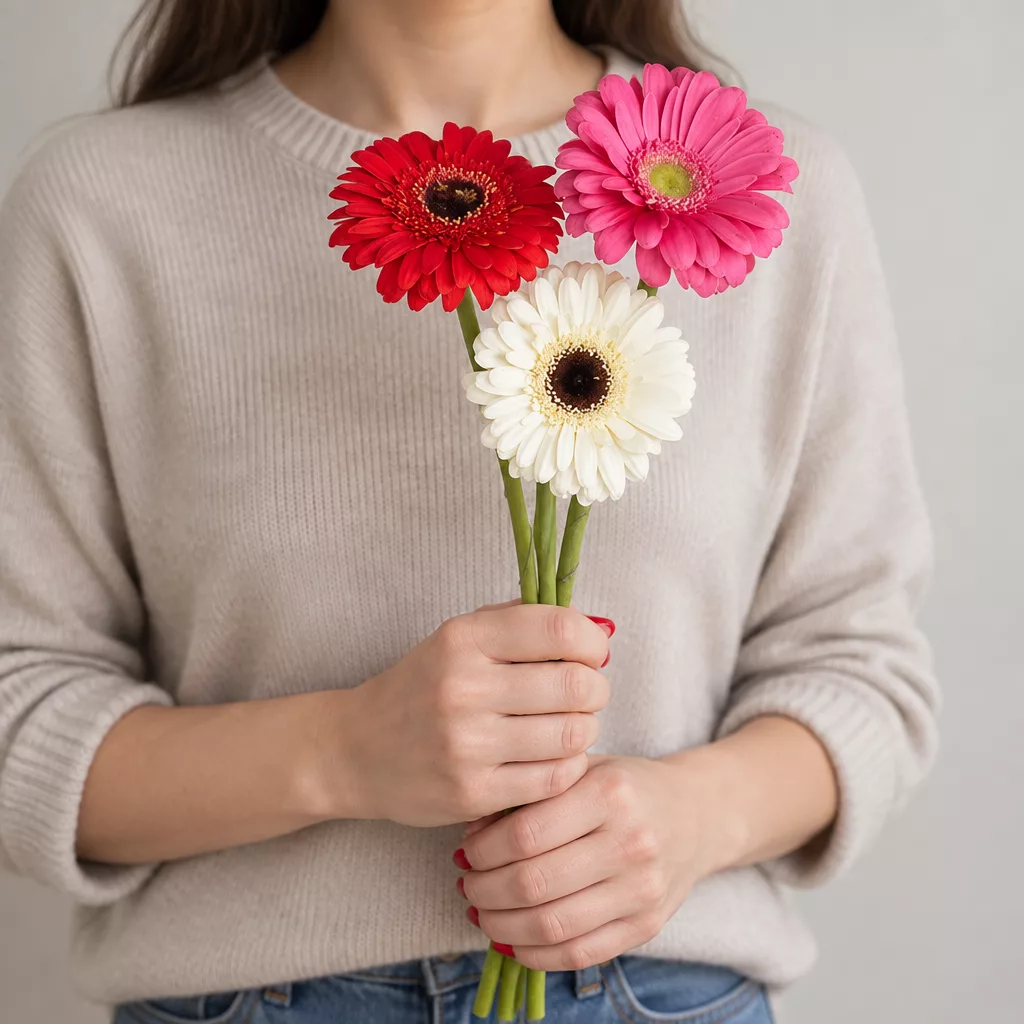
Odd numbers carry life and celebration. Three roses is intimate and tender, suitable for a new relationship or a quiet personal gesture. Five is warm and friendly. Seven is considered particularly romantic and is one of the most popular counts for early courtship. Eleven roses signals a more serious level of feeling, and twenty-one is a statement of strong, established love. As the number rises, so does the weight of the message.
One rose on its own is interesting: in Russia it reads as very personal and direct, almost more intense than a large bouquet because there is nothing else to dilute the gesture. A single long-stemmed red rose handed to someone is a concentrated romantic signal. Some senders find that more powerful than twenty-one; others find it too sparse. Think about the personality of the person receiving it.
When you order, tell the florist exactly how many stems you want rather than choosing a size category like small or large. A good florist will always confirm the count with you. At Turboflora, we check this at the point of order specifically because it is the detail that causes the most avoidable misunderstandings.
Choosing the Right Variety for the Occasion
Not all red roses look the same, and the variety you choose shapes the impression the bouquet makes before anyone reads a card. For a classic, formal romantic gesture — an anniversary, a proposal, a significant birthday — a large-headed variety with a deep velvety red and a strong upright stem is the right direction. Explorer and Red Naomi are both well-established varieties with that quality: full, symmetrical blooms that open slowly and hold their shape for a week or more when cared for properly.
For something slightly softer and more intimate, spray roses in red offer multiple small blooms on a single stem. They read as warmer and less ceremonial, which can suit a spontaneous mid-week gesture better than a formal arrangement. Mixing a central stem of large-headed red roses with red spray roses around the edges gives the bouquet depth and texture without changing the colour story.
Temperature during delivery is worth thinking about in Saint Petersburg and across Russia generally. In winter, roses need to be wrapped properly to survive the cold between the door of the shop and the door of the recipient. A stem that freezes even briefly will show dark water-soaked patches on the petals within hours. When you order in temperatures below zero, specify that the bouquet should be insulated for transit. A well-run delivery operation will do this automatically, but it is worth confirming. Roses that arrive in perfect condition in February make a stronger impression precisely because the recipient knows what the weather is like outside.
Pairing Red Roses With Other Flowers Without Diluting the Message
A bouquet of pure red roses is a classic for a reason, but pairing them thoughtfully with other flowers can make the arrangement feel more personal and less generic. The question to ask is what you want to add — softness, drama, contrast, or fragrance — without muddying the central message the red is carrying.
White flowers are the most natural companion. White gypsophila (baby's breath) around a cluster of red roses is a familiar combination that reads as romantic and clean. White ranunculus or white lisianthus adds a more sophisticated edge and suits recipients who appreciate a considered aesthetic. The contrast is sharp and the red stays dominant.
Green foliage — ruscus, eucalyptus, or simple leather leaf — grounds the bouquet and makes the red look richer by comparison. A tight cluster of red roses with dark green ruscus and no other colour is one of the most elegant options available and works across almost every romantic occasion.
What tends to work less well is mixing red roses with other strong colours. Orange lilies next to red roses create visual noise. Yellow flowers next to red shift the mood away from romance toward something more festive and general. Pink roses alongside red can look like an afterthought rather than a choice. If you want to include pink, use it in a separate smaller arrangement and let the red roses stand alone.
For a significant occasion, consider adding a single variety of greenery and nothing else. The restraint communicates confidence in the roses themselves, which is exactly the right message.
Timing, Delivery, and the Moment That Matters
In Russia, the timing of a flower delivery is part of the gesture. Flowers that arrive in the morning of a birthday set the tone for the entire day. Flowers that arrive in the evening feel like a closing thought. Neither is wrong, but they land differently, and it is worth deciding which effect you want before you book the slot.
For romantic occasions, morning delivery has a particular power: the recipient wakes up to something unexpected and carries that feeling through the day. For a dinner date or an evening celebration, having the flowers arrive an hour or two before the event gives the recipient time to put them in water and enjoy them before going out. Flowers that arrive after the occasion feel late.
If you are sending to an office address, check whether the recipient will actually be there. Flowers left at a reception desk are not the same as flowers handed directly. If the gesture is personal and romantic, an office delivery can work beautifully — there is an element of public acknowledgment that some people love — but it removes the private intimacy of a home delivery. Think about what the person would prefer.
Turboflora delivers across Saint Petersburg and to other Russian cities within one to two hours of the order being placed, which means you can respond to moments as they happen. A spontaneous gesture often lands better than a planned one. If something significant happens today and you want to mark it, you do not need to wait until tomorrow. The roses can be there this afternoon, fresh and properly presented, while the moment is still alive.
Keeping Red Roses Beautiful After They Arrive
Red roses are not difficult to care for, but they do respond noticeably to how they are handled in the first few hours after arrival. The recipient's job starts the moment the bouquet comes through the door, and a short note from you explaining what to do is a thoughtful addition to any delivery.
The stems should be cut at an angle — about two centimetres from the bottom — using a sharp knife rather than scissors. Scissors crush the stem tissue and reduce water uptake. The cut should happen while the stem is held under water if possible, which prevents air from entering the stem and blocking the flow. This single step makes a measurable difference to how long the blooms last.
The vase water should be cool and clean. Room temperature water is fine; cold water from the tap is better. Avoid placing the vase near a radiator, in direct sunlight, or next to a fruit bowl — ethylene gas from ripening fruit accelerates petal drop in roses noticeably. A cool room away from drafts is ideal.
Change the water every two days and re-cut the stems each time. Remove any leaves that sit below the waterline, as they rot quickly and contaminate the water. With this level of care, a well-conditioned red rose in a cool room — and Russian apartments in winter are often kept quite warm, which shortens vase life — should last seven to ten days.
Varieties like Red Naomi are bred partly for longevity and hold up well even in warmer indoor conditions. If the recipient keeps their home particularly warm, this variety is worth specifying when you order.
Red roses in Russia are not a default choice — they are a deliberate one, and that is precisely their value. When you understand what the colour signals, how the count is read, and how the moment of delivery shapes the impression, you are not just sending flowers. You are making a statement in a language the recipient already knows. Choose the right variety, get the number right, think about the timing, and the bouquet will do exactly what you want it to do. Turboflora assembles every red rose arrangement to order in Saint Petersburg and delivers it fresh, properly wrapped for the season, within one to two hours — so the gesture arrives when it still means something.
Frequently asked questions
Is it really a problem to send an even number of red roses in Russia?
Yes, genuinely. Even numbers of flowers are associated with mourning in Russian tradition and are brought to funerals. Sending six or twelve roses to a romantic partner or on a birthday will be noticed and may cause discomfort. Always choose an odd number — seven, eleven, or twenty-one are all strong options for a romantic gesture.
Can I send red roses to a female friend in Russia, or will it seem too romantic?
Red roses carry a strong romantic signal in Russian culture, so sending them to a friend can feel forward unless the friendship is very close and long-standing. For a warm, celebratory gesture to a female friend, consider mixing red with white flowers to soften the message, or choosing a different colour palette entirely and reserving pure red roses for romantic occasions.
How do red roses survive delivery in Russian winters?
Cold transit is a real risk. Even brief exposure to freezing temperatures causes water-soaked dark patches on petals that appear within hours of arrival. A professional florist insulates bouquets for cold-weather delivery. When ordering in winter, confirm that the arrangement will be wrapped for temperature protection during transit — this is standard practice at Turboflora.
What is the best number of red roses to send for a first romantic gesture?
Seven is widely considered the most romantic count for early courtship in Russia — it signals genuine feeling without the weight of a very large arrangement. A single rose is also powerful and direct if the relationship has a particular intensity. Three is tender and intimate. Avoid five if you want the gesture to read as clearly romantic rather than simply warm and friendly.
Do red roses need any special care in a warm Russian apartment?
Warm indoor temperatures shorten vase life noticeably. Place the vase in the coolest part of the room, away from radiators and direct sunlight. Change the water every two days, re-cut the stems at an angle each time, and remove submerged leaves. Varieties like Red Naomi are bred for longevity and hold up better than average in warmer conditions, making them worth requesting specifically.
Ready to send flowers?
Pick the city, choose the bouquet, and a local florist takes it from there.
Choose a city →