How to Remove Lower Foliage up to the Vase Rim
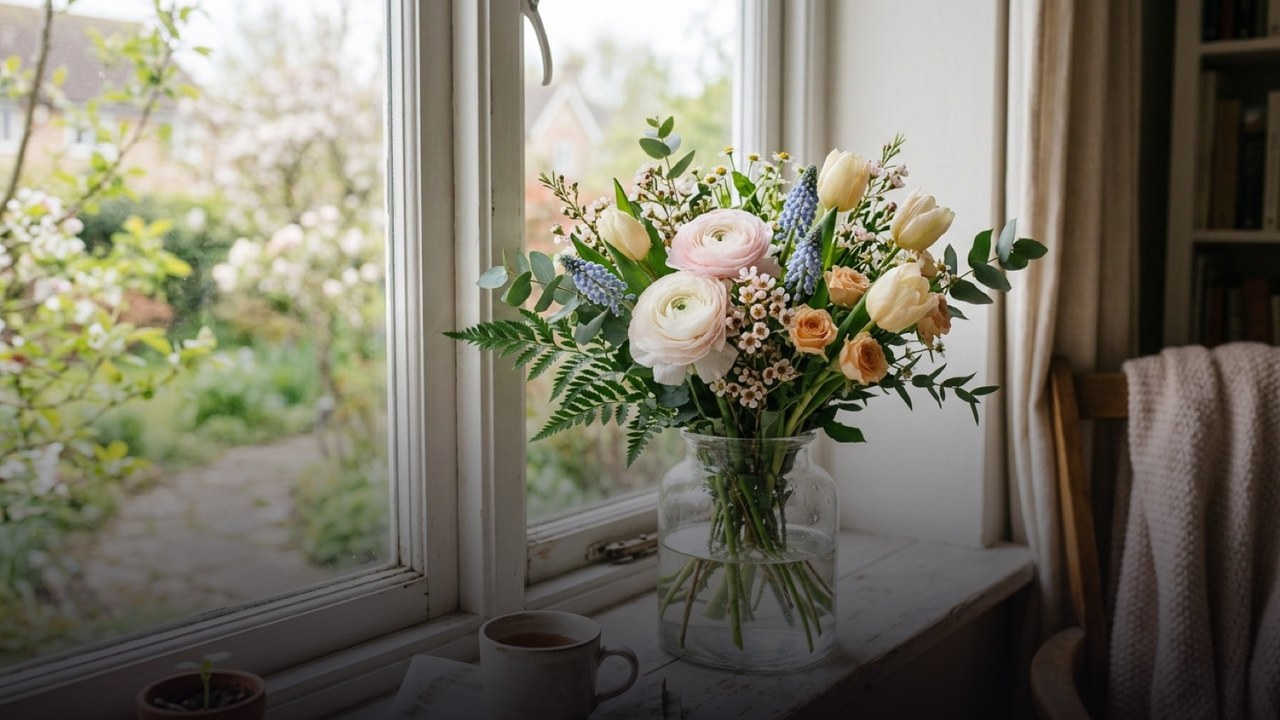
To remove lower foliage up to the vase rim, take off leaves on the stem sections that will sit inside the vase, especially any that would touch the water. Keep healthy upper leaves that sit clear of the water and help frame the flowers. The rim is a useful guide, but the actual waterline is the essential boundary: no leaves should be submerged.
You do not need to strip every stem bare. The aim is to give the bouquet enough clean stem to stand in water without trapping leaves beneath the surface or crushing them against the neck. Choose your vase before you start, because a short, wide container and a tall, narrow one need different amounts of preparation.
Use the waterline as your first guide
Hold a stem beside the vase with its cut end roughly level with the inside base. Look at where you intend the water to reach, then identify the leaves that would fall below that level. Remove those first. Next, check the remaining lower leaves against the neck and rim; take off any that would be folded, squeezed or pushed into the water when you arrange the stem.
Removing every leaf below the rim is a convenient preparation rule for many upright arrangements, rather than a requirement for every vase shape. In a broad vase with a relatively low waterline, a healthy leaf may sit inside the opening while staying dry and uncrushed. You can leave it if it has room and does not dip into the water when the stem settles.
Make the final check with the flowers in position. Stems often lean at an angle, so a leaf that looked safely above the water while you held it upright may end up submerged. Look through a clear vase from the side; with an opaque vase, lift small groups of stems to inspect them. Leave enough clear stem that normal settling will not put foliage into the water.
Remove leaves gently without tearing the stem
Start with clean hands, a clean vase and clean, sharp scissors or secateurs suitable for the stems. Separate the bouquet into manageable groups so you can see each leaf attachment. Support the stem close to the leaf you are removing. Work slowly around soft stems, where pulling hard can peel the outer tissue or bend the stem before you notice.
If a lower leaf comes away easily with a gentle pinch at its base, remove it that way. If it resists, snip its stalk close to the main stem without cutting into the stem itself. Avoid dragging a tightly closed hand down the entire stem: that can tear leaves away unevenly and damage tissue you need to keep intact. Remove loose fragments before placing the stem in water.
On roses, distinguish the small stalk carrying a group of leaflets from the main flowering stem. Remove a low leaf stalk as a unit when its foliage would be submerged, and retain sound upper leaves where they have space. Take care around prickles and avoid scraping the stem to make it completely smooth. Our guide to which leaves to remove before putting flowers in a vase explains the selection in more detail.
Bouquets we can deliver




Keep healthy upper foliage and check each flower separately
Healthy foliage above the water gives an arrangement shape and helps cover the gaps between flower heads. Keep it when it sits comfortably outside the vase and does not crowd neighbouring blooms. Remove yellowing, damaged or decaying leaves wherever they occur, but do not treat a naturally different leaf colour as proof of a problem. Judge the condition of the leaf as well as its colour.
A mixed bouquet needs stem-by-stem decisions. A branching stem may carry leaves and side shoots at several heights, while another flower has a long, naturally bare stalk. Use the position each stem will occupy in your arrangement to decide what to remove. Do not strip every stem to the same height simply to make the prepared bouquet look uniform on the table.
Decorative greenery follows the same waterline rule. Keep the upper sprays that create the outline, and clear leaves or needles from the portion that will stand in water. If a low branch is useful to the design, try changing its angle or using a wider vase before cutting it off. Once removed, foliage cannot be put back, so make small adjustments and check the shape as you go.
Finish preparing the stems before arranging them
Once the lower foliage is clear, give the stem ends a fresh cut with a clean, sharp tool and place them promptly in water. Cut enough to expose a fresh surface while keeping the length your vase needs. Avoid crushing or hammering the ends. If the bouquet includes flower food, follow the packet's dilution instructions rather than guessing how much a vaseful needs.
Choose a vase that supports the stems without forcing them into a tight bundle. If the neck presses leaves against wet stems, remove the trapped foliage or move to a wider container. Flowers should sit securely enough that arranging one stem does not repeatedly drag the others beneath the surface. A vase that looks attractive empty may still be the wrong size for a particular bouquet.
Fill with enough water for the prepared stem ends to remain submerged, while keeping the retained foliage clear. There is no single fill depth that suits every flower and container. Follow any care instructions supplied for the bouquet, and check the level after arranging: the stems displace water, so the final waterline can be higher than it was in the empty vase.
Recheck the leaves when you refresh the water
Lower-leaf removal helps keep plant material out of the water, but it does not replace ongoing care. Check the water level daily and replenish it as needed. If the water becomes cloudy, smells unpleasant or contains fallen material, empty the vase, clean it and refill it. Use fresh flower food according to its instructions if you are adding it again.
When refreshing the arrangement, inspect the submerged sections of the stems and remove any loose foliage. Discard decaying leaves and take out flowers that have deteriorated. Recut stem ends when needed with a clean tool, then reconsider the foliage height: shortening a stem can bring leaves closer to the waterline even when the original preparation was correct.
Keep the finished vase away from direct sun, heaters and ripening fruit where practical. Choose a position where you can reach it easily for water checks, rather than leaving it somewhere awkward to maintain. If the bouquet is a gift, a brief care message is useful: ask the recipient to keep leaves above water and check the level each day, without promising a fixed vase life.
Sending flowers to Russia: make the handover practical
If you are ordering from abroad for someone in Russia, consider when the recipient will be able to put the flowers in water. Turboflora delivers flowers across Russia, and you can start with the bouquets catalogue. City delivery costs 500 RUB; for remote districts and suburbs, the operator confirms the price when confirming the order. A free card can carry your personal message or a short care reminder.
In large cities, express delivery is available in 1–2 hours after order confirmation. You can also arrange an exact time within a margin of 30 minutes, choose a 09–12, 12–15, 15–18 or 18–21 window, or pre-order 1–30 days ahead. Contact a manager on WhatsApp for help choosing a bouquet, agreeing the address, timing and card text, or arranging a photo before delivery.
The courier calls the recipient about 15 minutes before arrival. If they are absent, we agree a second delivery that day or a handover to a neighbour or concierge with the sender's consent. Delivery is anonymous by default, so sign the card if you want the recipient to know who sent it. Online checkout uses CloudPayments; check the options displayed there, as acceptance of every foreign card is not guaranteed. See delivery and payment details when planning your order.
Frequently asked questions
Does “up to the vase rim” mean I must remove every leaf inside the vase?
Remove all leaves that would touch the water and any that would be crushed inside the neck. A healthy leaf can remain inside a wide opening if it stays dry and has enough room.
Should I remove all the leaves from roses?
Keep healthy upper leaves that sit above the water and fit comfortably in the arrangement. Remove submerged, damaged or decaying foliage, taking care not to tear the main stem.
Can I leave one or two leaves underwater?
It is better to remove them before arranging the flowers, because submerged foliage can decay and foul the water. If you discover a leaf later, lift the stem out and remove it; refresh the water if it has become dirty.
What if removing the lower leaves makes the bouquet look sparse?
Keep healthy upper foliage and adjust the stems so it frames the flowers above the rim. A shorter or wider vase may help you retain more dry foliage without putting leaves underwater.
Do I need to remove more leaves after cutting the stems shorter?
Check the arrangement again after each change in stem length or vase. Shortening the stems can lower previously dry leaves into the water, so remove any newly submerged foliage.
Ready to send flowers?
Pick the city, choose the bouquet, and a local florist takes it from there.
Choose a city →