Romashka Flower: A Practical Guide to the Russian Daisy
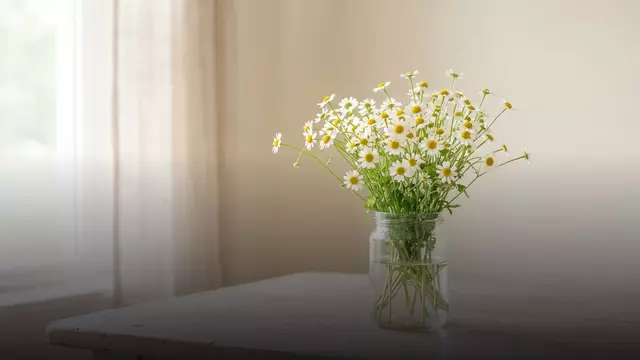
Romashka is a Russian word commonly translated as chamomile, although in everyday conversation it can also mean a daisy-like flower with white petals and a yellow centre. If you are searching for a romashka flower bouquet, a reference photo helps distinguish the small, branching flowers you may have in mind from larger, single-headed daisies.
That distinction matters when you choose a gift: a familiar flower name does not always identify one exact plant. This guide explains what to look for, what these flowers can express, how to keep cut stems fresh, and which details to confirm when sending a bouquet to someone in Russia.
What flower does romashka refer to?
In a botanical context, chamomile usually refers to plants such as German chamomile, Matricaria chamomilla. Its flower heads have yellow centres surrounded by white ray florets, which look like petals. The foliage is finely divided and feathery. This is a more specific identification than simply calling every white-and-yellow flower romashka.
An oxeye daisy, Leucanthemum vulgare, has the same familiar colour pattern but a different habit: its flower heads are generally larger, and its leaves are broader than chamomile foliage. Feverfew, Tanacetum parthenium, can also produce small white-and-yellow flowers in branching clusters. These plants belong to the daisy family, but they are not interchangeable botanical names.
For a bouquet, describe the visible result you want. Say whether you prefer many small flower heads on branching stems or fewer, larger daisies, and whether you want a loose meadow effect or a compact arrangement. A photo is more useful than a name alone; ask which flower is available before treating an image as an exact match.
Romashka meaning: affection without a formal message
For many Russian speakers, romashka brings to mind summer, meadows and the petal-plucking game of 'loves me, loves me not'. Those associations can make a daisy bouquet feel affectionate and familiar. They are cultural associations, however, rather than a fixed code that every recipient will interpret in the same way.
White petals and yellow centres give the flowers a bright, uncomplicated appearance. They can suit a thank-you, a birthday or a message to someone you miss, particularly if that person enjoys garden-style flowers. The strongest reason to choose them is the recipient's taste: a favourite modest flower can carry more personal meaning than a formal arrangement.
Let your card explain the occasion instead of asking flower symbolism to do all the work. 'These reminded me of our summers together' gives a meadow-style bouquet a clear connection to a shared memory. For a colleague or someone you do not know well, a simple greeting keeps the gesture warm without suggesting an intimacy you did not intend.
Bouquets we can deliver




Choosing a bouquet and observing Russian flower etiquette
Start with the overall shape and scale. Small, branching flower heads create a light texture, while larger daisies give a clearer, bolder outline. A bouquet made mainly from similar flowers feels different from one where daisies are a small accent. If the romashka look is your priority, explain that before choosing an arrangement by size alone.
In Russia, an odd number of flowers is traditionally chosen for happy occasions, while even numbers are associated with mourning. This convention is easiest to apply to a clearly countable bouquet. Branching stems with several flower heads make counting less straightforward, so clarify the stem count if the convention matters to you or the recipient.
Think about where the bouquet will go. Someone receiving flowers at work may appreciate an arrangement that is easy to carry home; someone with limited table space may prefer a modest size. Browse the bouquets catalogue for a starting point, then confirm the flower type and composition rather than assuming every daisy-like image represents the same plant.
How to care for a cut daisy-style bouquet
Begin with a clean vase and fresh water. Remove any leaves that would sit below the waterline, then trim the stem ends with clean, sharp scissors or secateurs before placing them in water. Avoid crushing the stems. If the bouquet comes with flower food, follow the packet's dilution instructions rather than adding an arbitrary amount.
Choose a position away from direct sunlight, radiators and ripening fruit. Check the water level daily: leafy, branching stems can make it difficult to see how much remains. Refresh the water and clean the vase regularly, especially if the water becomes cloudy, and remove fallen foliage before it starts to decay.
Remove fading flower heads and damaged leaves as they appear, keeping healthy stems in water while you work. Vase life varies with the actual species, the condition of the flowers and the room, so a precise number of days would be misleading. Also, do not use a decorative bouquet for tea or food; resemblance to culinary chamomile does not establish that it is suitable to consume.
Planning delivery to Russia from abroad
Turboflora delivers flowers across Russia. City delivery costs 500 RUB; for remote districts and suburbs, the operator confirms the delivery price when confirming the order. When arranging a gift from abroad, provide the destination city and complete address early so the delivery details can be agreed for the correct location.
In large cities, express delivery is available within 1–2 hours after the order is confirmed. Other options are delivery at an exact time with a tolerance of plus or minus 30 minutes, or within the windows 09–12, 12–15, 15–18 and 18–21. You can also pre-order 1–30 days ahead. Agree the time in the recipient's local time to avoid confusion across time zones.
Choose a window when the recipient is likely to be available. The courier calls about 15 minutes before arrival, so a complete surprise may still involve a phone call. If the recipient is absent, we agree a second delivery the same day or, with the sender's consent, hand the flowers to a neighbour or concierge. Make your preference clear when confirming the details.
How to order the right flowers and make the gift personal
If you specifically want romashka, contact a manager on WhatsApp with a reference photo and a short description of the flowers you mean. Include the destination, preferred date and timing, and card text. The manager can help you choose a bouquet, agree the address and delivery details, and arrange a photo of the bouquet before delivery.
Delivery is anonymous by default: the courier does not name the sender. A card with your text is free, so sign it if you want the recipient to know who sent the flowers. For a personal message across languages, short and direct usually works best. A name, a shared memory and a clear greeting are often enough to make the gift feel considered.
Online checkout uses CloudPayments. Check the payment options displayed at checkout; acceptance of every foreign card is not guaranteed. Before paying, review the recipient's details, agreed timing, bouquet choice and card text together. The delivery and payment information is a useful reference while you organise the order, particularly when you are coordinating it from another country.
Frequently asked questions
Is romashka the same as chamomile?
Romashka commonly translates as chamomile, but everyday usage can include other white-and-yellow daisy-like flowers. For a bouquet, confirm the actual flower type with a reference photo.
What does a romashka flower symbolise?
For many Russian speakers, it suggests summer, meadows and affectionate simplicity. Meanings are personal rather than universal, so use your card to express the message you intend.
Can I make tea from flowers in a romashka bouquet?
Do not use a decorative bouquet for tea or food. A daisy-like appearance does not confirm the plant's identity or that it was grown and handled for consumption.
Can I send a daisy-style bouquet to Russia from abroad?
Turboflora delivers flowers across Russia; confirm the specific flower choice and delivery details before ordering. Checkout uses CloudPayments, and you should check the payment options displayed there rather than assume your foreign card will be accepted.
Will the recipient know who sent the flowers?
The courier does not name the sender because delivery is anonymous by default. You can identify yourself in the free card, and the courier calls the recipient about 15 minutes before arrival.
Ready to send flowers?
Pick the city, choose the bouquet, and a local florist takes it from there.
Choose a city →