What Is Russia’s Country Flower? A Practical Guide to Chamomile
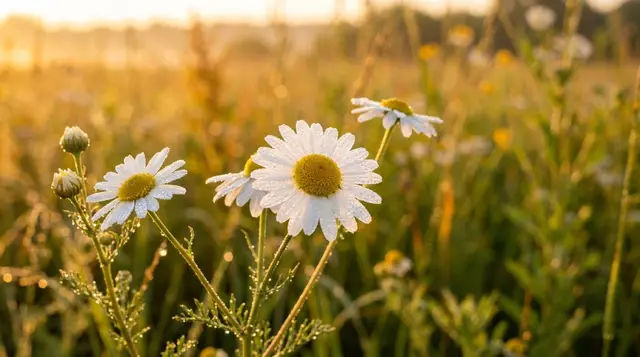
If you are searching for “russia country flower”, the usual answer is chamomile: the small flower with white petals and a yellow centre. It is widely associated with Russia and often described as its national flower, although that popular description should not be taken as proof of an official state designation.
For a gift, that distinction matters less than what the flowers communicate. Chamomile suggests simplicity, affection and a familiar countryside feeling, but you do not need to choose it simply because your recipient lives in Russia. Their taste, the occasion and the message on your card are better guides. Here is how to understand the symbolism, choose a suitable bouquet and arrange a delivery from abroad.
Why chamomile is associated with Russia
The Russian word you will often encounter is “romashka”, commonly translated as chamomile. Its white petals and yellow centre evoke summer meadows and the countryside. That familiar appearance helps explain its place in Russian cultural imagery: it feels approachable and personal, with associations that differ from the formality of a large rose bouquet.
Chamomile is also associated with Russia’s Day of Family, Love and Fidelity, observed on 8 July. This gives it a particular connection with family affection and lasting relationships. You can use that connection in a card for a spouse or relative, but it is helpful to explain your thought rather than expect every recipient to interpret a flower in exactly the same way.
There is a botanical distinction to keep in mind when choosing a bouquet. Flowers with a white ring of petals and a yellow centre are not all chamomile; similar-looking daisies may belong to other plants. If the actual species matters to you, ask about the flowers in the arrangement. A photograph can show the overall look without establishing botanical identity.
Choosing flowers for the person and the occasion
A loose, meadow-style arrangement can suit someone who enjoys an informal look, while a more structured bouquet may better match a formal celebration. Begin with something you know about the recipient: a favourite colour, flowers they have enjoyed before or their preference for a compact arrangement. National symbolism is a useful starting point, but personal familiarity usually makes the stronger gift.
For a romantic occasion, consider how direct you want the message to be. Red roses have a widely recognised romantic association, while a lighter mixed arrangement can express affection with less intensity. Chamomile-like flowers can suggest tenderness and ease. These are common associations rather than fixed rules, so let a short card explain whether you are celebrating love, friendship or gratitude.
For a birthday, family visit or thank-you gift, you can choose by colour and shape without trying to decode every stem. Browse the bouquets catalogue with the recipient’s preferences in mind. If you want the countryside feeling associated with chamomile, describe the white-and-yellow palette and airy shape you like, then confirm the actual composition before ordering.
Bouquets we can deliver




Russian flower etiquette: numbers, colours and cards
One important Russian convention concerns the number of flowers. An odd number of stems is traditionally used for happy occasions, while an even number is associated with mourning. This is especially noticeable in a bouquet of a single flower type, where the count is easy to see. For a small celebratory gift, choosing an odd number avoids an unnecessary cultural misunderstanding.
Colour meanings are less rigid. Yellow flowers sometimes carry an association with separation, but they can also be appreciated simply as bright, cheerful flowers. If your recipient loves yellow, that preference is more useful than a universal colour rule. For someone whose tastes you do not know, a mixed palette and a clear, affectionate card can help communicate your intention.
Write the card as you would speak to the person: name the occasion and add one specific thought. “Happy birthday, Mum. Thinking of our summer walks together” says more than a stock greeting. A card with your text is free. Delivery is anonymous by default, and the courier does not name the sender, so sign the card if you want the recipient to know who sent the flowers.
How to care for chamomile-style and mixed bouquets
When the bouquet arrives, use a clean vase and fresh water. Remove any leaves that would sit below the waterline, then trim the stem ends with a clean, sharp tool before placing them in water. Submerged foliage encourages dirty water, so this small preparation step matters more than adding household ingredients. If flower food is supplied, follow its instructions.
Keep the vase away from direct sunlight, radiators and ripening fruit. Choose a place where the flowers can be enjoyed without being exposed to a constant blast from a heater or air-conditioning vent. Do not assume that a flower associated with Russian meadows will tolerate freezing conditions after it has been cut; a bouquet needs care during cold weather too.
Check the water each day and refresh it when it becomes cloudy, cleaning the vase as needed. Remove wilted stems and any fallen leaves so they do not spoil the water for the remaining flowers. Mixed bouquets contain flowers with different vase lives, so individual stems may fade at different times. Ask for care guidance for the actual composition rather than expecting every flower to last equally long.
Planning a flower delivery to Russia from abroad
Start with the recipient’s city, full street address, building and flat details, and telephone number. Check the delivery date and time in the recipient’s local time zone, especially if you are ordering from another country. If an address contains unfamiliar terms, our guide to what “ulitsa” means in a Russian address can help you distinguish the street name from other address details.
We deliver flowers across Russia. City delivery costs 500 RUB; for remote districts and suburbs, the operator confirms the delivery price when confirming the order. Express delivery in large cities is available in 1–2 hours after the order is confirmed. Plan from that confirmation point when judging whether a bouquet can arrive before a visit, dinner or other event.
You can also arrange delivery at an exact time with a tolerance of plus or minus 30 minutes, choose a window of 09–12, 12–15, 15–18 or 18–21, or pre-order 1–30 days ahead. Choose a window when the recipient is likely to be available. For an occasion tied to a particular hour, agree the timing details when confirming the order.
Ordering, payment and what happens at the door
Once you have chosen a bouquet, confirm the recipient’s details, delivery timing and exact card text. Contact a manager on WhatsApp if you need help choosing flowers, agreeing the address or time, or arranging a photo of the bouquet before delivery. If chamomile itself is essential, say so explicitly and confirm the composition instead of relying only on a bouquet’s name.
Online checkout uses CloudPayments. Check the payment options displayed at checkout; acceptance of every foreign card cannot be guaranteed. If you are placing an order from abroad, allow time to check those options before your intended delivery date. You can also consult our delivery and payment information while planning the order.
The courier calls the recipient about 15 minutes before arrival, so provide a number they can answer. If the recipient is absent, we agree a second delivery the same day or, with the sender’s consent, hand the flowers to a neighbour or concierge. For a surprise, account for that practical call: you can keep the sender’s identity private while still helping the recipient receive the bouquet.
Frequently asked questions
What is the country flower of Russia?
Chamomile is commonly identified as Russia’s national or country flower. That is a cultural association; the popular description alone does not establish an official state designation.
Are chamomile and daisies the same flower?
Not necessarily: several different plants have white petals and a yellow centre. If you want chamomile specifically, confirm the actual bouquet composition rather than choosing by appearance alone.
How many flowers should you give someone in Russia?
For a happy occasion, an odd number of stems is the traditional choice, especially in a small bouquet of one flower type. Even numbers are traditionally associated with mourning.
Can I send flowers to Russia without revealing my name?
Yes, delivery is anonymous by default, and the courier does not name the sender. Leave your name off the card if you want to keep your identity private; the courier still calls the recipient about 15 minutes before arrival.
Can I pay for a Russian flower delivery with a foreign card?
Online checkout uses CloudPayments, but acceptance of every foreign card cannot be guaranteed. Check the payment options displayed at checkout before relying on a particular card.
Ready to send flowers?
Pick the city, choose the bouquet, and a local florist takes it from there.
Choose a city →