What Is Russia’s State Flower? A Practical Guide to Chamomile
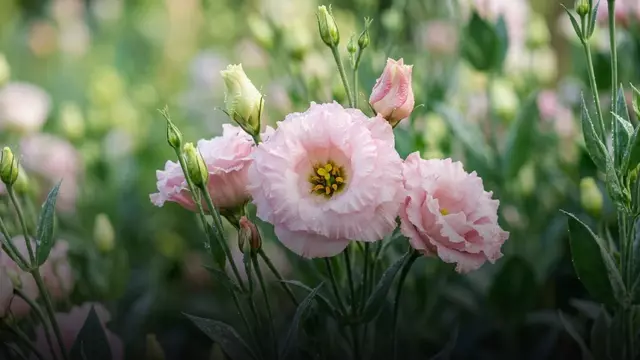
Chamomile is the flower most commonly associated with Russia when people search for the “Russia state flower”. It is best understood as a popular national floral symbol: that association does not establish it as an officially designated state flower. Its familiar white petals and yellow centre connect it with meadows, summer and simple affection.
If you are choosing flowers for someone in Russia, that symbolism gives you a useful starting point, but the recipient’s taste matters more than a national association. You may want a relaxed, meadow-style bouquet, a romantic gesture or flowers for a family occasion. Here is how to interpret the chamomile connection, recognise similar flowers and turn the idea into a suitable gift.
Why chamomile is associated with Russia
The Russian word “romashka” is commonly translated as chamomile, although everyday use can also encompass similar daisy-like flowers. The image is instantly recognisable: a yellow disc surrounded by white petals. In Russian cultural imagery, it often evokes countryside walks, summer fields and an unpretentious kind of beauty. Those associations explain its appeal more clearly than a claim about formal state recognition.
Chamomile is also associated with Russia’s Day of Family, Love and Fidelity, observed on 8 July. That makes it a relevant motif for a spouse, parents or another close family member. You do not need to present it as an official national flower in your message; a simple reference to family affection communicates the meaning without turning a personal gift into a statement about national symbols.
For a greeting card, keep the connection personal. “These reminded me of our summers together” works when you share that memory; “A little sunshine for your day” suits a lighter gesture. Avoid inventing a shared tradition or assuming that every Russian recipient attaches the same significance to chamomile. A specific, sincere sentence usually matters more than an elaborate explanation of flower symbolism.
Chamomile and daisy-like flowers are not interchangeable
A photograph of white petals and a yellow centre is not enough to identify a flower as chamomile. Several plants share that outline, including other daisies and daisy-flowered chrysanthemums. True chamomile generally has smaller flower heads and finely divided foliage, while some lookalikes have larger heads or broader leaves. These are useful clues, but a small catalogue image may not show enough detail.
Decide which part of your idea is essential before choosing a bouquet. If you specifically want chamomile, ask a manager to confirm the flowers in the proposed arrangement. If your priority is the white-and-yellow appearance, describe that instead. This avoids a mismatch between a botanical request and a visual preference, particularly when you are ordering in English for a recipient who uses Russian flower names.
Read the bouquet description alongside its photograph. A meadow-style arrangement may contain several kinds of flowers, and its name alone does not establish the contents. Browse the bouquets catalogue for a starting point, then clarify any detail that matters to your choice. Do not assume that a flower associated with Russia is available in every arrangement or on every delivery date.
Bouquets we can deliver




Choose the bouquet for the person and the occasion
White-and-yellow, daisy-like flowers can suit a friendly thank-you, a family greeting or an informal romantic gift. Their open shape gives an arrangement a relaxed character, but that does not make them the right choice for everyone. If the recipient prefers structured bouquets or strongly coloured flowers, use their preferences as your guide. The national-symbol connection is an optional layer of meaning.
In Russia, an odd number of stems is customary for celebratory gifts when the stems are individually counted; even numbers are traditionally associated with mourning. The convention is less straightforward in mixed arrangements or bouquets with branching stems and many flower heads. If you are choosing a small, countable bouquet, make the occasion clear and ask about the stem count before confirming your choice.
For an anniversary, say something about the relationship rather than relying on a flower to carry the whole message. For a colleague or teacher, a brief expression of thanks is usually easier to interpret than an intimate quotation. You can include a card with your own text free of charge. Check names, spelling and the intended tone, especially if you are writing in a language the recipient does not usually use.
Help delicate flowers settle in after delivery
Prepare a clean vase before arranging the stems. Remove any foliage that would sit below the waterline, because decaying leaves make the water dirty more quickly. Recut the stem ends with a clean, sharp tool and place them in fresh water promptly. If flower food comes with the bouquet, follow its directions rather than guessing the amount or adding household ingredients.
Give the bouquet a position away from direct sunlight, radiators and draughts. Keep it away from ripening fruit, which releases ethylene and can shorten the display life of sensitive flowers. Small, daisy-like heads may look informal, but they still need careful handling: avoid crushing them against a window, packing them tightly into a narrow vase or leaving stems out of water while you rearrange the room.
Check the water each day and refresh it when it becomes cloudy; clean the vase and remove deteriorating material at the same time. In a mixed bouquet, individual flowers may age at different rates, so removing a spent stem can help the remaining arrangement stay tidy. There is no single reliable vase-life promise for every bouquet: species, condition, transport and care all affect how long the flowers remain attractive.
Plan delivery around the recipient’s day
Turboflora delivers flowers across Russia. City delivery costs 500 RUB; for remote districts and suburbs, the operator confirms the delivery price when confirming the order. If you are arranging a gift from abroad, provide the full destination address and check the recipient’s local date and time. A suitable time in your own country may fall during work, travel or sleep at the destination.
In large cities, express delivery is available in 1–2 hours after the order is confirmed. You can also arrange delivery at an exact time with a tolerance of plus or minus 30 minutes, choose a window of 09–12, 12–15, 15–18 or 18–21, or pre-order 1–30 days ahead. Choose a window that fits the recipient’s routine and check the delivery and payment details before completing your plans.
The courier calls the recipient about 15 minutes before arrival. If the recipient is absent, we agree a second delivery that day or, with the sender’s consent, hand the flowers to a neighbour or concierge. Delivery is anonymous by default: the courier does not name you as the sender. If you want the recipient to know who sent the bouquet, include your name in the card text.
Order from abroad with a clear flower brief
Start with the recipient, occasion and delivery date, then describe the floral idea in plain language. For example: “I would like white-and-yellow, daisy-like flowers for a family birthday; please confirm the varieties.” If chamomile itself is essential, say so explicitly. A reference image can help explain the appearance you want, but you should still clarify the contents of the bouquet being considered.
Contact a manager on WhatsApp for help choosing a bouquet and agreeing the time, address and card text. You can also discuss a photo of the bouquet before delivery. Keep the key details together in one message, including the recipient’s telephone number and any practical address information. This gives the manager a clear brief without relying on assumptions about a catalogue title.
Online checkout uses CloudPayments. Check the payment options displayed at checkout rather than assuming that every foreign-issued card will be accepted. Before submitting the order, review the bouquet, recipient details, delivery arrangements and card wording. If the message needs more thought, our guide to adding a gift card message can help you make it personal and clear.
Frequently asked questions
What is Russia’s state flower?
Chamomile is the flower most commonly associated with Russia in answers to this question. Treat it as a popular national floral symbol rather than assuming it has an official state designation.
Does “romashka” always mean botanical chamomile?
Not necessarily: everyday use can include similar daisy-like flowers. If the exact species matters for your gift, ask for confirmation of the bouquet’s contents before ordering.
Are chamomile-style flowers appropriate for a romantic gift?
They can suit an informal, affectionate gesture, especially when the recipient likes meadow-style flowers. Add a personal card message so the romantic intention is clear.
Can I send flowers to Russia without revealing my name?
Yes. Delivery is anonymous by default, and the courier does not name the sender; check that your card text also reflects your preference.
Can I pay for a delivery to Russia with a foreign card?
Online checkout uses CloudPayments, but acceptance of every foreign-issued card is not guaranteed. Check the options displayed at checkout for your order.
Ready to send flowers?
Pick the city, choose the bouquet, and a local florist takes it from there.
Choose a city →