Sending a Graduation Bouquet to Russia When You Cannot Be There
The last school bell rings once. If your daughter, grandson, or younger sibling is graduating from a Russian school this summer and you are sitting thousands of kilometres away, that moment can still feel close — if a bouquet arrives at exactly the right time. Ordering flowers across borders sounds complicated, but with a little preparation it is entirely straightforward, and the result is something the graduate will remember long after the petals have dried.
What the Last School Bell Day Actually Looks Like in Russia
In Russia, the final day of school — called Posledniy Zvonok, or Last Bell — is a genuine ceremony, not just a quiet goodbye. It usually falls in late May, and the whole school gathers in the courtyard or assembly hall. Graduates wear their best clothes, often the classic Soviet-era uniform for girls: a brown dress with a white apron. Younger students present flowers and small gifts to the graduating class, and teachers receive bouquets too.
The atmosphere is emotional and very public. Photographs are taken in large groups, parents crowd the gates, and the day stretches into a long afternoon of celebration. A bouquet delivered to the school entrance or to the family home just before the ceremony begins lands at exactly the right emotional moment.
For relatives abroad, understanding this timing is everything. The ceremony typically starts between nine and eleven in the morning local time. Saint Petersburg, for example, is UTC+3, so if you are in London that is a six or seven hour difference depending on the season, and if you are in New York it is eight or nine hours behind. Placing your order the evening before, your evening, means the florists have the morning to prepare and deliver before the bell rings.
Knowing the school address or the home address matters too. Many families prefer the bouquet to arrive at home so the graduate carries it to school themselves, which feels more personal and avoids any awkwardness at the school gate.
Bouquets we can deliver

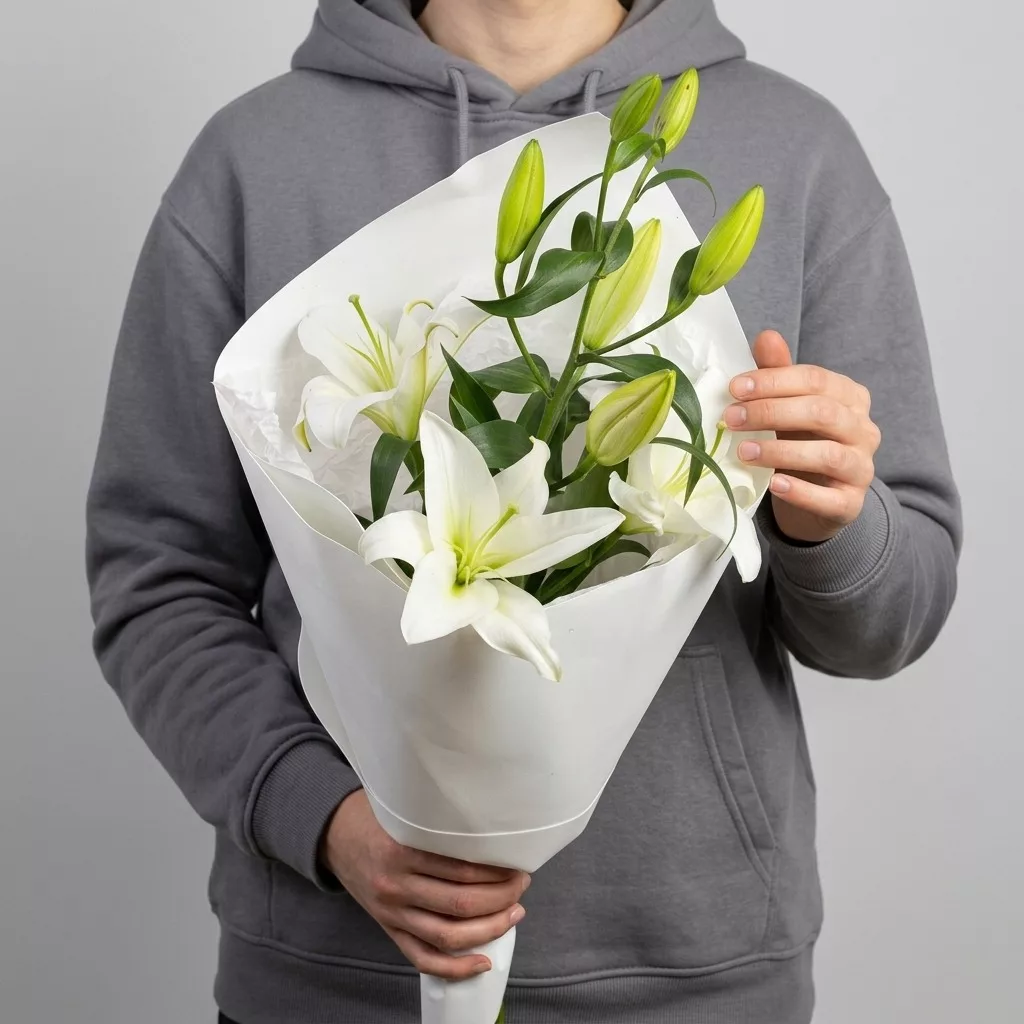
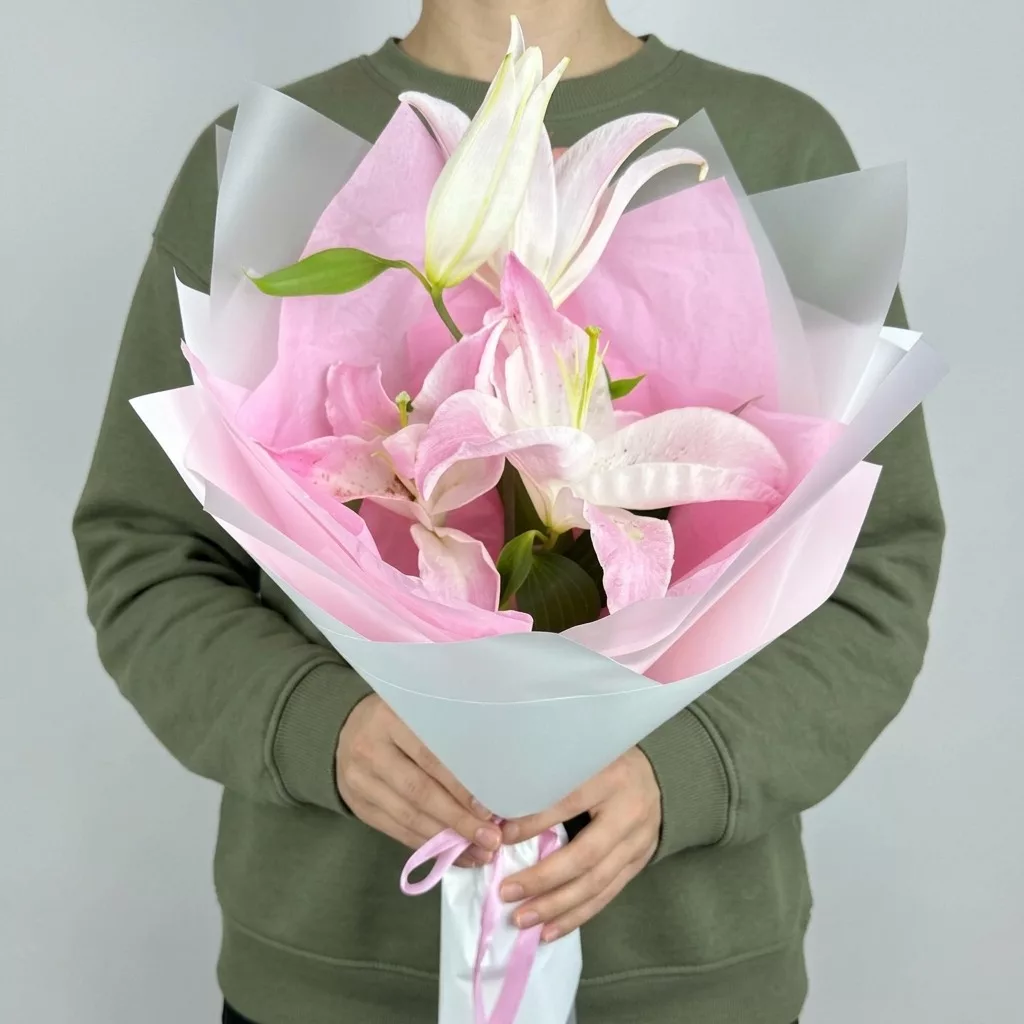
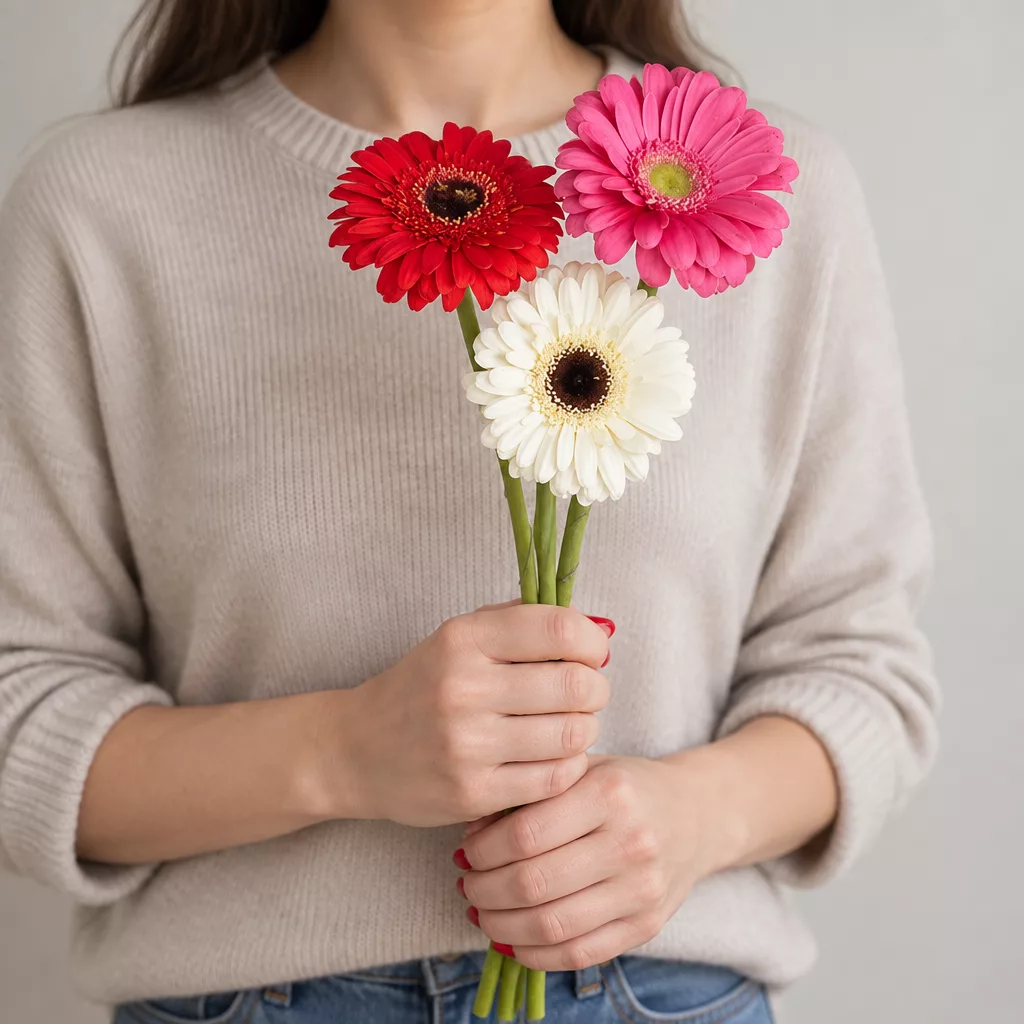
Choosing Flowers That Suit a Russian Graduation
Russian graduates almost always carry flowers on Last Bell day, and the bouquet is noticed. This is not the occasion for something minimal or abstract. Volume, colour, and freshness matter enormously, and the graduate will likely be photographed holding it dozens of times throughout the day.
White flowers photograph beautifully and feel celebratory without being overpowering. White eustoma, also called lisianthus, is a favourite — its ruffled petals look expensive and hold their shape well even in the heat of a May afternoon. White or cream roses remain the classic Russian choice for a young woman, and a bouquet of fifteen or twenty-one stems (odd numbers are traditional for joyful occasions in Russia; even numbers are reserved for mourning) makes a strong impression.
For a graduate who has a bolder personality, consider peonies if the timing aligns — late May is peak peony season in Russia, and a full peony bouquet in blush pink or coral is genuinely spectacular. Ranunculus in pale yellow or white adds texture and a slightly romantic feel without reading as overly formal.
If the graduate is a young man, the approach shifts. Bouquets for male graduates tend to be simpler and more structured: a tight arrangement of spray roses, alstroemeria, or chrysanthemums in white and green. The gesture matters far more than the size.
Avoid tropical flowers like anthuriums or bird of paradise for this occasion — they read as office gifts in Russia, not personal celebrations. Stick with European-style floristry: soft shapes, seasonal flowers, and plenty of fresh greenery to frame the composition.
How to Think About Budget When Ordering from Abroad
When you are ordering internationally, the question of budget works a little differently than walking into a local shop. You are paying in your own currency through a payment gateway, and the bouquet value translates into what the florist can source and build on the day. A thoughtful mid-range bouquet with quality seasonal flowers will almost always outperform a large arrangement of filler blooms — freshness and composition matter more than sheer volume.
At the lower end of the range, a compact bouquet of spray roses or mixed eustoma with eucalyptus is genuinely pretty and photographs well. It is a real gift, not a token gesture. Moving up, you gain access to garden roses, peonies, or a mixed seasonal arrangement with more stems and more considered structure. At the higher end, think of a large round bouquet of open garden roses in a single colour, or a peony arrangement that fills the arms — the kind of bouquet that stops people in the school courtyard.
One practical note: florists work with what is fresh on any given morning. Ordering a day in advance and specifying a colour palette — soft whites and blush, or bright yellows and white, for example — gives more flexibility than insisting on a single variety. A skilled florist will build something beautiful within that palette using whatever is at peak freshness that morning.
Also factor in delivery timing when thinking about value. A bouquet ordered for same-morning delivery requires the flowers to be cut and conditioned the night before, which is standard practice and does not affect quality — but it does mean the florist needs your order confirmed before they close for the evening.
Timing Your Order Across Time Zones
This is the part that most overseas relatives underestimate, and it is worth slowing down to get right. Russia spans eleven time zones, and Saint Petersburg sits at UTC+3. Moscow is the same. If you want a bouquet delivered by ten in the morning Saint Petersburg time on Last Bell day, you need to work backwards through your own time zone to understand when to place the order.
From Western Europe, placing the order the evening before is comfortable — you have a full overlap with business hours. From North America, the time difference is significant enough that you may need to order in the middle of your afternoon the day before, or use the shop's online order system outside of chat hours and confirm the delivery address and time in writing.
The safest approach is always to order at least eighteen to twenty-four hours before the desired delivery window. This gives the florist time to confirm the address, prepare the arrangement with freshly conditioned stems, and schedule the delivery driver for the right time slot. Rush orders are possible, but they depend on what is available in the cooler that morning rather than what was ordered specifically for your graduate.
If you are uncertain about the exact ceremony start time, ask the family member in Russia. Even a rough window — before noon, or mid-morning — is enough for the florist to plan. It is also worth specifying whether the bouquet should go to the school directly or to the home address, since both are common and the logistics differ slightly. Delivering to a school requires the driver to find the right entrance and sometimes coordinate with a parent waiting outside.
What to Write on the Card — and Why It Matters
A bouquet without a card is a beautiful object. A bouquet with the right words is a memory. For a graduate receiving flowers from a relative who could not be there, the card closes the distance in a way that the flowers alone cannot.
Keep the message warm and specific. Mention the graduate by name. Reference something real — the years of study, a subject they loved, the city they are heading to for university. Generic congratulations feel like they could have been written for anyone; a sentence that only you could have written feels like a hug.
If you are writing in English and the graduate reads English, that is perfectly fine — it adds a personal touch that reflects where you are. If you want the message in Russian and you are not a native speaker, write it in English and ask the florist to help with a translation, or use a trusted online translation tool for simple phrases. Common Russian graduation phrases include Pozdravlyayu s okonchaniem shkoly (congratulations on finishing school) and Zhelayu uspekha v budushchem (wishing you success in the future).
The card format in Russian floristry is typically a small folded card tucked into the bouquet wrapping or tied with ribbon. It is read at the moment of receiving, often in front of others, so keep the tone celebratory rather than overly sentimental — save the deeper emotion for a phone call or video message later in the day.
One small detail that makes a big difference: include the sender's name clearly. In the excitement of the day, a graduate receiving multiple bouquets needs to know at a glance which one came from you.
Keeping the Bouquet Fresh Through a Long Celebration Day
Last Bell day is long. The ceremony is in the morning, photographs go on until noon, and many families then move to a restaurant or park for the afternoon. The bouquet travels with the graduate through all of it, and by the end of the day it has been held, set down on tables, and left in warm cars. Giving the recipient a few simple care instructions as part of your message is a genuinely thoughtful touch.
As soon as the bouquet arrives home after the celebrations, the stems should be cut at an angle under running water — about two centimetres from the bottom — and placed immediately into a clean vase with cool, fresh water. Removing any leaves that would sit below the waterline prevents bacterial growth, which is the main reason bouquets fade prematurely.
The vase should sit away from direct sunlight and away from fruit bowls. Ripening fruit releases ethylene gas, which accelerates petal drop in roses and eustoma particularly. A cool room, ideally below twenty degrees Celsius, extends vase life significantly — in Russia in late May, indoor temperatures can already be warm, so a shaded spot matters.
With proper care, eustoma and spray roses will last seven to ten days. Peonies are shorter-lived once fully open — around five to six days — but their peak is so spectacular that the brevity feels worth it. Garden roses sit somewhere in between, depending on the stage at which they were cut.
For the day itself, if the bouquet will be in a warm car or outside for several hours, wrapping the stems in a damp paper towel inside the packaging helps them stay hydrated until they reach water.
Sending a graduation bouquet from abroad is one of those gestures that lands harder than you might expect. The graduate knows you thought about the timing, chose the flowers with them in mind, and found a way to be present across thousands of kilometres. That is what the flowers carry — not just colour and fragrance, but the fact that someone who loves them made it happen. Order a day ahead, give the florist a colour palette and a delivery window, write something real on the card, and let the rest take care of itself.
Frequently asked questions
How far in advance should I order a graduation bouquet from abroad?
Ordering eighteen to twenty-four hours before the desired delivery time is ideal. This allows the florist to condition the stems overnight, prepare the arrangement fresh in the morning, and schedule the driver for your exact time window. Same-day orders are possible but depend on availability, so earlier is always safer when you are working across time zones.
Can I request a specific flower variety, or is it better to choose by colour?
Both work, but choosing by colour palette gives the florist more flexibility to use what is at peak freshness that day. If you have a specific variety in mind — peonies or garden roses, for example — mention it as a preference rather than a strict requirement. A florist working with fresh stock will build something beautiful within your palette even if one element needs a substitute.
Is it appropriate to send flowers to a male graduate in Russia?
Yes, absolutely. Bouquets for male graduates are common in Russia, though they tend to be more compact and structured than those for young women. White or green arrangements using spray roses, chrysanthemums, or alstroemeria are well-suited. The gesture is warmly received — it is the thoughtfulness that counts, not the size of the arrangement.
What if I do not know the exact school address — can I send to the home instead?
Sending to the home address is actually the more common choice for overseas relatives. The graduate receives the bouquet before leaving for school and carries it to the ceremony themselves, which feels more personal. Just make sure someone will be home to receive the delivery, or coordinate with a family member in Russia to confirm the timing.
Why do Russian bouquets always have an odd number of stems?
In Russian tradition, even numbers of flowers are associated with mourning and are brought to funerals. For any joyful occasion — birthdays, graduations, celebrations — bouquets are made with an odd number of stems: five, seven, fifteen, twenty-one. This is a firm cultural convention, and a good florist will follow it automatically when preparing a celebratory arrangement.
Ready to send flowers?
Pick the city, choose the bouquet, and a local florist takes it from there.
Choose a city →