Sending Flowers to Bikin from Abroad? Read This First
Bikin is a small city in the Jewish Autonomous Oblast of the Russian Far East, sitting close to the Chinese border and far from the florist shops most people picture when they think of Russia. If you are in London, Berlin, Tokyo, or New York and want to send someone there a bouquet that actually arrives fresh and means something, you need a clear picture of what the distance, the climate, and the occasion each require. This article gives you exactly that — from choosing the right flowers for the season to understanding what your recipient will feel when the door opens.
Why Bikin Is Different from Sending Flowers to Moscow
Most international senders picture Moscow or Saint Petersburg when they imagine flower delivery in Russia. Bikin sits roughly 8,000 kilometres east of Moscow, in a region where winters are long and genuinely cold, summers are warm and humid, and the city itself has a population of around 17,000 people. That geography matters for flowers because it shapes what survives the journey and what will thrive once it arrives.
The Russian Far East experiences a continental climate with strong seasonal swings. In January, temperatures in Bikin regularly drop below minus 20 degrees Celsius. In July, they can climb above 30. Both extremes are hard on cut flowers if the logistics are not planned well. A bouquet of garden roses that travels beautifully in mild European spring weather needs a very different handling approach in a Bikin February.
Turboflora delivers across Russia, including the Far East, with a 1 to 2 hour window from order to door. For a sender abroad, the key is understanding that the order is placed online in any time zone, but the delivery operates on Bikin local time, which is UTC plus 7. When you place your order at noon in Paris, it is already early evening in Bikin. Timing your order correctly so the bouquet arrives when your recipient is actually home — not at work or asleep — makes all the difference between a surprise that lands and one that misses.
Bouquets we can deliver

What Russian Recipients Expect from a Flower Gift
Russian flower culture has a few unwritten rules that are worth knowing before you choose your bouquet. The first is the odd-number rule: bouquets for living recipients are always given in odd numbers — 3, 5, 7, 11, 25. Even numbers of flowers are reserved for funerals, so a bouquet of 10 roses, however beautiful, will quietly unsettle a Russian recipient even if they say nothing. Always choose an odd count, and a reputable florist will build the arrangement that way automatically.
The second tradition is that flowers are taken seriously as a statement. A small, sparse arrangement can feel dismissive in a way it might not in some Western cultures. Russians tend to appreciate generous, full bouquets — not necessarily expensive, but visually abundant. A wrapped bouquet of 15 spray chrysanthemums in autumn tones reads as warm and thoughtful. A single stem in a box, however elegant the box, reads as minimal effort.
Colour also carries meaning. Red roses are strongly romantic and work well for partners but can feel awkward between colleagues or distant relatives. White flowers are elegant and neutral, though some older recipients associate them with formality. Yellow flowers were once considered unlucky in Soviet-era superstition, though younger Russians largely ignore this. If you are unsure of the relationship dynamic, a mixed bouquet in pinks, creams, and soft corals is universally safe and genuinely beautiful. Lilies, alstroemeria, and standard roses in those tones combine well and last well in a Far Eastern home.
Choosing Flowers by Season in the Russian Far East
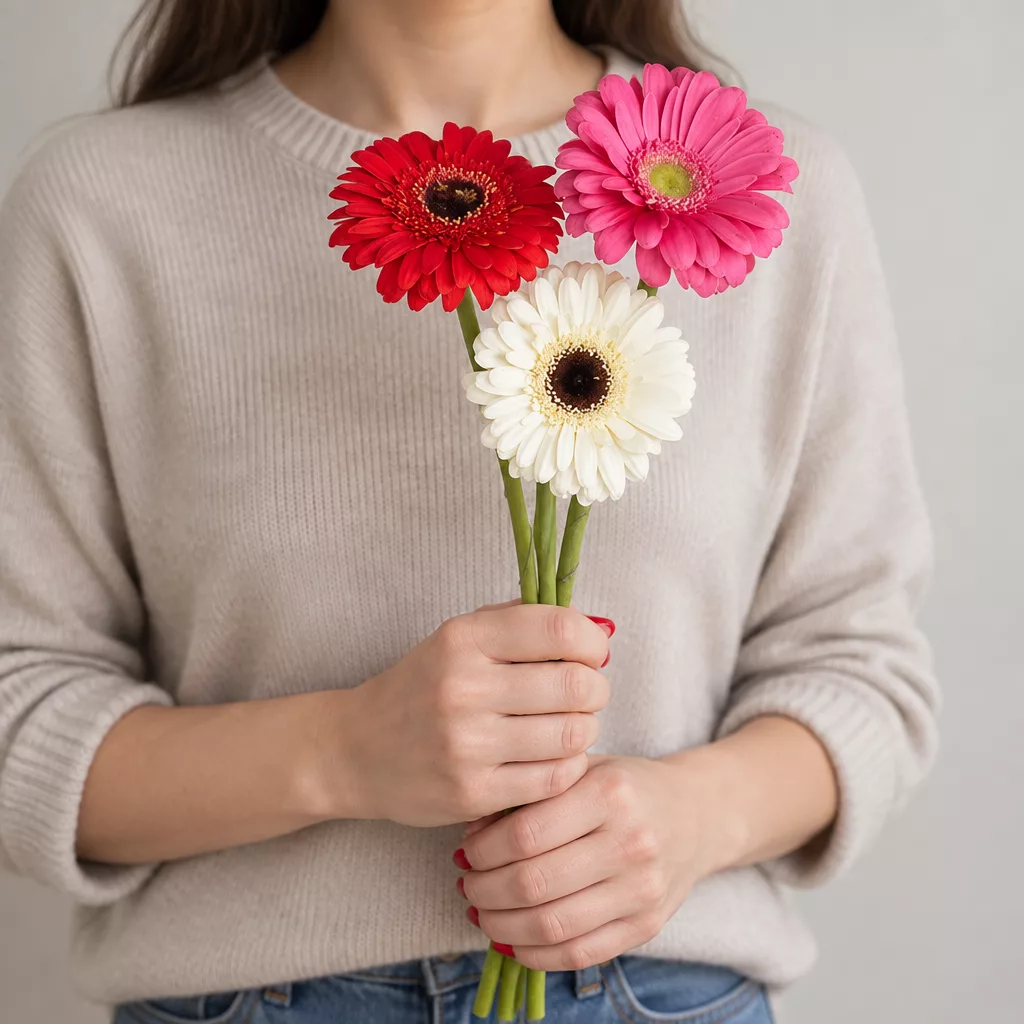
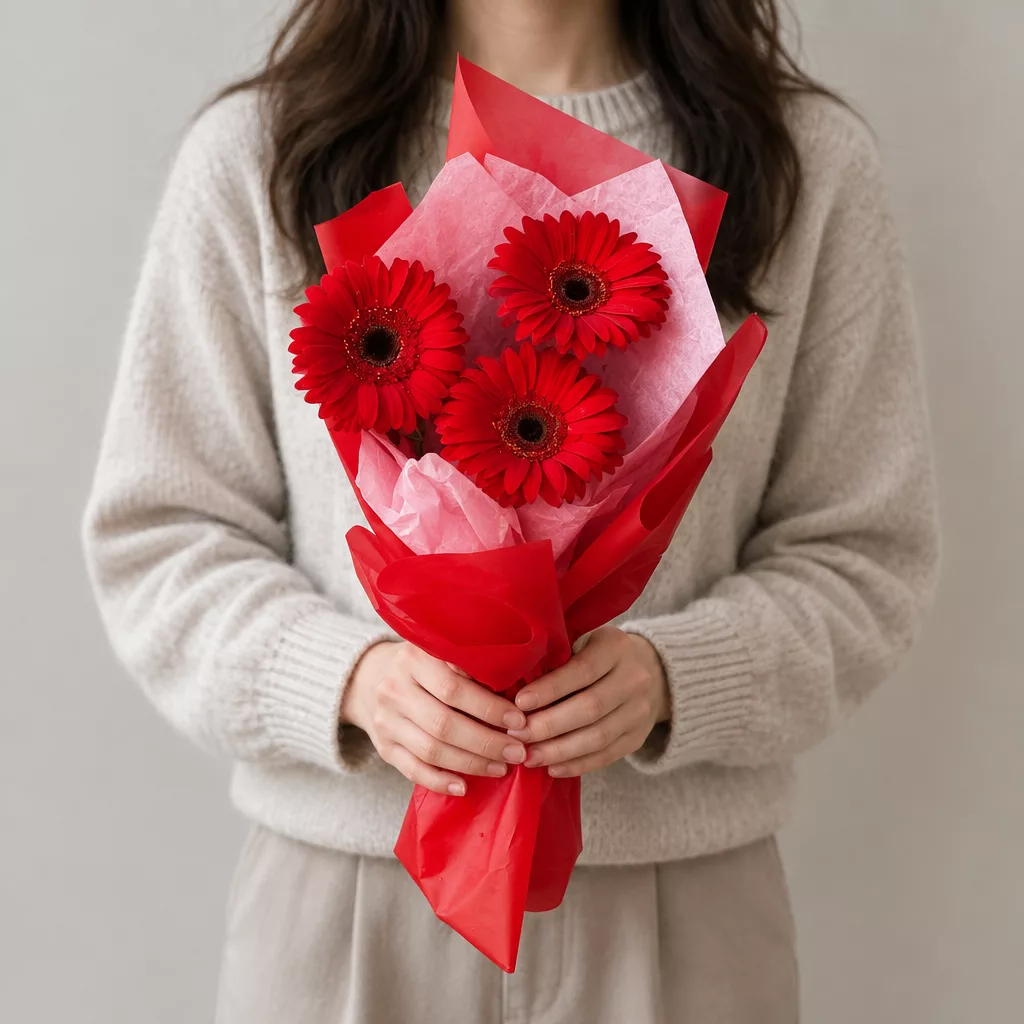
The season in Bikin should drive your flower selection more than your personal preference. In winter, from November through March, the cold outside makes certain flowers genuinely fragile during the final walk from the delivery vehicle to the door. Gerberas, for example, dislike sudden cold and can bruise at the petal edges in very low temperatures. Chrysanthemums, carnations, and alstroemeria are far more cold-tolerant and arrive looking pristine even in hard frosts. Standard and spray roses also handle winter well if they are properly conditioned.
Spring in Bikin arrives later than in European Russia, often not warming properly until May. Tulips are a wonderful spring choice — they are enormously popular across Russia for Women's Day on 8 March, which is the single biggest flower occasion in the country. If you are sending for that date, order well in advance, as demand spikes sharply. Tulips also open beautifully in a warm room after a cold journey, which makes them ideal for Far Eastern spring delivery.
Summer allows for a broader palette. Sunflowers look spectacular in July and August and carry a cheerful, generous feeling that suits birthdays and celebrations. Lisianthus in violet and white is elegant without being stiff. Eustoma holds well in the heat if the recipient keeps it away from direct sunlight and changes the water every two days.
Autumn is the season for dahlias, chrysanthemums in rust and gold, and garden roses in deep pinks. A mixed autumn bouquet in warm tones feels genuinely seasonal and considered — it tells the recipient that someone thought about where they live and what time of year it is.
Occasions That Travel Well Across the Distance
Sending flowers from abroad to someone in Bikin is itself a statement. The distance makes the gesture larger, not smaller. That means the occasion matters less than the intention — but some occasions do translate particularly well across international distance.
Birthdays are the most common reason international senders reach out, and they work beautifully. A birthday bouquet arriving at the door in Bikin from a family member in Germany or a friend in South Korea carries real emotional weight. Choose something bold and celebratory — sunflowers with spray roses in summer, or a generous arrangement of peonies if they are in season in late May and June. Peonies are deeply loved in Russia and carry a festive, luxurious feeling that suits birthdays perfectly.
Anniversaries, both personal and professional, are another strong occasion. For a work anniversary or a professional milestone, white and cream tones feel appropriate — white lisianthus, cream alstroemeria, and pale roses in a structured arrangement convey respect and warmth without crossing into romantic territory.
New baby congratulations are celebrated with flowers in Russia just as in many other cultures. Soft pinks and whites for a girl, whites and soft blues or yellows for a boy, are the traditional choices, though modern Russian families appreciate any gentle, fresh palette. Avoid strongly scented flowers like oriental lilies for a home with a newborn.
If your recipient has just moved to a new home or started a new chapter, a bright, optimistic bouquet of gerberas in orange and yellow, or mixed seasonal flowers in warm tones, says welcome and well done in a way that needs no translation.
How to Place Your Order from Outside Russia Without Confusion
Ordering from abroad is straightforward once you know the three things that trip most international senders up: the time zone, the address format, and the card message.
Bikin operates on UTC plus 7. When you choose a delivery time on the website, make sure you are selecting Bikin local time, not your own. A 10 AM delivery in Bikin is 3 AM in Moscow, 2 AM in Paris, and 6 PM the previous day in Los Angeles. Getting this wrong is the most common mistake international senders make, and it results in a beautiful bouquet arriving at 11 PM when no one wants to answer the door.
The address in Russia follows a specific format: city, street name, building number, apartment number. If your recipient lives in a multi-storey apartment block — which is common in Russian cities — you need the apartment number and ideally the entrance number and floor. Without these, the delivery driver may struggle to reach the right door in a large building. Ask your recipient casually for their full postal address before you order, framing it as something administrative.
For the card message, you can write in English and the message will be delivered as written. If you want the message in Russian, you can write it in English and note that you would like it translated — the florist team can help. Keep the message warm and personal rather than formal. Russians respond to genuine feeling expressed simply. Something like 'Thinking of you from far away' lands better than a long formal paragraph.
Flower Care in a Bikin Home: What to Tell Your Recipient
Even the freshest bouquet needs a little attention once it arrives, and a quick note to your recipient about care will extend the life of the flowers significantly. Most people appreciate being told, especially if they do not buy flowers often for themselves.
The first step is always a fresh diagonal cut across the stems, about two centimetres from the bottom, made under water or immediately before placing the stems in water. This removes any air that has entered the stem during transport and allows the flower to drink properly. A sharp knife is better than scissors, which can crush the stem tissue.
Water temperature matters more than most people realise. Lukewarm water, not cold and not hot, is best for most cut flowers. Tulips are an exception — they prefer cold water and will open more slowly in it, which extends their vase life. Change the water every two days and rinse the vase each time to prevent bacterial buildup, which is the main reason flowers die early.
In Bikin winters, keep the bouquet away from cold windowsills and exterior walls, where temperatures near the glass can drop enough to damage petals overnight. In summer, keep flowers out of direct sunlight and away from fruit bowls — ripening fruit releases ethylene gas, which ages flowers quickly.
Chrysanthemums and carnations are the longest-lasting common varieties, often going 10 to 14 days with good care. Roses typically last 7 to 10 days. Tulips and gerberas are shorter at 5 to 7 days but are so visually striking that the shorter life is worth it for celebratory moments.
Making the Bouquet Feel Personal from Thousands of Kilometres Away
The most meaningful flower gifts from abroad are the ones that feel considered rather than convenient. There are a few ways to add that layer of personal feeling even when you cannot be in the room.
Choose a flower your recipient loves if you know it. If your mother always kept lilac in the house in spring, a bouquet built around lilac branches in May says something no generic arrangement can. If your friend once mentioned loving sunflowers, a generous bunch of them in July is a memory made visible. Specific choices communicate attention in a way that a default 'mixed bouquet' simply cannot.
Think about the presentation as well as the flowers. A bouquet wrapped in kraft paper with a satin ribbon has a different feeling from one in a box with tissue paper. For a romantic occasion, a box presentation feels intimate and considered. For a birthday, a generous hand-tied bouquet in bright wrapping feels celebratory and immediate. You can specify your preference when ordering.
If the occasion is significant — a major birthday, a long-awaited achievement, a reunion after years apart — consider a larger arrangement rather than a standard bouquet. A tall arrangement of garden roses and eucalyptus in a vase, or a lush mixed bouquet of peonies, lisianthus, and spray roses, fills a room in a way that a smaller bouquet cannot. It also photographs beautifully, and your recipient will almost certainly send you a photograph. That image, of someone you love holding something you chose from across the world, is the real point of the whole exercise.
Sending flowers to Bikin from abroad is not complicated once you understand the time zone, the season, and what your recipient will feel when the bouquet arrives. The distance is exactly what makes the gesture matter. A fresh, well-chosen arrangement delivered to a door in the Russian Far East from someone in another country carries a warmth that no digital message can replicate. Choose thoughtfully, time it well, and the flowers will say everything you need them to say.
Frequently asked questions
Can I send flowers to Bikin if I do not speak Russian?
Yes. The Turboflora website and ordering process are accessible to international senders. You can write your card message in English and it will be delivered exactly as written. If you need help with any step, the team can assist. The key information you need — the recipient's full address including apartment number — you can collect from your recipient directly before ordering.
What is the best flower choice for sending to Bikin in winter?
Chrysanthemums, carnations, alstroemeria, and standard roses are the most cold-tolerant cut flowers and handle Far Eastern winter conditions well. Avoid gerberas and tropical varieties in January and February, as they are sensitive to cold and can bruise during the final stretch of delivery. A generous bouquet of spray chrysanthemums in warm tones is a reliable and beautiful winter choice.
How far in advance should I order for a specific date, like a birthday?
For regular dates, ordering on the day is fine given the 1 to 2 hour delivery window. For major flower occasions like International Women's Day on 8 March, order at least 2 to 3 days in advance as demand across Russia spikes dramatically. Always account for the time zone difference between your location and Bikin, which is UTC plus 7, when selecting your delivery time.
Is it true that even numbers of flowers are bad luck in Russia?
It is a genuine and widely observed custom. Even numbers of cut flowers are associated with funerals in Russian tradition, so a bouquet of 10 or 12 stems will quietly unsettle most Russian recipients even if they say nothing about it. Always choose an odd number — 7, 11, 15, or 25 are all common and well-received counts. Turboflora builds all recipient bouquets in odd numbers automatically.
How long will the flowers last once they arrive in Bikin?
Vase life depends on the variety and how well the recipient cares for them. Chrysanthemums and carnations last 10 to 14 days with fresh water every two days and a clean vase. Roses give 7 to 10 days. Tulips and gerberas typically last 5 to 7 days. In Bikin winters, keeping flowers away from cold windowsills is the single most important care tip for extending their life.
Ready to send flowers?
Pick the city, choose the bouquet, and a local florist takes it from there.
Choose a city →