Sending Flowers to Gornyak from Abroad Without the Guesswork
You are somewhere far from Russia — maybe in Europe, Central Asia, or further — and someone you care about is in Gornyak, a small mining town in the Altai Krai. You want to send them flowers, but you are not sure how the process works from a distance, what the climate means for the bouquet, or what a Russian recipient actually expects to find at the door. This article answers all of that plainly, so you can place your order with confidence and your recipient can open the door to something genuinely beautiful.
Understanding Gornyak Before You Order
Gornyak sits in the Altai Krai region of southwestern Siberia, a compact town built around the mining industry. It has a continental climate with cold winters that can drop well below minus twenty Celsius and warm, sometimes dry summers. That temperature range matters directly for flower delivery, because a bouquet travelling through those conditions needs to be chosen and packaged with the weather in mind.
The town itself is not large, which means delivery logistics are straightforward once you work with a service that covers the region. Turboflora delivers fresh flowers across Russia, including to Gornyak, within a one-to-two hour window after your order is confirmed. For an international sender, that speed is reassuring — you do not have to wait days and wonder whether the flowers are still alive.
One thing worth knowing: Gornyak is a close-knit community. Receiving a flower delivery is a noticeable, warm gesture there. People genuinely appreciate it, and the recipient is likely to be asked about the occasion by neighbours or colleagues. That social warmth means your bouquet carries extra meaning, so the presentation and the choice of flowers matter more than they might in a large anonymous city. Think of it as a gift that arrives with a small audience.
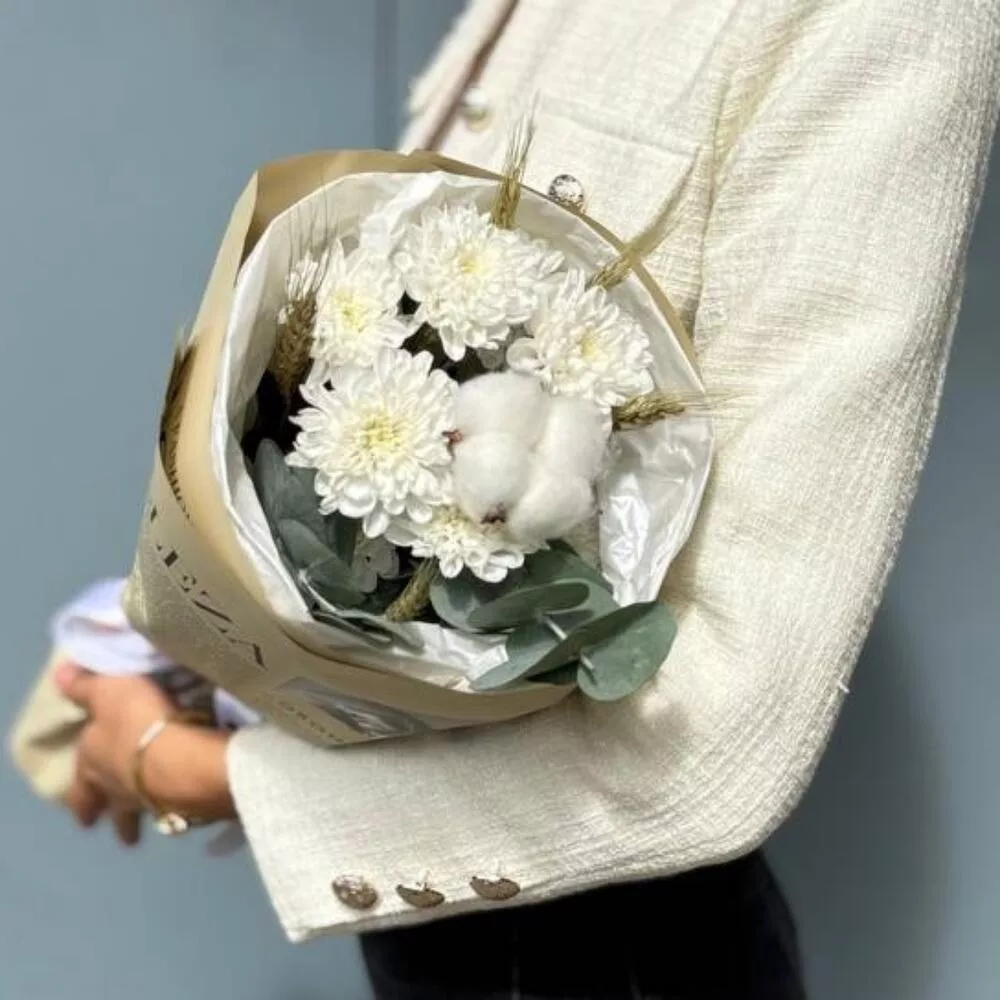
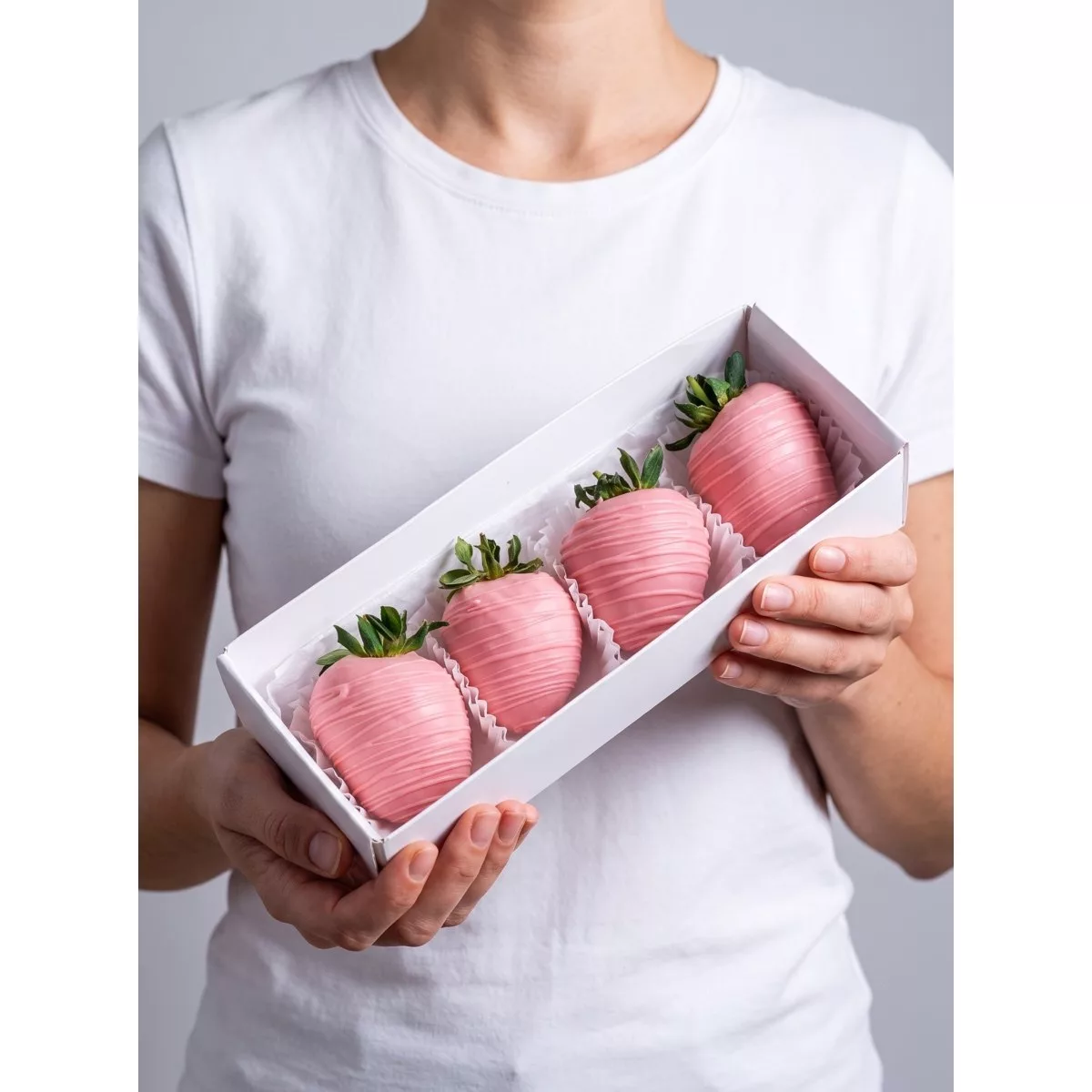
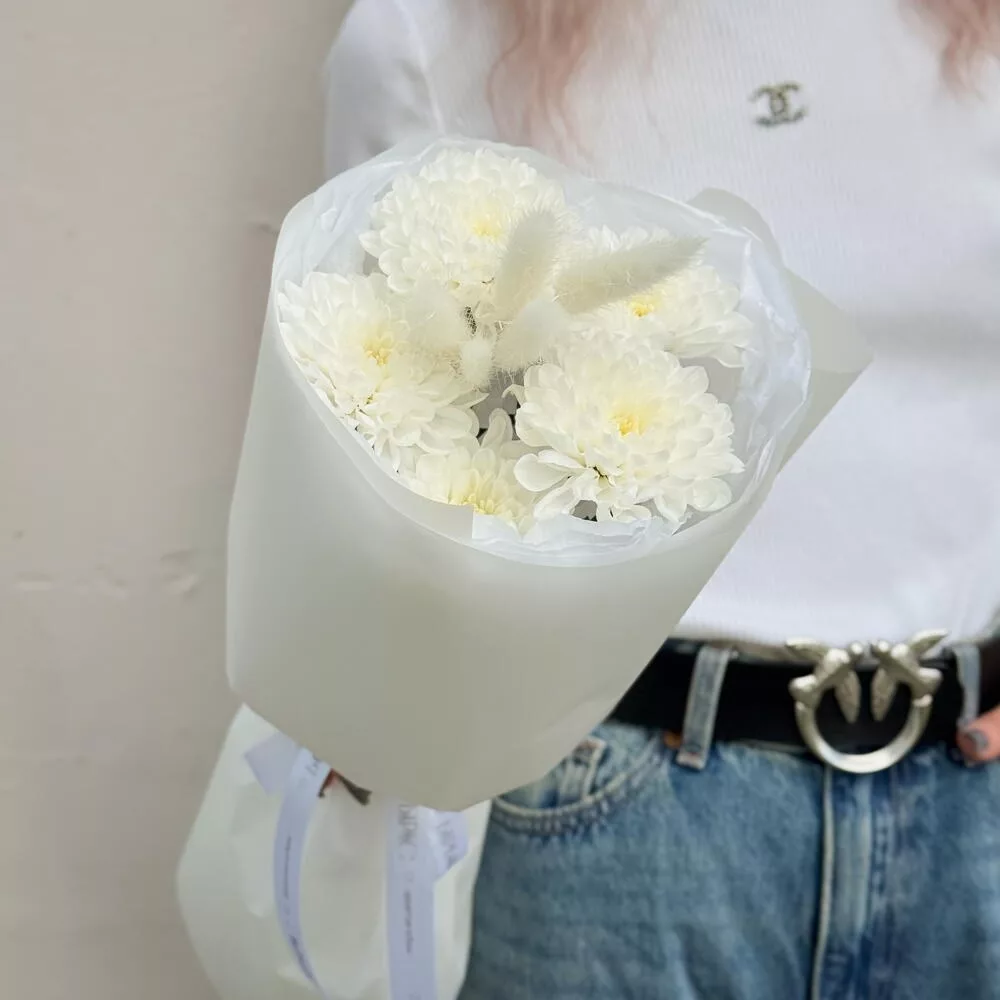
Bouquets we can deliver

Choosing Flowers for the Person, Not Just the Occasion
Before you think about which flowers to order, spend a moment thinking about who will receive them. A woman in her sixties who grew up in Soviet times will likely feel moved by a classic arrangement of roses or carnations — flowers she associates with celebration and respect. A younger woman in her thirties might love something more textural, with ranunculus, lisianthus, or spray roses mixed with eucalyptus. A man receiving flowers — yes, this does happen and is appreciated — often responds well to bold, structured arrangements with sunflowers, anthuriums, or strong stems of alstroemeria.
Russian flower culture has a few customs that are worth knowing. Flowers are traditionally given in odd numbers, and this is taken seriously. An even number of flowers is associated with mourning, so always choose three, five, seven, or more stems rather than four or six. Your florist will handle this automatically, but if you are specifying exact stem counts in a note, keep the rule in mind.
Colour also carries meaning. Red roses signal romantic love clearly and unmistakably. White flowers read as elegant and sincere. Yellow flowers were once considered unlucky in Soviet culture, though younger Russians today are far more relaxed about this — still, if you are unsure of the recipient's age or sensibility, mixing yellow with other colours is a safer choice than an all-yellow bouquet. When in doubt, a mix of soft pinks, whites, and greens is universally welcome and reads as thoughtful rather than generic.
Matching Your Bouquet to the Situation
Different occasions call for different approaches, and getting this right makes the difference between a polite gift and one that genuinely moves someone.
For a birthday, volume and warmth work well. Think peonies in season, or a generous arrangement of garden roses with waxflower and soft greenery. The bouquet should feel abundant — Russians associate generosity with care, and a small, sparse arrangement can feel underwhelming even if the individual flowers are expensive.
For a professional achievement — a promotion, a defence of a thesis, a retirement — white and cream tones with structured stems like calla lilies or gladioli project respect and elegance. These are flowers that say the occasion is significant without being overly personal.
For a new home or housewarming, which Russians celebrate warmly, choose something long-lasting. Chrysanthemums, alstroemeria, and lisianthus all hold well in a vase for ten days or more with basic care. The recipient will be busy with settling in, and a bouquet that lasts becomes part of the new space rather than a fleeting gesture.
For a romantic occasion — an anniversary, a reunion, a simple expression of missing someone — red or deep pink roses remain the clearest and most understood language. A dozen long-stemmed red roses in Gornyak means exactly what it means in Paris. You do not need to overthink it. Add a handwritten note in Russian if you can manage a few words — even a simple "Ya skuchayu" (I miss you) alongside your message in English will be remembered.
Timing Your Order Across Time Zones
This is where international senders most often make mistakes, and it is entirely fixable once you understand the gap. Gornyak operates on Omsk Time, which is UTC plus six. If you are ordering from Western Europe, you are five to seven hours behind. From the east coast of the United States, you are nine hours behind. From Australia's east coast, you are ahead by several hours.
What this means practically: if you want flowers to arrive in the morning on a birthday, you may need to place your order the evening before your own local time. A noon delivery in Gornyak might require you to place the order at five or six in the morning Central European Time, or the night before from New York. Calculate this before you sit down to order, not during the checkout process.
Turboflora's website allows you to specify a delivery time in local Russian time, which removes the guesswork from the recipient's end. Use that feature deliberately. A surprise delivery timed to arrive just as your recipient gets home from work — say, between six and seven in the evening Gornyak time — lands with far more emotional impact than one that arrives while they are out and sits with a neighbour.
Also consider Russian public holidays. On the eighth of March, International Women's Day, and on the twenty-third of February, Men's Day, demand across Russia is extremely high. Order at least two to three days in advance for these dates. The same applies to New Year, which Russians celebrate on the first of January with significant enthusiasm, and to the ninth of May.
What Gornyak's Climate Means for Your Flower Choice
The Altai Krai experiences genuine Siberian winters. From November through March, outdoor temperatures in Gornyak regularly fall to minus fifteen or minus twenty-five Celsius, and occasionally lower. This is not a detail to ignore when ordering flowers.
In those months, the delivery process must account for cold exposure during transit from the vehicle to the door. Turboflora packages bouquets for cold-weather delivery, but you as the sender can support the bouquet's survival by choosing hardier varieties for winter orders. Roses, carnations, chrysanthemums, and alstroemeria all handle brief cold exposure better than more delicate options. Ranunculus and anemones are beautiful but more sensitive to sudden temperature drops — save those for spring and autumn orders.
Summer in Gornyak brings the opposite challenge: warmth and dryness. In July and August, temperatures can reach thirty Celsius or above. This means the recipient needs to get the bouquet into water quickly and keep it away from direct sunlight and heat sources. Sunflowers, which are grown abundantly in the Altai region, are actually quite resilient in summer heat if conditioned properly. Peonies, available from late May through June, are a wonderful summer choice — they open dramatically over two to three days and fill a room with scent.
Spring and autumn are the most forgiving seasons for flower delivery. April through June and September through October offer moderate temperatures that suit almost any variety. If you have flexibility in your timing, these are the months when your bouquet will arrive looking its absolute best.
Vase Life and Care Instructions for the Recipient
Most people in Russia know how to care for cut flowers — it is a deeply embedded part of the culture — but a few specific tips in your accompanying note can make a real difference, especially if your recipient is younger or simply busy.
The most important step happens in the first hour. Stems should be cut at a diagonal under running water or while submerged, removing about two centimetres from the base. This opens the vascular tissue and allows the flower to drink immediately. Diagonal cuts create more surface area than straight cuts, which matters more than people realise.
Leaves below the waterline should be removed entirely. Submerged leaves decompose quickly and cloud the water, breeding bacteria that shorten vase life significantly. Clean water changed every two days does more for a bouquet than any additive.
Placement matters too. Flowers last longest away from direct sunlight, away from heating radiators — which are very common in Russian apartments and run hot in winter — and away from fruit bowls. Ripening fruit releases ethylene gas, which accelerates petal drop in roses and carnations especially.
With proper care, roses and carnations last seven to ten days. Alstroemeria and chrysanthemums can reach twelve to fourteen days. Lisianthus, one of the most underrated flowers in terms of longevity, often lasts two weeks. Peonies are shorter-lived at five to seven days but so visually generous that the trade-off is worth it. Include a simple care card note if you want to extend the gift's life beyond the first impression — it shows thoughtfulness that the recipient will notice.
Placing Your Order from Outside Russia: Practical Steps
Ordering internationally is simpler than most people expect, but a few practical points will save you confusion at the checkout stage.
First, the recipient's address. Russian addresses follow the format: postal code, region, city, street, building number, apartment number. For Gornyak, the region is Altai Krai. If you do not have the full address, ask your recipient for it in advance — even framing it as a casual question works. You do not have to reveal the surprise; just say you might need it for something.
Second, payment. Turboflora's website accepts international payment cards. Make sure your bank has not blocked international transactions, which some banks do by default for security. A quick call to your bank before ordering prevents a frustrating checkout failure.
Third, the message card. You can write your message in English, and it will be delivered as written. If you want to include a Russian phrase, use a reliable translation tool and double-check it — machine translations of emotional messages can occasionally produce awkward results. A short, sincere message in English is always better than a long, uncertain one in Russian.
Finally, confirm the recipient's phone number when you order. The delivery team may call ahead to coordinate arrival, especially in a smaller town like Gornyak where building access can vary. A working local number makes the difference between a smooth delivery and a missed one. If your recipient does not know about the surprise, you can ask Turboflora to call only when they are already at the door.
Sending flowers to Gornyak from abroad is one of the most direct ways to close a distance that geography has put between you. The town is small enough that a flower delivery is a real event, and the person who opens the door to your bouquet will feel the weight of the thought behind it — the time zones you calculated, the variety you chose, the message you wrote. Get the timing right, respect the odd-number rule, pick flowers suited to the season, and trust that fresh flowers travel well when the logistics are handled properly. The rest is simply about knowing someone well enough to choose what they will love.
Frequently asked questions
Can I order flowers to Gornyak if I do not speak Russian?
Yes, entirely. Turboflora's website works in English, and your message card can be written in any language you choose. The delivery process does not require you to communicate in Russian at any point. If there is a coordination question about the delivery, the team handles it on the ground without involving you.
How far in advance should I order for a birthday or holiday in Gornyak?
For regular dates, placing your order one day ahead is usually sufficient, accounting for the time zone difference. For major Russian holidays like the eighth of March or New Year, order two to three days in advance. High-demand dates see a surge across all Russian cities simultaneously, and earlier orders secure both availability and your preferred delivery window.
Why do Russian flower customs specify odd numbers of stems?
Even numbers of flowers are traditionally associated with funerals and mourning in Russian culture, so giving an even number at a celebration feels inauspicious to many recipients, particularly older ones. Odd numbers — three, five, seven, nine, eleven — are considered appropriate for all joyful occasions. Your florist applies this automatically, but it is useful to know if you are writing specific instructions.
What flowers survive Gornyak's cold winters best during delivery?
Roses, carnations, chrysanthemums, and alstroemeria are the most resilient choices in cold conditions. They tolerate brief exposure to low temperatures during the transfer from vehicle to building without significant damage. More delicate varieties like ranunculus, anemones, and sweet peas are better reserved for spring and autumn orders when outdoor temperatures are moderate.
Can I include a gift alongside the flowers, such as chocolates or a soft toy?
Yes, Turboflora offers the option to add gifts to your flower order at checkout. Chocolates, small plush toys, and similar items can be included in the same delivery. This is a popular choice for birthdays and for senders who want the bouquet to feel more complete, especially when distance prevents them from giving anything in person.
Ready to send flowers?
Pick the city, choose the bouquet, and a local florist takes it from there.
Choose a city →