Sending Flowers to Krasnovishersk from Abroad? Here Is What to Know
You are somewhere far from Russia — perhaps Toronto, Berlin, or Dubai — and someone you love is in Krasnovishersk, a quiet town on the Vishera River in the Perm region. You want to send flowers that arrive fresh, feel personal, and land at exactly the right moment. The distance feels like the obstacle, but with the right approach it simply is not one. This guide walks you through everything: timing, seasonal choices, Russian gifting customs, and how to make sure the bouquet speaks the way you intend it to.
Why Krasnovishersk Deserves a Thoughtful Approach
Krasnovishersk is a small town in the northern part of Perm Krai, surrounded by taiga and the Ural foothills. Its remoteness is part of its character, and that character should shape how you think about sending flowers there. A grand, tropical arrangement that might suit a Moscow office feels out of place in a home where the windows look out onto birch forest and river mist. Think instead of compositions that feel close to nature — garden roses, lisianthus, spray chrysanthemums, and seasonal greenery that echoes what grows in the region.
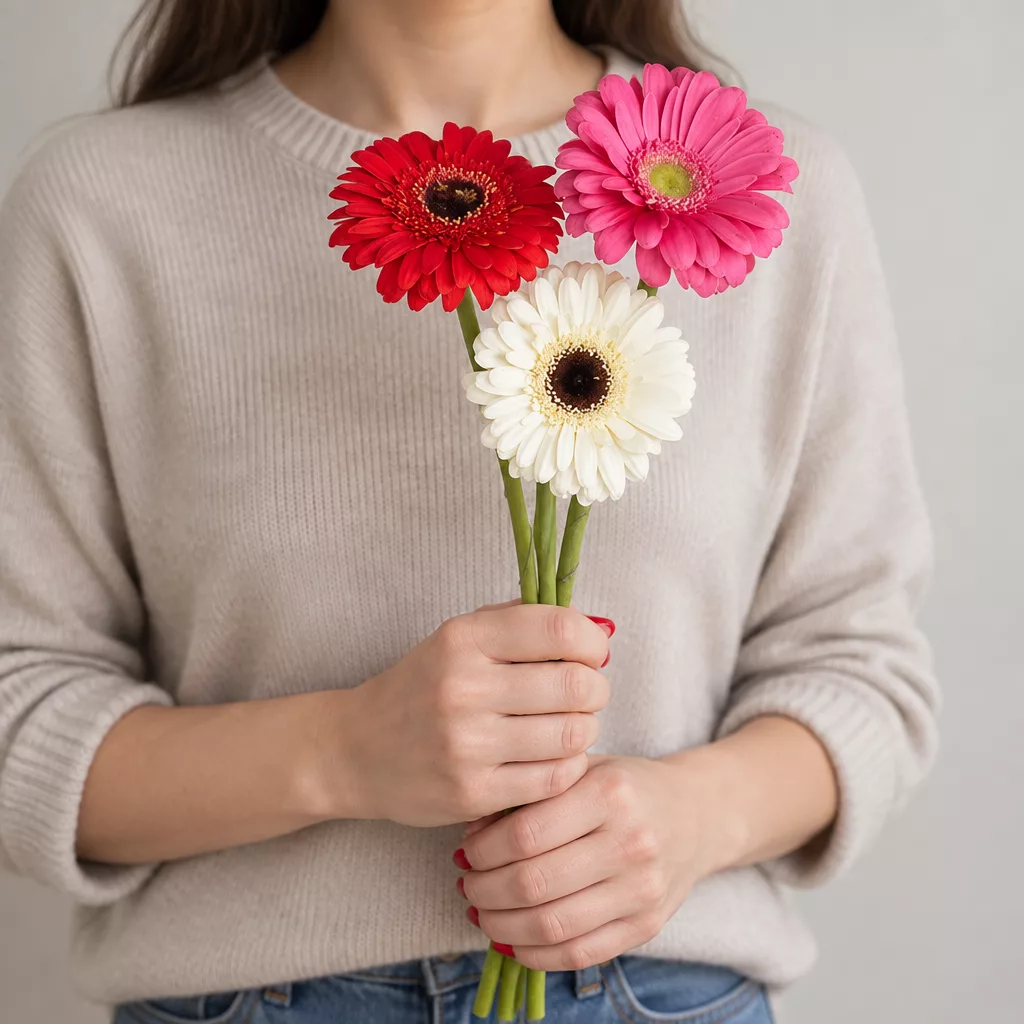
The town's climate is continental and cold for much of the year. Winters are long and genuine, which means a bouquet of white tulips or cream-colored freesias arriving in February carries enormous emotional weight. In summer, bold sunflowers and bright gerberas feel right and celebratory. Matching your flower choice to the season is not just practical — it makes the gift feel considered and intimate rather than generic.
Senders from abroad often underestimate how meaningful a fresh bouquet is in a smaller Russian town. Flowers are not an everyday purchase for most households there. Receiving a beautifully arranged delivery — especially from someone overseas — is genuinely memorable. That is worth taking seriously, and it is worth taking the extra few minutes to choose thoughtfully rather than clicking the first option you see.
Bouquets we can deliver


Understanding Russian Flower Customs Before You Order
If you are sending flowers from outside Russia, a few local customs are worth knowing so your gift lands exactly as intended. The most important rule: always send an odd number of stems. Even numbers of flowers are associated with mourning in Russian tradition, and a bouquet of twelve roses, however beautiful, carries an unintended message. Choose five, seven, nine, eleven, or any other odd count, and you are already following the custom correctly.
Red roses are a classic romantic statement in Russia, just as they are in most of the world. But Russian recipients also appreciate variety and creativity. A mix of garden roses in blush and ivory, combined with eucalyptus and white lisianthus, reads as sophisticated and warm. Bright combinations — orange spray roses with yellow solidago and green dianthus — work wonderfully for birthdays and celebrations.
Flowers are given for a wide range of occasions in Russia: birthdays, name days, professional anniversaries, school graduations, and simply as a gesture of care. You do not need a formal reason. Sending flowers to a parent, a friend, or a colleague just to say you are thinking of them is entirely normal and warmly received.
One more thing: include a message card with your note written out in Russian if possible. Even a simple phrase transliterated — something your recipient can read aloud — adds a personal layer that a generic printed slip cannot match. If you write in English, that is fine too; it often delights the recipient.
Choosing Flowers for the Person, Not Just the Occasion
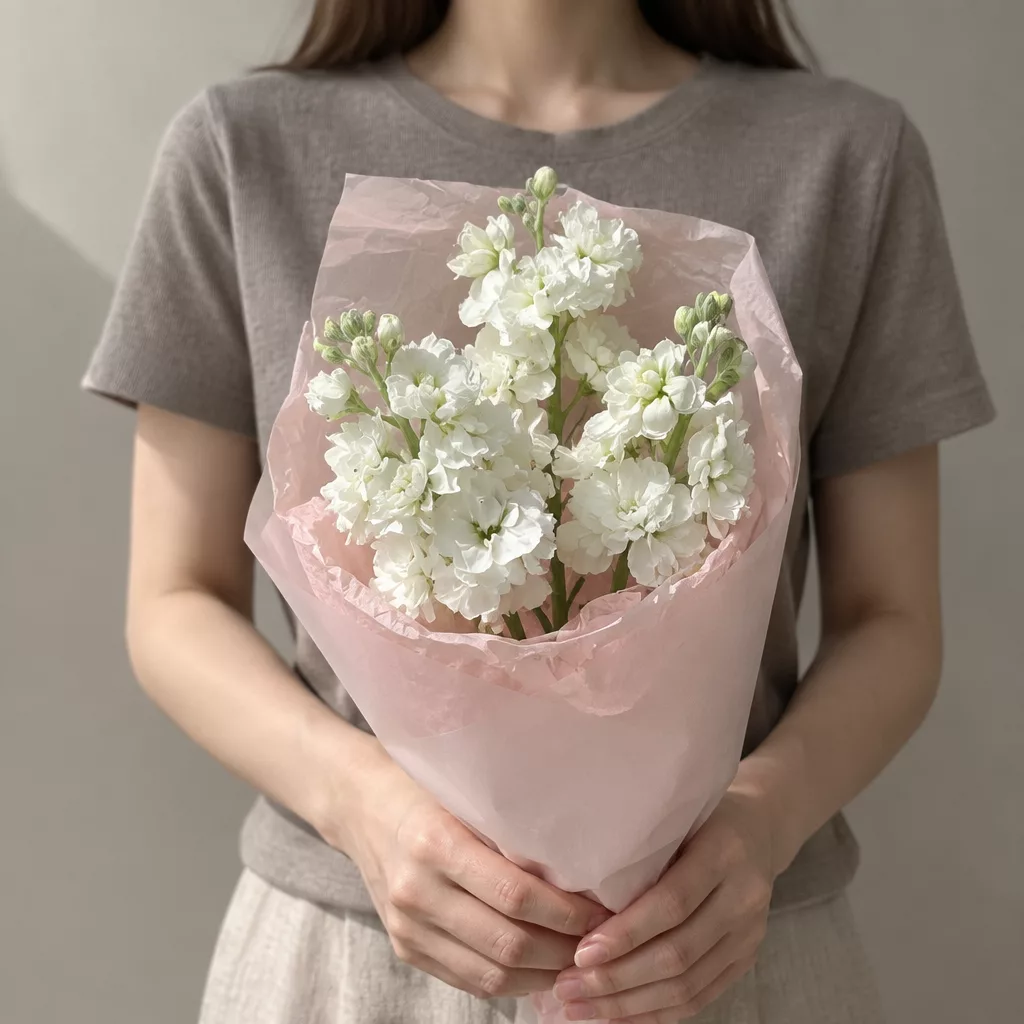
Before you think about budget or delivery windows, think about the person receiving the bouquet. A grandmother in Krasnovishersk who tends a small garden will likely adore a soft, cottage-style arrangement: pale pink alstroemeria, white matthiola with its gentle fragrance, and a few stems of waxflower. A younger woman celebrating a birthday might love something bolder — hot pink gerberas, purple statice, and vivid spray chrysanthemums in a hand-tied bunch that feels energetic and fun.
For a man — and yes, flowers for men are increasingly common and appreciated in Russia — consider a structured arrangement of tropical foliage, anthuriums, or a clean monochrome composition in white and green. Avoid overly frilly presentations; clean lines and confident color work better.
If the recipient has a home with limited space, a compact but lush arrangement of freesias, ranunculus, and small-headed roses is far more practical than an enormous floor-standing display. Freesias in particular are excellent for smaller homes because their fragrance fills a room without the bouquet needing to be large.
Think also about the time of year. In January and February, when Krasnovishersk is deep in winter, tulips and hyacinths are a genuine luxury — they bring color and scent into a home that has been grey and cold for months. In May and June, peonies are the obvious choice: lush, fragrant, and quintessentially Russian in their associations with warmth and abundance. Matching the flower to the season and the person is what separates a memorable gift from a forgettable one.
Timing Your Order Across Time Zones
This is where senders from abroad most often go wrong, and it is entirely understandable. Krasnovishersk runs on Yekaterinburg Time, which is UTC+5. If you are in London, that is seven hours ahead of you. New York is ten hours behind Krasnovishersk. Sydney is four hours behind. These gaps matter enormously when you want flowers to arrive at a specific moment.
For a birthday morning delivery, you may need to place your order the evening before your local time — or even earlier. A good rule is to calculate what time it is in Krasnovishersk right now, then work backward from your desired delivery window. If you want flowers delivered by noon on a Tuesday in Krasnovishersk, and you are in Berlin, you need to order by mid-morning Monday at the latest to allow for processing and preparation.
Same-day delivery is possible when orders are placed early enough in the Krasnovishersk day. Turboflora operates across Russia with a one-to-two-hour delivery window, but that window opens from the moment the order is confirmed and the bouquet is prepared — not from when you click send at midnight your time.
Avoid placing orders on the eve of major Russian holidays without extra lead time. March 8th — International Women's Day — is the single busiest flower day in Russia, comparable to Valentine's Day in Western countries but considerably more universal. February 23rd, May 9th, and New Year's Eve also see very high demand. Order at least two to three days ahead for these dates, and specify your preferred delivery time clearly in the order notes.
What Happens to Flowers in Cold Weather — and How to Protect Them
Krasnovishersk winters are serious. January temperatures regularly drop below minus twenty Celsius, and even October and April can bring hard frosts. This affects flower delivery in ways that international senders rarely consider but should.
Cold is not always the enemy of cut flowers — roses, tulips, and chrysanthemums actually tolerate cold transport quite well when handled correctly. The danger is in the transition: a bouquet that moves rapidly from a cold vehicle into a warm apartment can experience condensation that accelerates bacterial growth in the stems. Professional preparation — clean cuts, treated water, proper wrapping — mitigates this significantly.
What cold weather does affect is fragile tropical varieties. Orchid stems, anthurium blooms, and bird-of-paradise flowers do not handle sub-zero temperatures well even for short periods. In deep winter, it is wiser to choose hardy varieties: roses, alstroemeria, carnations, spray chrysanthemums, and lisianthus all travel and survive cold conditions reliably.
Once the flowers arrive, advise your recipient to unwrap them immediately, trim the stems at a diagonal, and place them in clean, cool water. Keeping the vase away from radiators is important — Russian apartments in winter are often very warm, and heat shortens vase life dramatically. A cool room or even a hallway overnight can add two or three days to how long the flowers last. Roses and chrysanthemums kept this way can stay fresh for seven to ten days. Tulips move faster, usually four to six days, but their drama while they last is worth it.
Combinations That Work Best for Long-Distance Gifting
When you are ordering from far away and cannot see the bouquet being made, choosing a style rather than a specific composition gives better results. Ask for something in a color family you know the recipient loves, and trust the florist to build around that. A warm palette — peach roses, apricot spray roses, ivory lisianthus, and copper-toned chrysanthemums — works across almost every taste and occasion.
Monochromatic bouquets photograph beautifully and feel intentional. An all-white arrangement of roses, freesias, and white alstroemeria with silver-green eucalyptus is elegant enough for an anniversary and soft enough for a new mother. An all-pink composition — from pale blush to deep raspberry — feels celebratory and feminine without being predictable.
For birthdays, contrast makes an impression. Violet lisianthus paired with yellow spray chrysanthemums and white waxflower is vivid and long-lasting. Orange gerberas with green dianthus and white statice is bright without being loud. These combinations hold their shape and color for days, which matters when you want the recipient to enjoy the gift well beyond the day it arrives.
Avoid compositions that rely heavily on delicate single blooms — gardenias, for instance, bruise easily in transit and have a very short vase life. Similarly, heavily scented lilies are beautiful but can be overwhelming in a small apartment. If you want fragrance, freesias and matthiola offer it more gently. The goal for long-distance gifting is a bouquet that looks as good on day five as it did on day one — that is what makes the sender look thoughtful.
Writing Your Message and Adding Personal Details
The card that accompanies a bouquet is often what the recipient keeps long after the flowers have faded. From abroad, you have the advantage of distance making your message inherently meaningful — the fact that you thought of someone across thousands of kilometers is already part of the gift. Do not waste the card with something generic.
Write specifically. Instead of 'Happy Birthday,' try 'I remember how you used to make pancakes on your birthday morning — I hope today is just as warm.' Specificity is what separates a message that makes someone cry happy tears from one that gets glanced at and set aside. If you are writing in English, that is perfectly fine; many Russians read English, and those who do not will find someone to translate it for them — and that act of sharing is itself a small celebration.
If you want to include a Russian phrase, even a phonetically written one, it adds enormous warmth. 'S dnem rozhdeniya' for Happy Birthday, or 'Ya skuchayu po tebe' for I miss you, are phrases that land deeply when they come from someone abroad.
You can also add small instructions for the recipient through the order notes — ask that the delivery person call ahead rather than ring the bell if the recipient has a sleeping baby, or request that the bouquet be left with a neighbor if no one will be home. These details make a remote transaction feel personal and attentive. The more context you give, the better the delivery experience for the person you care about.
Sending flowers to Krasnovishersk from another country is a gesture that carries real weight. The distance you are bridging — geographically and emotionally — is exactly what makes it meaningful. Choose varieties suited to the season and the person, respect the odd-number custom, plan carefully around the time difference, and write a card that says something only you could say. The flowers will arrive fresh and ready to fill a home with color. The rest — the warmth, the memory, the sense of being remembered — that part is entirely yours to give.
Frequently asked questions
Can I order flowers to Krasnovishersk if I do not speak Russian?
Yes, entirely. The order form at turboflora.com works in English, and you can write your card message in any language you like. If you want to include a Russian phrase on the card, you can note it phonetically in the order comments and we will transcribe it correctly for the recipient.
How far in advance should I order for a birthday in Krasnovishersk when I am overseas?
At least one full day ahead, accounting for the time difference. Krasnovishersk is UTC+5, so calculate what time it is there now before placing your order. For major Russian holidays like March 8th or New Year's Eve, order two to three days early — demand is very high and delivery slots fill quickly.
What flowers last longest after delivery in a Russian winter apartment?
Spray chrysanthemums, alstroemeria, carnations, and roses are the most durable. They handle cold transport well and last seven to ten days in a vase when stems are trimmed and water is changed every two days. Keep the vase away from radiators — Russian apartments are warm in winter, which shortens vase life significantly.
Is it really important to send an odd number of flowers?
Yes, very much so in Russian custom. Even numbers are associated with mourning and are placed at graves. An odd number — five, seven, nine, eleven — is the correct choice for any celebratory or affectionate occasion. This is one of the most important local customs for an international sender to know before ordering.
Can I request a specific delivery time when ordering from a different country?
Yes. Use the order notes to specify your preferred delivery window in Krasnovishersk local time. Be precise — morning, afternoon, or an exact hour if needed. Turboflora delivers within a one-to-two-hour window, so the more clearly you indicate the timing, the better we can coordinate the arrival for your recipient's day.
Ready to send flowers?
Pick the city, choose the bouquet, and a local florist takes it from there.
Choose a city →