Sending Flowers to Nikolaevsk from Abroad? Read This First
You are sitting in another country, thinking about someone in Nikolaevsk-on-Amur, and you want to send them something that actually arrives fresh, looks beautiful, and feels personal. The distance feels enormous, but the gesture does not have to be complicated. What you do need is a clear picture of how flower delivery works in this part of Russia, what to expect from the climate, and how to make choices that will genuinely delight the person on the receiving end.
Why Nikolaevsk Is a Unique Delivery Destination
Nikolaevsk-on-Amur sits at the mouth of the Amur River in Khabarovsk Krai, far to the east of central Russia. It is a small city by Russian standards, and its geography shapes everything about flower delivery there. The town experiences a sharply continental climate with long, cold winters and short summers, which means that flowers arriving in January or February face temperatures that can drop well below minus twenty Celsius. This is not a reason to avoid sending flowers — it is simply a reason to plan thoughtfully.
For a sender abroad, the most important thing to understand is that Nikolaevsk is not a next-day destination from Moscow, let alone from Europe or North America. Time zone differences are significant: Nikolaevsk is UTC plus ten, which means that when you are placing an order in the evening from London or New York, it may already be the following morning in Nikolaevsk. Factor that into your timing from the very first step.
The city has a close-knit feel, and receiving a flower delivery there carries real weight. People notice the effort. A bouquet arriving at a home or workplace in Nikolaevsk is a genuine event, not a routine transaction. That emotional context should shape how you think about what to send — not just what looks nice in a photograph, but what will feel meaningful to the specific person who opens the door.
Bouquets we can deliver



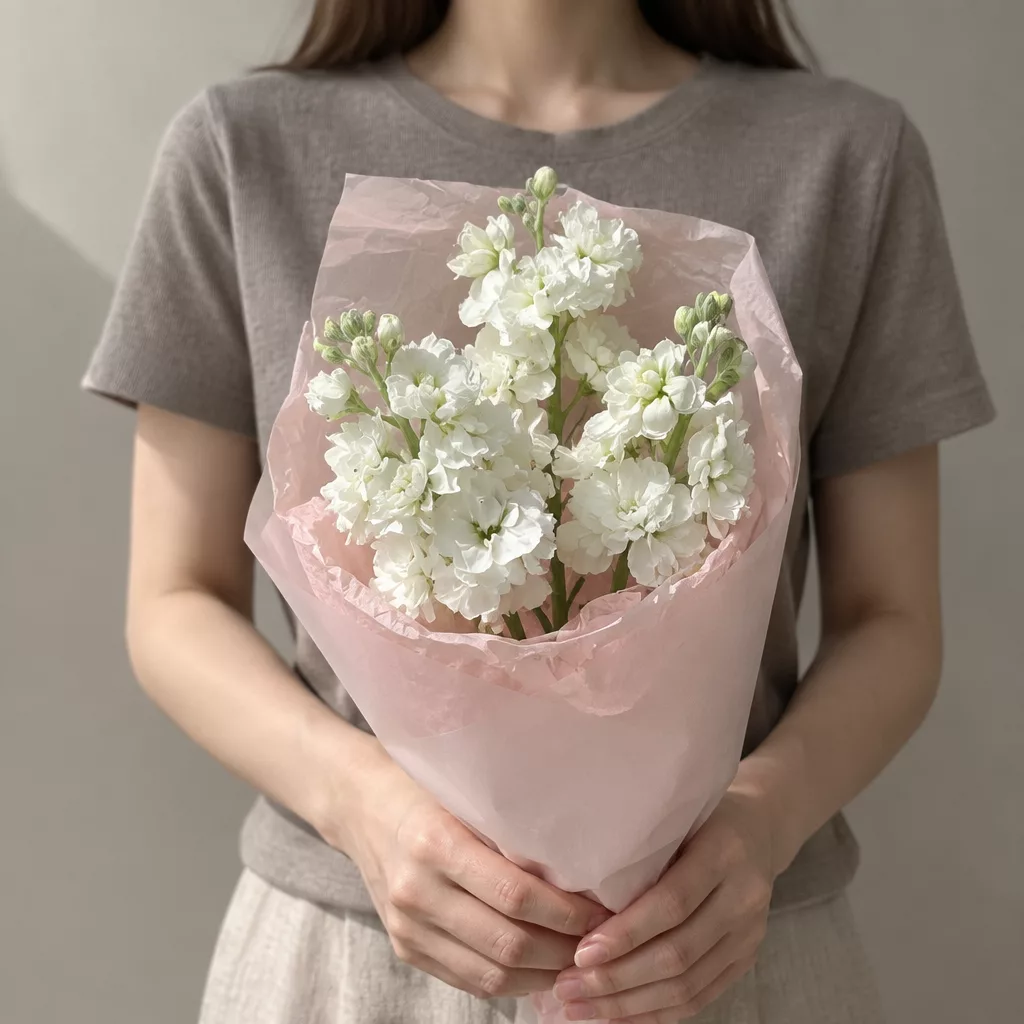
Choosing Flowers for the Right Occasion and the Right Person
Start with the recipient, not the catalogue. A woman celebrating her birthday in her fifties will respond differently to a bouquet than a young colleague marking a work anniversary, or a mother seeing her child graduate. Russian flower culture tends toward abundance and warmth — sparse minimalist arrangements can read as cold or half-hearted to someone raised with the tradition of lush, generous bouquets.
For romantic occasions, red and deep-pink roses remain the most universally understood gesture in Russia. Varieties like Explorer or Red Naomi hold their shape well during transport and have strong, full heads that photograph beautifully and last in the vase. If you want something a little less conventional, spray roses combined with lisianthus in white or pale lavender create a softer, more romantic impression without straying into unfamiliar territory.
For birthdays and celebrations, chrysanthemums are genuinely beloved in Russia — do not overlook them simply because they feel ordinary to you. A bouquet of large-headed santini chrysanthemums in yellow, peach, and white, combined with eucalyptus stems, looks abundant and joyful and holds up exceptionally well in cold-weather transport. Gerberas are another strong birthday choice: bright, sturdy, and immediately cheerful.
For professional occasions — a promotion, a work milestone, a thank-you — lean toward white or cream tones with structured greenery. Alstroemeria mixed with white freesia gives a polished result that does not feel overly intimate. Always think about what the moment means to the recipient before you think about what you personally find pretty.
Understanding Russian Flower Customs Before You Order
If you are sending flowers from outside Russia, a few cultural details will save you from accidental missteps. The most important one: always send an odd number of flowers. Even numbers of flowers in Russia are associated with mourning and are placed at graves. This is not a superstition you can ignore — it is a deeply held convention, and sending twelve roses instead of eleven or thirteen will genuinely unsettle the recipient. Any reputable florist working within Russia will automatically follow this rule, but it is worth knowing so you can confirm it.
Colour also carries meaning. Yellow flowers have a complicated reputation in Russian culture — they are sometimes associated with separation or infidelity, particularly yellow roses. This association is generational and is fading among younger Russians, but if you are sending to someone older or more traditional, it is safer to avoid a purely yellow bouquet. Mixed arrangements that include yellow as one colour among several are generally fine.
White flowers are considered elegant and celebratory, not mournful as they might be in some Western contexts. A white rose bouquet is a beautiful, well-received gift for a birthday or anniversary in Russia.
It is also customary in Russia for the recipient to unwrap flowers immediately upon receiving them and to place them in water straight away. This means that the presentation of the bouquet — the wrapping, the ribbon, the overall shape — matters enormously. The unwrapping is part of the experience. A beautifully packaged bouquet signals care and intention before a single flower is even seen.
Timing Your Order Across Time Zones and Seasons
The time zone gap between Nikolaevsk and most of the world is one of the practical challenges that catches international senders off guard. If you want flowers delivered in the morning local time in Nikolaevsk — a lovely touch for a birthday — you need to place your order well in advance, accounting for the fact that Nikolaevsk runs UTC plus ten. When it is nine in the morning there, it is eleven the previous evening in Moscow, and the middle of the previous afternoon or earlier in Western Europe.
Place your order at least twenty-four hours before the intended delivery time when sending from abroad, and aim for forty-eight hours if the date is important and non-negotiable. This gives time for any communication about the address or recipient details to be resolved without pressure.
Season matters significantly for what you should order. In winter — roughly November through March — the cold in Nikolaevsk is severe, and flowers spend only a short time outdoors between the delivery vehicle and the front door. Roses, chrysanthemums, and carnations handle the cold transition well. Tropical flowers like anthuriums or orchids are more vulnerable to cold shock and are better reserved for warmer months.
In summer, Nikolaevsk warms considerably, and the range of viable flowers expands. Peonies, which are enormously popular in Russia during their season from late May through June, are a spectacular choice if the timing aligns. They arrive in bud and open over two to three days into full, lush blooms that feel genuinely luxurious. Sunflowers in summer are another crowd-pleaser — bright, bold, and unmistakably warm in feeling.
Bouquet Sizes and Combinations Worth Considering
When sending from abroad, there is a natural temptation to over-specify — to describe exactly which flowers you want in which colours. A better approach is to communicate the occasion, the recipient, and the feeling you want to create, and then trust the florist's judgment on the specific mix. That said, understanding what combinations work well will help you ask the right questions and recognise a good result.
For a mid-sized celebration bouquet, a combination of roses as the focal flower with alstroemeria for volume, eucalyptus for texture, and a few stems of white waxflower for delicacy is a reliable and beautiful choice. It looks abundant without being overwhelming, and it holds up well in transport. This kind of mixed bouquet also has a longer vase life than a single-variety arrangement because different flowers peak at slightly different times.
If you want something more dramatic and memorable, a mono-bouquet of garden roses — varieties like David Austin types with their layered, cupped heads — makes an immediate impression. These are best in summer and early autumn when availability is strongest.
For a smaller, more intimate gesture — perhaps for a friend rather than a grand occasion — a hand-tied bouquet of tulips in spring or ranunculus in cream and blush tones is quietly beautiful and feels personal rather than performative. Ranunculus in particular are underused and underappreciated: they have a papery, layered quality that photographs exquisitely and surprises people who have not received them before.
Always ask about the packaging. A kraft paper wrap with a satin ribbon is classic Russian presentation. A hatbox arrangement is more contemporary and travels particularly well.
What Happens After Delivery: Vase Life and Care
The bouquet arrives, the recipient is delighted — and then what? As the sender, you may want to include care instructions, especially if the recipient is not experienced with fresh flowers. A short note tucked into the bouquet can make the difference between flowers that last four days and flowers that last ten.
The first step is always a fresh diagonal cut on the stems, done underwater or immediately before placing them in the vase. This prevents an air bubble from forming at the cut end, which would block the stem from drawing water. A sharp knife is better than scissors for this, as scissors can crush the stem tissue.
Water temperature matters. Lukewarm water is absorbed more readily than cold water by most cut flowers. The exception is tulips and other bulb flowers, which prefer cool water. Change the water every two days and re-cut the stems each time.
Remove any leaves that fall below the waterline — they decompose quickly and cloud the water, which shortens vase life for the whole bouquet. Keep the arrangement away from direct sunlight, radiators, and fruit bowls. Ripening fruit releases ethylene gas, which accelerates wilting in roses and carnations in particular.
With proper care, roses and chrysanthemums will last seven to ten days. Alstroemeria can last two weeks or more, making it one of the best-value flowers for longevity. Tulips will last five to seven days but continue to grow and move in the vase, which gives them a lively, organic quality that many people find charming. Gerberas last well in shallow water — they actually prefer not to be submerged too deeply.
Practical Steps for Placing Your Order from Outside Russia
Ordering flowers internationally requires a little more preparation than a domestic order, but the process is straightforward once you know what to gather. Before you reach out to place an order, have the following information ready: the recipient's full name, their complete address in Nikolaevsk including apartment number and entrance code if applicable, a local phone number for the recipient, and your preferred delivery date and time window.
The address is the detail that causes the most delays. Russian addresses are formatted differently from Western ones — the street name comes before the building number, and apartment numbers are listed separately. If you have the address written in Russian Cyrillic, use that version. If you only have a transliteration, provide that and note that it is transliterated. A local phone number for the recipient is important because the courier will call ahead of delivery, which is standard practice in Russia.
Payment from abroad is typically handled by card. Have your card details ready and be aware that your bank may flag an international transaction — it is worth notifying your bank in advance to avoid the payment being declined.
If you want to include a message card, write it in advance. If you want the message in Russian but do not speak Russian, provide your message in English and ask for it to be translated — most florists working with international clients can accommodate this. Keep the message warm and specific to the person rather than generic. A card that says something personal will be kept long after the flowers have faded, and that is the detail the recipient will remember most.
Sending flowers to Nikolaevsk from abroad is one of the most direct ways to close a distance that geography has created. The logistics are manageable, the cultural customs are learnable, and the impact on the person receiving that bouquet is entirely real. Plan your timing carefully, choose flowers that suit the season and the occasion, follow the odd-number rule, and trust that a well-chosen arrangement will say everything you want it to say across however many thousands of kilometres lie between you.
Frequently asked questions
How far in advance should I order flowers for delivery to Nikolaevsk from abroad?
Place your order at least forty-eight hours before the intended delivery time when ordering from outside Russia. Nikolaevsk is UTC plus ten, so time zone differences can be significant. Ordering early gives you time to confirm the address, sort any payment issues, and ensure the right flowers are available for your chosen date.
Is it true that I should never send an even number of flowers in Russia?
Yes, this is a firmly held convention throughout Russia. Even numbers of flowers are placed at graves and associated with mourning. Always send an odd number — eleven roses rather than twelve, for example. Any florist operating within Russian customs will follow this automatically, but it is good to know so you can verify it when ordering.
Can I send tropical flowers like orchids or anthuriums to Nikolaevsk in winter?
It is possible but carries more risk in deep winter, when outdoor temperatures in Nikolaevsk can fall well below minus twenty Celsius. Tropical flowers are sensitive to cold shock during the brief transition between vehicle and door. Roses, chrysanthemums, and carnations handle cold-weather delivery more reliably. Reserve orchids and anthuriums for spring and summer orders.
What should I write on the message card if I do not speak Russian?
Write your message in English and ask for a translation into Russian — this is a reasonable request for any florist handling international orders. Keep the message personal and specific rather than generic. A card that mentions something the recipient will recognise as meaningful to them will be treasured long after the flowers themselves have faded.
Are yellow flowers really a problem to send in Russia?
Yellow flowers, particularly yellow roses, carry an association with separation or bad luck in traditional Russian culture. This belief is strongest among older generations. Mixed bouquets that include yellow as one colour among several are generally fine. If you are uncertain about the recipient's age or background, choosing a different colour palette is the safer and simpler choice.
Ready to send flowers?
Pick the city, choose the bouquet, and a local florist takes it from there.
Choose a city →