Sending Flowers to Okulovka from Abroad? Read This First
You are somewhere far from Russia — a different time zone, a different season, a different rhythm — and someone you care about is in Okulovka. Maybe it is their birthday, an anniversary, or simply a moment when you want them to open a door and feel genuinely surprised. The distance does not have to shrink what you send. With the right preparation, a bouquet can arrive in Okulovka fresh, timed correctly, and chosen for the person rather than just the occasion. Here is everything a sender abroad needs to know before placing that order.
Why Okulovka Requires a Little Extra Planning
Okulovka is a small town in the Novgorod Oblast, sitting between Saint Petersburg and Moscow along the old Nikolaevskaya railway line. It is not a remote village, but it is not a major city either, which means flower delivery there requires a florist with genuine reach across the region rather than a presence limited to large urban centres. Turboflora delivers from Saint Petersburg across Russia, and that includes towns like Okulovka where the recipient may not expect a beautifully arranged bouquet to arrive at all.
For a sender abroad, the planning challenge is mostly about time zones and communication. Saint Petersburg runs on Moscow Time, which is UTC plus three, with no daylight saving changes. If you are calling or messaging from New York, London, or Tokyo, calculate that gap before you try to reach anyone or set a delivery window. A delivery requested for two in the afternoon in Okulovka means you may need to place your order the evening before from the United States.
Okulovka also has real seasons. Winters are cold and genuine, with temperatures regularly dropping well below zero from November through March. Summers are mild and green. The season matters enormously for which flowers will travel well and which will suffer. A sender abroad used to year-round tropical availability should know that some varieties perform beautifully in cold transit and others do not. Planning around the calendar, not just the occasion, is where good flower gifting begins.
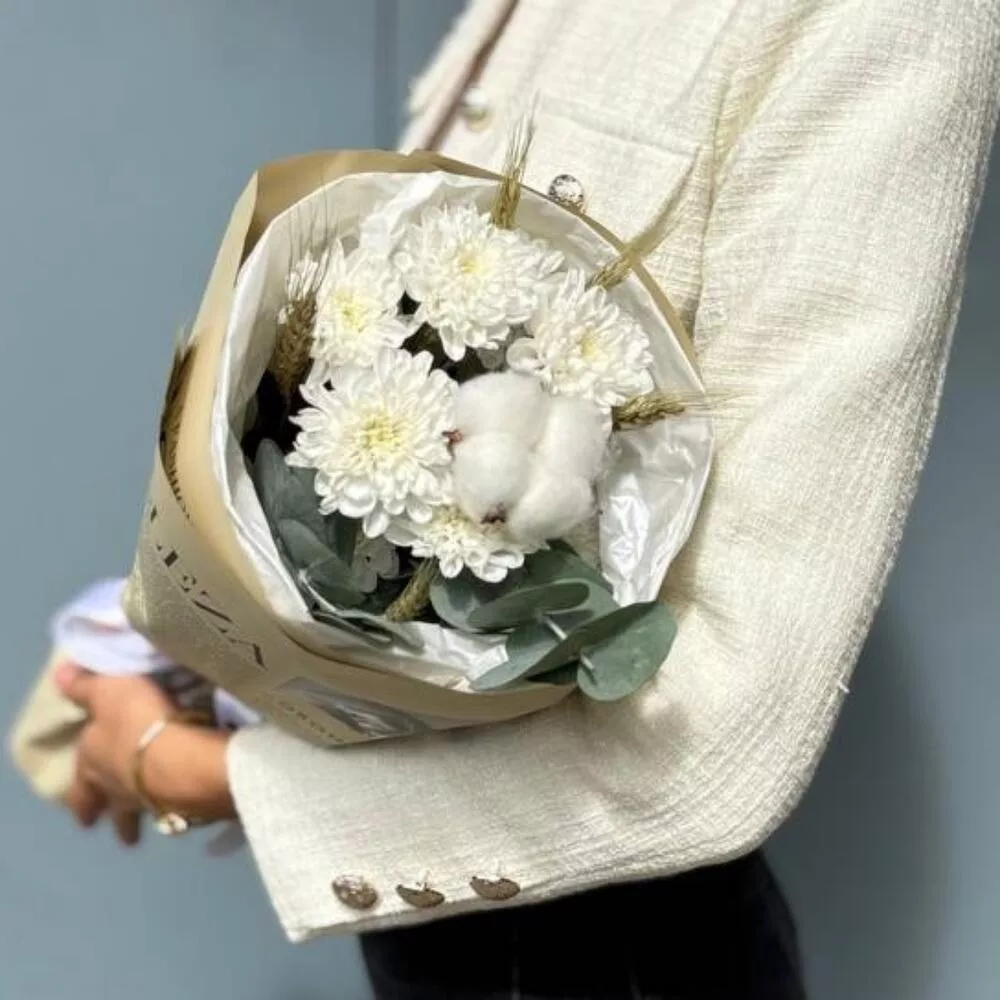
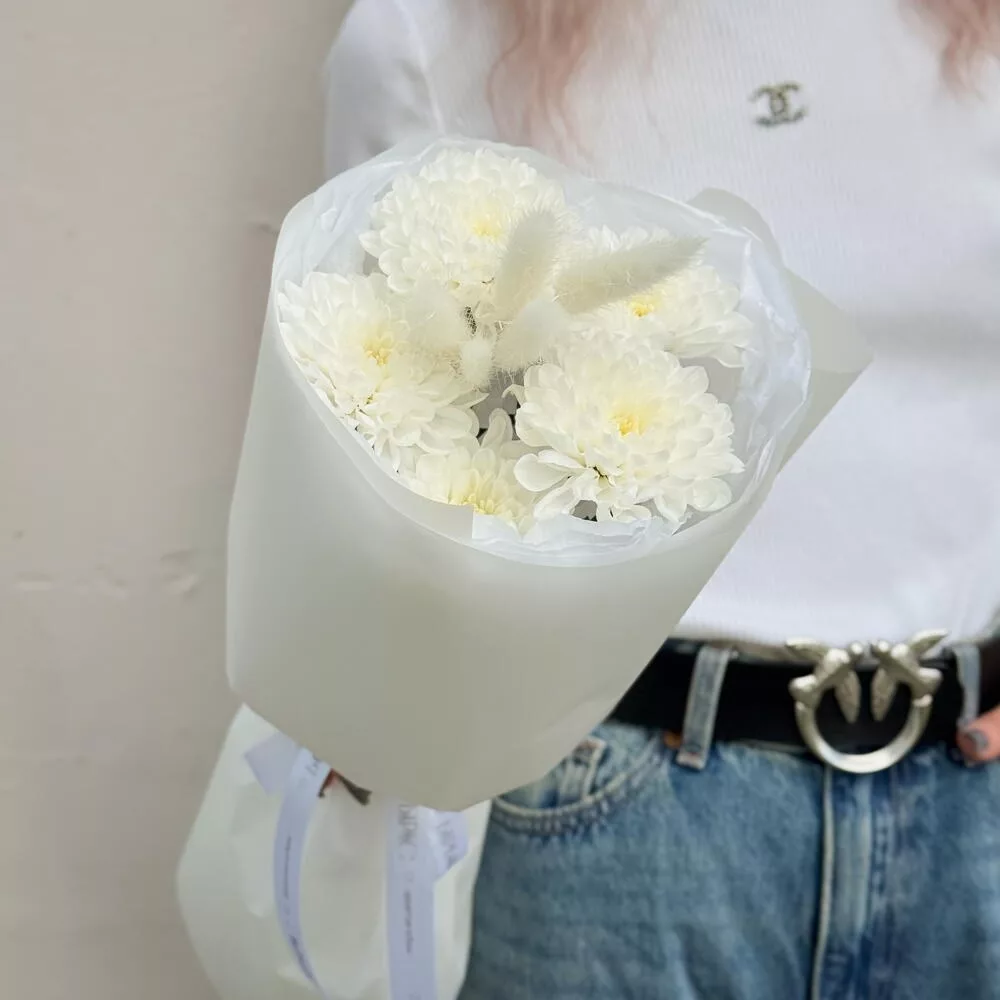
Bouquets we can deliver

Choosing Flowers for the Person, Not Just the Date
Before thinking about budget or variety, think about the recipient. In Russian culture, flowers carry a lot of meaning and are taken seriously as a gift. A bouquet that looks considered — chosen for someone rather than grabbed — lands very differently from a generic arrangement. If the person you are sending to loves the outdoors, garden-style compositions with lisianthus, scabiosa, and seasonal greenery feel personal. If they are more classic in their taste, roses and alstroemeria in a tight, structured arrangement communicate care and elegance.
For birthdays, bold colour works well — sunflowers combined with orange gerbera or hot-pink spray roses create warmth and celebration. For anniversaries, think about restraint: creamy garden roses, white ranunculus, and eucalyptus have a quiet intimacy that says more than a loud mixed bouquet. For a new home or a professional milestone, something structured and long-lasting like chrysanthemums mixed with solidago gives a sense of abundance without fussiness.
One thing worth knowing: in Russia, even numbers of flowers in a bouquet are traditionally associated with mourning, so florists always compose bouquets with an odd number of stems. You do not need to count them yourself — a professional florist will handle this automatically — but it is useful background if you are ever asked for a specific stem count. The recipient will notice, and so will anyone else in the room. Getting this detail right is part of what makes a bouquet feel respectful of local culture rather than assembled without thought.
Seasonal Sense: What Travels Well in Each Part of the Year
Summer in the Novgorod region, roughly June through August, is the easiest time to send flowers. Temperatures are moderate, transit is gentle, and the season brings strong availability of peonies in early summer, followed by dahlias, gladioli, and zinnias as July and August progress. Peonies in particular are a favourite in Russia and have a short season, so if the occasion falls in late May or June, they are an excellent choice — fragrant, full, and unmistakably celebratory.
Autumn brings chrysanthemums, which are genuinely beautiful and often underestimated by senders abroad who associate them with simpler arrangements. In Russia, large-headed chrysanthemums in burgundy, white, or pale yellow are considered a proper gift. Combined with hypericum berries and autumn foliage, they make a rich, seasonal arrangement that feels right for October birthdays and anniversaries.
Winter is when roses dominate, partly because they travel well in cold conditions and partly because the demand for warmth and colour increases when everything outside is grey and frozen. Ecuadorian roses with their long stems and dense heads hold up beautifully in cold transit. Tulips are available through late winter and early spring, arriving from Dutch growers, and they are enormously popular for Women's Day on the eighth of March — one of the busiest flower gifting days in Russia. If your occasion falls near that date, order well in advance.
Spring, from April onward, brings freesia, ranunculus, and early garden varieties. These are delicate but rewarding choices for someone who appreciates softness and scent over visual drama.
Timing the Delivery from a Different Time Zone
This is where most senders from abroad make their first mistake. They place an order at what feels like a reasonable hour in their own city without accounting for the time difference, and the delivery lands either too early — before the recipient is home — or too late in the evening to feel like a celebration. Okulovka follows Moscow Time year-round, so do the arithmetic carefully before you confirm a delivery window.
For a midday surprise, someone in Berlin needs to place their order by mid-morning at the latest given the two-hour difference. Someone in Los Angeles, nine hours behind Moscow Time, may need to order the previous evening to catch morning preparation and transit. The earlier you place the order, the more flexibility the florist has to source the freshest stems and compose the arrangement without rushing.
For significant occasions — a milestone birthday, a wedding anniversary — consider requesting a morning delivery rather than afternoon. In Russia, receiving flowers early in the day feels generous and intentional. It sets a tone for the whole day rather than arriving as an afterthought at five in the evening. If the recipient works regular hours, confirm they will be home or arrange for a neighbour to receive the bouquet on their behalf. Flowers left outside in Okulovka's winter cold for even an hour can suffer visibly.
When you place your order, include the recipient's phone number. The delivery team will call ahead to confirm they are available, which protects both the flowers and the experience. This is standard practice and not intrusive — Russian recipients expect and appreciate it.
Budget Options and What Each Level Gets You
Flower budgets translate into three broad tiers, and understanding what each delivers helps you choose honestly rather than guess. Entry-level arrangements are typically composed of one or two varieties — a classic rose bouquet or a single-variety tulip bundle — with minimal wrapping. They are sincere and appropriate for casual occasions or when the gesture matters more than the grandeur. For a colleague's birthday or a thank-you to a neighbour, this level is entirely correct.
Mid-range arrangements open up the composition significantly. Here you can combine varieties — think garden roses with lisianthus and ruscus, or spray chrysanthemums with alstroemeria and waxflower. The wrapping becomes part of the presentation, with kraft paper, ribbon, or a structured box adding to the unboxing moment. For birthdays, anniversaries, and meaningful personal occasions, this is where most senders land and where the florist has enough to work with creatively.
Premium arrangements are built around statement varieties: large-headed Ecuadorian roses, peonies at their peak, or imported garden roses that carry genuine fragrance. The composition is more layered, the stems are longer, and the overall impression is one of deliberate generosity. If the recipient is someone who will genuinely appreciate flowers — a mother, a partner, a close friend — and the occasion is significant, this level communicates that you thought carefully rather than clicked quickly.
When ordering from abroad, remember that you are paying in your local currency converted to Russian rubles at the current rate. Currency fluctuations can make Russian flower delivery surprisingly affordable for senders from Western Europe or North America. The value at mid and premium levels is often striking.
How to Write a Card Message That Lands Well
A card message is not an afterthought. In Russian gift culture, the written word that accompanies flowers carries real weight. A message that is warm, specific, and personal will be kept and reread. A generic greeting will be forgotten before the flowers open. Take two minutes to write something that only you could write — a shared memory, a private joke, a specific reason you are thinking of this person today.
If you are writing in English and the recipient reads English comfortably, that is perfectly fine. Many Russians in smaller cities like Okulovka have enough English to appreciate a heartfelt note in the sender's own language — it can feel even more personal than a translated version. If you want the message in Russian, you can write it yourself using a translation tool, but have someone check it first. Automated translation of emotional language sometimes produces results that are grammatically correct but tonally odd.
Keep the message short. Three to five sentences is ideal. State who it is from clearly — if the delivery is a surprise, the recipient should not have to guess. Include something specific to the occasion or to your relationship. End warmly without being excessive. Russians appreciate sincerity more than effusiveness, so a direct and genuine message outperforms a flowery paragraph every time.
If you are sending for a Russian national holiday — Women's Day, New Year, or a birthday — it is worth acknowledging the occasion by name. Saying Happy Eighth of March, for example, shows cultural awareness that the recipient will notice and appreciate. It signals that you understand their world rather than imposing your own.
Keeping the Bouquet Fresh After Delivery
Your job as a sender ends at delivery, but passing along simple care advice with your card message is a small gesture that extends the life of your gift. Fresh flowers in Okulovka's climate behave differently depending on the season. In winter, a warm apartment can be very dry due to central heating, which shortens vase life for moisture-loving varieties like tulips and ranunculus. Advising the recipient to keep the vase away from radiators is genuinely useful.
For roses, the basics are well known but often skipped: cut the stems at an angle under running water, remove any leaves that sit below the waterline, and change the water every two days. Roses in a cool room away from direct sunlight and fruit bowls — ethylene gas from ripening fruit accelerates petal drop — will last ten to fourteen days under good conditions. Spray roses last slightly longer than large-headed varieties.
Lisianthus and alstroemeria are among the longest-lasting cut flowers available, often holding well for two to three weeks with basic care. If your arrangement includes these, the recipient has a genuinely durable gift. Peonies, by contrast, are short-lived but spectacular — five to seven days of full bloom is typical, and they are worth every one of those days.
Chrysanthemums are the most forgiving of all. They tolerate variable temperatures, require minimal maintenance, and can last three weeks in a vase with clean water and a single stem trim. For a recipient who travels or has a busy schedule, a chrysanthemum-forward arrangement is a practical kindness as well as a beautiful one. Mentioning this in your card shows the kind of thoughtfulness that turns a bouquet into a real gift.
Sending flowers to Okulovka from abroad is not complicated once you understand the moving parts: time zones, seasonal availability, Russian gifting customs, and a card message that says something real. The distance between you and the recipient is not something flowers can erase, but a well-chosen, carefully timed bouquet does something quieter and more lasting — it tells someone that you thought about them specifically, from wherever you are, and made it happen. That is what flowers have always been for.
Frequently asked questions
Can I place an order for Okulovka delivery if I do not speak Russian?
Yes, entirely. You can place your order in English and include your card message in English or request a Russian translation. The delivery confirmation call to the recipient is handled by the florist team, so you do not need to manage any Russian-language communication yourself. Having the recipient's phone number ready is the most important practical step.
How far in advance should I order from a non-Russian time zone?
For same-day delivery in Okulovka, orders should be placed at least four to five hours before the desired delivery window, accounting for Moscow Time. From the United States or East Asia, this often means ordering the evening before your local time. For major occasions like Women's Day on March 8th or New Year, place your order several days ahead as demand across Russia is extremely high.
What if the recipient is not home when the flowers arrive?
The delivery team calls ahead to confirm availability, which significantly reduces missed deliveries. If the recipient is unexpectedly unavailable, the team will coordinate a revised delivery window. Providing a secondary contact number or a neighbour's details when you order adds another layer of reliability, particularly in winter when flowers cannot safely wait outside.
Are there flowers I should avoid sending to Russia for cultural reasons?
The main convention to know is that even numbers of stems are associated with mourning in Russian tradition, so professional florists always use odd numbers — this is handled automatically. Yellow flowers were historically considered unlucky in some regions, though this association has faded considerably among younger generations. When in doubt, a mix of colours or a classic rose bouquet in warm tones is always well received.
What payment methods work for international senders ordering to Russia?
Turboflora accepts major international payment cards and online payment methods that allow cross-border transactions. Some cards issued outside Russia may require you to notify your bank before completing the payment. If a transaction is declined, trying a different card or a digital payment service usually resolves the issue quickly. Contact the shop directly if you encounter persistent payment difficulties.
Ready to send flowers?
Pick the city, choose the bouquet, and a local florist takes it from there.
Choose a city →