How to Send Flowers to Orenburg from Abroad and Get It Right
Someone you love is in Orenburg, and you are sitting thousands of kilometres away wanting to do something that actually lands — not a gift card, not a message, but real flowers arriving at their door. The distance feels enormous until you realise the logistics are simpler than you think, and the gesture lands harder precisely because you made it happen from so far away. Here is everything an international sender needs to know.
Understanding What Orenburg Means for a Flower Delivery
Orenburg sits in the southern Urals, close to the Kazakhstan border, and its climate shapes everything about how flowers travel and survive there. Winters are genuinely cold — temperatures regularly drop well below minus twenty Celsius — and summers can be dry and warm. This is not a detail to skip over, because it directly affects which flowers hold up and how you should time your order.
For a sender abroad, the most important thing to understand is that Orenburg is a large regional city with a real urban centre, residential neighbourhoods, and outlying districts. A delivery address in the city proper is straightforward. If your recipient lives in a more rural area outside the city limits, it is worth confirming the exact address carefully and communicating it clearly when you place your order.
Time zones matter too. Orenburg runs on UTC plus five, which puts it ahead of Western Europe by three to four hours, ahead of the UK by five, and behind Moscow by two. When you are calculating when to order so that flowers arrive at a meaningful moment — morning, lunchtime, or early evening — you need to think in Orenburg time, not your own. A sender in London ordering at noon is already mid-afternoon in Orenburg. Building that awareness into your planning means the bouquet arrives when your recipient is actually home and awake to receive it.
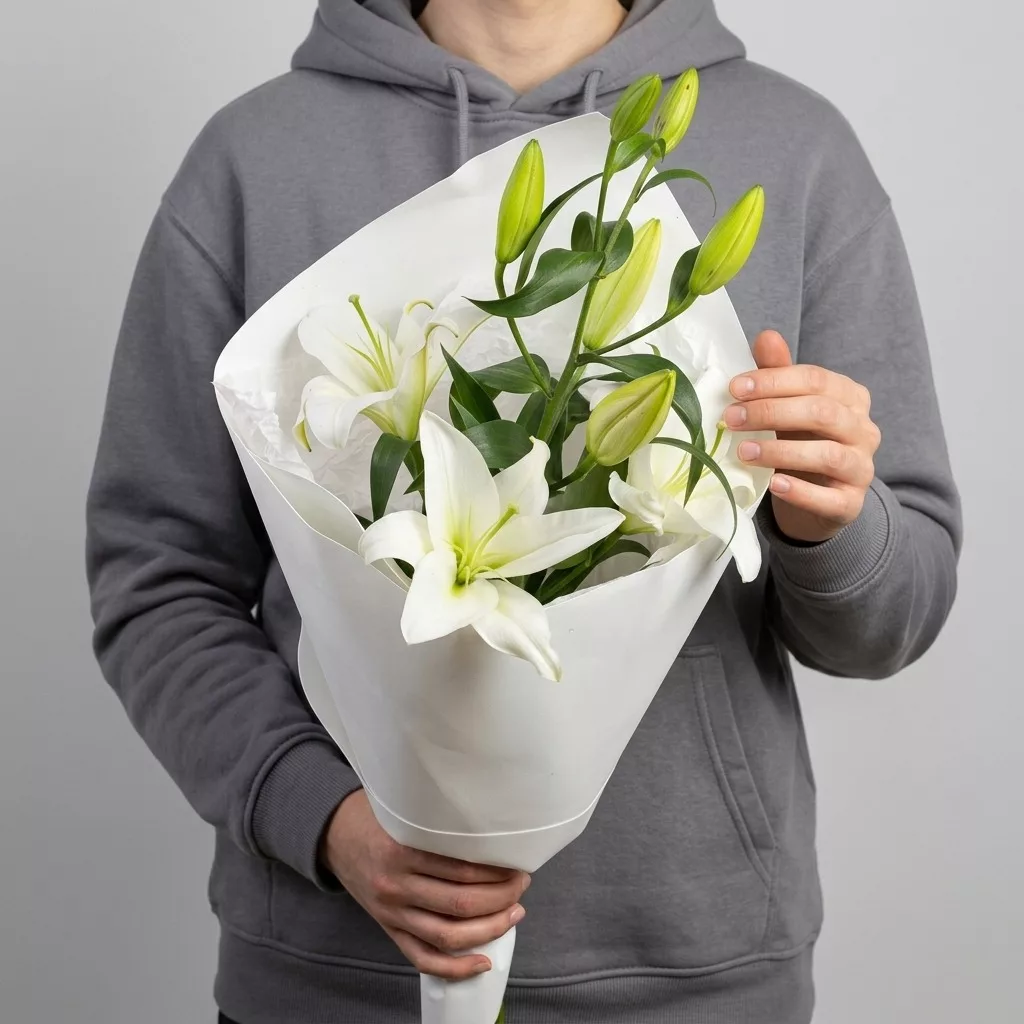
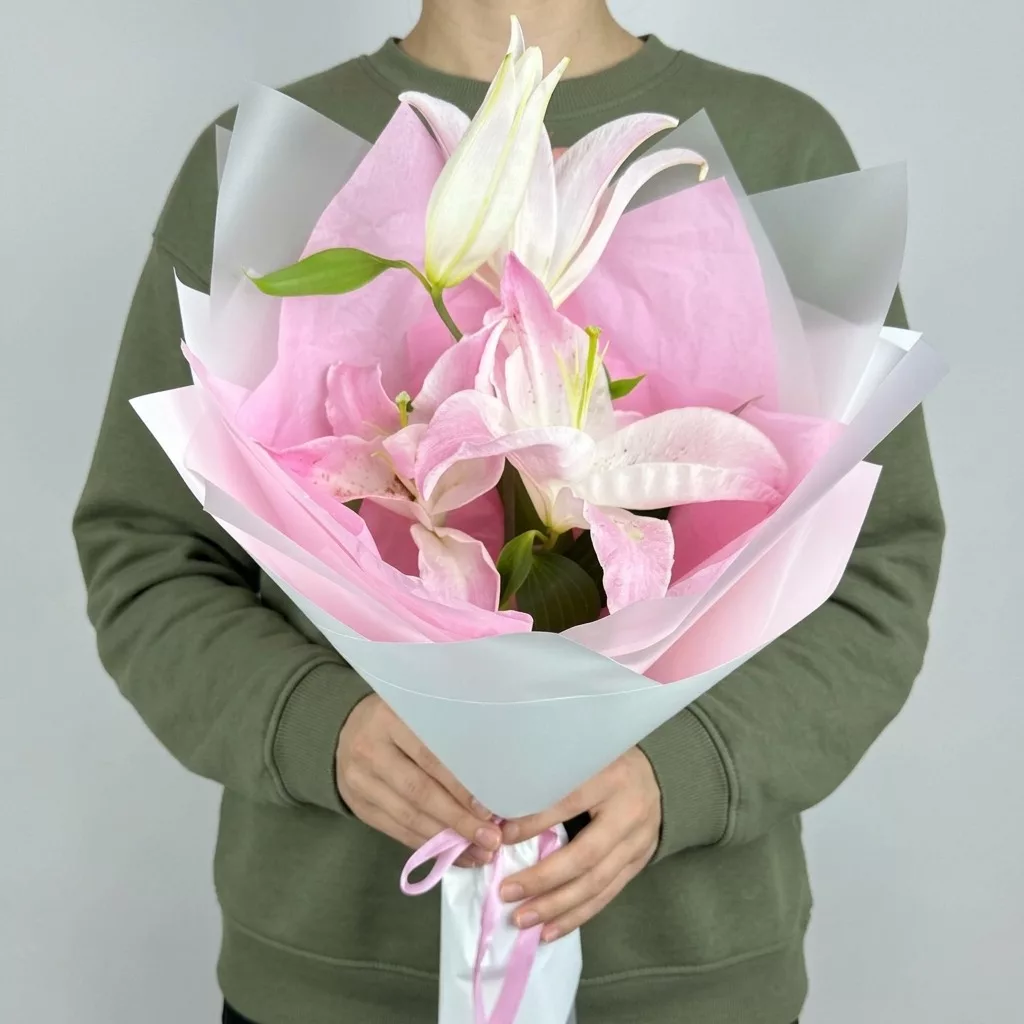
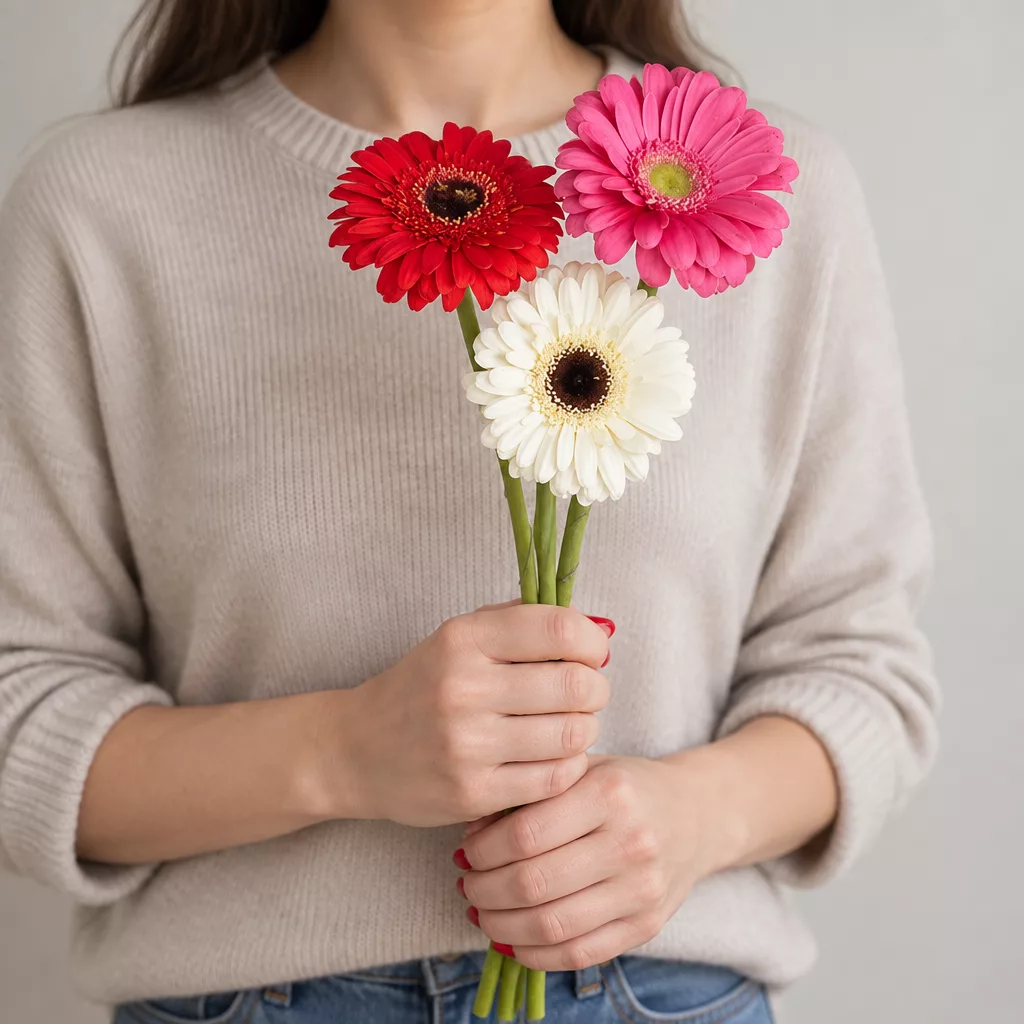
Bouquets we can deliver

Choosing Flowers for the Person and the Moment
Start with the person, not the flower list. A bouquet chosen for who someone is and what they are celebrating will always feel more personal than one selected by colour alone. Think about whether they tend toward something classic and elegant or something lush and abundant. Think about the occasion — a birthday calls for a different energy than an anniversary, and a congratulations for a new job reads differently still.
For a romantic gesture, roses remain the undisputed choice in Russian culture, and in Orenburg as anywhere in Russia, a generous arrangement of deep red or blush garden roses carries real weight. Combine them with eucalyptus or dusty miller for a modern, less formal feel. If you want something that feels more unexpected, ranunculus in soft coral or cream layered with white lisianthus creates a bouquet that looks genuinely considered.
For a birthday, think about abundance and warmth. Sunflowers mixed with orange spray roses and solidago have an immediate cheerfulness that photographs beautifully and fills a room. For a new home, seasonal greenery combined with white alstroemeria and hypericum berries gives a fresh, long-lasting arrangement that suits any interior.
Russian gifting culture tends to favour odd numbers of stems — this is a genuine tradition, not a myth. Even numbers of flowers are associated with mourning, so always go odd: five, seven, eleven, fifteen. If you are unsure about quantity, err toward more rather than fewer. A generous bouquet signals that you put real thought into the moment, and that is exactly the impression you want to make from abroad.
Timing Your Order Across Time Zones and Seasons
The single most common mistake international senders make is ordering at the last minute in their own time zone without accounting for where Orenburg sits on the clock. If you want flowers delivered in the morning of a birthday, you need to place the order the evening before — in Orenburg time — which may mean placing it in the middle of your own afternoon or even earlier depending on where you are.
Season affects availability and condition significantly. In winter, hardy varieties like chrysanthemums, carnations, and spray roses travel and hold better than delicate open-faced blooms. Tulips are widely loved in Russia and arrive in abundance from late winter through spring — a large mono-bouquet of tulips in late February or March, around International Women's Day on the eighth of March, is one of the most culturally resonant gifts you can send. Ordering ahead for that date is essential, as it is the busiest flower day of the year across Russia.
In summer, peonies have a short but glorious window, usually from late May through June. If your timing aligns, a full peony bouquet is spectacular and deeply appreciated. In autumn, dahlias, lisianthus, and seasonal branches add texture and richness.
For any significant occasion — a milestone birthday, an anniversary, a graduation — place your order at least a day in advance. Same-day delivery is available within Orenburg, but giving yourself and the florist more lead time means better flower selection, more careful composition, and less risk of anything going wrong with the address or contact details for your recipient.
What to Write and How Russian Greeting Customs Work
A card message from abroad carries particular warmth because it closes a physical distance. In Russian culture, the message on a flower card is taken seriously — it is read carefully, often kept, and sometimes shown to others. Do not leave it blank, and do not default to something generic. Write something that connects the flowers to the person and the moment.
If you are writing in English, that is completely fine. Many recipients in Orenburg will read English, and for those who do not, the gesture of a personal message in your own language is itself meaningful. You can also write a transliterated Russian phrase if you want to try — something like "S dnyom rozhdeniya" for happy birthday or "Pozdravlyayu" for congratulations — but do not feel obligated. Sincerity in any language communicates.
Russian naming conventions are worth knowing briefly. Russians use a first name, a patronymic (derived from the father's first name), and a family name. In formal contexts, people address each other by first name and patronymic together. For a flower card, using just the first name is warm and appropriate — it signals affection rather than formality. If you are unsure of the recipient's name in Russian script, providing it in Latin letters when you order is perfectly workable.
Avoid humour that relies on cultural references your recipient might not share. Instead, be direct and warm. Say what the flowers mean, say why you wanted to send them from where you are, and say something specific about the person. That combination — specificity, warmth, and the acknowledgement of distance — is what makes a card from abroad genuinely memorable.
Flower Care in Orenburg's Climate: Advice to Pass On
When flowers arrive, especially in winter, they need a moment to adjust before being unwrapped. If they have been transported in cold outdoor temperatures, bringing them inside and letting them sit in their packaging for ten to fifteen minutes before opening prevents the shock of moving too quickly from cold to warm air. This is particularly relevant in Orenburg from October through April.
Once unwrapped, trim the stems at a diagonal under running water using a sharp knife or scissors — not a blunt blade, which crushes the stem tissue and reduces water uptake. Remove any leaves that would sit below the waterline in the vase, as submerged foliage rots quickly and clouds the water. Fill the vase with cool, clean water and change it every two days.
Keep the bouquet away from direct sunlight, heating radiators, and fruit bowls. Ripening fruit releases ethylene gas, which shortens the life of cut flowers noticeably. In a Russian apartment in winter, heating systems run consistently warm, so finding a cooler spot — near a window that is not in direct sun, or in a hallway — extends vase life meaningfully.
Expected vase life varies by variety. Chrysanthemums and carnations are the longest-lasting, often going twelve to fourteen days. Roses and lisianthus give a solid seven to ten days with good care. Tulips and ranunculus are shorter — five to seven days — but their impact in the first few days is worth it. Letting your recipient know these simple steps when you send the flowers shows an extra layer of care that will not go unnoticed.
Practical Details: Address, Contact, and Confirmation
Getting the delivery details right is where international orders most often run into difficulty, and it is entirely preventable with a little preparation. Russian addresses follow a specific format: city, street name, building number, apartment number. In Orenburg, many residential buildings are large Soviet-era blocks where the apartment number is essential — without it, a delivery cannot be completed. Make sure you have the full address including the apartment number, floor, and any entry code for the building door, which is called a domofon.
A working Russian mobile number for your recipient is equally important. Drivers and florists call ahead to confirm the delivery and coordinate timing, and this is standard practice across Russia. If you do not have your recipient's number, consider whether a trusted friend or family member in Orenburg could coordinate on your behalf — without revealing the surprise, if that is your intention.
For a surprise delivery, it helps to think through the timing carefully. Is your recipient likely to be home during the delivery window? Are they at work during the day? Specifying a delivery window — morning, afternoon, or evening — when you order increases the chance of a smooth handover. If they are not home, the driver will typically call, but having a backup plan is sensible.
When you place your order from abroad, double-check that the address you have provided is written clearly in Russian or in an unambiguous Latin transliteration. Street names in Orenburg, as in all Russian cities, are in Cyrillic, and providing the correct spelling prevents any confusion. Confirming all details at the time of ordering means you can relax knowing the flowers will find their way to exactly the right person.
Sending flowers to Orenburg from another country is one of those gestures that lands with more weight than almost anything else you could do remotely. The distance that makes it feel complicated is also what makes it meaningful — your recipient understands exactly what it took to make it happen. Choose flowers that suit who they are and what the occasion calls for, get the address and timing right, and write something real on the card. The rest takes care of itself.
Frequently asked questions
Can I order flowers for Orenburg delivery if I do not speak Russian?
Yes, entirely. You can place your order in English, provide the recipient's address in Latin transliteration, and write your card message in any language you choose. The key information you need to supply clearly is the full address including apartment number, a working Russian mobile number for the recipient, and your preferred delivery window in Orenburg local time.
What is the best time of year to send flowers to Orenburg?
Flowers can be sent year-round, but late February through June offers the widest seasonal variety — tulips in late winter, peonies in late spring. If you are sending in deep winter, choose hardy varieties like chrysanthemums, spray roses, or carnations, which handle cold transit better than open, delicate blooms. International Women's Day on 8 March is the peak occasion and deserves advance ordering.
How do I make sure a surprise delivery actually stays a surprise?
The driver will call the recipient's number before arriving, which is standard practice. To preserve a surprise, you can ask a trusted contact in Orenburg to receive the flowers on the recipient's behalf, or choose a delivery time when you know they will be home without them expecting a visit. Specifying a narrow delivery window in your order helps considerably.
Does the number of flowers in a bouquet matter in Russian culture?
Yes, and it matters more than most international senders realise. An odd number of stems is the strong cultural norm for a celebratory gift in Russia — five, seven, eleven, fifteen, and so on. Even numbers are associated with mourning and should be avoided for any joyful occasion. When in doubt, choose a larger odd number rather than a smaller even one.
How long will the flowers last once they arrive in Orenburg?
With proper care — diagonal stem trim, clean cool water changed every two days, away from heat and fruit — most bouquets last seven to ten days. Chrysanthemums and carnations can reach twelve to fourteen days. Tulips and ranunculus are shorter at five to seven days but make a strong first impression. Sharing these care tips with your recipient when you send the flowers extends their enjoyment noticeably.
Ready to send flowers?
Pick the city, choose the bouquet, and a local florist takes it from there.
Choose a city →