Sending Flowers to Plavsk from Abroad? Here Is Everything That Matters
You are sitting in Berlin, Toronto or Dubai, and someone you love is in Plavsk — a quiet town in Tula Oblast where a beautiful bouquet arriving at the door means everything precisely because it came from so far away. The distance makes the gesture larger, but it also raises real questions: Will the flowers arrive fresh? What do I order for a Russian birthday or anniversary? How do I pay from abroad? This article answers all of that plainly, so you can place your order with confidence and your recipient can open the door to something genuinely lovely.
What Plavsk Is Like and Why It Changes Your Flower Choice
Plavsk is a small town of roughly 15,000 people in Tula Oblast, about 100 kilometres south of Tula city. It sits in a continental climate zone, which means proper winters with temperatures dropping well below zero and warm, sometimes humid summers. That climate matters when you are choosing flowers from abroad, because what survives a January delivery in Plavsk is not the same as what thrives in July.
In winter, delicate open blooms like garden roses or lisianthus can suffer in transit if they are left in an unheated hallway even for fifteen minutes. Sturdier choices — spray chrysanthemums, alstroemeria, closed-bud roses — handle the cold far better and arrive looking composed rather than wilted. In summer, the concern flips: heat and direct sunlight are the enemy, and flowers should be delivered early in the day before temperatures peak.
Plavsk is not a large metropolitan centre, so the recipient may not be accustomed to receiving elaborate arrangements on a regular basis. That actually works in your favour. A well-composed bouquet of fifteen stems with good greenery and a ribbon will feel genuinely special there in a way it might feel ordinary in Moscow. Think about the person's home, their taste, and the season outside their window — those three things together will guide your choice better than any catalogue description. A florist who knows the route to Plavsk will pack accordingly, but your choice of flower variety sets the foundation.
Bouquets we can deliver


Timing Your Order Across Time Zones
This is the part that trips up almost every international sender the first time. Plavsk runs on Moscow Standard Time, which is UTC+3 and does not observe daylight saving. If you are in New York, that is an eight-hour gap in winter and a nine-hour gap in summer. London is three hours behind Moscow. Dubai is one hour behind. Sydney is five or six hours ahead, depending on the season.
Turboflora delivers within one to two hours of order confirmation, so the practical question is: what time will it be in Plavsk when you click the button? If you want a morning delivery — say, flowers waiting when your mother wakes up on her birthday — you may need to place the order the evening before your local time. If you want an afternoon arrival, noon Moscow time is a reasonable target, which might mean placing the order at 9 am in London or 4 am in New York.
Birthday deliveries are the most time-sensitive. Russian custom strongly favours flowers arriving before the celebration begins, not after. Delivering on the actual birthday date matters more than almost any other detail. Missing the date by even one day — even if the flowers are stunning — is noticed. Set a calendar reminder for yourself three days before the occasion, check the Moscow time conversion, and place the order the evening before if you have any doubt. A little planning on your side makes the moment land perfectly on theirs.
Choosing Flowers for the Right Russian Occasion
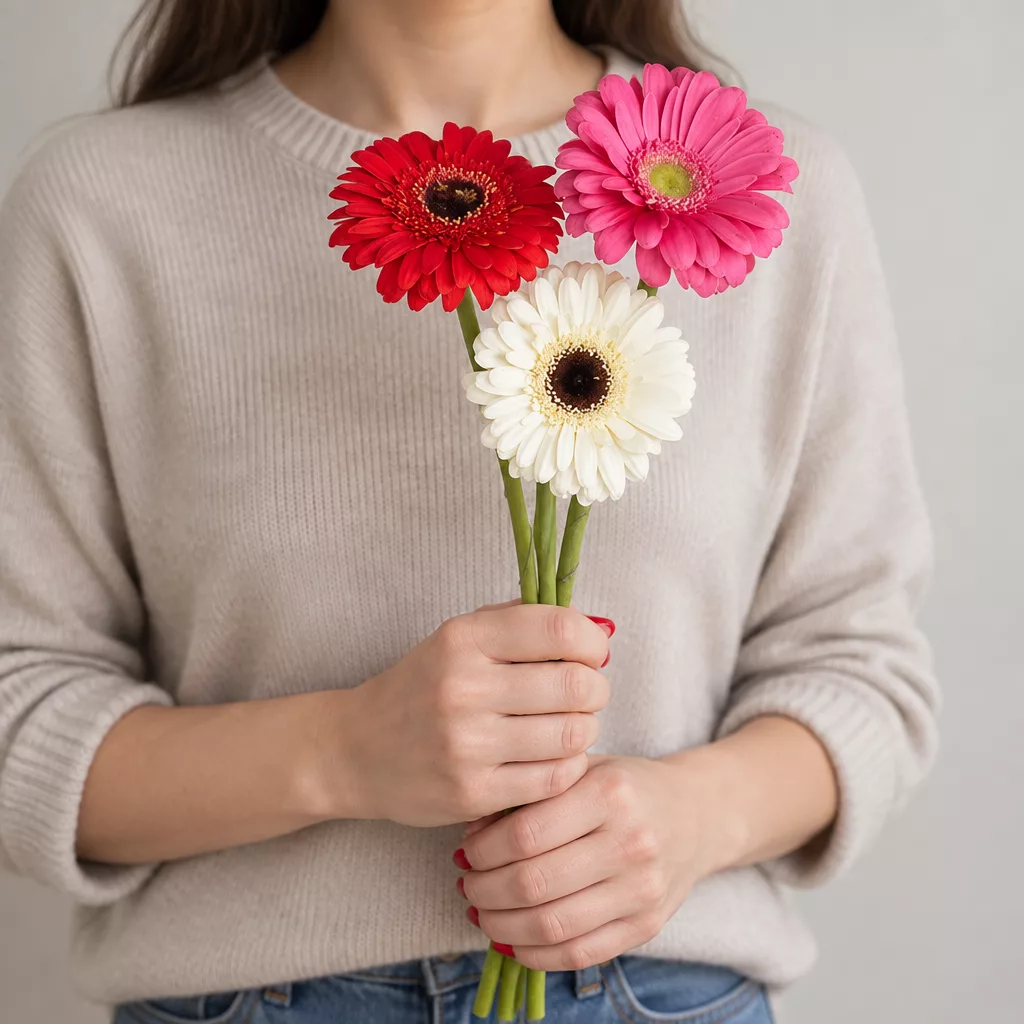
Russian flower-giving has a few customs that are worth knowing so you do not accidentally send the wrong message. The most important one: always send an odd number of stems. Even numbers of flowers are traditionally associated with mourning and funerals, so a bouquet of twelve roses or ten tulips would feel wrong to most Russian recipients, even if they never explain why. Eleven roses, fifteen tulips, nine gerberas — these feel right.
For birthdays, roses remain the most universally appreciated choice. Red roses read as romantic, so for a mother, grandmother or female colleague, choose soft pinks, creams, corals or whites. For a male recipient, which is less common but entirely appropriate, sunflowers, alstroemeria or a bold mixed bouquet with greenery works well. Tulips are beloved in spring and feel fresh and light. In autumn and winter, chrysanthemums and eustoma (lisianthus) are excellent because they last well and look generous in a vase.
For a professional achievement, a housewarming or a thank-you, mixed seasonal bouquets with foliage — eucalyptus, pittosporum, ruscus — look considered and stylish without reading as overly romantic. For a young woman's graduation or promotion, something with peonies in season (late May through June) or garden spray roses feels celebratory and feminine without being clichéd. Think about what the bouquet says before you think about what it costs — the message matters more than the price to a Russian recipient.
Ordering from Abroad: Practical Steps Without the Confusion
Ordering internationally is simpler than most people expect, but there are a few things to prepare before you start. First, have the recipient's full address ready in Russian if possible — street name, house number, apartment number and the entrance code if there is one. Many apartment buildings in Russian towns have a door code or an intercom, and without it, the delivery cannot reach the door. If you do not know the code, ask your recipient casually in advance or let the florist know so they can call ahead.
You will need to provide a contact phone number for the recipient. Russian delivery relies on a phone call or message to confirm the person is home or to arrange a handoff. If your recipient speaks no English, that is completely fine — the florist will communicate in Russian. What matters is that the number is current and that the person is reachable during the delivery window you have chosen.
Payment from abroad is straightforward with international cards. Visa and Mastercard issued outside Russia work for online orders. If you encounter a payment issue, contact Turboflora directly before assuming the order failed — sometimes a card issuer flags an unfamiliar merchant country and a simple confirmation call resolves it in minutes.
A personal message card is one of the most meaningful additions you can include. Write it in English if that is your language — the recipient will very likely find a way to translate it, and a message in your own words, even in a foreign language, carries warmth that a generic printed phrase never does. Keep it short, honest and specific to the occasion.
Seasonal Flower Choices That Work Well in Plavsk
Plavsk's seasons are distinct, and matching your bouquet to the time of year shows care that a recipient notices even if they cannot articulate why. In January and February, the town is cold and often grey, so a bouquet of bright flowers — warm-toned roses, yellow freesias, orange alstroemeria — brings genuine visual warmth into a home. These varieties also travel well in cold conditions when properly wrapped.
March is one of the most important months in Russia for flower giving. International Women's Day on the 8th of March is celebrated seriously, and tulips are the iconic flower of that day. A large bunch of tulips — white, yellow, pink or mixed — in an odd number is the classic choice. If you are sending from abroad for March 8th, place your order at least two days early, as demand is exceptionally high.
April and May bring the first true warmth, and ranunculus, narcissus and early peonies begin to appear. Late May through June is peony season, and they are universally adored in Russia — full, fragrant and generous-looking in a vase. July and August call for sunflowers, lush garden roses and bright gerberas. September and October suit rich, warm tones: burgundy roses, orange spray chrysanthemums, dahlias when available. November and December suit elegant, restrained palettes — white and blush roses with dark greenery, or deep red roses with eucalyptus — which photograph beautifully and last well in cooler indoor temperatures.
How to Help Your Recipient Care for the Flowers
Fresh flowers arriving at someone's door are only half the story — how they are cared for in the first hour determines whether they last five days or twelve. Most people in smaller Russian towns keep flowers in a vase correctly but may not know the specific steps that extend vase life significantly. You can include care notes with your order, or simply share these points in a message.
The single most important step is a clean diagonal cut on the stems, made with a sharp knife rather than scissors. Scissors crush the stem tissue and reduce water uptake. A diagonal cut increases the surface area drawing water up. This should be done immediately before placing stems in water, not in advance. Roses and tulips benefit most from this.
Water should be cool and changed every two days. Warm water encourages bacterial growth that clogs stems and shortens vase life. A clean vase matters — any residue from previous flowers introduces bacteria immediately. Removing any leaves that would sit below the waterline is essential, as submerged foliage rots quickly and contaminates the water.
Keep the vase away from direct sunlight, radiators and fruit bowls. Ripening fruit releases ethylene gas, which accelerates petal drop in roses, carnations and eustoma noticeably. A cool room — around 18 to 20 degrees Celsius — extends vase life compared to a warm one. Tulips continue growing after cutting and will bend toward light, so rotating the vase occasionally keeps them upright and even. Alstroemeria and spray chrysanthemums are among the longest-lasting cut flowers, often staying fresh for ten to fourteen days with basic care.
Making the Moment Feel Personal from a Distance
The flowers themselves are the centrepiece, but the details around them are what make a delivery feel like a real gesture rather than a transaction. A handwritten-style message card, even a short one, transforms the experience for the recipient. If you are celebrating a birthday, name a specific memory or quality you love about the person. If it is an anniversary, say what the years have meant. Russian recipients respond deeply to sincerity — a direct, genuine sentence lands better than an elaborate poetic phrase.
Think about packaging as part of the presentation. Wrapping style matters in Russia: a well-dressed bouquet with quality paper, ribbon and a neat bow signals that care was taken. Turboflora's arrangements are composed with this in mind, but if you have a preference — a particular colour of wrap, a specific ribbon style — you can note it in the order comments.
If the occasion is a significant birthday — a fiftieth, a sixtieth — consider a larger arrangement that commands the room rather than a standard bouquet. A tall vase arrangement or a wide hand-tied bouquet with multiple flower varieties and abundant greenery makes an immediate impression when the door opens. The recipient should feel, in that first second, that something significant has arrived.
Finally, consider the surprise factor. Many international senders ask whether to tell the recipient in advance. For most occasions, the surprise is the point — the knock at the door, the flowers appearing without warning, the knowledge that someone far away was thinking of them at exactly that moment. That is the feeling you are really sending, and fresh flowers are simply the most beautiful way to carry it.
Sending flowers to Plavsk from abroad is not complicated once you understand the timing, the customs and the seasonal choices that make a bouquet feel genuinely right for the moment. The distance between you and your recipient is real, but a well-chosen bouquet arriving on time — odd-numbered stems, appropriate for the season, with a personal note — closes that distance in a way that a message or a phone call simply cannot. Turboflora handles the route to Plavsk so that all you have to do is choose something beautiful and send it with intention.
Frequently asked questions
Can I order flowers for delivery to Plavsk if I live outside Russia?
Yes, completely. Turboflora accepts international card payments and delivers to Plavsk directly. You will need the recipient's full address including apartment number and entrance code, plus a working Russian mobile number for the recipient. The entire process can be completed in English from anywhere in the world.
How far in advance should I order if I am in a very different time zone?
Plavsk operates on Moscow Standard Time, UTC+3. If you want a morning delivery, place your order the evening before your local time. For birthdays, placing the order 24 hours early removes all time-zone risk. Turboflora delivers within one to two hours of confirmation, so the timing of your order placement determines the arrival window.
Why do Russian recipients count the number of stems in a bouquet?
Even numbers of flowers are traditionally associated with mourning in Russian culture, so they feel inappropriate as a gift. An odd number — eleven roses, nine tulips, fifteen gerberas — is the correct and expected choice for any celebratory or affectionate occasion. This custom is taken seriously across generations and regions, including in smaller towns like Plavsk.
Which flowers last longest after delivery in a home in Plavsk?
Spray chrysanthemums and alstroemeria consistently last ten to fourteen days with basic care. Carnations and eustoma also have excellent vase life. Roses last seven to ten days if stems are recut and water is changed regularly. Tulips are shorter-lived at five to seven days but are deeply loved and worth sending for the right occasion.
Is it possible to include a message card written in English?
Absolutely, and we encourage it. A message in your own language feels authentic and personal. The recipient will find a way to translate it, and receiving words in the sender's native language adds warmth that a translated or generic phrase cannot replicate. Keep it honest and specific to the person and occasion for the greatest impact.
Ready to send flowers?
Pick the city, choose the bouquet, and a local florist takes it from there.
Choose a city →