Sending Flowers to Polyarny from Abroad? Read This First
Polyarny sits on the Kola Peninsula inside the Arctic Circle, a closed military town where the winters are long, the light disappears for weeks, and a bouquet arriving at someone's door carries an outsized emotional weight. If you are ordering from Germany, the United States, Israel, or anywhere else outside Russia, you are not just sending flowers — you are sending warmth into one of the coldest, most isolated corners of the country. Knowing how delivery actually works there, which flowers survive the climate, and what the occasion calls for will make the difference between a gesture that lands and one that wilts before it is even unwrapped.
Why Polyarny Is Unlike Any Other Delivery Destination
Polyarny is a ZATO — a closed administrative territorial entity — which means access to the town is restricted to residents, registered visitors, and authorized services. For a sender abroad, this matters practically: you cannot simply dispatch a courier from a neighboring city without the right permissions and established logistics. Turboflora has the routing in place to reach recipients inside the town, but it is worth understanding from the start that delivery here requires more planning than sending flowers to Moscow or Saint Petersburg.
The town sits on the shore of the Kola Bay at roughly 69 degrees north latitude. In December and January, the sun does not rise at all. In summer, it never fully sets. This polar rhythm shapes the emotional life of residents deeply. Flowers, particularly those with vivid color and strong fragrance, are not a small luxury here — they are a genuine sensory event in a landscape that is often monochrome and severe.
For a sender outside Russia, the key practical point is that you are placing an order through Turboflora's website and the shop handles the full chain from Saint Petersburg to the recipient's address. You do not need to coordinate with anyone locally, speak Russian, or navigate Russian postal services. Your role is simply to choose well, communicate the occasion clearly in the order notes, and allow realistic delivery time. The shop does the rest, including navigating the specific logistics of a restricted-access town.
Bouquets we can deliver


When to Order and How Far Ahead to Plan
Turboflora delivers across Russia within one to two hours as a standard, but Polyarny's geographic position and closed-town status mean you should plan your order further in advance than you would for a major city. For a birthday, anniversary, or celebration with a fixed date, placing the order at least one to two days ahead gives the shop time to ensure the freshest flowers are routed correctly and arrive in prime condition.
Seasonal timing also affects what is available and how flowers travel. In the deep winter months — November through February — temperatures in Polyarny regularly drop to minus twenty Celsius or colder. Flowers traveling in those conditions need proper insulation during the final leg of delivery. Delicate open blooms like garden roses or ranunculus are more vulnerable than closed buds, so the shop will typically send arrangements in bud form during the coldest months, allowing them to open in the warmth of the recipient's home over the following day or two.
If you are ordering for a significant occasion — a major birthday, a wedding anniversary, a new baby — and the date is weeks away, it is still worth placing the order early and specifying the delivery date clearly. This is especially true if you are ordering from a time zone far from Russia, where the date difference can catch senders off guard. A recipient in Polyarny who receives flowers a day late for their birthday notices. A little planning prevents that entirely. Include a personal note with the order; Russian recipients appreciate a written message, and it makes the delivery feel complete rather than transactional.
Choosing Flowers for an Arctic Climate and a Distant Recipient
The first question to ask is not which flower you personally like, but which flower will mean something to this person in this place. In a town where greenery is scarce for months at a time, a lush arrangement with eucalyptus, ruscus, or salal alongside the main blooms reads as genuinely generous. The foliage is not filler — in Polyarny, it is part of the gift.
For cold-weather resilience, chrysanthemums are a practical and beautiful choice. They travel well in low temperatures, hold their shape, and last ten to fourteen days in a vase with basic care. Alstroemeria is similarly robust and comes in a wide range of colors from pale cream to deep burgundy. Spray carnations, often underestimated, are exceptionally long-lasting and look elegant when arranged with intention rather than treated as an afterthought.
If the occasion is romantic — a Valentine's Day order, an anniversary, a long-distance declaration — roses remain the right choice, but opt for varieties with tighter petals and stronger stems. Varieties like Explorer or High & Magic ship and hold better than very open garden types. A monochromatic bouquet of deep red or blush roses with dark foliage photographs beautifully, which matters because your recipient will almost certainly send you a photo.
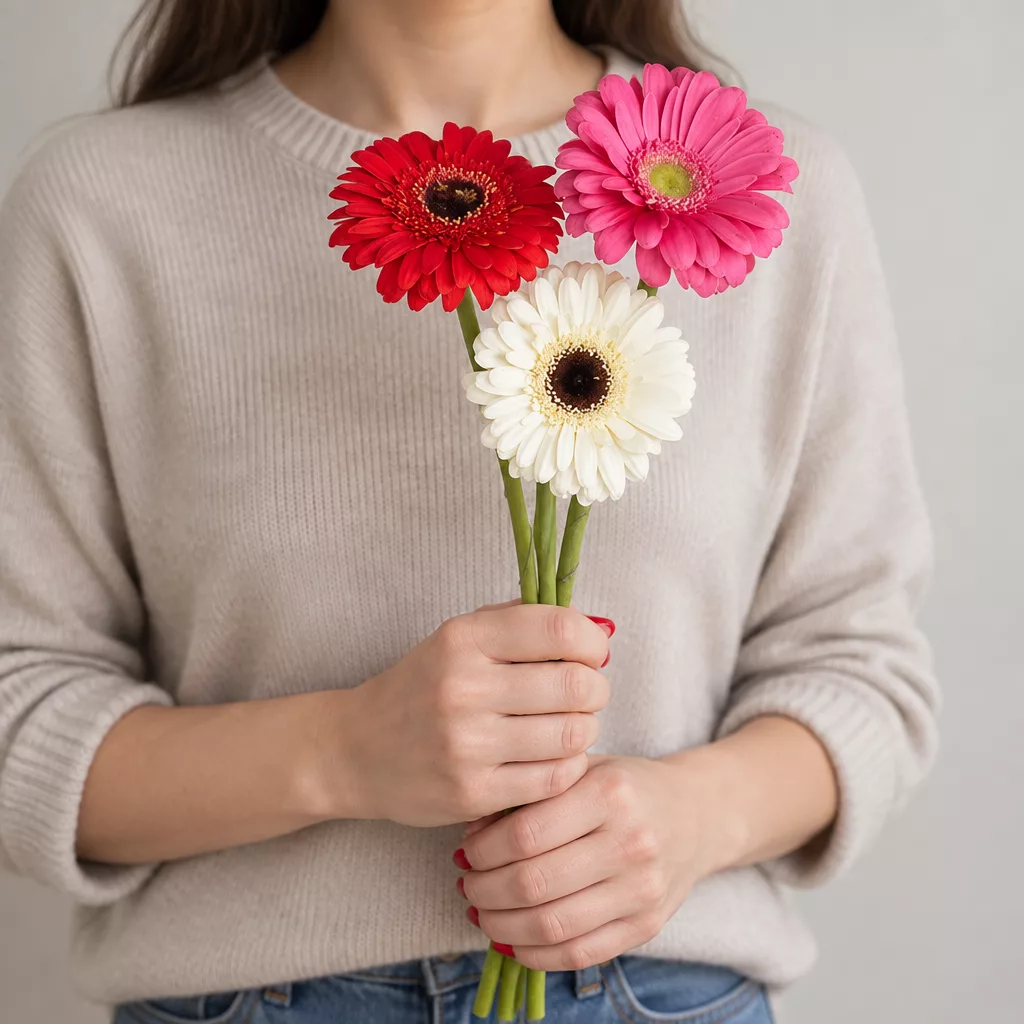
For a celebratory mood — a birthday, a promotion, a new home — consider combinations that bring color contrast: orange gerbera with white waxflower, yellow freesia with blue statice, or sunflowers paired with burgundy hypericum berries. These arrangements feel like a burst of summer in a place where summer is brief and precious.
Budget Ranges and What They Actually Get You
Ordering from abroad, you may not have a clear sense of what different spending levels produce in terms of actual flowers and presentation. Here is a plain breakdown based on what florists typically assemble at different tiers, without quoting specific prices.
At the entry level, you are looking at a single-variety bouquet — perhaps seven or nine stems of spray roses or chrysanthemums with basic foliage, wrapped simply. It is a genuine, pretty gesture, appropriate for a thank-you, a get-well wish, or a casual birthday. It will not overwhelm a small apartment, and for a recipient who is not expecting anything, it will feel like a warm surprise.
At a mid-range level, you move into mixed bouquets of fifteen to twenty stems combining two or three varieties, more considered foliage, and a presentation that includes kraft paper or a fabric wrap with ribbon. This is the level that photographs well and feels like a real occasion. It suits anniversaries, significant birthdays, and any moment where you want the recipient to feel genuinely celebrated.
At a higher spend, you are looking at large statement arrangements — hatbox designs, tall vase arrangements with premium flowers like Dutch roses, lisianthus, or peonies in season, or elaborate mixed compositions that fill a room. For a recipient in Polyarny, a large, fragrant arrangement in deep winter is not just beautiful; it changes the atmosphere of their home for a week or more. That is worth something beyond the aesthetic.
Whatever you spend, add a handwritten card note in the order. It costs nothing and it is the part the recipient reads first and keeps longest.
Russian Flower Customs a Foreign Sender Should Know
Russian flower-giving has its own set of conventions that are worth understanding so your gift lands exactly as intended. The most important one: always send an odd number of stems. Even numbers of flowers are associated with mourning in Russian tradition, so a bouquet of ten roses would feel jarring to many recipients, even those who might not consciously articulate why. Turboflora's florists follow this convention automatically, but if you are specifying a stem count in your order notes, keep it odd — seven, nine, eleven, fifteen, and so on.
Color carries meaning too, though Russian conventions here are somewhat more relaxed than the strict Victorian language of flowers. Red roses signal romantic love clearly and universally. White flowers are associated with purity and are appropriate for a wide range of occasions. Yellow flowers, which in some Western traditions signal jealousy or farewell, are simply cheerful in Russia and are a perfectly appropriate birthday gift — do not avoid them based on non-Russian associations.
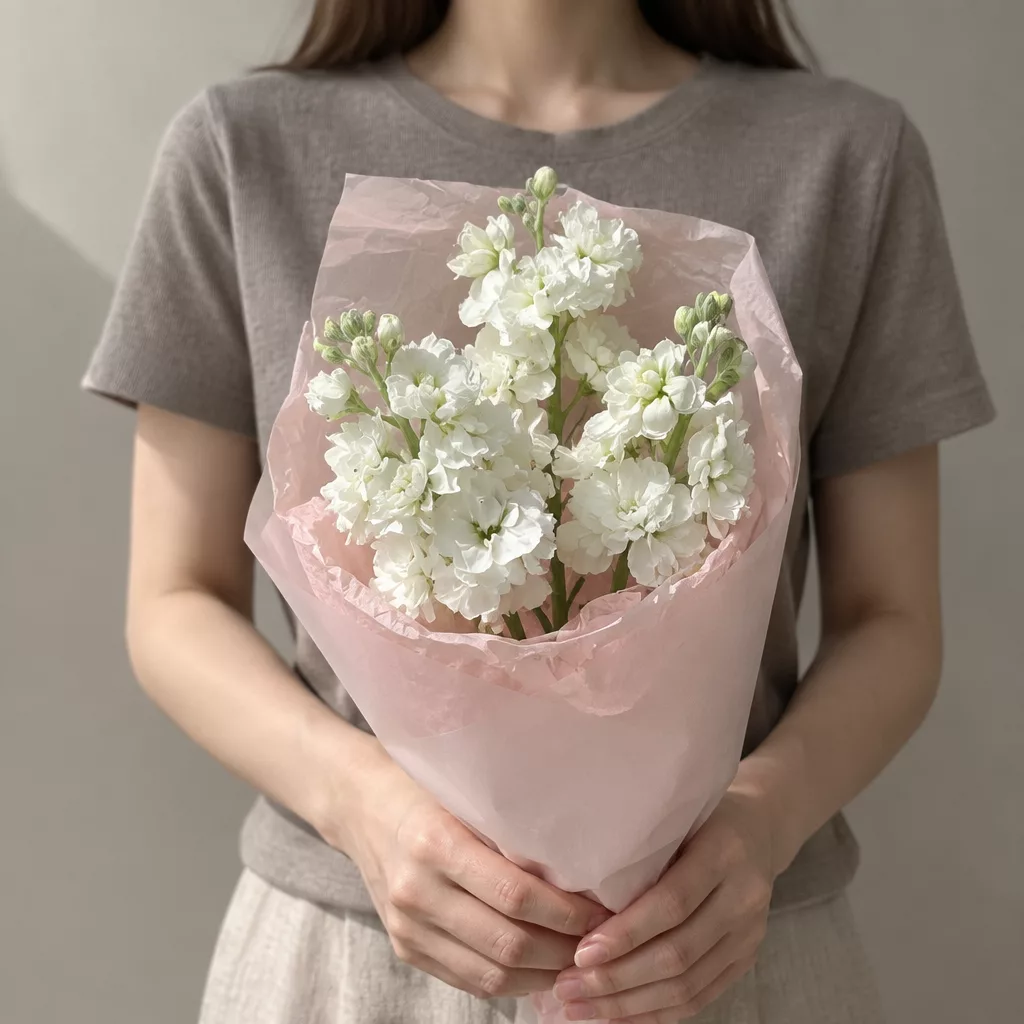
Fragrance is valued highly. If you have the option to specify more fragrant varieties — freesia, hyacinth in season, oriental lilies, stock — a recipient in Polyarny will appreciate it deeply. The long winters and indoor living make scent a real sensory pleasure.
Finally, Russians typically unwrap flowers immediately upon receiving them rather than waiting. The presentation inside the wrapping matters as much as the outer packaging. A well-arranged bouquet that looks beautiful unwrapped is a sign of care and professionalism, and your recipient will notice.
Flower Care in Polyarny's Conditions
Once the bouquet is in the recipient's hands, its lifespan depends almost entirely on how it is cared for in those first few hours. If you are sending flowers to someone who may not know the basics — perhaps an older relative or a friend who rarely receives them — it is worth including care instructions in your order note, or simply knowing what to tell them afterward.
The most important step is immediate: cut the stems at a forty-five-degree angle under running water and place them in a clean vase with fresh, cool water. Warm water accelerates wilting. In Polyarny's heated apartments — Russian homes are kept very warm in winter, often above twenty-two Celsius — this matters more than it would in a milder climate. The contrast between the cold outside and the hot inside can shock flowers that have just been delivered.
Keep the arrangement away from radiators, which are running constantly in Arctic winter. A windowsill might seem like a pretty spot, but in deep winter the glass is very cold and the radiator below it creates a harsh hot-cold gradient. A table away from direct heat sources is better. Change the water every two days and re-cut the stems each time.
Chrysanthemums and alstroemeria will last ten to fourteen days with this care. Roses typically give seven to ten days. Freesia and hyacinth are shorter-lived — five to seven days — but the fragrance they give in that time is exceptional. Gerbera stems are prone to bacteria; a small piece of charcoal in the vase water or a drop of bleach helps significantly. These are small steps that double the life of the flowers and make your gift feel present in the room much longer.
Making the Moment Matter from Thousands of Kilometers Away
The logistical side of sending flowers to Polyarny from abroad is manageable once you understand the steps. The emotional side — making the recipient feel genuinely seen and thought of — is where the real effort goes, and it does not require proximity.
Start with the card message. In Russia, a written note accompanying flowers is expected, not optional. It does not need to be long, but it should be personal. Avoid generic phrases like 'with best wishes' in isolation. Instead, reference something specific: the occasion, a shared memory, how far apart you are and why that makes this moment feel important. If you are writing in English to a Russian speaker, that is fine — many people in Polyarny have some English, and the effort of writing in your own language reads as authentic.
Consider the timing from the recipient's perspective. A delivery that arrives in the morning on a birthday means the person spends the whole day with the flowers visible. An evening delivery is still lovely but gives less time. If you know your recipient's schedule — when they are home, when they work — use that knowledge to specify a delivery window in the order notes.
Finally, send a message separately to let them know flowers are coming. This is not spoiling the surprise — in a closed town with limited access, a recipient who is not home when the delivery arrives creates a complication. A quick message saying 'something is arriving for you today' ensures they are there to receive it. The actual flowers are still the surprise. The knowledge that someone far away thought carefully enough to arrange all of this — that is the real gift, and it arrives the moment they open the door.
Sending flowers to Polyarny from abroad is not an everyday transaction — it is a deliberate act of connection across an extraordinary distance to one of the most remote towns in Russia. When you take the time to choose the right flowers for the season, follow the conventions your recipient will recognize, and write something personal on the card, the bouquet becomes more than decoration. It becomes proof that distance does not diminish care. Turboflora handles the logistics so that the only thing your recipient experiences is the moment the door opens and something beautiful is handed to them.
Frequently asked questions
Can I order flowers to Polyarny if I live outside Russia and don't speak Russian?
Yes. Turboflora's website supports international orders and you can complete everything in English. You provide the recipient's name, address, and a contact phone number in Polyarny. The shop handles all communication with the recipient in Russian on delivery day, so there is no language barrier on your end at any point in the process.
Which flowers hold up best in Polyarny's extreme winter temperatures during delivery?
Chrysanthemums, alstroemeria, and spray carnations are the most cold-tolerant cut flowers and travel reliably even in sub-zero conditions. Roses and lisianthus are sent as tight buds in winter so they open safely indoors. The shop accounts for temperature in packaging, but hardier varieties give an extra margin of safety when temperatures drop below minus fifteen Celsius.
How far in advance should I place the order for a specific date like a birthday?
For a fixed occasion, order at least one to two days ahead and state the delivery date clearly in the order notes. If you are in a time zone significantly behind Russia — for example, on the US West Coast — place the order the evening before your local date, since Russia will already be well into the following day. Early ordering also gives the shop time to source the freshest stems for a remote destination.
Is it true I should never send an even number of flowers to a Russian recipient?
Yes, this is a genuine and widely observed convention in Russia. Even numbers of flowers are associated with mourning and will feel wrong to most recipients, even if they cannot immediately explain why. Always choose an odd number — seven, nine, eleven, or fifteen stems are all common and appropriate. Turboflora's florists follow this automatically when assembling arrangements.
Can I include a message in English on the card, or should it be in Russian?
An English message is completely fine and often appreciated as a personal touch. Many residents of Polyarny have some English, and a message in your own language feels authentic rather than translated. If you want the card written in Russian, include your message in English in the order notes and indicate that you would like it translated — the shop can help with a simple, warm phrasing.
Ready to send flowers?
Pick the city, choose the bouquet, and a local florist takes it from there.
Choose a city →