A Practical Guide to Sending Flowers to Polyarnye Zori from Outside Russia
Polyarnye Zori sits above the Arctic Circle in Murmansk Oblast, a small city where fresh flowers are not something people pick up on a corner. When someone you love lives there and you are calling or messaging from Berlin, Toronto, or Dubai, the distance feels enormous — but the gesture does not have to. Ordering a bouquet delivered to Polyarnye Zori from abroad is entirely possible, and when it is done with the right information, the flowers arrive looking as though they were arranged that morning.
Why Polyarnye Zori Is a Special Delivery Destination
Polyarnye Zori is a closed-type city by history, built around the Kola Nuclear Power Plant. It has a small, tight-knit population, which means a flower delivery is genuinely noticed. People there are not surrounded by flower shops on every street, so receiving a bouquet is an event, not a routine. That context matters when you are choosing what to send: the arrangement does not need to compete with anything. It can be generous, unhurried, and personal.
The city sits at approximately 67 degrees north latitude. That geographic fact shapes everything about how flowers travel and how long they last once they arrive. In January and February, outdoor temperatures regularly fall below minus twenty Celsius. In summer, the polar day means near-constant daylight, which warms interiors and shortens vase life for certain varieties. A florist who understands these conditions will pack and time the delivery accordingly, using insulated wrapping in winter and choosing hardier stems in summer.
Delivery to Polyarnye Zori is routed through the Murmansk region logistics network. The route is reliable but requires planning that differs from sending flowers to Moscow or Saint Petersburg. Giving yourself a lead time of at least one to two days when ordering from a foreign time zone removes most of the stress. The recipient will not see any of this complexity — they will simply open a door to something beautiful.
Bouquets we can deliver

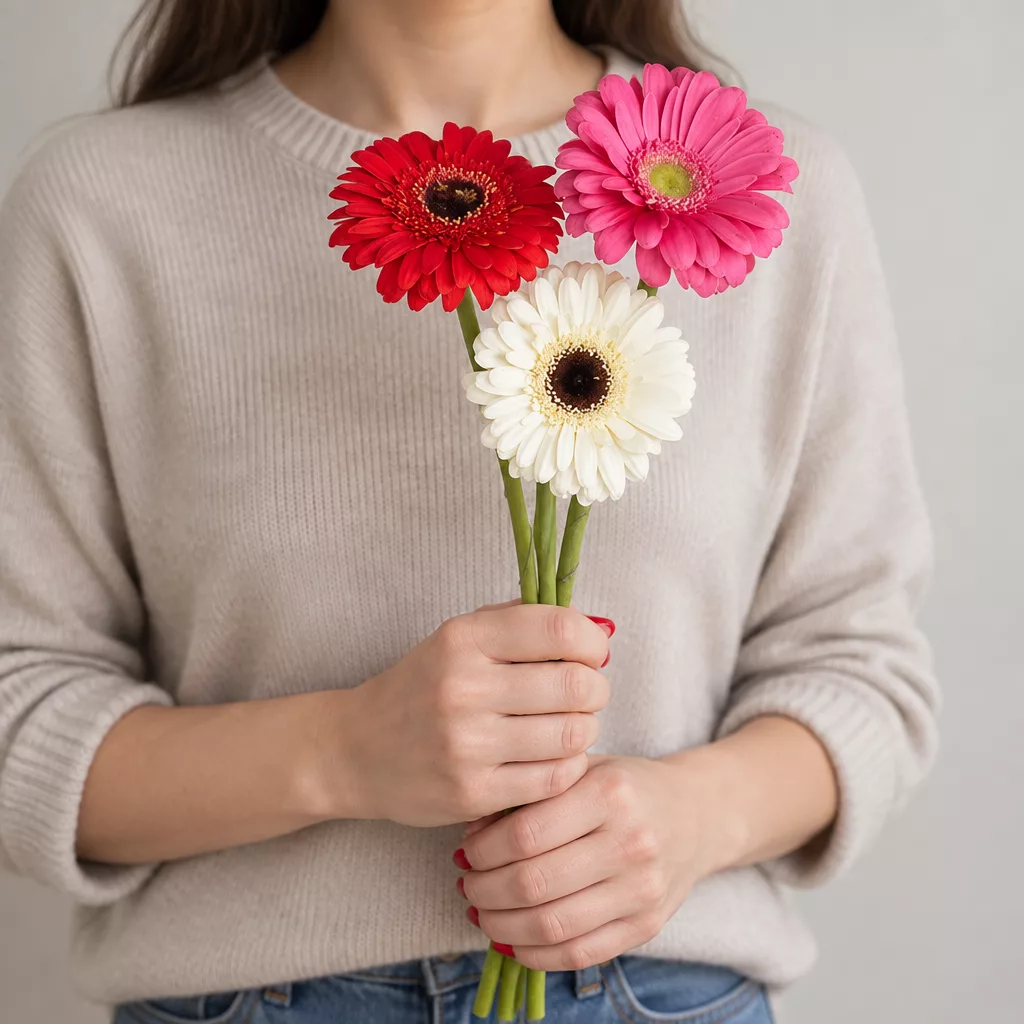
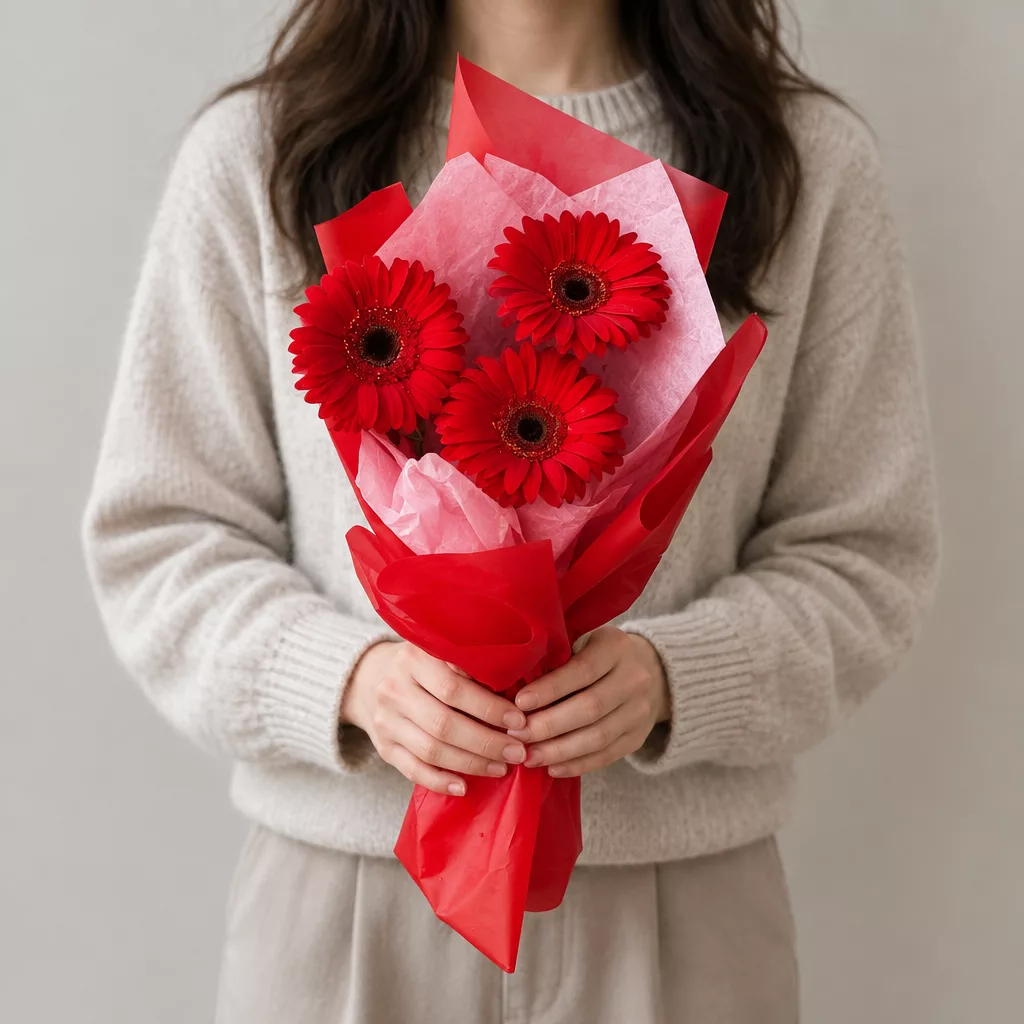
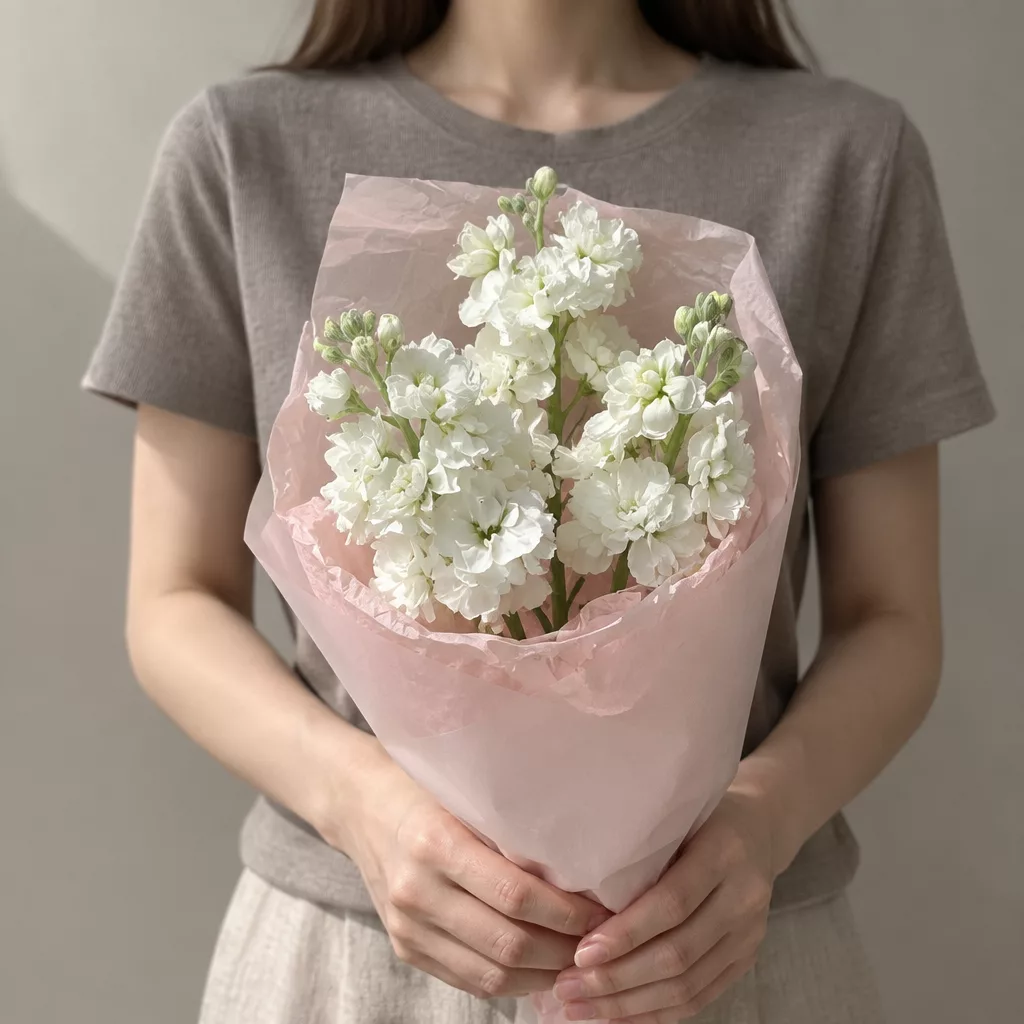
Choosing the Right Occasion Framing Before You Order
Before you select a single flower, think about what the recipient is meant to feel when the bouquet arrives. A birthday calls for something celebratory and warm — sunflowers, spray roses, or bright gerberas carry that energy clearly even without a card in Russian. An anniversary deserves something more considered: garden roses in blush or cream, paired with eucalyptus or ruscus, feel intimate rather than festive. A new baby, a job promotion, a housewarming — each occasion has its own emotional register, and flowers speak that register fluently when they are chosen with intention.
In Russian culture, the number of flowers in a bouquet carries meaning. An even number of stems is traditionally associated with mourning, so bouquets for celebrations always contain an odd number — five, seven, nine, eleven, and so on. If you are accustomed to buying flowers in dozens, this is the one custom worth knowing. A reputable florist will handle this automatically, but it is useful context so you are not surprised when the arrangement contains seven roses rather than eight.
Colour also communicates across language barriers. Red roses signal romantic love unmistakably. Yellow flowers, sometimes avoided in older Russian tradition as a sign of parting, are now widely accepted in modern arrangements, particularly when mixed with other colours. If the recipient is more traditional, leaning toward whites, pinks, and purples is a safe and beautiful choice. If they are younger or contemporary in taste, almost any palette works.
Flowers That Travel Well to the Arctic North
Not every flower is suited to the journey to Polyarnye Zori. Delicate open blooms like garden peonies or fully open hydrangeas can bruise in transit, especially when temperatures require extra protective packaging. The best choices for long-distance delivery to the far north are varieties with structural resilience: roses with firm petals, chrysanthemums, alstroemeria, and carnations. These flowers hold their form under wrapping and recover well once placed in water.
Roses remain the most reliable choice for a reason that goes beyond sentiment. A well-conditioned rose bud, cut at the right stage, will open gradually over five to seven days in a vase. For someone in Polyarnye Zori who will not have easy access to a replacement arrangement, that extended vase life is genuinely valuable. Dutch or Ecuadorian roses, which are the standard in the Russian professional flower market, are grown specifically for stem strength and longevity.
Alstroemeria is underrated for this kind of delivery. A single bunch can carry eight to twelve individual blooms on branching stems, each one opening in sequence, which means the arrangement keeps changing and surprising the recipient over a week or more. Mixed with solid greens like pistacia or salal, alstroemeria creates a full, generous look without relying on fragile focal flowers. Chrysanthemums — both the large disbud type and the smaller spray varieties — are equally dependable, come in a wide colour range, and last exceptionally well in cooler indoor temperatures, which are common in northern Russian apartments during winter.
Timing Your Order Across Time Zones
Polyarnye Zori operates on Moscow Standard Time, which is UTC plus three. If you are placing an order from London, you are two hours behind. From New York, you are eight hours behind. From Singapore, you are five hours ahead. These differences matter because florists prepare arrangements during business hours, and delivery windows are set within the same day's schedule. An order placed at eleven in the morning Moscow time has a very different delivery horizon than one placed at nine in the evening.
The safest approach when ordering from abroad is to plan for next-day delivery rather than same-day. This gives the florist full preparation time and gives you the ability to communicate any personalisation — a specific colour scheme, a card message in Russian that you would like help phrasing, or a request to avoid a particular flower the recipient dislikes. Rushed orders are possible, but they leave no room for adjustments.
If the occasion is fixed — a birthday, an anniversary, a graduation — work backward from the date and place the order at least forty-eight hours in advance. For spontaneous gestures, same-day delivery to Polyarnye Zori is achievable when the order arrives before noon Moscow time. Always confirm the recipient's address in full Russian format, including the apartment number and entry code if the building has one. A delivery that cannot reach the door is the most avoidable disappointment in the whole process.
What to Write on the Card When You Are Far Away
A card message is often the part that international senders find most daunting. If you are not a Russian speaker, you have a few good options. You can write your message in your own language — many recipients, particularly younger ones, read English or German — and the sincerity of a handwritten foreign-language note has its own warmth. Alternatively, you can write in English and request that the florist transcribe it into Russian, which is a normal and appreciated service.
Keep the message short and direct. Long, elaborate sentences lose something in translation and can feel impersonal. Something like 'Thinking of you today — I hope these make your home feel warmer' carries more feeling than a formal paragraph. Use the person's name at the start. In Russian culture, using a diminutive or affectionate form of someone's name — Natasha instead of Natalia, Sasha instead of Alexander — signals closeness, and a florist can advise you on the right form if you are unsure.
If the occasion is a birthday, the Russian phrase 'S dnyom rozhdeniya' means happy birthday, and seeing even one Russian phrase from an international sender tends to delight recipients. It signals effort and attention. For other occasions, 'S lyubovyu' means 'with love' and works across almost any context. You do not need to master the language — a single warm phrase, the rest in your own words, and the flowers themselves do the rest of the communicating.
Caring for the Bouquet in a Northern Climate
Once the flowers arrive, the recipient's environment shapes how long they last. Polyarnye Zori apartments in winter are typically heated to comfortable indoor temperatures, often around twenty to twenty-two Celsius, which is standard for Russian residential heating. That warmth is pleasant for people but accelerating for cut flowers. The single most effective thing a recipient can do is keep the vase away from radiators and heating units, which are usually positioned under windows in Russian flats.
Fresh water every two days is more important than any flower food sachet. When refreshing the water, re-cut the stems at a diagonal — about two centimetres from the bottom — using a sharp knife rather than scissors, which can crush the stem tissue and restrict water uptake. Removing any leaves that sit below the waterline prevents bacterial growth, which is the main cause of early wilting.
In summer, the polar day creates a different challenge. Extended daylight keeps rooms warmer than the thermostat suggests, and flowers near windows receive light almost around the clock. Moving the arrangement to a cooler, shadier spot overnight — or simply to an interior room away from windows — can add two to three days of vase life. For roses and alstroemeria specifically, a cool overnight rest is remarkably effective. If the recipient has a cool hallway or entryway, that is an excellent overnight spot, as long as temperatures do not drop below five Celsius, which would damage tropical varieties like gerbera.
Making the Experience Feel Personal Despite the Distance
The fact that you are not in the same country as the person you are sending flowers to can actually make the gesture more meaningful, not less. A bouquet that arrives unexpectedly in a small Arctic city, from someone thousands of kilometres away, carries a weight that a local purchase simply cannot match. Lean into that. Choose something that reflects what you know about the person — their favourite colour, a flower they once mentioned, a combination that suits their home decor if you have seen photographs.
Adding a small extra to the arrangement can personalise it further. A box of quality chocolates, a scented candle, or a small decorative element placed alongside the bouquet transforms the delivery from a transaction into a composed gift. These additions travel safely alongside flowers when packaged correctly, and they give the recipient something to enjoy as the blooms gradually open.
Consider the timing of the delivery within the day. A morning delivery means the recipient starts their day with something beautiful. An afternoon delivery works well for working recipients who will return home to a surprise. If you know their schedule, mention a preferred delivery window when ordering — most florists will accommodate a two-to-three-hour window request. The smallest logistical detail, when it is thought through, is what makes the recipient feel truly seen. That feeling — of being remembered precisely, from far away — is what flowers have always been best at delivering.
Sending flowers to Polyarnye Zori from abroad is less complicated than the geography suggests. What it requires is a small amount of advance planning, an understanding of which varieties travel well to the Arctic north, and the knowledge that Russian floral customs — odd numbers, colour choices, a warm card — are easy to follow once someone explains them plainly. The distance between you and the person you are thinking of is real, but it becomes the very thing that gives the bouquet its meaning. Turboflora handles the logistics, the climate-appropriate packaging, and the same-day delivery window. You handle the choosing — and the feeling behind it.
Frequently asked questions
Can I order flowers for Polyarnye Zori if I do not speak Russian?
Yes, entirely. You can place the order and write your card message in English. Turboflora can transcribe your message into Russian if you prefer, or deliver the card in your own language. Many recipients in Polyarnye Zori, particularly those under forty, read English comfortably. The most important information — the address, the recipient's name, and the delivery date — can be provided in Latin script and will be handled correctly.
How far in advance should I order to guarantee delivery on a specific date?
Ordering forty-eight hours before the target date is the most reliable approach when ordering from a foreign time zone. This window allows for time zone differences, any address clarifications, and arrangement preparation. Same-day delivery to Polyarnye Zori is possible when the order is confirmed before noon Moscow time, but for fixed occasions like birthdays or anniversaries, advance ordering removes all uncertainty.
Will the flowers survive the cold temperatures during winter delivery?
Yes, when the florist uses proper insulated packaging. In winter, arrangements for Polyarnye Zori are wrapped in thermal materials that protect stems and petals from temperatures that can reach minus twenty Celsius or lower outdoors. The transit time from vehicle to door is brief, and flowers that are still in bud stage — as professional arrangements typically are — handle cold exposure better than fully open blooms.
Why do Russian bouquets always have an odd number of flowers?
In Russian tradition, even numbers of flowers are associated with mourning and are brought to funerals. For any celebratory occasion — birthdays, anniversaries, congratulations — bouquets contain an odd number of stems: five, seven, nine, eleven, and so on. Professional florists follow this automatically. If you are ordering a specific quantity, choosing an odd number ensures the arrangement aligns with the cultural expectation your recipient will have.
What flowers last longest in a Polyarnye Zori apartment during winter?
Roses, chrysanthemums, alstroemeria, and carnations are the strongest performers in heated northern interiors. They tolerate the warm, dry air produced by central heating better than delicate varieties like tulips or open peonies. Alstroemeria is particularly good value because individual blooms open in sequence over seven to ten days. Keeping the vase away from radiators and refreshing the water every two days extends the life of any of these varieties significantly.
Ready to send flowers?
Pick the city, choose the bouquet, and a local florist takes it from there.
Choose a city →